Deusdedit Ruhangariyo
ICT
Around the world: Nepal builds cable cars through sacred peaks; Māori health boards warn of silencing under new reforms; Indigenous filmmakers break barriers and reclaim Canadian screens; Panama boosts forest patrols as logging threat spreads; and Greenland coach slams soccer confederation over exclusion decision.
NEPAL: Nepal builds cable cars through sacred peaks
Despite a Supreme Court verdict earlier this year striking down a controversial law that allowed large-scale infrastructure in Nepal’s protected areas, the government continues to approve projects inside fragile ecosystems – delaying the full release of the court’s ruling and emboldening commercial interests, Mongabay reported on June 25.
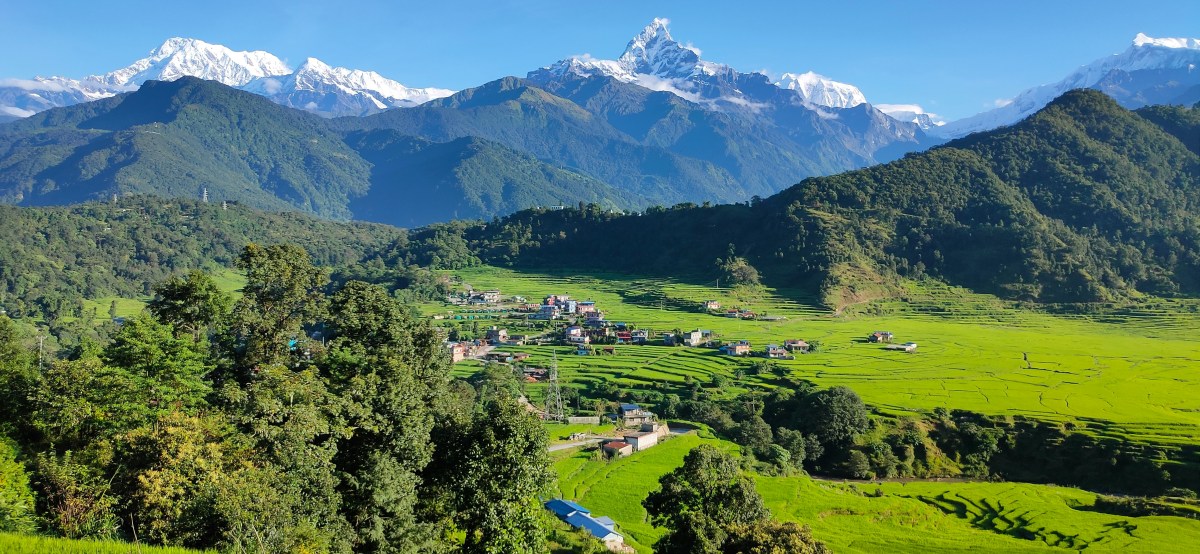
The most prominent of these projects is the proposed 81-kilometer Muktinath Cable Car, set to become the world’s longest, slicing through the Annapurna Conservation Area – one of the Himalayas’ most spiritually and ecologically significant regions. The $416 million project, promoted by Muktinath Darshan Pvt. Ltd. under a BOOT (build-own-operate-transfer) model, has already been approved by the Investment Board Nepal, chaired by Prime Minister KP Sharma Oli.
Conservationists and legal petitioners argue this move defies a January verdict by the Supreme Court’s Constitutional Bench, which ruled that development inside protected areas must respect ecological integrity and intergenerational responsibility. Yet, with the court’s full written decision still unpublished, authorities are pressing forward.
“This shows that the government is not accountable to the people,” said senior lawyer Prakash Mani Sharma, who co-led the petition that nullified the 2024 law. He says the government is exploiting the delay in publishing the verdict to greenlight projects that jeopardize conservation.
The Muktinath cable line will pass through seven stations and six high-altitude stops, cutting into forests and sacred pilgrimage routes revered by both Hindus and Buddhists. A second cable car project in Sikles, also within the Annapurna area, plans to fell nearly 4,000 native trees including rhododendrons. Though developers claim these are eco-tourism projects, lawyers say they contradict both Nepal’s Constitution and international treaties.
Supreme Court Judge Sapana Pradhan Malla, who is preparing the final text of the decision, had earlier written that protected areas must be preserved for future generations – and warned against portraying conservation and development as inherently opposed.
Meanwhile, Nepal’s finance minister has proposed opening parks to private tourism and commercial extraction of resources like timber and gravel, further alarming environmentalists. Critics say these actions disproportionately benefit the government and private sector, while communities bear the ecological and cultural cost.
“This is part of a larger trend,” Sharma warned, “where protected areas become the last frontier for unchecked infrastructure.”
Until the full court decision is published, Indigenous highland communities – already restricted in infrastructure access – remain in limbo, caught between ecological responsibility and economic ambitions they didn’t choose.
NEW ZEALAND: Māori health boards warn of silencing under new reforms
Iwi Māori health leaders in Aotearoa are raising alarms that proposed legislative reforms could significantly weaken their role in shaping local health services – undermining community voice and Te Tiriti o Waitangi obligations in New Zealand’s evolving health system, RNZ News reported on June 26.
Health Minister Simeon Brown recently announced amendments to the Pae Ora (Healthy Futures) Act, aiming to “streamline” the role of Iwi Māori Partnership Boards (IMPBs). Under the changes, the 15 regional boards established in 2022 to advocate for Māori health equity would lose their influence over local service design and instead offer advice indirectly, through a national committee.
“Effectively, this centralizes decision-making back in Wellington,” said Hagen Tautari, co-chair of the Te Tiratū IMPB in the Waikato region. “We’re being moved further away from our whānau. It’s a weakening of the authentic Māori voice.”
Previously, the boards were empowered to design culturally relevant services in partnership with Health New Zealand. The removal of that role, critics say, not only reduces Māori agency but risks repeating a historical pattern where national policies override local Māori knowledge.
Tautari emphasized that the new structure places excessive expectations on the Hauora Māori Advisory Committee (HMAC), which will now be the main channel advising the minister. “We support HMAC, but not at the expense of sidelining grassroots voices. You can’t substitute national advisors for lived community knowledge.”
While the minister claims the goal is to ensure timely and equitable care for all New Zealanders, Māori leaders argue the approach undermines the Crown’s duty to uphold Te Tiriti commitments – not just in policy, but in law and practice.
The changes come less than a year after the controversial disestablishment of Te Aka Whai Ora, the Māori Health Authority, which had previously carried the weight of systemic Māori health transformation.
“The last minister empowered us,” Tautari said. “This one has powered us down.”
IMPBs from the Te Manawa Taki collective – including Tairāwhiti, Bay of Plenty, Rotorua, Taupō, and Taranaki – have sent a formal letter to the minister opposing the move. “Te Tiriti isn’t going anywhere,” Tautari said firmly. “Neither are we.”
CANADA: Indigenous filmmakers reclaim Canadian screens
Across Canada, Indigenous storytellers are no longer waiting to be cast – they are building their own projects, reshaping the entertainment industry, and restoring narrative sovereignty one production at a time, CBC News reported on June 27.
From the Emmy-nominated series “Reservation Dogs” to acclaimed Canadian titles like “Bones of Crows,” “North of North,” and “Don’t Even,” Indigenous-led films and series are making headlines, winning awards, and changing how Indigenous people are seen, and heard, on screen.
“We’re making our own stories now,” said Edmonton-based filmmaker Trevor Lightning, whose upcoming film Smudge the Blades explores hockey, memory, and Indigenous identity. “Growing up, we auditioned for one role a year. Now, we’re writing the scripts.”
This shift is more than artistic, it’s systemic. Following years of grassroots mentoring and advocacy, structural change came with the creation of the Indigenous Screen Office in 2017–2018. Initially an advocacy body, the office began receiving federal funding in 2021. Since then, it has become a direct funder of Indigenous-led productions, now managing over $10 million annually through the Canadian Media Fund’s Indigenous Program.
“Access has always been the barrier,” said Kristy Assu, the Indigenous Screen Office’s director of funding. “Now that we control funding and decision-making, the momentum is ours.”
The movement also draws strength from a growing awareness among studios about historical harm. After the 2020 murder of George Floyd, there was a cultural reckoning in North America’s media industry. “People began asking, ‘Are we perpetuating harmful narratives?’” said Indigenous filmmaker Jennifer Podemski.
That awareness is key in a country where early “documentaries” like “Nanook of the North” staged Indigenous life for white audiences – often romanticized, sometimes fabricated, and always one-sided. “We’ve carried the cost of carelessness in film,” said Indigenous filmmaker Adam Piron. “But today, we are taking back the lens.”
Podemski recalls a recent moment where an airport staffer dismissed her with a stereotype about “free benefits” after seeing her Indigenous status card. She spent 20 minutes calmly explaining the history and reality behind the misconception.
“That moment reminded me: ‘This is why we tell stories,’” she said. “So next time, maybe they won’t dismiss us so easily.”
For many, real victory lies not just in awards or screen time, but in control. Who decides what stories are told? Who profits? Who heals?
“Territorial sovereignty matters,” said Podemsk. “But so does narrative sovereignty. And we are claiming both.”
Panama: Panama boosts forest patrols as logging threat spreads
In Panama’s Darién Gap, a dense rainforest long known as a corridor for migrants and traffickers, new government efforts are aiming to reclaim control. But while forest patrols have expanded and enforcement has tightened, deep-rooted threats like illegal mining, logging, and land grabbing still loom over Indigenous territories, Mongabay reported on June 24.
Since taking office in July 2023, President José Mulino’s administration has increased funding for conservation, hired 30 new park guards for Darién National Park, and begun deploying Starlink-powered satellite tech to improve surveillance deep in the forest. Officials say these tools will help curb deforestation and protect drinking water sources for communities downstream.
“The park rangers now have a stronger presence,” said Segundo Sugasti, director of Darién National Park. “We can finally reach areas we couldn’t before.”
But conservationists warn that the real battle lies beyond the trees. Illegal gold mining, often linked to Colombian cartels like Clan del Golfo, continues to poison rivers with mercury. Massive piles of waste left by migrants over 300,000 tons clog watersheds. Meanwhile, Indigenous communities are being courted by international logging companies promising income but often delivering exploitation.
“Communities aren’t receiving the full benefit from the wood extracted on their land,” said Elsy Ortiz, a forest technician working with the Emberá-Wounaan. In many cases, companies pressure villages to cut down trees outside approved zones, eroding both the land and the law.
To fight this, Panama extended its national logging moratorium until 2029 and deployed technicians to help Indigenous communities develop better forest management plans, replant nurseries, and eventually qualify for Forest Stewardship Council certification. The goal is to support sustainability without sacrificing sovereignty.
Yet outside these territories, roads and ranches are still encroaching. New infrastructure projects, including a $70 million highway addition and two major river bridges, may ease isolation for rural communities but also open access for cattle ranchers and private developers. Rangers say if left unchecked, these pressures could push right up to the edge of the park.
“There’s just too much money to be made,” said Jeff Morgan of Global Conservation. “The rainforest is under siege.”
Some NGOs are now racing to buy 30,000 hectares of buffer land before developers do. But officials say without a coordinated monitoring system and stronger protections for Indigenous governance the forest’s future hangs in the balance.
“We’re trained,” said park guard Edwin Cerrud. “But we’re watching the edge inch closer.”
GREENLAND: Greenland coach slams soccer confederation
Greenland’s national soccer team has been left without a regional home after the Confederation of North, Central America and Caribbean Association Football unanimously rejected its application for membership – without offering guidance for improvement. The decision has sparked outrage across Greenland’s sports community, where football serves as a vital outlet during the island’s long, harsh winters, Eye on the Arctic reported on June 27.
“This was our last chance to be part of something,” said national coach Morten Rutkjær. “We didn’t even get advice on how to improve, just a flat ‘no.’ It’s incredibly disappointing.”
Greenland, geographically located in North America, had hoped to join the Confederation of North, Central America and Caribbean Association Football to gain access to international matches and regional development opportunities. Rutkjær emphasized that the team had made logistical preparations to travel to other countries for games, requiring no additional burden on member nations.
Currently, Greenland is not eligible to compete under any global football body, including UEFA or FIFA, leaving its athletes unable to play international matches.
“It’s not just about the game,” Rutkjær said. “It’s about giving our players something to believe in. Football helps them survive the darkness – literally and emotionally.”
The coach noted Greenland’s recent efforts to professionalize the sport, including infrastructure upgrades and partnerships with clubs like Inter Miami. He now calls on FIFA to intervene and provide an alternative pathway to recognition.
“This is about fairness,” he said. “Small nations deserve a place on the pitch, too.”
My final thoughts
Across five continents, a strange quiet is gathering, not the silence of peace, but the hush that follows a dismissal. A verdict withheld. A voice redirected. A forest negotiated without its roots present. An entire nation told: “You don’t belong, not yet, maybe not ever.”
In Nepal, the mountains stand as they always have, but something invisible is shifting. Steel lines cut across the sky, cable cars advancing toward the holy site of Muktinath, their arrival framed as progress, their impact disguised as development. The government pushes forward while the Supreme Court delays releasing the full decision meant to protect these lands. Somewhere between the letter of the law and the spirit of the forest, something sacred is being bargained away. And those who revere the peaks are told, gently but firmly, that reverence is not a valid planning objection.
Meanwhile, far to the south, in New Zealand, the reshaping of a health system begins not with a scalpel but with a steady dulling of the Māori voice. What was once promised as partnership is now reclassified as consultation. Power, once spoken of as shared, is quietly centralized in Wellington. And the boards designed to hold space for whānau wisdom are handed polite reassurances and hollow roles. The architecture of inclusion remains, but the roof has been taken off. Rain will come. Trust will leak through the cracks.
But not all erasures arrive with bureaucracy. In Canada, it arrives through memory, specifically, the memory of being portrayed, not seen. For decades, Indigenous people existed on screen only through someone else’s lens, their stories staged, their truths reduced to feathers, drums, and a tidy three-act arc. Yet now, a new generation has taken the camera back. They film with defiance and grace, not because they want to be recognized, but because they no longer need permission. They know that control of the story is control of the future, and their stories are not waiting at the gate anymore.
To the south again, the Darién rainforest breathes heavily under the weight of its own exploitation. The air smells of mercury and moss, diesel and resignation. Panama’s forest rangers are more equipped than ever, but the systems they confront, illegal mining, timber laundering, manipulated community agreements are older than the trails they patrol. The rainforest is protected, but only on paper; outside the park boundary, deals are made with signatures and silence. The very communities entrusted with stewardship are offered short-term income in exchange for long-term loss. Still, some say yes. Hunger is a harder force than hope.
And then there is Greenland. Cold, distant, misunderstood. A nation that trains in frozen fields, that dreams of international matches, that partners with teams like Inter Miami while its players sprint beneath midnight suns. Yet when Greenland knocked on CONCACAF’s door, hoping simply for a seat at the table, the answer came swift and empty: no path forward, no guidance, no second look. Just rejection dressed in procedural politeness. And so, a national team remains without a nation, not because they lack talent, but because they challenge the cartography of convenience.
From tundra to tropic, from summit to screen, what binds these stories is not geography – it is the persistent moral pattern of Indigenous peoples being treated as optional. Optional in the telling of their own histories. Optional in systems built upon their lands. Optional in institutions they helped envision. Optional when they speak up, too late, when they are gone.
But they are not gone.
They are building cameras and court petitions, guarding forests and designing health equity, refusing to be edited out. They are not asking to be included in someone else’s future. They are living on one of their own, and it is the one with the longer memory, the deeper foundation, the harder questions.
So, what if we shifted the lens?
What if the world was not a platform and Indigenous peoples were not participants, but the other way around? What if the systems of extraction, rejection, and silence were the experiment, and the cultures who hold memory, ecology, and dignity were the standard?
What if we stopped treating Indigenous wisdom as a setting, something to toggle on or off and started treating it as the spine?
In this quiet fire burning from Kathmandu to Waikato, from Toronto to Darién to Nuuk, there is a lesson for those building the next world:
You do not own the map unless you can read the mountain. You do not own the future unless you can hear the forest. You do not lead unless you are willing to follow the truth, even when it comes wearing red paint, speaking in old tongues, or asking you, simply, to listen.