
Deusdedit Ruhangariyo
Special to ICT
Around the world: Film festival amplifies Indigenous voices through risk and renewal; media unite globally to safeguard Indigenous languages; and Aboriginal people in Australia celebrate a $10 million Moorundi health hub opening.
CANADA: Festival amplifies Indigenous voices
The 50th season of the Toronto International Film Festival is proving to be a landmark moment for Indigenous filmmakers. Bigger risks in Indigenous cinema are being rewarded with bigger audiences and, crucially, a bigger platform, CBC News reported on August 22.
This year, the Indigenous Screen Office, a national advocacy body, invested $3.5 million in the development and production of eight Indigenous feature films premiering at the festival – the largest number supported at one festival to date.
Melanie Nepinak Hadley, the Indigenous Screen Office’s vice president, says the organization backs projects at every stage. Some are small-budget productions by new creators who rely on resourcefulness, while others are international co-productions with broader funding networks. “We want Indigenous projects to succeed at all levels – from scrappy first films to global blockbusters,” said Nepinak Hadley, who is Minegoziibe Anishinabe from Manitoba.
After two decades in the industry, she has seen Indigenous filmmaking evolve from painful historical documentaries to a wider mix that includes comedies and contemporary narratives. “The most exciting change is seeing Indigenous people telling stories that aren’t locked in trauma or history,” she said. “We’re showing audiences Indigenous life as modern, diverse, and vibrant.”
That diversity is visible at the Toronto International Film Festival, says Canadian programmer Kelly Boutsalis, who is Kanien’kehá\:ka from Six Nations. She welcomes both seasoned and emerging filmmakers and says the festival remains a crucial launching pad. “One of my favorite things is watching first-time filmmakers on stage,” she explained. “The nerves, the applause – it’s electric.”
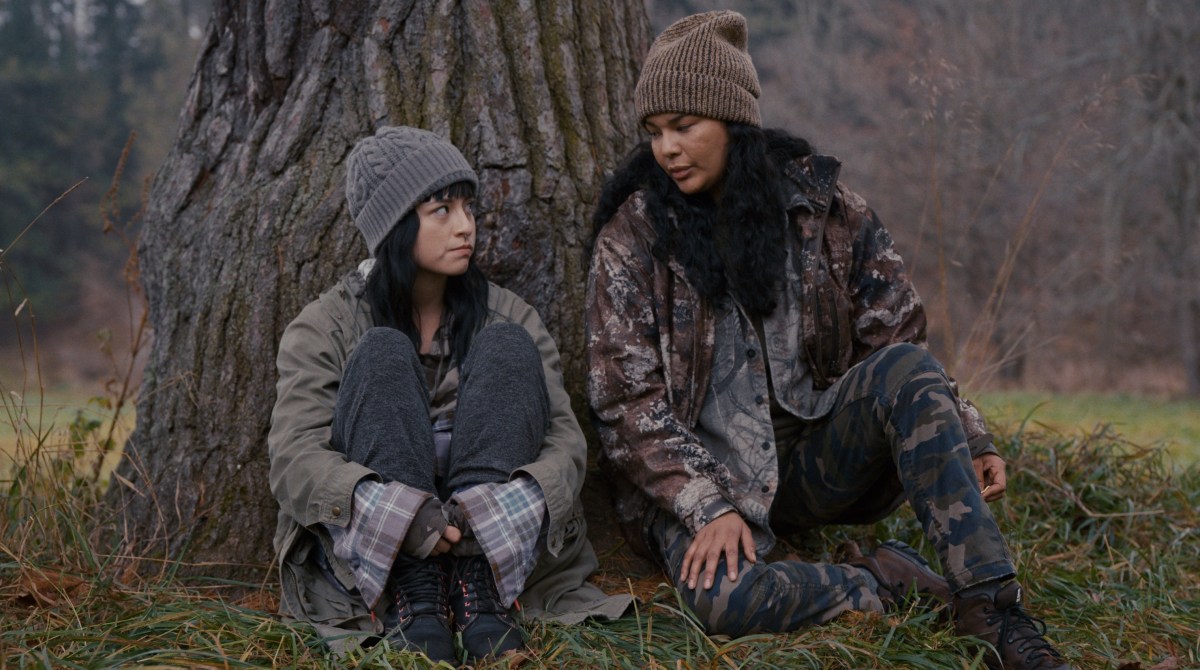
Among the standout premieres is “Nika & Madison,” directed by Eva Thomas. Inspired by “Thelma and Louise” and rooted in Thomas’s earlier short film “Redlights,” the story follows two Indigenous women on the run. Thomas said she wanted to create characters who were strong, defiant, and deeply human. “Being an Indigenous woman often means navigating unsafe spaces,” she said. “We survive by the strength of the women around us.”
The film confronts harsh realities – its short film predecessor was inspired by the “starlight tours,” when police abandoned Indigenous people in remote, freezing areas, but Thomas insists the takeaway is about resilience, sisterhood and growth. Actress Ellyn Jade, who plays Nika, described the journey as “cathartic” and a chance to witness Thomas’s growth as a director.
For Boutsalis, stories like “Nika & Madison” prove Indigenous cinema no longer fits a single mold. Films that once focused mainly on historical trauma now stand alongside stories of humor, defiance and adventure. The result is a rapidly expanding audience Indigenous and non-Indigenous alike.
The Toronto International Film Festival runs September 4-14, with “Nika & Madison” premiering September 7. For Indigenous filmmakers, the festival signals not just celebration but transformation, a recognition that taking risks in storytelling opens new doors to the global stage.
NEW ZEALAND: Media unite to safeguard Indigenous languages
Nearly 40 percent of the world’s languages are at risk of disappearing, with UNESCO estimating one vanishes every two weeks. Against this backdrop, Indigenous media leaders from Aotearoa, Canada, Australia, Taiwan and Norway gathered in Nangang, Taiwan, to strengthen collaboration and protect endangered languages through broadcasting, Te Ao Maori News reported on August 22
The gathering was hosted by the World Indigenous Broadcasters Network, which since 2008 has connected Indigenous media organizations worldwide. Its mission is clear: preserve and promote Indigenous languages and cultures by sharing content across borders, from news reports to documentaries, so Indigenous stories reach global audiences.
This year’s annual conference brought together more than 60 delegates under the theme “Ipannong Sinaduan.” Ipannong, from the Tao/Yami people, represents unity and collective hope; Sinaduan, from the Bunun, calls for courage to shape a better future. These principles guided discussions on how broadcasters can carry cultural knowledge into the digital age.
The chair of WIBN and Kaihautū o Whakaata Māori emphasized that the gathering embodies whanaungatanga (kinship) and mahi tahi (working together). “We face amazing opportunities, but also amazing challenges,” he noted, pointing to the urgent need for solidarity.
For Tanya Denning-Orman, director of First Nations at SBS and head of NITV in Australia, the meeting encouraged bold thinking. “We’ve all had to work hard to exist. The rights movement and the UN Declaration on (the Rights of) Indigenous Peoples fuel us. Finances are always a challenge, but disruption forces innovation. We need to be included in all spaces of media.”
From Norway, NRK Sápmi CEO Johan Ailo Kalstad warned that technology and audience expectations present pressing obstacles. “Competition is harder than ever,” he said. “Young audiences expect Indigenous content to be as high quality as any other.”
Beyond content sharing, WIBN is building leadership capacity and fostering international cooperation so broadcasters can meet these challenges together. The ultimate goal: to ensure Indigenous voices continue to be heard worldwide, and that languages, once silenced or endangered, not only survive but thrive in future generations.
AUSTRALIA: Ngarrindjeri celebrate health hub opening
The Ngarrindjeri people received a historic boost on August 22 with the opening of the $10 million Moorundi Health Centre in Murray Bridge, on Ngarrindjeri Country. The centre, more than two decades in the making, delivers on a community vision first voiced 23 years ago, National Indigenous Times reported on August 22.
Since 2015, Moorundi has offered three integrated pillars of care – cultural and country, spiritual and mind, physical and body – across the Murray Mallee, Southern Fleurieu, Kangaroo Island, Coorong, and Adelaide Hills. Services were previously spread across three Murray Bridge sites. The new centre unites them under one roof.
Funding included $1.1 million from the Indigenous Land and Sea Corporation and almost $9 million from the Commonwealth. The facility was designed collaboratively with Moorundi staff and community members to ensure cultural safety, celebrate Ngarrindjeri identity, and accommodate health and wellbeing programs, allied health services, and spaces for elders and children.
Moorundi Aboriginal Community Controlled Health Service Chair Tahlia Lloyd said the center will strengthen holistic health by revitalizing cultural knowledge and language. “This is more than a building. It symbolizes cultural strength and our community’s right to accessible, holistic, and culturally safe healthcare,” she said. The facility, she added, will serve as a place of healing, belonging, and cultural connection, reflecting a commitment to closing health gaps and nurturing future generations.
CEO Steven Sumber recalled that 23 years have passed since Ngarrindjeri first called for an Aboriginal community-controlled health service in Murray Bridge. “A purpose-built facility brings cultural safety and integrity, aligned with primary health principles of prevention, intervention, and accessibility,” he said. “I hope this build is a beacon for other organizations nationwide to deliver quality care and reduce chronic disease.”
The new hub features larger office and conference spaces, administration and reception areas, a playroom with nature play, and expanded storage – anticipating growing client demand.
Indigenous Land and Sea Corporation Chief Executive Joe Morrison hailed the opening as a major milestone. “This health centre is vital for the local Aboriginal people,” he said. “They will benefit greatly from its holistic care in the years to come.”
My final thoughts
My final thoughts are across three continents this week, where risk is at the heart of Indigenous storytelling, resilience and survival, whether on the big screen, in the media landscape, or in community health. At the Toronto International Film Festival’s 50th season, Indigenous filmmakers showed that daring to step outside the expected narratives of trauma can open new doors.
Backed by the Indigenous Screen Office, they are not only creating but redefining Indigenous cinema for wider audiences. Films like “Nika & Madison” carry the urgency of lived experience but also the vitality of laughter, rebellion and sisterhood. Such risks signal that Indigenous voices, when trusted to shape their own stories, can move audiences far beyond the confines of cultural stereotypes.
That same spirit of innovation was alive in Taiwan, where Indigenous media leaders from five countries gathered to address one of humanity’s greatest silences – the disappearance of languages. With nearly 40 percent of the world’s languages under threat, their commitment to broadcasting as a tool of survival is nothing short of urgent.
The World Indigenous Broadcasters Network conference framed media not as entertainment alone but as a covenant with memory, a duty to ensure that every language carries its breath into the next generation. Facing disruption, financial barriers, and fierce digital competition, these leaders recognized that they must work differently, think creatively, and demand spaces in global media landscapes. Language is not simply communication. It is identity, ceremony and resistance, and its survival depends on both courage and collaboration.
In Australia, the opening of the Moorundi Health Centre after 23 years of persistence showed that the struggle for survival is also fought through care of body and spirit. Built with Ngarrindjeri knowledge and priorities at its core, the centre stands as a beacon of cultural safety and holistic healing.
It’s not just bricks and mortar; it’s testimony that Indigenous communities have the right and the power to design their futures. The gathering of people at its doors echoed the gathering of storytellers in Toronto and media leaders in Taiwan – a shared recognition that Indigenous futures are secured not by waiting for permission, but by building, creating and insisting on spaces where culture and community thrive.
Together these three stories remind us that Indigenous resurgence is not confined to one sector. It is expressed through film that dares, through language that endures, and through health care that heals. Each arena requires courage to take risks, imagination to think differently, and determination to see promises through decades of waiting.
Whether on the screen, the airwaves, or in a health hub, the message is the same – Indigenous strength is unstoppable when it is rooted in culture and carried forward with vision.
