
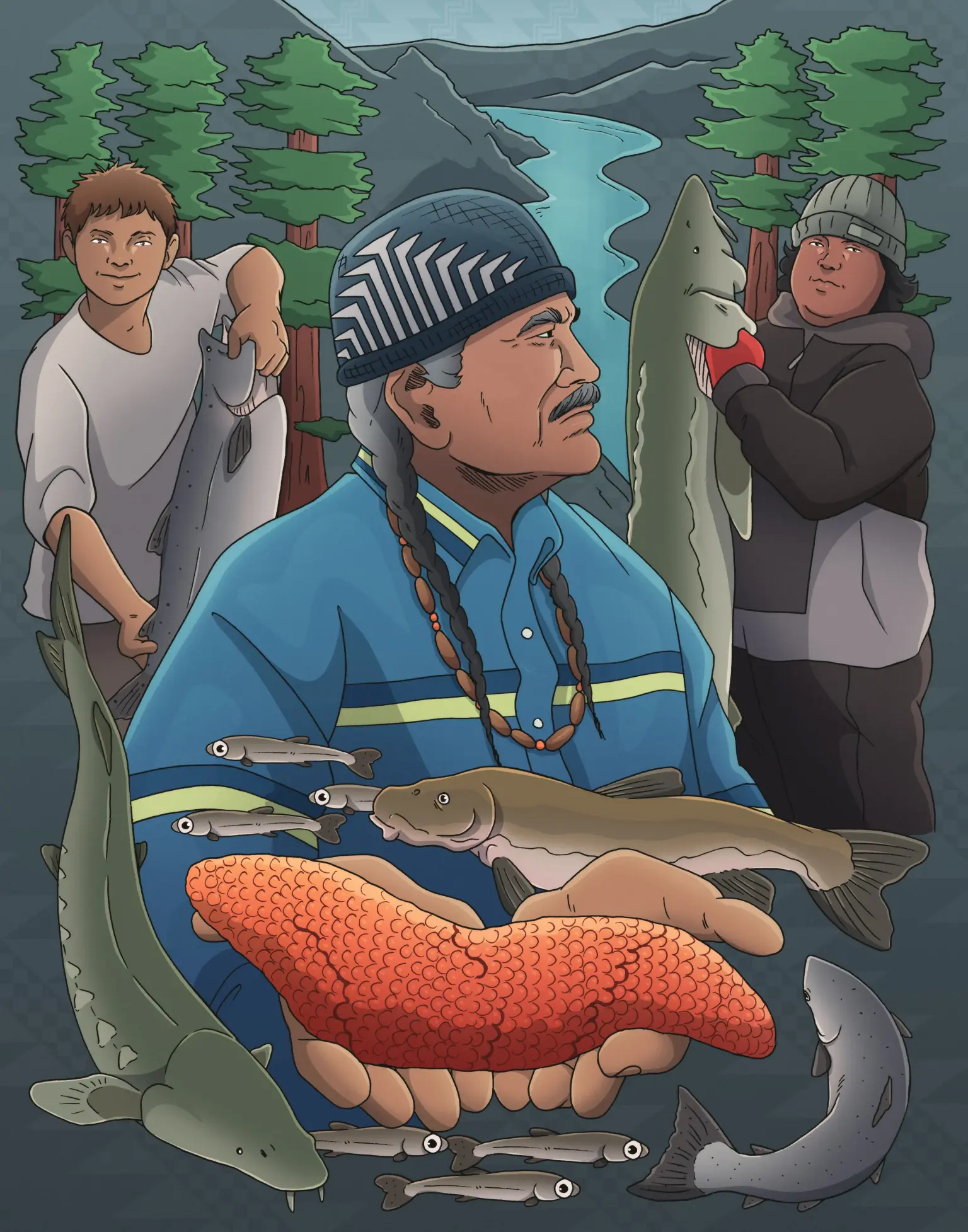
This story was produced by Grist and co-published with Underscore Native News.
Anita Hofschneider and Jake BittleI
llustrations by Jackie Fawn
Grist
PART V — Homecoming
Last November, two months after the final dam fell, Jeff Mitchell heard that salmon were spotted in Spencer Creek along the upper Klamath River in Oregon. He drove to the creek, which fed into the river just upstream from where the concrete behemoth of J.C. Boyle Dam had once stood.
Staring into the shallow Klamath River waters, Mitchell couldn’t see any salmon at first. Then he spotted a few carcasses resting on the bottom of the river. Anyone else might have been disappointed to find only dead fish. But to Mitchell, it felt like a glimpse of the salmon completing their life cycles after spawning, resting peacefully in an area that for so long had been denied to them.
“They’re telling me that they have come home,” he said. “And they also told me that there is work to do.”
Here was a shift, a tangible correction, to more than a century of theft, injustice, and cultural and environmental harm. Just a few weeks after the dams came down, salmon arriving from the Pacific had pushed through the reconnected river and returned to the frigid upstream tributaries that had been closed to them for decades, navigating the same rills and rapids that their ancestors did. Yurok Tribe members captured videos of spotted gray fish dashing and flopping back and forth in the reopened waterways. The waters of the Klamath, which had been depleted and laden with algae and parasites, were now flowing free, replenishing their formerly barren channels. For the first time in more than a century, the fish were spawning their eggs in a reopened river.
The fight to undam the Klamath only succeeded thanks to the tenacity of the tribes in the Klamath Basin. But it took thousands of people to make it happen — everyone from fish scientists and Bush administration bureaucrats to utility executives and environmental activists.
Many of these people may never be recognized for their roles in the campaign, but their contributions were essential. These were people like Kathy Hill, a Klamath Tribes citizen who coined the slogan, “Bring the salmon home,” that became the campaign’s rallying cry; Ron Reed, a Karuk Tribe member who had sought to persuade PacifiCorp executives of the cultural importance of salmon; and environmentalists like Kelly Catlett, who attended that first campaign meeting in Redding in 2004, and Glen Spain, who supported the agreement on behalf of deep-sea commercial fishermen.
Countless staffers working behind the scenes in tribal, state, and federal governments, as well as environmental organizations like Trout Unlimited, helped ensure the dam removal agreement survived when politicians and executives threatened to kill it. Many people who were critical to the cause never lived to see the dams come down, like Howard McConnell, a Yurok Tribe chairman, and Elwood Miller of Klamath Tribes — or Ronnie Pierce and Troy Fletcher, who had started the campaign.
Today there is a new generation of tribal members — some of them the children and grandchildren of the original dam removal advocates — who are stepping up to be stewards of the river. They are drawing their inspiration from the success of the dam removal campaign, a victory as significant as the derailment of the Keystone XL pipeline proposal.
“It just wouldn’t have happened if the Indigenous people didn’t have that vision,” said Amy Cordalis of the Yurok Tribe.
But to Mitchell, now 67, the victory is bittersweet. Throughout the past 25 years, the Earth has grown warmer, and water is becoming scarcer. He isn’t sure how he feels about passing down the responsibility for protecting the fish to his children and grandchildren. He and his fellow campaigners freed the river from the PacifiCorp dams, but they weren’t able to protect it from the ravages of climate change and water scarcity.
“Honestly, I just want them to enjoy this land and enjoy life,” he said. “I didn’t want to have to have them fight like I had to fight.”
The Klamath River Basin has no shortage of challenges, even with the dams down. The former reservoir land will have to be replanted and preserved, which will require years of stewardship by the Yurok and Karuk tribes. The waters of Upper Klamath Lake in Oregon are still contaminated with runoff from farms and ranches in the area, and the lake often sees toxic algal blooms like those that once occurred in the PacifiCorp reservoirs. Relationships between farmers and tribal communities are back to being “tenuous,” according to a lead advocate for the Klamath farmers, and the comity established between Troy Fletcher and Greg Addington has long since faded.
The biggest remaining conflict on the river is over water, the same issue that supercharged the dam removal campaign after the 2002 fish kill. The U.S. Bureau of Reclamation still controls a large dam and canal system at the top of the river, which it uses to deliver irrigation water to potato farmers in the Klamath. During dry years, the bureau must choose between leaving water in Upper Klamath Lake for C’waam and Koptu suckerfish, releasing it to the farmers, or letting it flow down the Klamath River for the salmon to swim in.
Dam removal took PacifiCorp out of the Klamath and opened up hundreds of miles of former salmon habitat, but it did not resolve the question of where the government should send water during years when there is not enough of it. That was the promise of the original Klamath settlement agreement, which died in Congress owing to inaction from former Oregon Representative Greg Walden and other Republican leaders.
Neither farmers nor tribal nations are benefiting from this stalemate. Recent water shortages, which have been intensified by climate-fueled drought, have forced farms in the basin to downsize crop production. Populations of C’waam and Koptu have shrunk as well, despite restrictions on water deliveries to Klamath Basin farmers. Klamath Tribes and the Yurok Tribe are still in the middle of long-running fights over this water crisis. The Klamath Tribes want to protect rights to water from Upper Klamath Lake, and Cordalis and the Yurok Tribe are trying to compel the government to ensure endangered salmon always have enough water to swim upstream, even if it means cutting irrigation for farmers.
“We have been spending millions and millions and millions of dollars [on the lawsuits] and neglecting other areas that we need to be paying attention to to help our people,” said Mitchell. “But we understood and knew that if we didn’t fight this fight, we could lose all of our resources. Everything needs water. And all we wanted was enough water.”
Mitchell isn’t sure how long it will take to resolve these cases, or whether he’ll live to see them come to a conclusion. As he sees it, the outlook for the river is grim: With Donald Trump in office again and already moving to gut the Endangered Species Act, it’s possible that the suckerfish in Upper Klamath Lake may fall even closer to extinction. Farmers and tribes reached an agreement under Joe Biden’s administration to restore degraded river ecosystems, but that agreement depends on funding from the Inflation Reduction Act that Trump may withhold.
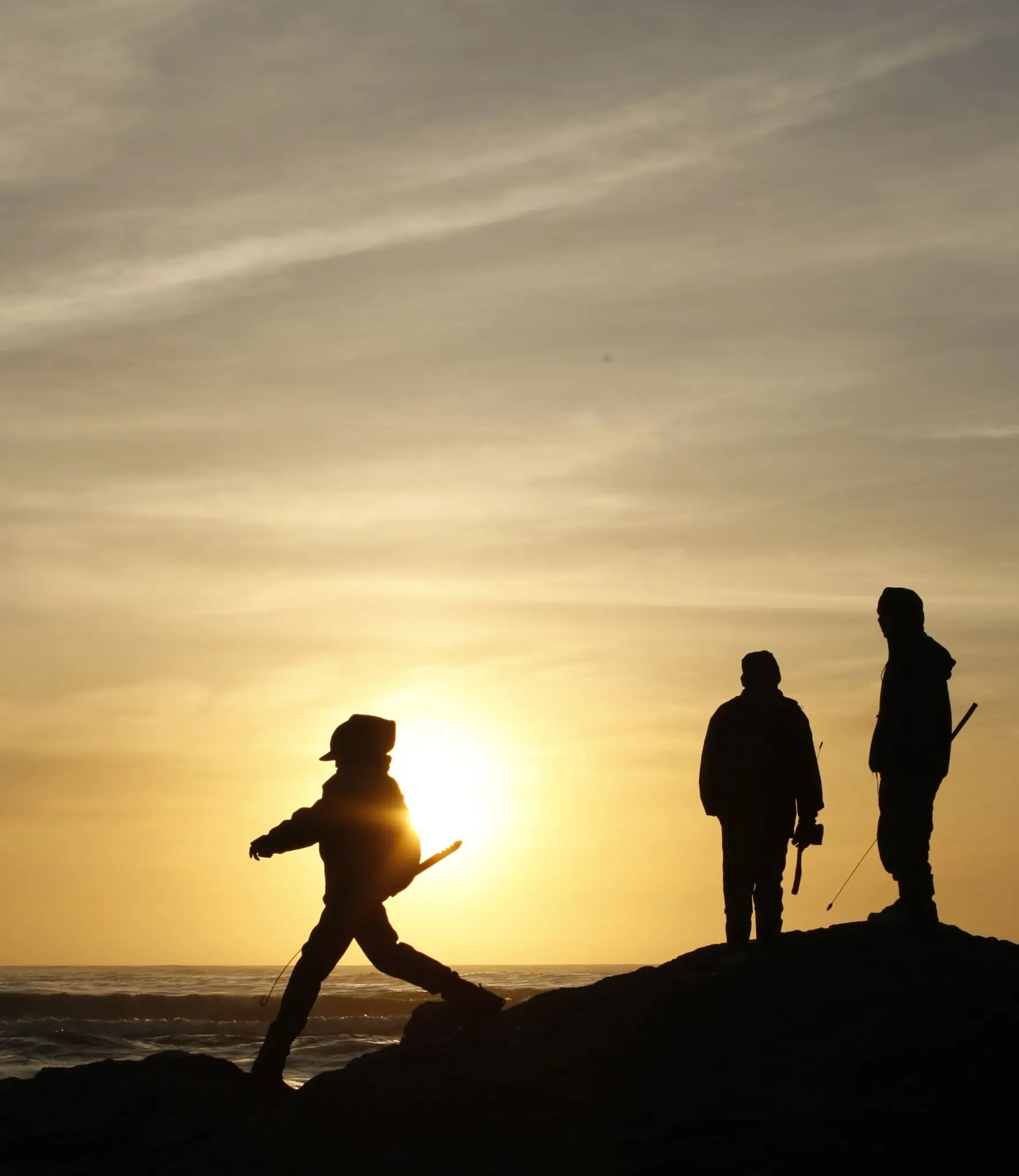
But nothing, not even the Trump administration, can put the PacifiCorp dams back up on the Klamath, or take away the victory that the dam removal campaigners achieved. The precedent has been set: For more than a century, governments and private utilities built dams with impunity, blocking forest streams from the mountains of Appalachia to massive waterways like the Colorado River. Today, Indigenous youth are planning to paddle the full length of the Klamath River for the first time.
The dam removal is a victory in itself, but it also ensures that tribes will never stop fighting for the Klamath and other rivers like it, said Cordalis. That will be true no matter how many setbacks they face.
“Dam removal is just the beginning,” she said.

This is Part V of a five part series. This story was originally published in Grist.
Credits
This story was reported and written by Anita Hofschneider and Jake Bittle. Illustration was done by Jackie Fawn, with art direction and design by Mia Torres. Development by Parker Ziegler. Meredith Clark handled fact checking.
The project was edited by Tristan Ahtone, John Thomason, Katherine Lanpher, and Katherine Bagley. Teresa Chin provided design edits. Jaime Buerger managed production. Megan Merrigan and Justin Ray handled promotion. Rachel Glickhouse coordinated partnerships.

