
The following was originally published on July 1, 2025 on ICT.
Kevin Abourezk
ICT
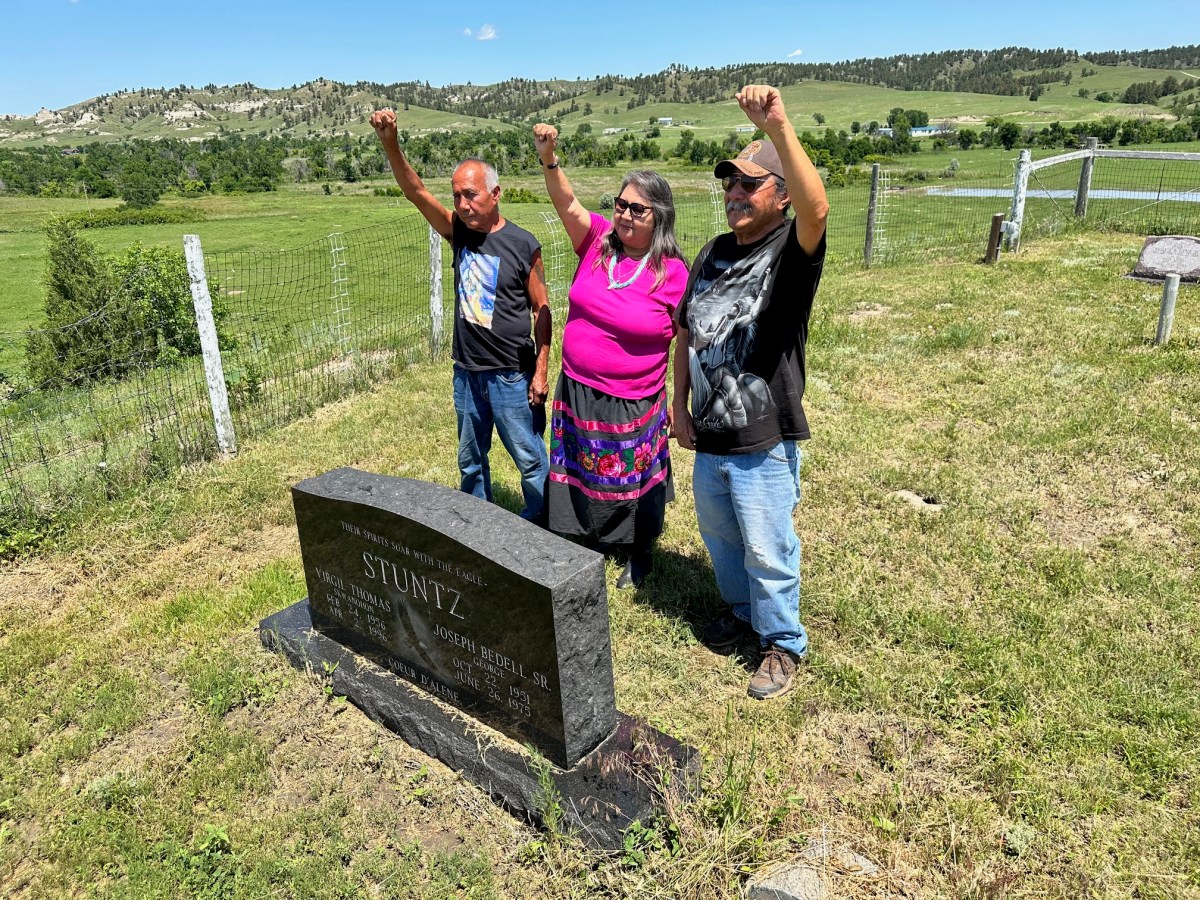
OGLALA, South Dakota — Standing before low, pine-covered hills, Fred Cedar Face looked back at nearly a half-century spent trying to keep alive the memory of an imprisoned man whose fate, to many, seemed sealed.
Just a few feet away, a gravestone marked the final resting place for Joe Stuntz, a Native man whose fate was surely sealed during a 1975 shootout with federal agents a few miles down the road.
“Over the last 26 years since I’ve been involved, we have every year come here and prayed that Leonard is free and our prayers have been answered,” Cedar Face said. “But maybe we forgot to say, ‘Drop the charges.’”

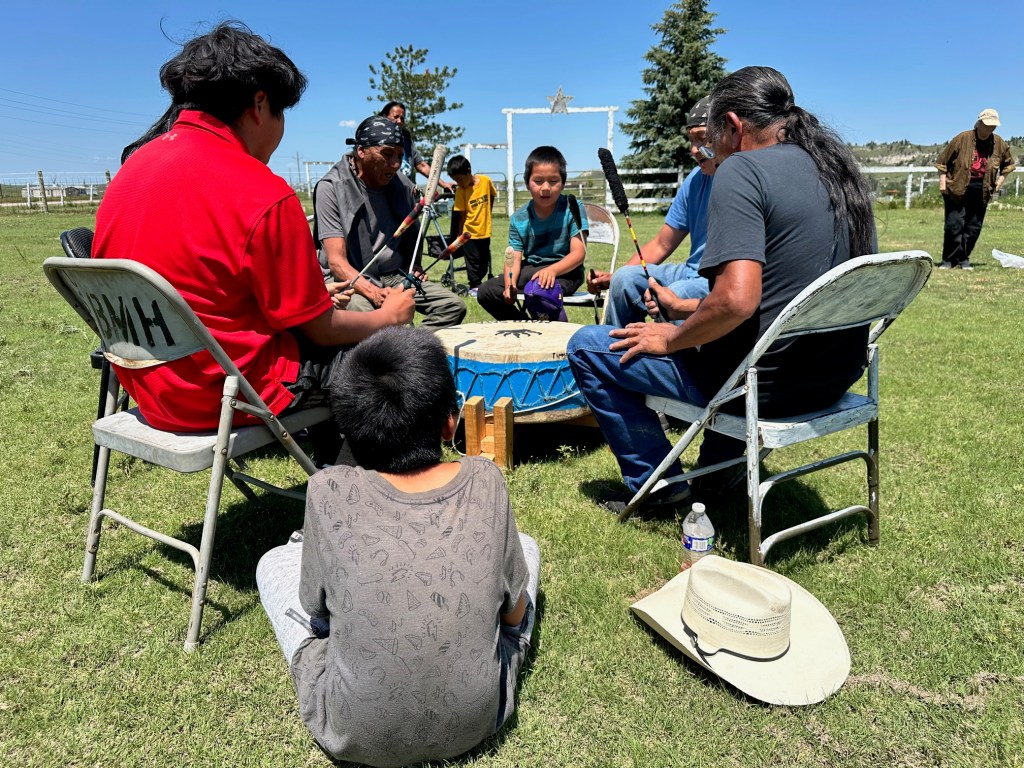
A commemoration of the shootout at Oglala — an event that also led to the deaths of two federal agents and the imprisonment of Turtle Mountain Chippewa activist Leonard Peltier — was held on the 50th anniversary of the shoot-out on June 26. The event began with a prayer ceremony at the site of the shootout, a place known as the Jumping Bull compound, followed by a dinner and a video conference discussion with Peltier, who was granted clemency on Jan. 20 by former President Joe Biden, allowing Peltier to serve out his sentence at home, though not exonerating him of aiding and abetting in the murder of the federal agents. A showing of the new movie, “Free Leonard Peltier,” also was shown later that evening.
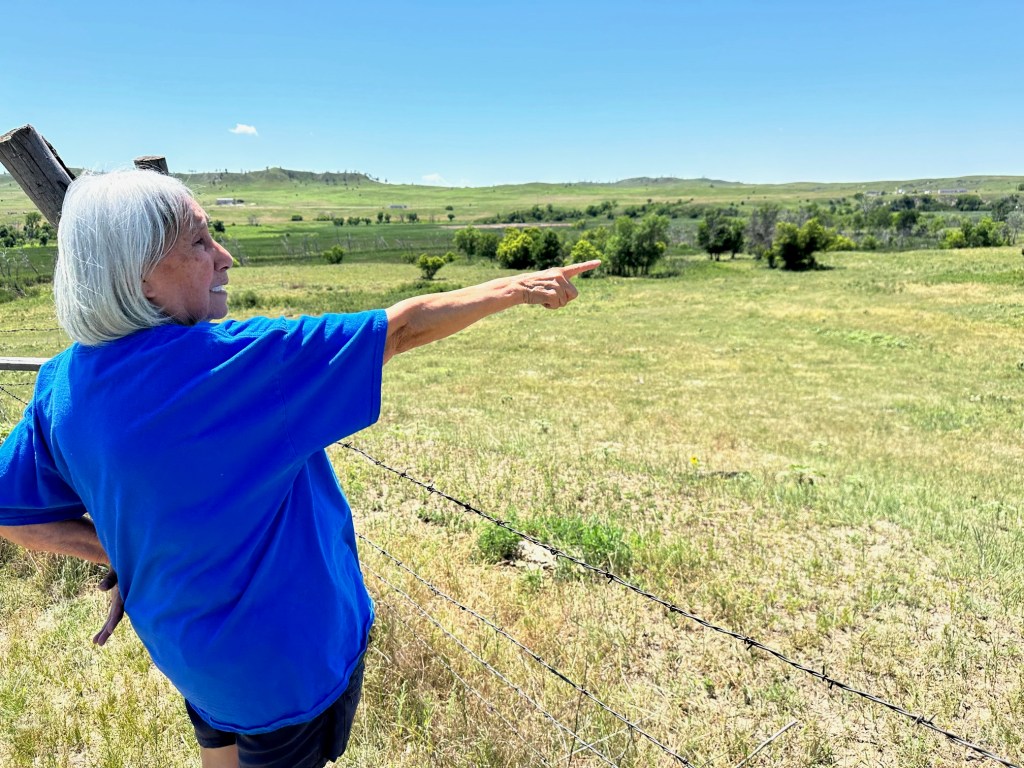
Several survivors of the shootout, including Jean Roach and Ivis Long Visitor, spoke during the prayer ceremony. Long Visitor, 71, talked about fleeing his grandparents’ home with his wife and three children shortly after the shootout began.
“Fifty years ago, me and my family were hauling ass down the creek over there heading toward my aunt’s house down the road,” he said.
As they walked, they ran into Roach, who was heading toward the sound of gunfire with two other young women.
“We had prayer with us,” she said.
She said she’s hopeful to one day see Peltier revisit the site of the shootout.
“We’re all still happy that Leonard’s out now,” she said. “Maybe next year he’ll be here.”
International attention
Visitors from as far as Italy and Germany attended the June 26 commemoration, including Mike Cook, a German man who started a Leonard Peltier Defense Committee chapter in his country 23 years ago. He said 13 such chapters exist today in eight European countries.
Wilma Blacksmith, whose grandparents were Harry and Cecelia Jumping Bull, said the event would be the last commemoration hosted by the Peltier commemoration committee, which planned to disband after the event. However, several members of the Jumping Bull, including Long Visitor, said they hoped to continue hosting an annual ceremony on June 26.
Blacksmith said a week before the shootout, her grandparents celebrated their 50th wedding anniversary on the land. After the shootout, federal agents wouldn’t allow the couple to return to their home, so a caravan of Oglala community members traveled to the property and took back the property. They found a home riddled with bullet holes and tear gas bombs.
“I remember seeing my grandma and grandpa cry over what happened,” Blacksmith said. “Today I want to honor them because they were strong heart, elderly, Lakota people.”
After a dinner hosted by the commemoration committee, Peltier and Dino Butler – who also was present at the 1975 shootout – joined event participants through video conferencing. Several people were able to visit with Peltier and ask him questions.
Butler said the decades of efforts to free Peltier – which included pleas from Congressional leaders, Amnesty International, the late Pope Francis and the Dalai Lama – were worth it.
“Makes me happy,” he said through tears.
Peltier talked about his health problems, including an aneurysm in his heart and cataracts that prevent him from recognizing people, including those on the Zoom call. He said he can’t travel beyond a 100-mile radius from his home in Belcourt, North Dakota, without permission from federal authorities. He said he plans to have cataract surgery, however.
It was the first time for many in the audience to get to meet and listen to Peltier speak in real time.
“Hello, everybody,” he said, eliciting shouts and trills. “I wish I could be there with you.”
‘This was a war’
Peltier’s release has drawn criticism, however, including from those who allege he was involved in the murder of Anna Mae Pictou Aquash, Mik’maq. Peltier has maintained he had no involvement in her death.
Peltier was not convicted of murder in the deaths of the FBI agents Jack Coler and Ronald Williams. He was convicted of aiding and abetting the murder of federal officers. Stuntz was shot in the head, presumably by law enforcement officers, though his death was never investigated.
During his talk at the commemoration, Peltier again criticized federal prosecutors for allegedly manufacturing evidence and witnesses to secure his prosecution. And he denied knowing who actually murdered Coler and Williams, but he said the shootout ended years of harassment and murder of traditional Lakota people on the Pine Ridge Reservation.
He said 62 Native people died mysteriously during what was known as the “Reign of Terror” — which involved conflicts between traditional Lakota people and the tribal presidential administration of Dick Wilson. He said the murders of traditional Lakota people ended following the June 26, 1975, shootout.
“Who pulled the trigger, I don’t want to know. I don’t care,” he said. “It was not murder. This was a war.”
Peltier demonstrated a strong grasp of current events as well, speaking about America’s attacks on Iran, California protests over immigration raids and the Israel-Palestine conflict.
“They’re terminating those people,” he said of Israel’s continued assault on Palestinians. “That’s the same thing they did to us, only different times, different weapons.”
He said he was proud to see young women standing up to Immigration and Customs Enforcement officers in California.
“They stood up to the fascist state of police,” he said. “These are the things we have to worry about.”
He said he still dreams about prison and breaking out.
“I’m actually in a prison right now, but it’s a million times better than the cell I was living in,” he said. “At least I’m not being tortured every day.”
He said he hopes people continue to remember the efforts of the American Indian Movement to improve the lives of Indigenous people.
“Time’s getting close. I will be moving on to a different world,” he said. “I hope the sacrifice we made is appreciated by everyone and enjoy what we did get and continue to make it grow even bigger and better. That’s what I believe and that’s what I hope and that’s what I pray for.”
Looking ahead
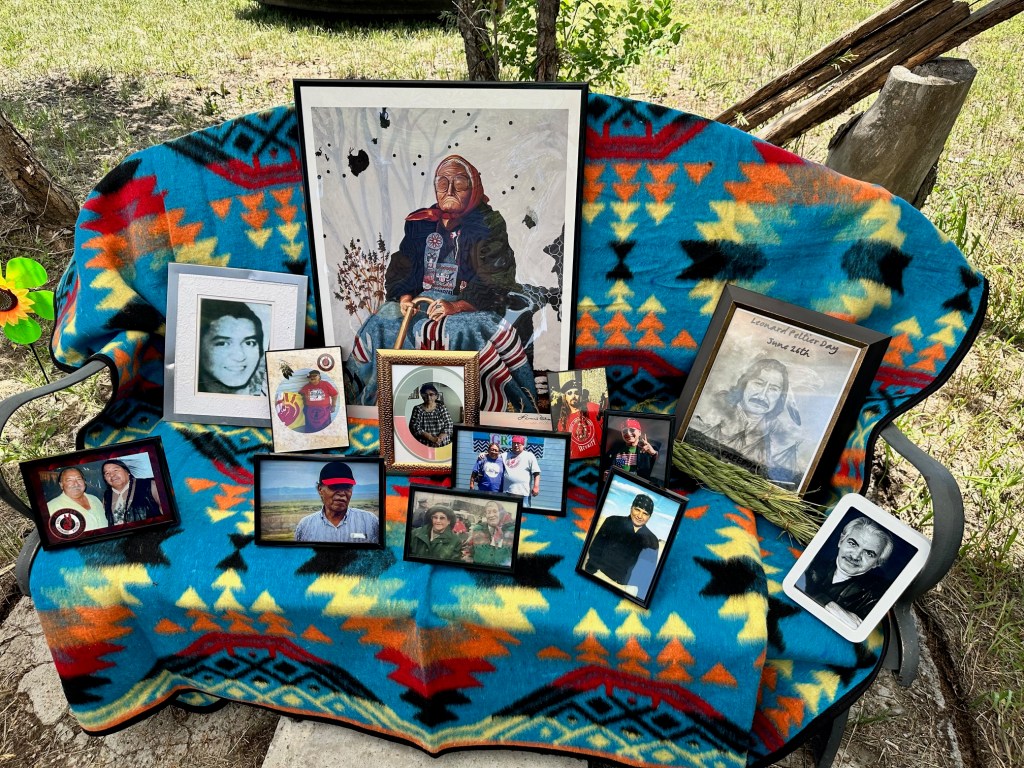
During the event, climate justice advocate Winona LaDuke, an old friend of Peltier’s, arrived to watch “Free Leonard Peltier.” LaDuke said she didn’t know he was there talking to people but hopped in front of the computer to talk to her old friend. They teased one another about getting old, and Peltier chided her for not visiting him yet at his home in Belcourt.
“It’s very busy being a farmer. … I’ll bring you some food. Maybe you’ll like me better,” she told him.
“Maybe,” Leonard said, eliciting laughter.
LaDuke said she would bring Peltier fresh vegetables from her garden when she visited, to which Peltier responded that he has no teeth.
“I want to get my teeth fixed,” he said.
“Not at Indian Health Service,” she responded. “You won’t get your teeth for 10 years. Is there a petition or something we’re supposed to sign?”

