Kevin Abourezk
ICT
WHITE CLOUD, Kansas – The black-and-white photograph offered Shelby Merry a window into her people’s past. In it, her great-grandfather stirred a pot over an outside stone fireplace as other Ioway relatives behind him feasted.
In early September, Merry gathered with about a half-dozen of her Ioway relatives at the same fireplace to feast and harvest their ancestral corn, continuing a family tradition.
“An intention behind having this memorial garden was to create and enliven that community gathering space that this land here knows and remembers well,” she said.
This year’s Ioway corn harvest was especially poignant because of the January 12 death of beloved Ioway elder Lance Irogre Foster, 64, who had served as the tribal historic preservation officer for the Iowa Tribe of Kansas and Nebraska. Foster had worked for many years to preserve his tribe’s culture, including restoring its agricultural practices.
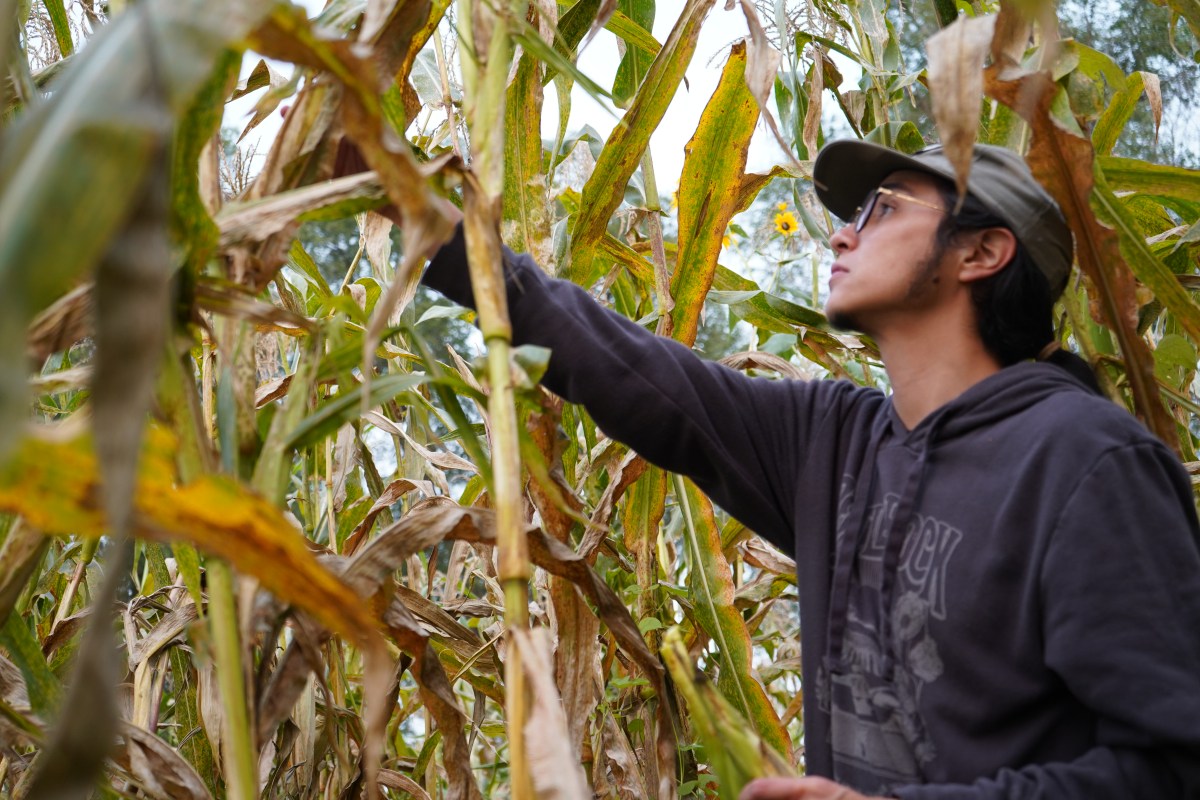
Named for Foster, the Irogre Memorial Garden was planted this spring using the three sisters gardening technique, which involves planting corn, beans and squash in concentric circles with the corn at the center, followed by the beans and then the squash, which has broad leaves that suppress weeds and retain soil moisture. The beans often climb the corn stalks.
The small field of Ioway corn is planted next to the tribe’s community building in White Cloud on its reservation, which straddles the Kansas-Nebraska border in northeast Kansas.
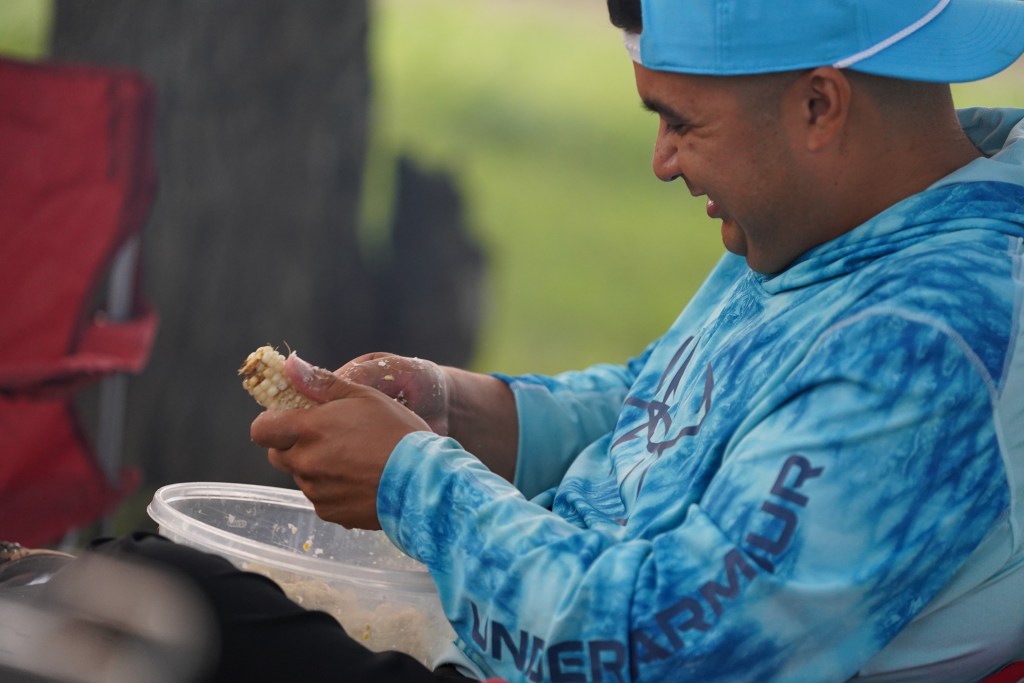
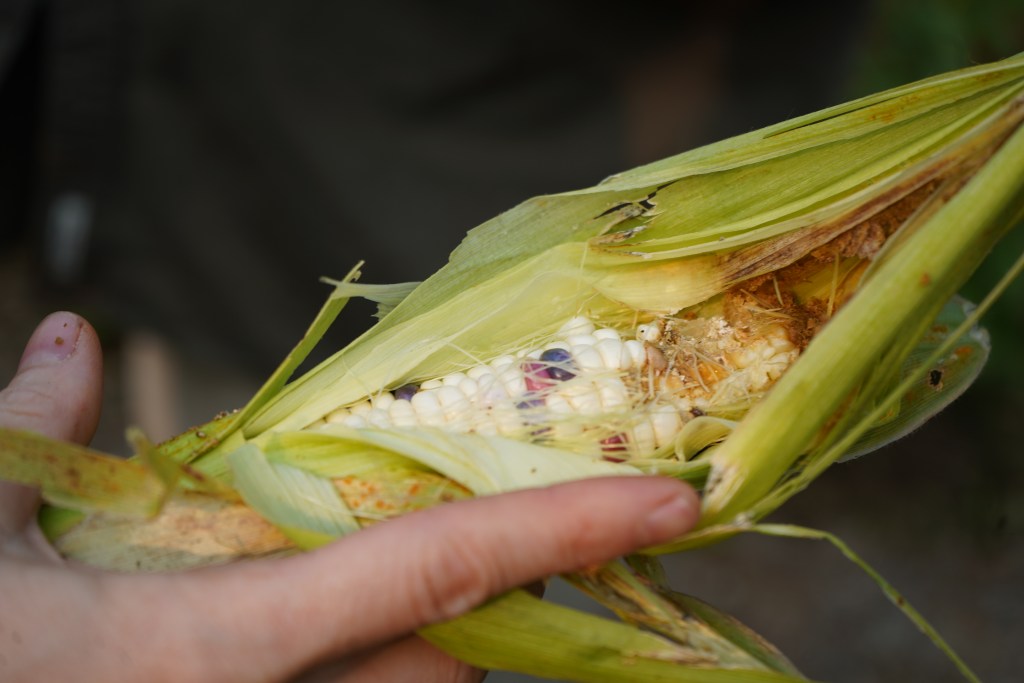
Those gathered for the harvest picked, shucked, blanched and spooned the white kernels – known for their characteristic purple and reddish specks – off the cobs so they could be dried and preserved for future tribal feasts. They also gathered to share soup prepared by Merry and to talk about gardening techniques, something Ioway elder Reuben Ironhorse-Kent knows a lot about.
He said he planted and harvested corn for many years and developed various contemporary processing techniques, including incorporating the use of shower doors and mosquito netting to dry the corn once it’s harvested and blanched.
“I cheat,” he said, smiling. “It speeds up the process.”
The corn harvest is an effective way of reconnecting Ioway people to their ancestors and to their traditional foods, as well as to prepare them for a time when it might be vital for them to know how to grow and prepare their own foods, Ironhorse-Kent said.
“There’s still fresh water, but there’s a lot less. There’s still semi-good air, but there’s a lot less,” he said. “We’re either going to have to adapt or it’s all going to go to pot around us.
“I’m not really worried about it because I probably won’t be here when it hits,” he said.
He said he is hopeful that a growing awareness about the medicinal properties of food may entice more people to learn to grow and prepare their own foods. But he said people also need to learn to better regulate their food intake because even homegrown foods can be detrimental if eaten in large quantities.
“It’s good to know medicinal plants but it’s even better to know how much is too much,” he said.
He said he is hopeful that a growing awareness about the medicinal properties of food may entice more people to learn to grow and prepare their own foods. But he said people also need to learn to better regulate their food intake because even homegrown foods can be detrimental if eaten in large quantities.
“It’s good to know medicinal plants but it’s even better to know how much is too much,” he said.
Merry said those who tended the corn avoided using any machinery or even a water hose so they could better understand the effort it takes to care for it in the traditional manner. That made the process more difficult but also helped those who helped to better connect to their ancestors, she said.
“We wanted to keep the heart of human and land relationship alive and beating throughout the whole process,” she said.

Rebekka Schlichting, Ioway, drove to the corn harvest from her home in Lawrence, Kansas, bringing her two daughters to help pick and process the corn. She stood over a boiling pot of water, dipping corn cobs into the water and pulling them out after the kernels had become soft enough to be carved from the cobs.
This year’s crop was her first Ioway corn harvest, though she said she has plenty of experience growing and harvesting corn having done so with her family when she was younger. She said she was inspired to get involved following the passing of Foster, who she said was a friend and mentor.
She described a moment during the first harvest of the Ioway corn in late August when she stood near the community building and saw the setting sun light up the trees. As she stood there, she thought about her grandparents who are buried on a nearby hill and what it must have been like for them growing and harvesting corn.
“It’s just a special thing to be able to honor them with this corn,” she said.