
Sandra Hale Schulman
Special to ICT
The latest: New art from a Native perspective and hefty grants for artists and storytellers get the new year off to a good start after a sad end to 2023.
‘Beautifully perfect’
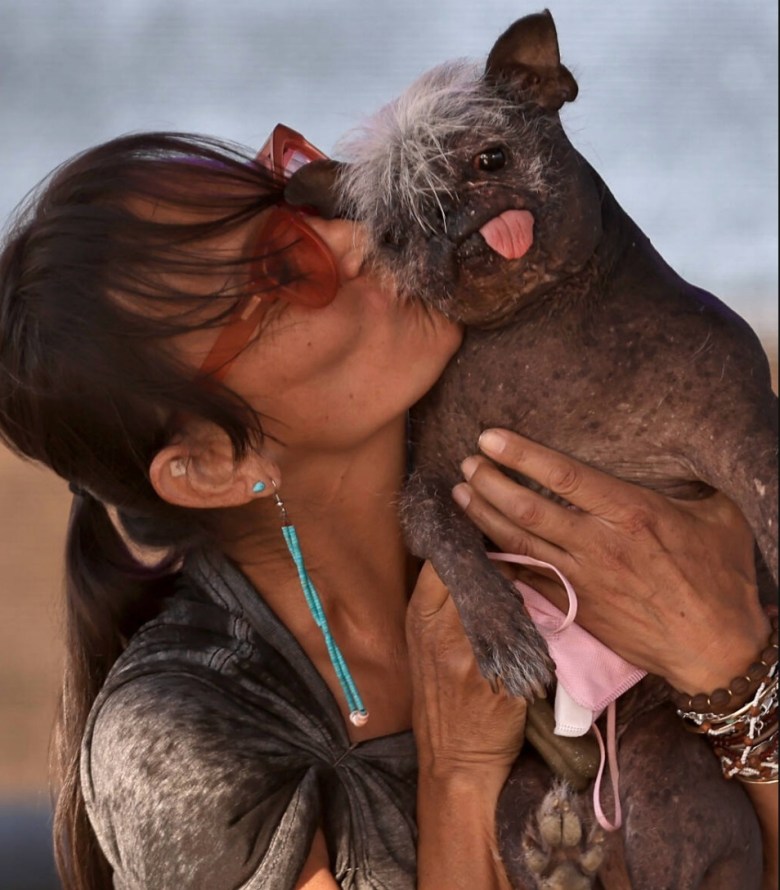
The year ended on a sad note for Diné musician and activist Jeneda Benally.
On Dec. 20, the bass player with the bands Blackfire, Sihasin and others announced the death of Mr. Happy Face, who was crowned the World’s Ugliest Dog in June 2022 after being adopted by Benally from a Tuba City shelter.
SUPPORT INDIGENOUS JOURNALISM. CONTRIBUTE TODAY.
The Chinese Crested/Chihuahua mix — with a drooping tongue and distinctive mohawk — became a symbol of kindness, helping promote the adoptions of older dogs and helping raise funds for the shelter.
Mr. Happy Face died that day at age 19 of complications of old age after spending the last two years of his life as a multimedia celebrity.
“Mr. Happy Face was one of the most beautiful beings I have ever had the privilege of loving,” Benally posted on his Instagram account, mrhappyface_wud. “His life was a celebration of resilience, adorableness and willingness to love.”
Benally appeared on numerous TV shows and in magazines with the dog after he won the Ugly Dog contest in California. She took him on tour with her family band, the Jones Benally Family, which performs traditional Navajo songs and dances, and raised funds for the Tuba City shelter.
“RIP Beautiful Mr. Happy Face. You will be missed,” she posted on social media. “Thank you for existing and loving. You were beautifully perfect.”
Related story:
—World’s Ugliest Dog turns bleary eyes on helping rez, shelter dogs
She indicated she has been working on a children’s book about his legacy of “learning to love, finding home and, of course, celebrating the underdog.”
But the bad news continued. On Dec. 31, she announced her brother, Klee Jones Benally, 48, had died in a Phoenix hospital of undisclosed causes. Jeneda, Klee and their other brother, Clayson, had been in the political punk band Blackfire starting as teenagers, winning numerous awards, touring the world and performing with punk icon Joey Ramone before breaking up.
A memorial will be held for the talented musician, activist, author and artist in Flagstaff, Arizona, on Saturday, Jan. 6.
GRANTS: Artists, storytellers get funding boost
But there was good news, too, for Jeneda Benally. She was among 10 artists and storytellers awarded grants of $100,000 each from the NDN Collective’s Radical Imagination program.
The grants are aimed at creatives who imagine, design, and create projects that propose workable solutions to complicated social problems, with this year’s winners focusing on music, visual art, performance art, photography, filmmaking, storytelling, installations, fiber arts and more.
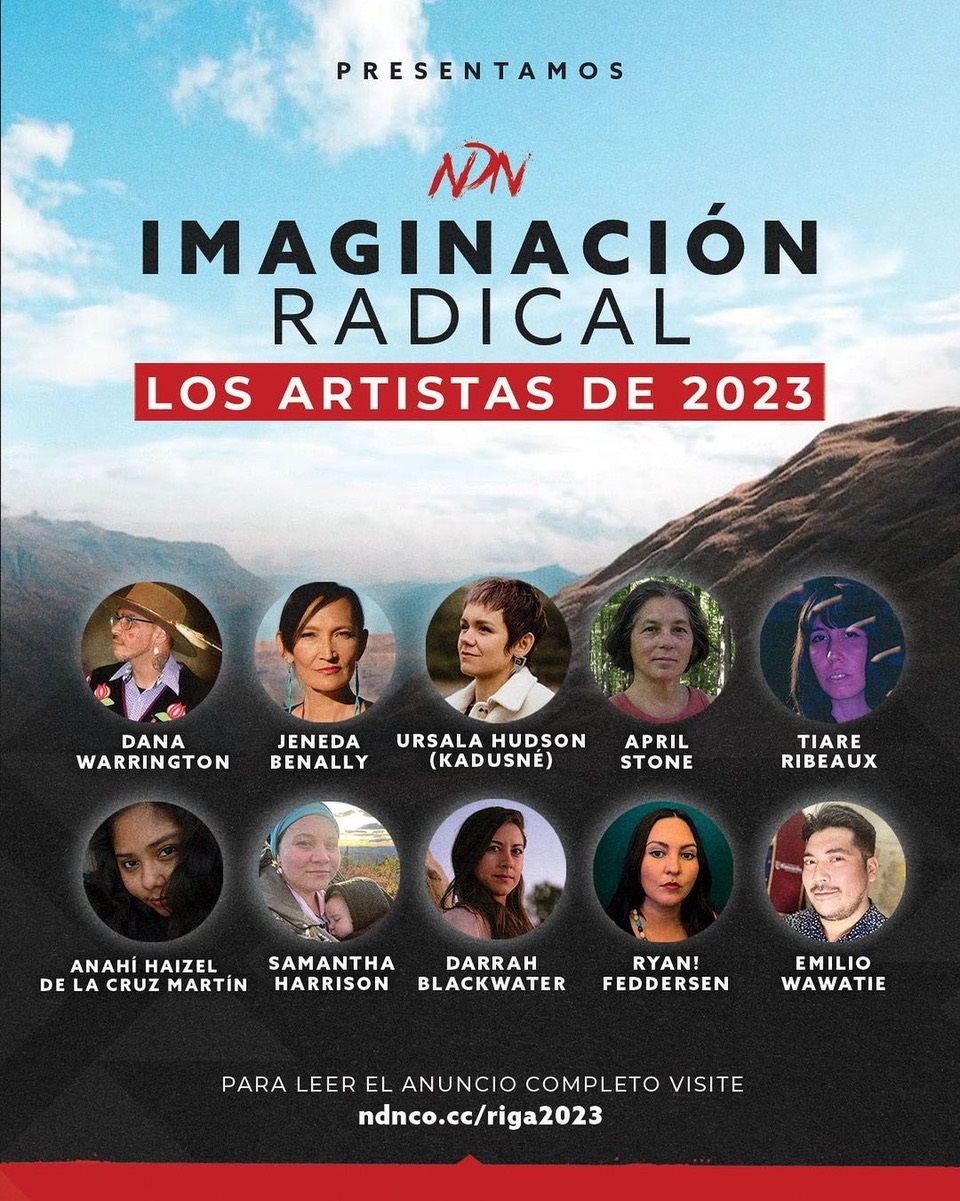
“Meeting this year’s cohort, I can feel their creative power,” said Helen Aldana, program officer at NDN Collective, in a statement. “These are artists who are protecting and creating ancestral memory, dismantling limiting structures, and amplifying the wisdom of future generations. I am honored to support these artists’ radical imagination that embraces the past and future, as they build hope and beauty in all things present.”
Benally created a radio program for teen youth to teach and inspire.
“I’m so honored to be awarded this grant for my teen/tween radio show, ‘Indigenous YOUth Nation,’” she told ICT. “We are currently scheduling youth radio workshops and the creation of new episodes. Please contact me if your Indigenous community wants to be featured and trained.”
The other winners are:
*Anahí Haizel de la Cruz Martín, Maya
*Tiare Ribeaux, Kānaka Maoli/Kānaka ‘Ōiwi
*Ursala Hudson, Kadusné, Tlingit, Filipino, Norwegian, German, English
*April Stone, Bad River Band del Lago Superior Chippewa (Ojibwe)
*RYAN! Feddersen, Tribus Confederadas de la Reserva Colville
*Dana Warrington, Menominee/ Prairie Band Potawatomi
*Samantha Harrison, Kotzebue Native People
*Darrah Blackwater, Diné/Navajo
ART: Imagining and reclaiming the West
Rhinestone suits. Tricked out NDN trucks. Custom branding irons.
Two new exhibits at the Autry Museum of the American West in Los Angeles show both a humorous and a serious side of the history of the West.
In a new, longterm exhibition, “Imagined Wests,” a funhouse of pop culture awaits with embroidered cowboy and cowgirl clothing by rhinestone-designer-to-the-stars Manuel, toys, branding art by Cahuilla sculptor Gerald Clarke, archives, film posters, art, firearms, archives and even an NDN truck.

The exhibition, which opened in 2023, features more than 250 objects from the Autry collections, as well as multimedia and hands-on activities, including the museum’s popular “green screen” where visitors can get photos made with 3D backdrops.
“Imagined Wests” travels through the vast Western storytelling landscapes, retelling history through the craft work of Western creatives from tailors to actors.
“‘Imagined Wests’ fulfills the Autry’s mission by bringing together many distinct ‘imagined’ Wests and sharing stories that both connect and divide us,” Stephen Aron, president and CEO of the Autry Museum, said in a statement.
“But for all its serious ambition, ‘Imagined Wests’ shows that the Autry works best when it plays, sharing big ideas with delight and good humor.”
It highlights several pieces on display for the first time, including Lewis deSoto’s conceptual sculpture, “Cahuilla,” (2007), which uses a customized 1980s pickup truck to tell the story of Native gaming in Southern California; highlights from the International Gay Rodeo Association Institutional Archives; a cowboy-style lowrider bicycle with embossed leather seats by Compton craftsman Jo Manny Silva; and Roy Rogers’ plastic saddle from the Rose Parade.
Another worthy exhibit now showing at the Autry, “Reclaiming El Camino: Native Resistance in the Missions and Beyond,” aims to educate Los Angeles residents and visitors about Native life and the history of activism in and around the California borderlands region.
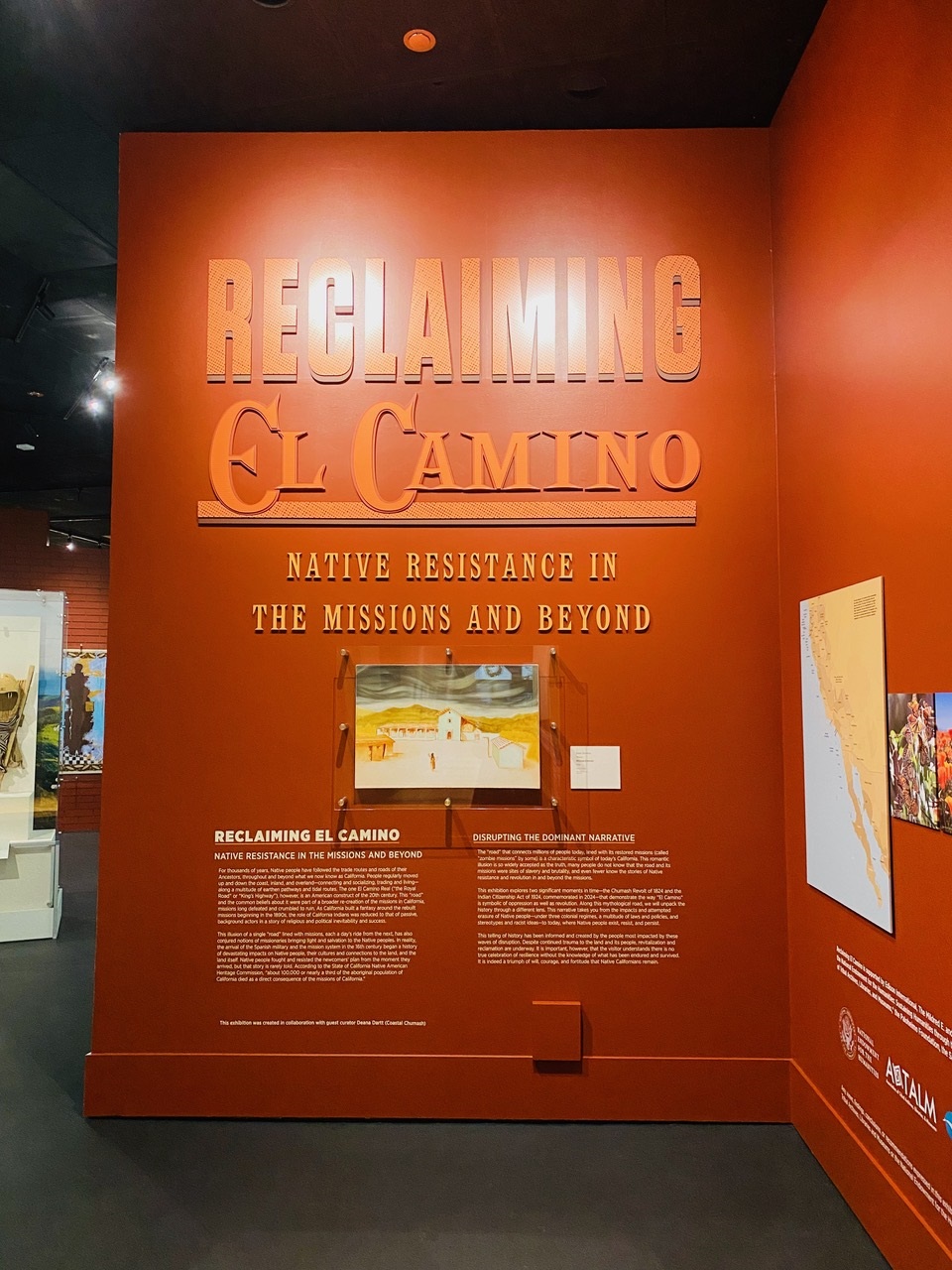
Working with Native advisors, tribal community members and regional Native artists, “Reclaiming El Camino” takes a hard look at the painful settlement of California and its missions from an Indigenous perspective with artifacts, photos, paintings and sculpture.
The exhibit opened Dec. 9, 2023, and runs through June 15, 2024.
ART: Group show in Manhattan
One of the largest shows on Indigenous art to date, “New Terrains,” is a sprawling exhibition of important works of contemporary Native American and Canadian art curated by Native artists in Manhattan.
The show, by the Phillips auction house at its exhibition platform, PhillipsX, runs Jan. 5-23.

The show explores the influences of modernism, post-war and pop influences, showing how the evolution of contemporary Native art came about in the mid-to-late 20th and early 21st centuries.
Featuring more than 50 artists spanning seven decades, the works reflect the social, political and artistic climates that helps established, emerging, and under-recognized artists share their visions of what it means to be an Indigenous artist.
The works include major pieces by Kent Monkman, Canadian Cree; Kay Walkingstick, Cherokee; Natalie Ball, Klamath/Modoc; Edgar Heap of Birds, Cheyenne/Arapaho; T.C. Cannon, Kiowa/Caddo; George Morrison, Ojibwe; Oscar Howe, Yanktonai/Dakota; and Jaune Quick-to-See Smith, Confederated Salish/Kootenai tribes.
The pieces include painting, sculpture, photography, jewelry, clay, video, large-scale installation, and weaving. Many of these works have not been publicly exhibited or made available to collectors, foundations, or museums for acquisition.
“New Terrains” is curated by Bruce Hartman, Diné artist Tony Abeyta, and James Trotta-Bono.
“This exhibition remarks upon the journey of artists whose contributions were pivotal and helped change the idea of what Native American art is — and what it can be,” Abeyta said in a statement. “Each artist — from diverse tribes throughout this country — expresses the unique aspects of their ancestral origins, myths, and traumas. Theirs is art of the first people, delayed in its ascent to the mainstream art world, now arrived.”
He continued, “Each of the artists in this exhibition has their own interpretation of what it is to be Native … The stories they tell are generational testaments to survival and healing. ‘New Terrains’ is an exhibition of new possibilities, reflective of the times within which these works were created. They address our Native connection to source, to our lands and songs taught by those who came before us.
“Our time of inclusion and our hour of personal storytelling is now.”

Our stories are worth telling. Our stories are worth sharing. Our stories are worth your support. Contribute $5 or $10 today to help ICT carry out its critical mission. Sign up for ICT’s free newsletter.

