

Sandra Hale Schulman
Special to ICT
The latest: Border-wall material becomes new art, Indigenous language in a country song and traditional crafts in a museum exhibit
ART: Steel sculpture ‘lands’ in New York City
Continuing his series of large-scale sculptures, artist Nicholas Galanin has unveiled a monumental Cor-Ten steel sculpture in collaboration with the Public Art Fund in Brooklyn Bridge Park in New York.
The 30-foot-tall sculpture, “In every language there is Land/En cada lengua hay una Tierra,” is Galanin’s first public artwork in New York City and comes after his iconic sculpture, “Never Forget,” was a hit at Desert X in the Coachella Valley in 2021.
SUPPORT INDIGENOUS JOURNALISM. CONTRIBUTE TODAY.
The New York sculpture, which opened May 16 and continues through Fall 2023, spells out LAND, riffing off Robert Indiana’s famous LOVE graphic from 1964. This updated Indigenous version combines references to the U.S.-Mexico border wall and to classic pop art, while serving as a reminder of the legacy of colonization and its impact on land migration across generations, cultures and communities.
Read more:
—‘Indian Land’ art installation calls for return of lands
—Indigenous artist joins board of Desert X
The sculpture is made of the identical material and scale of the border wall, spelling out the word “LAND” in dynamic, sculptural form. Galanin focuses on the Indigenous connection with land and the commonality that transcends borders.
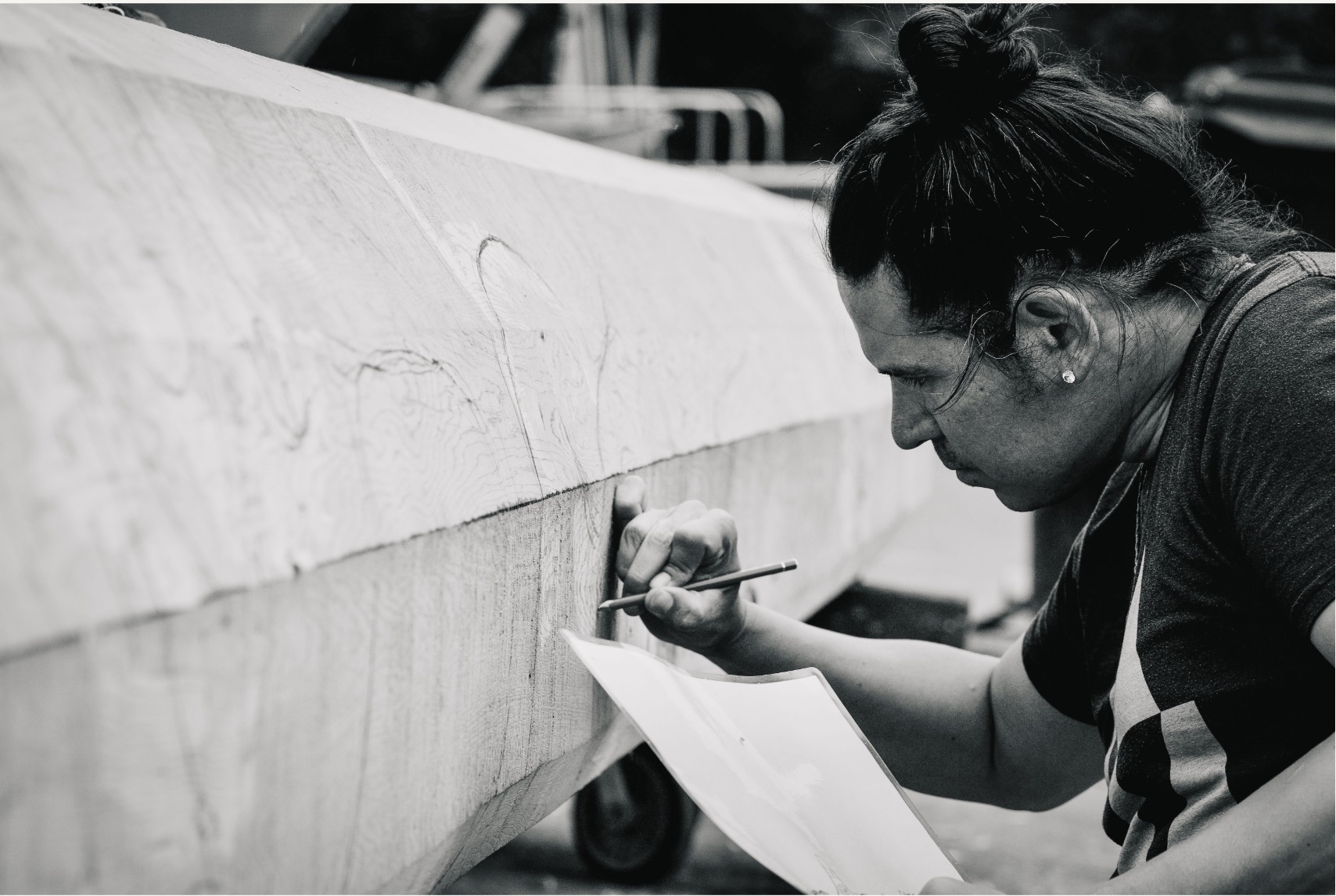
With a title that includes English and Spanish, two languages imposed by colonial regimes on either side of the border, Galanin’s work draws attention to non-Indigenous approaches to ownership and lines that are drawn.
“Indigenous care for Land and community is rooted in connection based on mutual sustainability,”Galanin said in a statement. “Rather than nationalism or capital, this perspective always embodies a deep respect for life beyond any single generation. ‘In every language there is Land / En cada lengua hay una Tierra’ questions barriers to Land, which directly reflect barriers to love, love for Land, community, and future generations.”
Nicholas Baume, the Public Art Fund’s artistic and executive director, said the sculpture makes an impact.
“Nicholas Galanin has developed one of the most distinctive and powerful bodies of work in contemporary North American art,” Baume said in a statement. “It is profoundly shaped not only by his Tlingít and Unangax̂ heritage, knowledge, and practice, but also by his facility with the forms and concepts of international contemporary art. This Public Art Fund commission, his first public project for New York City, promises to be a major cultural event.”
Based in Sitka, Alaska, Galanin works from his experience as a Tlingít and Unangax̂ artistin sculpture, installation, film, and performance.
He will also be featured in New York City at the Peter Blum Gallery’s upcoming group exhibition, “Fabric,” opening May 31, as well as an upcoming solo exhibition at SITE Santa Fe and group exhibitions at The National Gallery of Art and the Liverpool Biennial later this year.
His Desert X sculpture, which spelled out “Indian Land,” drew crowds to the series of art installations in 2021.
MUSIC: Canadian singer draws on music, cultural roots
Saltwater Hank — the stage name of Ts’msyen First Nations musician Jeremy Pahl — is dropping a new album July 1 that is written entirely in Smalgyax, the Ts’msyen language.
The album, “G̱al’üünx wil lu Holtga Liimi,” channels his love of country and roots music, featuring songs drawn from traditional Ts’msyen lore and knowledge but which touch on contemporary topics such as police oppression in Canada.
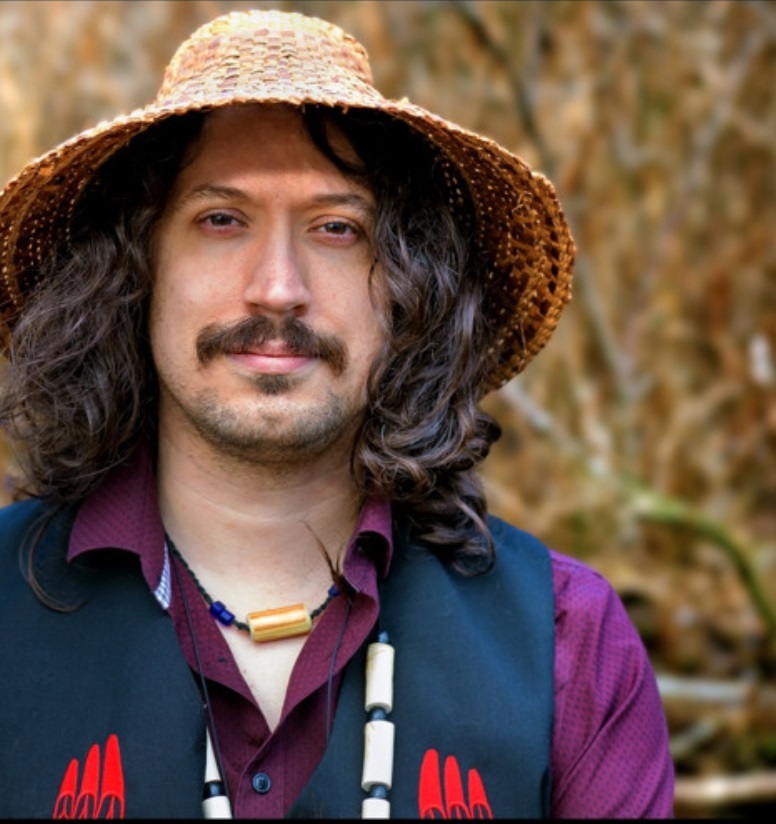
Pahl is from Kxeen (Prince Rupert, British Columbia), and his grandfather used to play country dances in the region. He translated the Hank Williams song, “My Sweet Love Ain’t Around,” into Ts’msyen for the album.
Dropping on Canada Day as a statement of defiance, the record is a gentle act of protest over the focus by the Canadian and American governments to eradicate Indigenous languages, music, and cultural identities for decades.
He does it using a language that dates back millennia, while living and working on land that’s been occupied by the Ts’msyen since time immemorial.
“The fact that I’m singing in my language is an act of resistance,” Hank said. “Over 150 years after Alexander Macdonald (first Prime Minister of Canada) and being able to still speak and sing in our language…This really goes to show that he failed. We succeeded in keeping our language and our musical traditions alive.”
CRAFT: Baskets as art and vessel
Cherokee National Treasure Anna Sixkiller is sharing her knowledge and skills as a traditional basket weaver in a new exhibit at the Saline Courthouse Museum in Rose, Oklahoma.
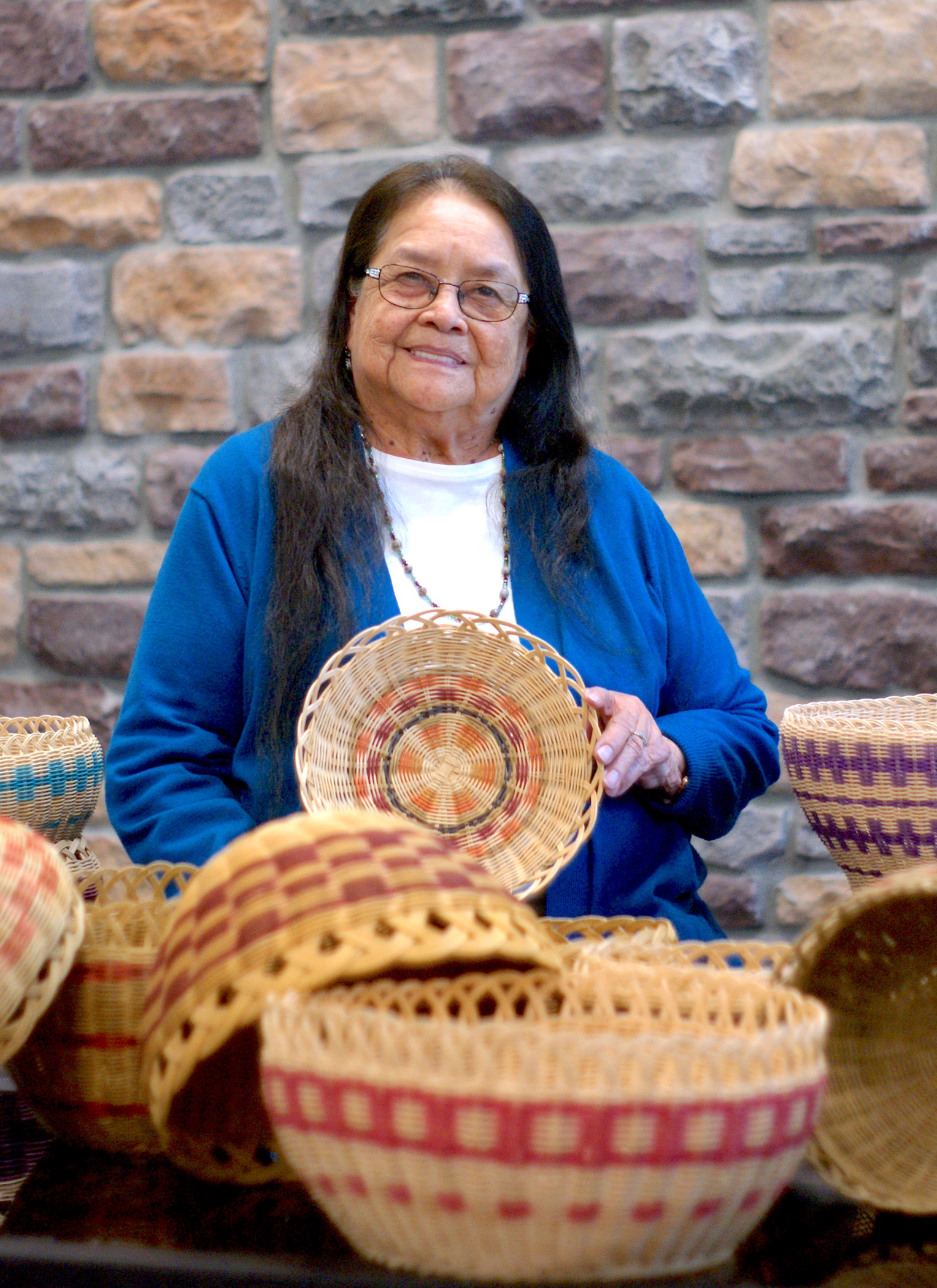
The exhibit, “Anna Sixkiller: The Language of Reeds,” runs through July 15. Visitors will discover how she learned to gather natural materials, process them and weave them into decorative and utilitarian works of art.
Honored as a Cherokee National Treasure in 1991, Sixkiller is passionate about her traditional methods and has served as a translator with the Cherokee Nation Language Department for more than 22 years.
“Preservation is at the heart of Anna’s work,” Karen Shade-Lanier, exhibits manager for Cherokee Nation Cultural Tourism, said in a statement. “She is truly helping ensure that our traditional practices and our language continue to thrive for generations to come. In a utilitarian culture, Anna reminds us all that while everything should be functional and serve a purpose, it can still be beautiful.”
The exhibit features her favorite baskets and several works for sale to the public.
The historic Saline Courthouse is the last of nine district courthouses built in the 1800s by the Cherokee Nation. After years of ongoing work to restore, preserve and modernize the structure, Cherokee Nation reopened the site in August 2020 as a cultural museum featuring historical and cultural exhibits.

Our stories are worth telling. Our stories are worth sharing. Our stories are worth your support. Contribute $5 or $10 today to help ICT carry out its critical mission. Sign up for ICT’s free newsletter.

