Sandra Hale Schulman
Special to ICT
The latest: Rock guitarist on a roll, shoe company gets in step, Seminole craft spotlighted
MUSIC: Jesse Ed Davis exhibit and book gives late musician his due
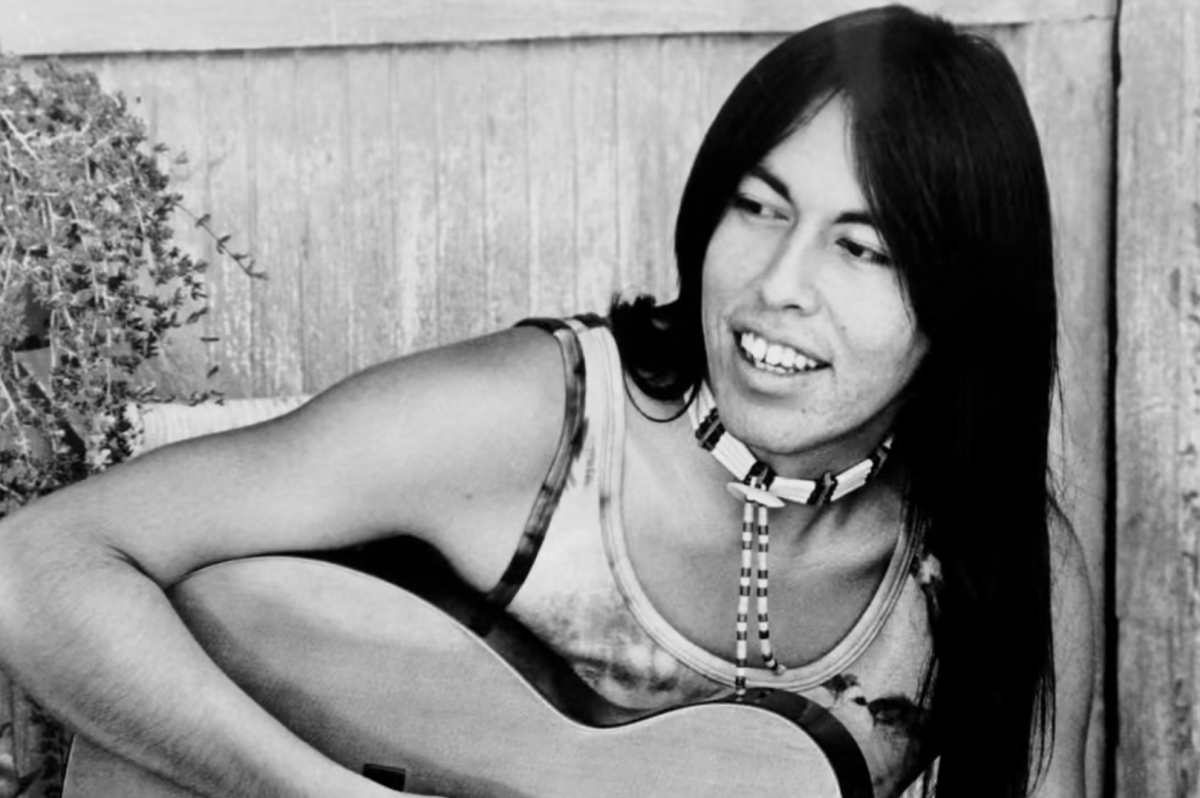
The life, career and music of Jesse Ed Davis, Kiowa, Comanche, Seminole and Creek, legendary rock ‘n’ roll musician and member of the Native American Music Hall of Fame, will be celebrated with a new exhibit Jesse Ed Davis: Natural Anthem, book and record.
Hailing from Oklahoma, Davis began playing guitar in his teens, and was soon on the big stages with John Trudell, Jackson Browne, Taj Mahal, George Harrison, Leon Russell, Eric Clapton, Johnny Cash, Neil Diamond, Leonard Cohen, Rod Stewart and Bob Dylan.
Davis’ significance as a musician, songwriter and Native American artist has been previously highlighted in the Smithsonian National Museum of the American Indian’s exhibit “Up Where We Belong: Native Musicians in Popular Culture” in 2010 and in the film “Rumble: The Indians Who Rocked the World” in 2017.
The career-spanning exhibit opens to the public at the Bob Dylan Center in Tulsa, Okla., on Friday, Nov. 15, along with the book launch of “Washita Love Child: The Rise of Indigenous Rock Star Jesse Ed Davis” by Douglas Miller.

Miller wove together over 100 interviews with Davis’ bandmates, family members, friends and peers to reconstruct Davis’ life and career. His childhood in Oklahoma, first real gig backing rockabilly star Conway Twitty, through playing with George Harrison’s 1971 Concert for Bangladesh to his breakthrough work with John Trudell and the Graffiti Man band. Of particular interest is Davis’ ancestry that includes notable chiefs, artists, medicine people, athletes and war veterans.
Miller also produced “Tomorrow May Not Be Your Day: The Unissued Atco Recordings 1970-1971,” a double-LP collection of unreleased recordings taken from Jesse’s sessions for his two Atco solo records, that will be out on Record Store Day on Nov. 29.
“This project is so personal for me,“ Miller told ICT. “It’s really about a life of music for me as much as the people that are interviewed about Jesse. It could not have been easy for him in that time period with his Indigeneity, though his family were extraordinary people. I hope it connects with people.”
CRAFT: Minnetonka finds its sole
They are a multi-million dollar company, found in nearly every trading post and reservation store. Minnetonka Moccasins was founded in 1946 by Polish immigrant Philip W. Miller. The company has acknowledged its history of cultural appropriation and has taken steps to address it by hiring Adrienne Benjamin, a Minnesotan, Anishinaabe and member of the Mille Lacs Band of Ojibwe, as a reconciliation advisor.

“Minnetonka got in touch with me through a Minneapolis community elder in 2020,” Benjamin told ICT. “After an initial values-alignment meeting, I made the decision to become their reconciliation advisor. With my guidance, in 2021 Minnetonka publicly apologized for profiting from Native American culture and shared its newly constructed reconciliation commitment. From there, I felt that a vital next step in its long-term commitment plan was to work with local Minnesota Native American artists.”
They hired artists to create new moccasin designs and to revitalize existing ones.
“With my help, Minnetonka is actively creating new and redesigned products with artists and craftspeople from Native American communities, making sure their stories are told, that they are paid fairly for their work, and that they are integral to decision making about the use of their art.”
Why were specific designs relaunched?
Said Benjamin: “While Minnetonka is working to redesign all of its appropriated styles, we felt it was appropriate to start with the Thunderbird because it had been a staple style in Minnetonka’s catalog for decades. The Thunderbird, now named Thunderbird ‘Animikii’ (the Anishinaabe word for Thunderbird), was one of the brand’s most recognizable appropriated products, and we’re proud to have been able to redesign it and shine a light on the designer and their story and Anishinaabe heritage.”
“I connected Minnetonka with an incredibly talented Red Lake Nation Anishinaabe designer named Lucie Skjefte to redesign the style. Lucie then began the process of creating the Thunderbird ‘Animikii,’ a redesigned beading that honors and represents her cultural roots.
“Animikii is also the name of Lucie’s son. We also agreed it was so important for Lucie to be the sole owner of her design. So in addition to the lifetime royalties of the Animikii design, we filed the image’s copyright in Lucie’s name. The Thunderbird ‘Animikii’ relaunch was so successful that it has already sold 185 percent more than the discontinued style last year.
“Since relaunching the Thunderbird ‘Animikii,’ we’re continuing to look at Minnetonka’s entire collection of shoes to prioritize redesigning the remaining appropriated styles, some of which will launch in 2025.”
FABRIC ART: Unique craft zigzags into exhibit
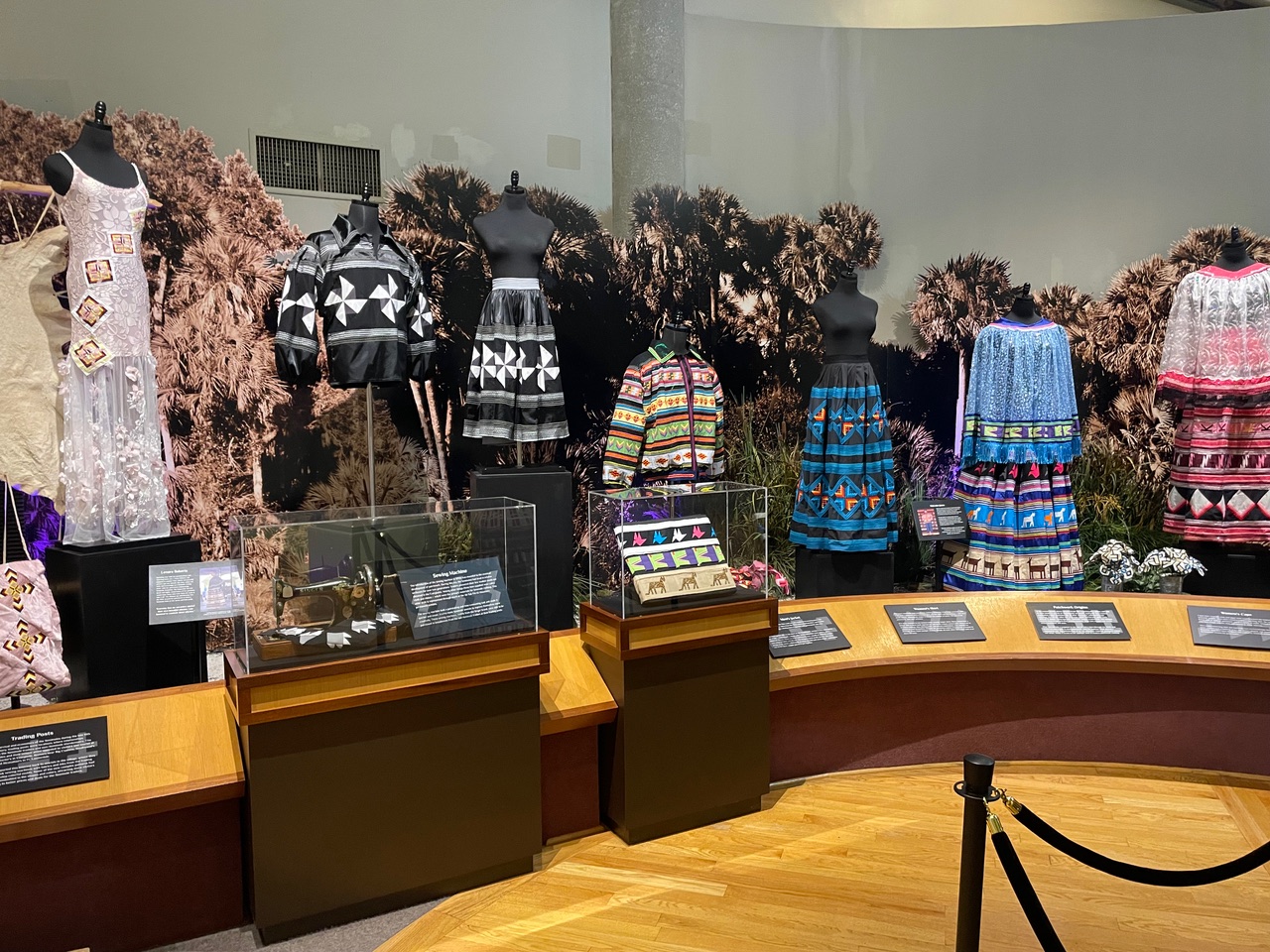
Distinctive Patchwork is celebrated at the Seminole Tribe of Florida’s Ah-Tah-Thi-Ki Museum and the opening of its latest exhibit, “Taweekaache: Seminole Patchwork,” a vibrant exhibit of the tribe’s unique and iconic patchwork garments.
Open now through June 2025 in the East Gallery, more than 20 Seminole sewing artists from five different Seminole reservations, including Trail and Big Cypress, are on display.
Taweekaache shows the intricate and culturally significant art of patchwork, whose colors and hand-stitched symbols tell stories of nature, animals and heritage, a tradition that has been passed down through generations of Seminole artisans. Despite the Florida Everglades heat, it was necessary to cover up completely to protect the body from the searing sun, mosquitos, sharp palm fronds and snakes.
Visitors can view exclusive video interviews with renowned Seminole artists Lenora Roberts and Melissa Osceola DeMayo, who both provide their insight into the craftsmanship, stories and cultural importance of Seminole patchwork. From bold appliqué rick rack patterns to tiny pieces stitched with time-consuming care made into dresses, shirts, capes and leggings, the designs reflect the connection between artist and heritage.
“Patchwork has grown and evolved over time, becoming more intricate and beautiful with each generation,” says DeMayo in the exhibit’s video segment. “This exhibit honors the past while showcasing how the tradition continues to thrive today.”

Our stories are worth telling. Our stories are worth sharing. Our stories are worth your support. Contribute today to help ICT carry out its critical mission. Sign up for ICT’s free newsletter.