
Sandra Hale Schulman
Special to ICT
The latest: Natives through a foreign lens, contemplating Indigenous futures, four womens’ journeys through MMIW, language survival through art.
PHOTOGRAPHY: Japanese photographer’s century old images
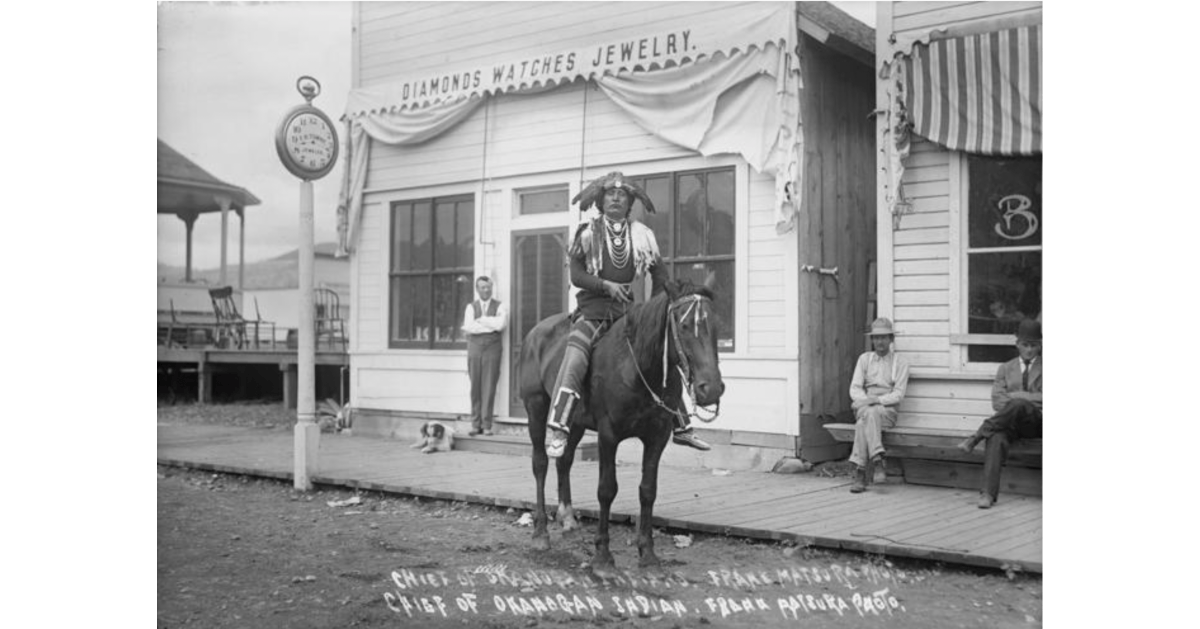
An early immigrant from Japan, Frank Sakae Matsura (1873-1913) settled in Okanogan County along the U.S.-Canada border in Washington state. Matsura had been formally trained in photography, so he set up a studio in Okanogan, a cultural and geographic borderland, to witness a time of change.
In his studio, Matsura made detailed portraits of the Indigenous people of the region. Now a century later, his work is receiving attention as conceptually sophisticated and collaborative portraits of people and families with whom he built trusting relationships.
Matsura’s work will be in a new exhibition opening Feb. 1 at the High Desert Museum in Bend, Oregon. “Frank S. Matsura: Portraits from the Borderland” will feature 39 photographs from Matsura’s archive paired with period-specific cultural items from the Indigenous Plateau where he lived. Exploring Indigenous people in photography as well as their objects, the exhibition spotlights some of Matsura’s most culturally significant work.
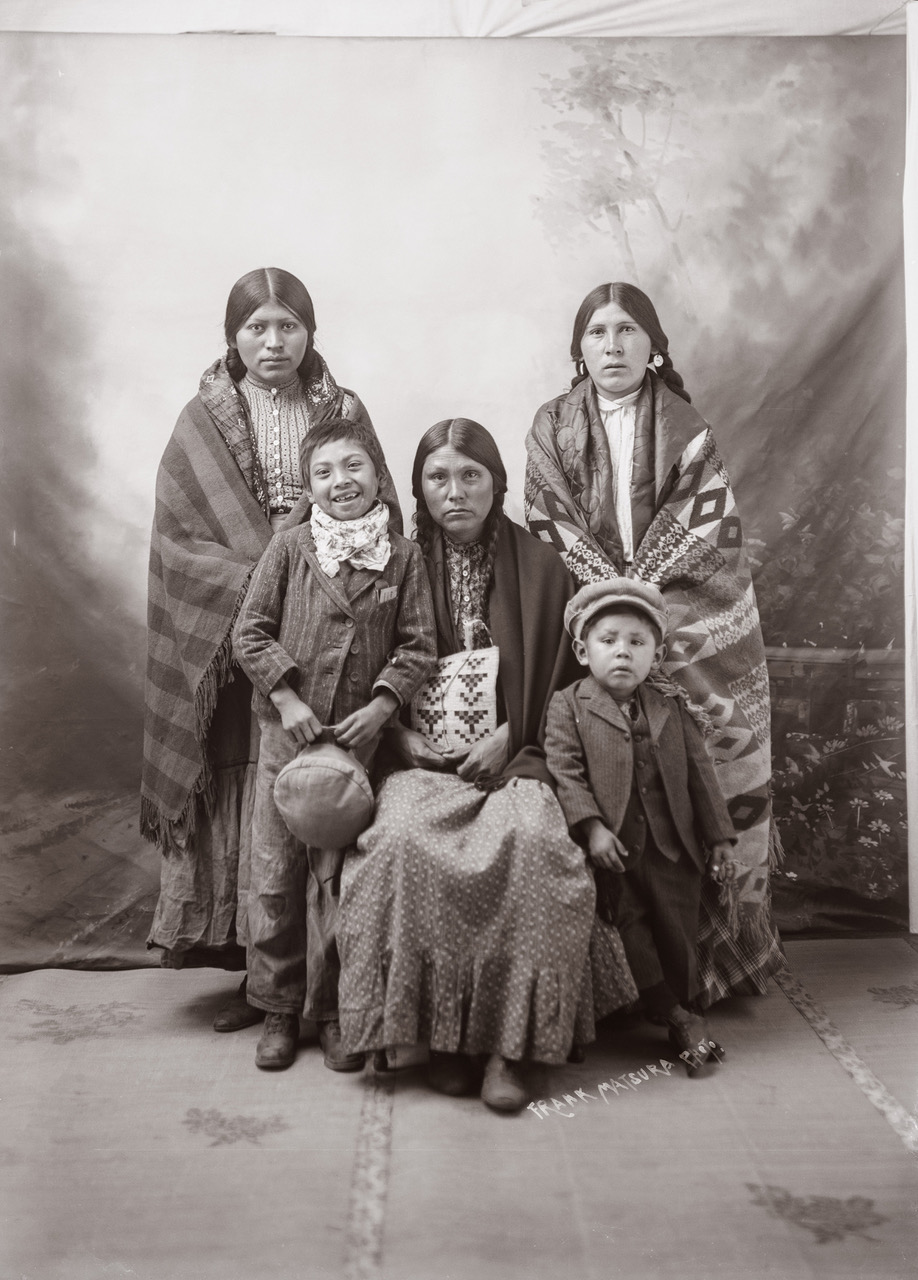
Matsura’s photographs are blown up to see their impressive detail. They capture Syilx, or Okanogan, communities adapting to a changing time with gloves, beaded cornhusk bags and leggings, drawn from the Northwest Museum of Arts and Culture’s collection and from the collections of the High Desert Museum.
“By sharing Frank Matsura’s compelling photographs alongside objects and contemporary videography, this exhibition offers a rich exploration of Indigenous communities and stories in the Plateau region,” said Executive Director Dana Whitelaw in a statement.
ART: ‘Speechless’ speaks loud and clear
Known for his mirror shields and wild costumes, the Nasher Museum of Art at Duke University will present “Cannupa Hanska Luger: Speechless,” opening Feb. 13-July 6.
“Speechless” builds on Luger’s Future Ancestral Technologies project, where he designs Indigenous futures through a visual lens of speculative fiction. Inspired by “cargo cults” in the 20th century, Luger finds ways to parallel historical phenomena with present-day North American culture questioning language, agency and control. The new work includes large-scale, mixed-media radio towers made of lodgepole and white pine poles that become cargo cult sculptures, surrounded by speakers that have teeth biting down on tongues, a way to silence through symbols.
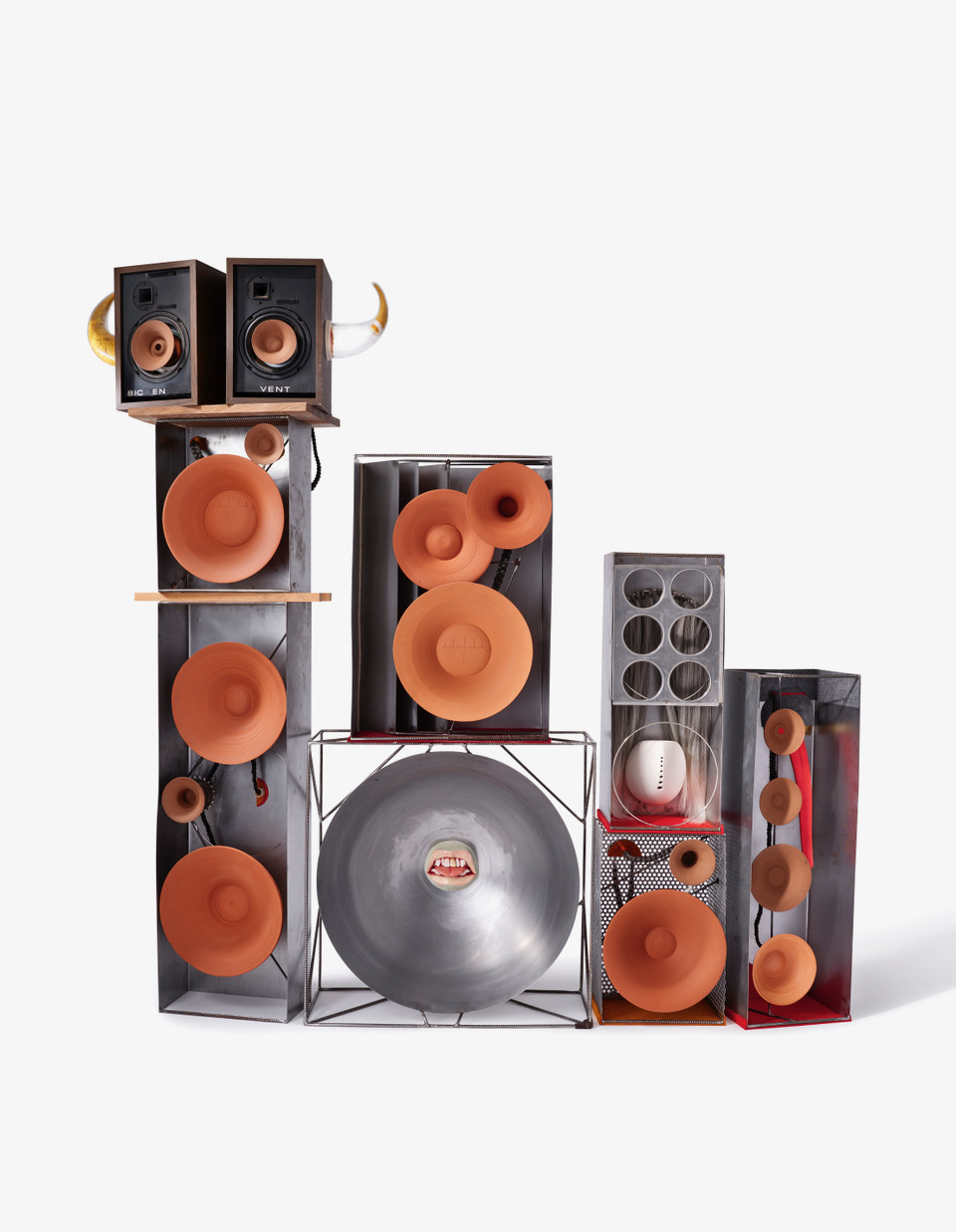
Also on view are works from Luger’s series “Transportable Intergenerational Protection Infrastructure (TIPI),” the three-channel video installation “Future Ancestral Technologies: ++ a generation of new myth ++,” and 11 Native American bustles made from hair, hand-made paper, and repurposed speaker cones.
THEATER: Why they wear red

The Victory Theatre Center presents the world premiere of Four Women in Red, a provocative new play written by Laura Shamas (Chickasaw Nation) and directed by Jeanette Harrison (Onondaga), about four resilient women searching for their missing loved ones. Four Women in Red runs Jan. 17 through Feb. 23 at The Victory Theatre Center.
Carolyn Dunn (Tunica-Choctaw/Biloxi, Mvskoke), Harriette Feliz (Chumash), Zoey Reyes (Dinéh and Chicana) and Jehnean Washington (Yuchi, Seminole/Shoshone) star as four First American women seeking missing friends and relatives in the face of apathetic sheriffs and fading clues. Are their loved ones lost? Were they taken? Are they even alive?
This moving new play celebrates the power of community as the four women seek answers against all odds. Their roller coaster journey involves mystery, grief, prayer and moments of sudden joy.
“Women and girls are disappearing, and no one will look for them,” says Victory Theatre Center producing artistic director Maria Gobetti. “It’s horrifying.”
“It breaks my heart,” says Shamas. “I wrote this play to raise awareness about this very real crisis. Congressional hearings were held last month to try to address some of these issues, but most Americans are unaware of this horrible ongoing emergency, and we must take action.”
PHOTOGRAPHY: Portraits to save languages
Actor and stuntman Eugene Brave Rock (“Wonder Woman,” “Dark Winds”) has set up a collaboration between Oki Language Project, Cowboys & Indians Magazine, and photographer Joseph Kayne, who creates the bygone art of wet plate collodion tintype photography.
Three different 11″ x 14″ art portraits of a Brave Rock in full regalia are available, signed and numbered by Brave Rock. There will only be 100 of each print available, making these exclusive, limited-edition pieces.
Brave Rock’s Oki Language Project – a “one Indian band” as he calls it – travels the country in an airstream to record elders speaking languages in tribes large and small to preserve the words and stories.

Our stories are worth telling. Our stories are worth sharing. Our stories are worth your support. Contribute today to help ICT carry out its critical mission. Sign up for ICT’s free newsletter.

