
ICT is working to shape the future of journalism and stay connected with readers like you. A crucial part of that effort is understanding our audience. Share your perspective in a brief survey for a chance to win prizes.
Miles Morrisseau
ICT
A record number of Indigenous artists have broken out into the mainstream music categories at this year’s Juno Awards, with more than 20 nominations across multiple categories in Canada’s top music awards.
In addition to the 10 artists nominated in the two Indigenous music categories, more than a dozen other Indigenous artists are nominated in at least seven other categories – a record number for the music awards that are seen as Canada’s answer to the U.S. Grammy awards.
SUPPORT INDIGENOUS JOURNALISM. CONTRIBUTE TODAY.
In the 30 years since the introduction of the Indigenous music categories at the Junos starting in 1994, there have been occasional nominations outside those categories. But this year’s nominations are in a wide variety of categories, with several artists earning multiple nominations.
Aysanabee, Oji-Cree from Sandy Lake First Nation, leads the way with three nominations — for songwriter of the year, alternative album of the year and contemporary Indigenous artist or group of the year.
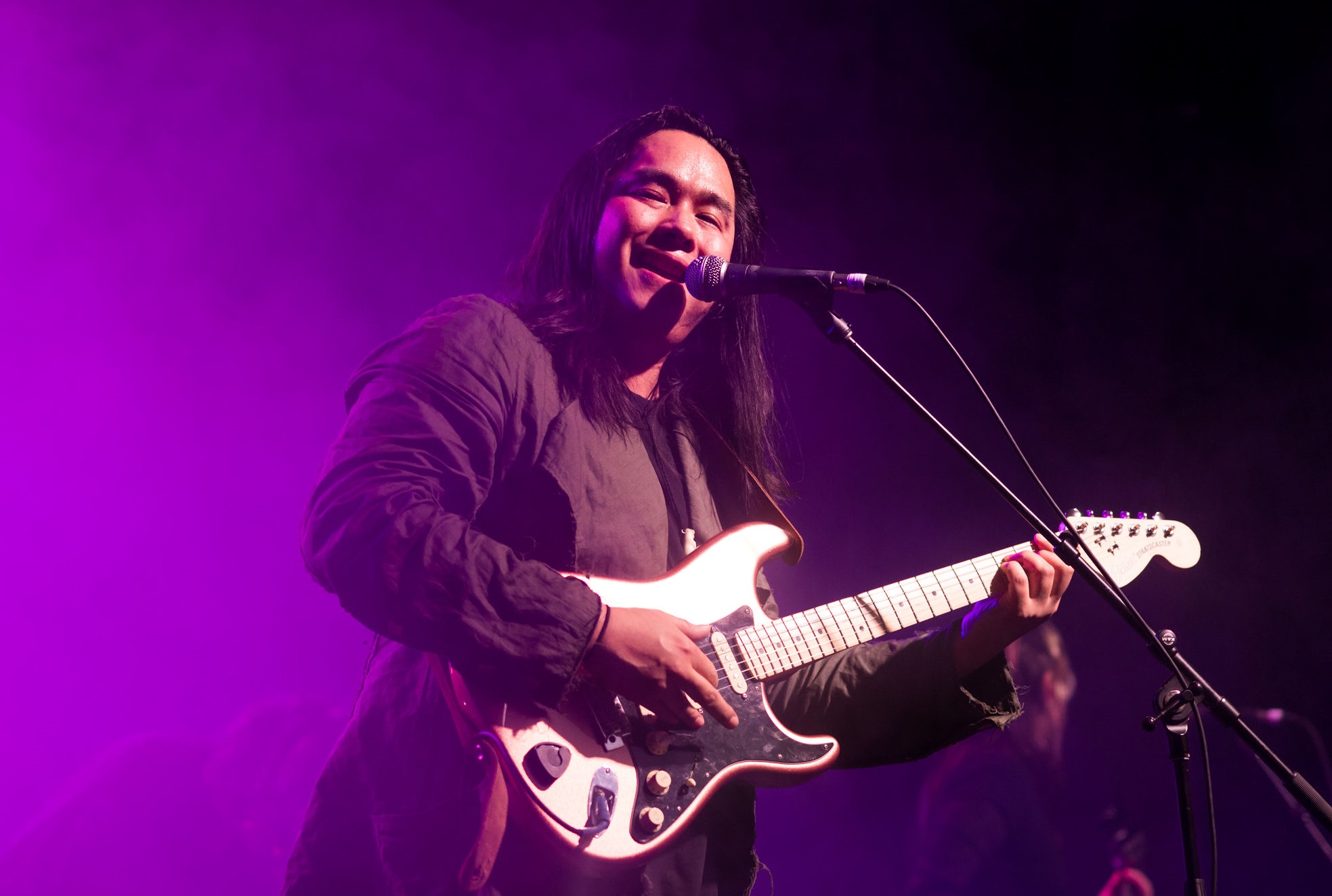
Other Indigenous artists drawing multiple nominations include William Prince, Peguis First Nation; Shawnee Kish, Mohawk; Jeremy Dutcher, a Wolastoqiyik (Maliseet) member of the Tobique First Nation; Blue Moon Marquee; Elisapie, Inuk; and The Snotty Nose Rez Kids, according to an unofficial tally by ICT.
“With this year’s Juno Awards, this is the most number of Indigenous artists who have been nominated outside of the Indigenous categories,” Kim Wheeler, a writer and producer for this year’s telecast, told ICT.
“It has taken many decades for non-Indigenous audiences to see the value of Indigenous artists and the music they are creating in various genres,” said Wheeler, who is Anishinaabe/Mohawk.
The awards, similar to the Grammy Awards in the U.S., will be announced on March 24 at a televised awards ceremony at Scotiabank Centre in Halifax, Nova Scotia.
The sharp rise in Indigenous nominations for the Juno Awards follows a year in which no Native performers were nominated in the U.S. for a Grammy award in the Best Regional Roots Album category, which includes Native American, Hawaiian, Cajun, zydeco, New Orleans, polka and other roots music.
In the running
The highest number of nominations outside the Indigenous categories came for Contemporary Roots Album of the Year, in which three of the five nominees are Indigenous artists.
Those nominated include William Prince, Peguis First Nation, who is getting recognized for his fourth full-length release, “Stand in the Joy”; Julian Taylor, of Mohawk descent, who is nominated for his fourth release, “Beyond the Reservoir”; and Logan Staats, Mohawk, Six Nations of the Grand River, who first came to national attention in 2018 as the winner of CTV’s “The Search,” and is nominated for his second full-length release, “Light in the Attic.”
In the highly competitive Songwriter of the Year category, two Indigenous artists are among five artists vying for the award: Aysanabee, who is nominated for songs from his release, “Here and Now,” and Prince, both of whom are nominated in other categories as well.

Two Indigenous nominees are up for Alternative Album of the Year: Dutcher is nominated for his album, “Motewolonuwok,” and Kish got the nod for her release, “Revolution.” Dutcher won Indigenous Music Album of the Year in 2019 for “WOLASTOQIYIK LINTUWAKONAWA,” which also won the 2018 Polaris Music prize. Kish was previously nominated for a Juno in 2022 for her self-titled debut.
For Album Artwork of the Year, Inuk singer/songwriter Elisapie is getting a nod for her album, “Inuktitut,” as are the Snotty Nose Rez Kids for their album, “I’m Good, HBU?”
The Rez Kids are also joint nominees with Sterling Larose for Music Video of the Year, for the album, “Damn Right.”
Other nominees identified by ICT include:
*Traditional Roots Album of the Year: “Resilience,” by Morgan Toney, Mi’kmaq
*Blues Album of the Year: “Scream, Holler & Howl,” by Blue Moon Marquee. Marquee is led by A.W. Cardinal, Cree/Metis, and Jasmine Collette. The pair recently cleaned up at Canada’s top blues awards, winning songwriter, entertainer, record and acoustic entertainer of the year honors at the Maple Blues Awards.
*Contemporary Indigenous Artist or Group of the Year: In addition to Aysanabee’s nomination for his album, “Here and Now,” and Kish’s “Revolution,” the nominees include Elisapie, for her “Inuktitut” album; Blue Moon Marquee with “Scream Holler & Howl”; and Bekka Ma’iingan for the album “Zoon”.
*Traditional Indigenous Artist or Group of the Year: Joel Wood with the album, “Sing. Pray. Love.”; Nimkii and the Niniis, with “LFS5”; The Bearhead Sisters for the album, “Mitòòdebi (For My Relatives)”; The Red River Ramblers, with “Reverie”; and Young Scouts, with “Drum Nation.”
Finding new audiences
Wheeler, who is a member of the Sagkeeng First Nation in Manitoba, is also host of “The Kim Wheeler Show” on the Sirius Satellite. She credits the rise in attention for Indigenous artists on the increasing number of ways for sharing Indigenous music, including Sirius’ Indigiverse.
“I think because of streaming services and apps like YouTube, Indigenous artists are getting more attention because they have historically not been signed to big labels with a marketing machine behind them,” Wheeler said.
Wheeler said she believes Indigenous artists need more control over the music that is being released and that would mean more Indigenous labels starting up.
“Ishkode Records has had a lot of success with their artists like Aysanabee, who was short-listed for a Polaris Prize and a Juno last year,” Wheeler said. “This year, one of their other artists, Morgan Toney, is nominated for a Juno. I think if we have more labels like Ishkode and Meriläinen Müsic representing our own artists — that would be amazing.”
Wheeler also gave a shout-out to non-Indigenous labels that are lifting up Indigenous artists.
“Mainstream labels have been doing great work with Indigenous artists — Six Shooter reps William Prince and (Tanya) Tagaq and both of them have stellar careers,” she said. “So, I think it’s the industry that has to take Indigenous artists seriously and really look into who they should be investing in.”
A breakthrough year
This year’s gains into mainstream acceptance, however, does not mean that the Indigenous categories no longer have value, Wheeler said.

“The Traditional Indigenous Group or Artist of the Year was just established last year,” Wheeler said. “And the Contemporary Indigenous Group or Artist of the Year has gone through a few iterations but at the heart of this category, it is to recognize Indigenous artists, obviously.”
In fact, she said she has heard of more established Indigenous artists refusing to submit their work to the Indigenous categories in order to make space for other worthy but lesser-known artists.
“I find that admirable but at the same time, I would hate to see someone miss out on the opportunity to be recognized because of that,” Wheeler said. “I don’t think being in this category means your music is less than. I think it just means that the artist hasn’t built up as much of an audience as they would like.”
In a breakthrough year for Indigenous artists at Juno Awards, Wheeler believes there are more paths to break.
“I can’t wait for the day for an Indigenous artist to be in the fan choice, single of the year, or artist and group of the year categories,” she said. “That will be quite spectacular.”
*Correction: Jeremy Dutcher is a Wolastoqiyik (Maliseet) member of the Tobique First Nation. His Indigeneity was incorrect in an earlier verison of this story.

Our stories are worth telling. Our stories are worth sharing. Our stories are worth your support. Contribute $5 or $10 today to help ICT carry out its critical mission. Sign up for ICT’s free newsletter.

