
Help ICT make strides in 2024. Our goal is to raise $150,000 by the end of the year with generous contributions from funding partners and collaborators like you. We’re thankful for your support, and we’re thriving because of it. DONATE TODAY!
Jourdan Bennett-Begaye
ICT
WASHINGTON — I was 25 years old when I told a Haudenosaunee community member I felt homesick. It was my first time living east of the Mississippi River thousands of miles away from the southwest, my ancestral homelands.
They replied with something along the lines of, “Anywhere you live in North America, on Turtle Island, is your home. It’s Indigenous lands.” So there was no need to be homesick.
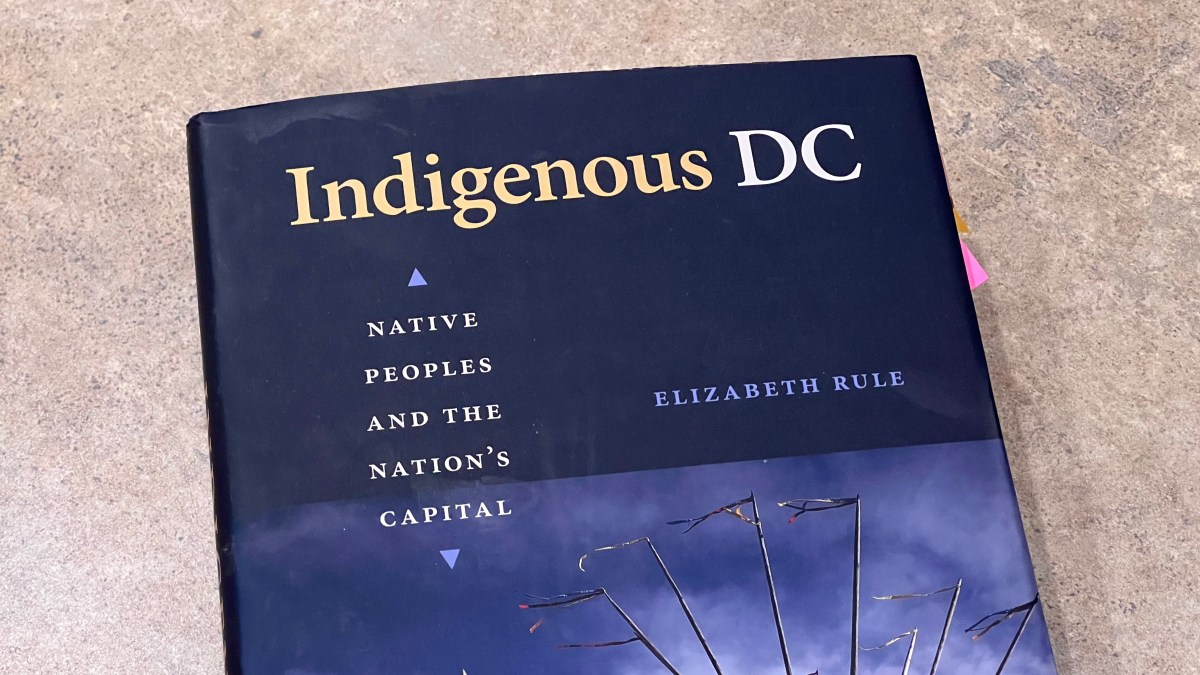
I thought about that moment when I first moved to Washington, D.C., five years ago when I started at ICT, formerly Indian Country Today, as a reporter/producer. It’s the same thought I have when a new community member moves to the area and the exact memory that came up when I opened to read “Indigenous DC: Native Peoples and the Nation’s Capital” by Elizabeth Rule, a citizen of the Chickasaw Nation and assistant professor of critical race, gender, and culture studies at American University in Washington, D.C.
To an Indigenous person, moving to Washington, D.C., is the antithesis of creating change because to our communities it means you are a “sell out.” Because why would you voluntarily move to the glorified city of white stone and marble buildings, with the occasional red-brick buildings that resemble Burea of Indian Affairs buildings back home, where assimilation and termination policies were born to carry out the genocide of Indigenous peoples? It’s the belly of the beast.
Native students, tribal leaders of sovereign nations, Indigenous organizations, and Native people come to the city thinking it’ll be all settler-colonialism every waking moment. They’re right. But Rule decides to flip the script and make it inspiring, “Make no mistake, however: Washington, DC, is Indian Land.”
Right away she makes it known that this book is not intended to “weigh in on various contested claims to identity, land, and political power involving any of the groups mentioned herein or to provide an authoritative history of these groups.” A messy topic we, as guests (including myself) on this territory, stay away from as protocol because it’s not our territory.
“In contrast, this book contributes to the essential body of literature dedicated to contemporary Indigenous topics, which history used as a touchpoint from which we understand ourselves today and as the root from which we build our future,” she writes.
Related:
— Indigenous DC (there’s an app for that)
— Learning DC’s Indigenous history
From the first page to the last, Rule covers the (obvious) Indigenous footprint in the greater metropolitan area of Washington. From the museum on the National Mall to the statues that stand tall under the Capitol, to the Piscataway mural and Department of Interior building. The presence is known to a lot of Indigenous peoples who have lived in the area for more than five years (like me). And for the Indigenous activism nerds, Rule encapsulates the big movements where Indigenous activism and political action intersect, such as the Cowboy and Indian Alliance, Change the Name Campaign, the Occupation of the BIA, and the Oceti Sakin Youth and Allies Relay Run to Washington that kicked off the Standing Rock movement.
It’s not as politically heavy as one would think but has a balance of politics, social weight, and heart.
If anything, readers will witness the sacrifice that Native delegates, advocates, activists, and dignitaries have made for their communities and nations when they traveled from home to the political capital of Indian Country since just before contact.
Rule said it is sacrifices like that that she wanted her students to see. That they’re not alone. They were the ones who inspired her to write this book after all, after she built the digital mapping project, Guide to Indigenous DC, in 2019.
“In practice, the act of visualizing Indigenous imprints upon this space enables the up-and-coming tribal politicians, advocates, thought leaders, and activists to see themselves as part of this ever-evolving story. In what ways will they leave their own marks upon this land?” This is how you know “Indigenous DC” is for the next generation. It’s an aspirational and political love letter to them.
This book is a starting point for all the seen and unseen moments in the political capital for Native people that play a huge role in Indigenous history today. Their fights are seen and not forgotten within the colonial walls of the city.
“Indigenous DC” hits home on showcasing the Indigenous diaspora in the nation’s capital where the sometimes only cure for our homesickness is our stories because “our stories and our places connect us to ourselves and each other.”

Help ICT make strides in 2024. Our goal is to raise $150,000 by the end of the year with generous contributions from funding partners and collaborators like you. We’re thankful for your support, and we’re thriving because of it. DONATE TODAY!

