
Kolby KickingWoman
ICT
The North American Indigenous Athletics Hall of Fame announced its second class of inductees Wednesday.
Founded in 2022 by Dan Ninham, Oneida, and his wife Susan, Red Lake Ojibwe; this year’s class features more than 75 new athletes, coaches and teams to receive the honor for their athletic achievements and contributions to their respective sports.
Ninham is a regular contributor to ICT and has been involved with Indigenous athletics for more than 40 years.
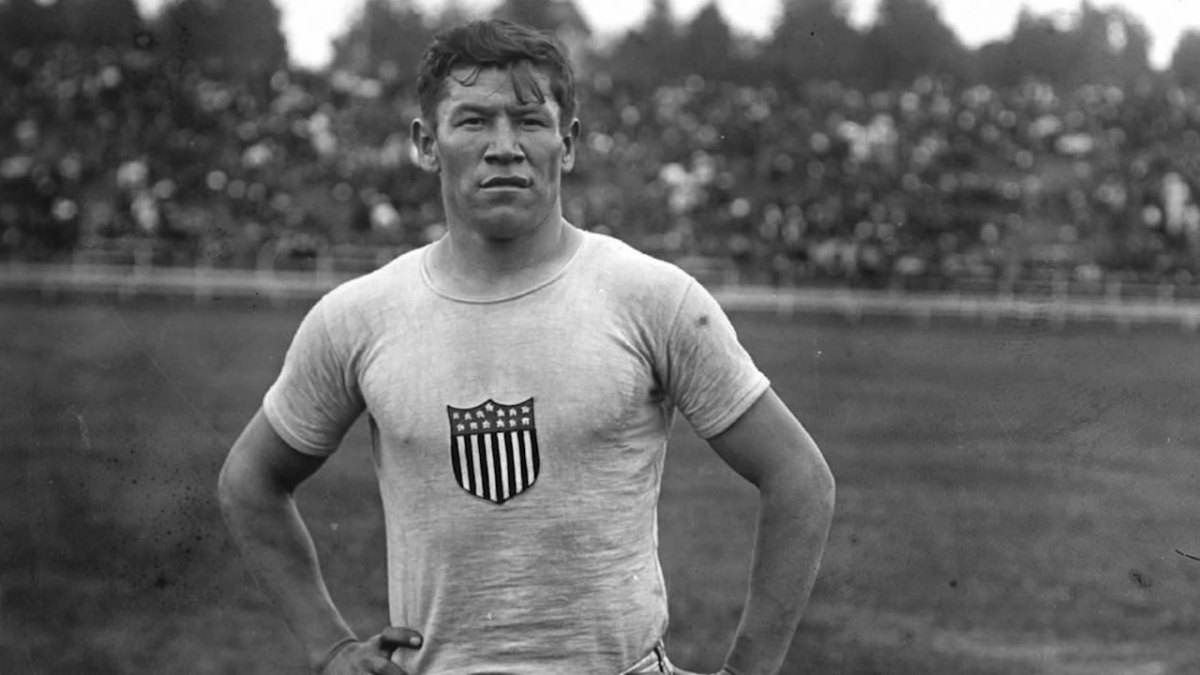
Jim Thorpe, Sac and Fox, and Billy Mills, Oglala Lakota, may be two of the more recognizable names on the list, however Ninham said there is no singular inductee who is the “headliner” of the group.
“It’s hard to say when you have so many elite people whether or not some are headlining over the other,” Ninham said. “Billy Mills is big time as we know and everyone is big time that are inducted. They empower others, they encourage others to also pursue their goals on and off the field and court and ice. Again, there are so many that can and should be recognized.”
Thorpe is recognized as one of the greatest athletes of the 20th century, winning the gold medals in the pentathlon and decathlon. He also played football and baseball professionally in the United States.
Mills also has his own place in Olympic history, being the only American to win gold in the 10,000 meter race. His come-from-behind win is viewed as one of the biggest upsets in Olympic history and his time of 28 minutes, 24.4 seconds set the world record at the time.
One of the youngest inductees, Lauren Schad, Cheyenne River Lakota Nation, excelled at volleyball at the collegiate level and played professionally in the top volleyball league in France.
She was sitting in her living room, working on some art when she got the news. She said it took her a moment to process it all but when it fully settled in, she had a childlike giddiness.
“I think all the past me’s, little me, high school me, college me, all were so overwhelmed with pride and joy,” Schad said in an email to ICT.
Schad retired in June 2022 and described the feeling of her career ending as bittersweet.
“It was a really painfully emotional year in terms of my career ending,” she said. “Getting that message, it validated all the hard work I had put in as an athlete so it was a very special moment, that brought me so much closure and peace.”
She continued to say that as an Indigenous athlete, she was taught to remain humble and that was a value she carried throughout her athletic career. However, being recognized with this hall of fame induction is a huge honor.
“Being recognized for the 14 years I put into what was at the time, my entire life, it’s a really really big honor,” Schad said. “I’m forever grateful for the support that the Indigenous community has shown me in my career and to this day it’s something that I cherish very close to me.”
Other inductees include; Ryneldi Becenti, Navajo, a two-time first team All Pac-10 and honorable mention All-American in basketball at Arizona State University. She played basketball professionally overseas, as well as for the Phoenix Mercury of the WNBA in 1997.
Alwyn Morris, Kahnawake Mohawk, won the gold medal during the 1984 Olympic games in Los Angeles in the 1,000-meter competition and bronze in the 500 meter event for kayak pairs.
Biographies and the full class of 2023 can be found on the North American Indigenous Athletics Hall of Fame website.
Ninham had been interested in creating a hall of fame for Indigenous athletes for some time. His great-grandfather, Martin Wheelock, Oneida, was previously inducted into the American Indian Athletic Hall of Fame at Haskell Indian Nations University in Lawrence, Kansas.
Wheelock was recognized for playing on the Carlisle Indian School football team where he served as captain in 1899. His name was included in the inaugural induction class last year.
Related: A new Indigenous sports hall of fame
Individuals can be nominated for consideration to the hall of fame but Ninham and his wife also consult with advisors to determine who should be inducted.
The hall of fame is housed online and moving forward, Ninham is working to develop a curriculum to share with schools and communities.
He was inspired to do so by an Indigenous hall of fame out of Manitoba, Canada.
“I thought that would be good for us to follow suit. So that’s coming out next month or so into schools and communities and Indigenous areas to get our inductees out there. A lot of inductees have messages that they promote, ‘I came from where you came from and look at what I have achieved,’” he said. “There’s so much that can happen from just that message alone. There’s so many indigenous athletes out there that are excelling.”
Another Indigenous hall of fame is celebrating its 50th anniversary this year. The American Indian Athletic Hall of Fame is holding an induction ceremony for Johnny Bench, Choctaw, and Sam Bradford, Cherokee, on April 28.

ICT is a nonprofit news organization. Will you support our work? All of our content is free. There are no subscriptions or costs. And we have hired more Native journalists in the past year than any news organization ─ and with your help we will continue to grow and create career paths for our people. Support ICT for as little as $10. Sign up for ICT’s free newsletter.

