Kolby KickingWoman
ICT
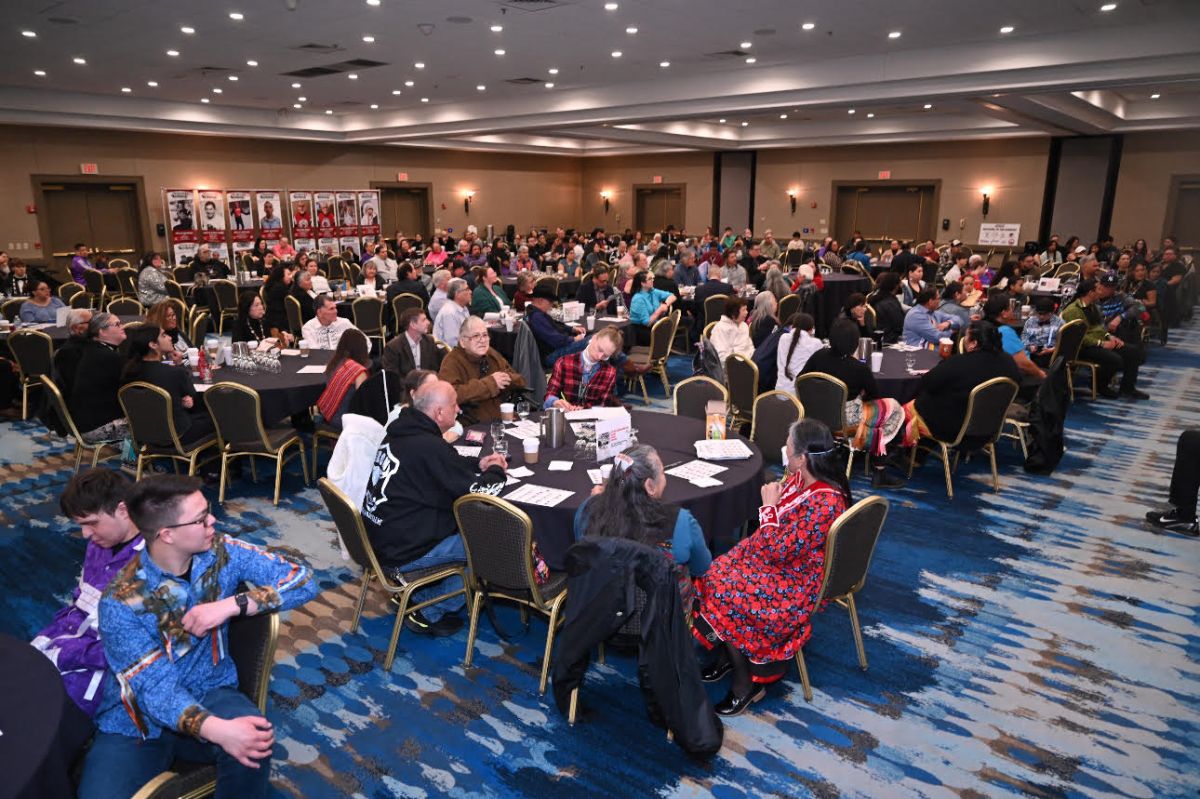
The North American Indigenous Athletics Hall of Fame continues to grow at an amazing rate after its inception four years ago.
Thus far each new class of inductees has averaged well above 100 individuals, including entire teams such as the 1899 Carlisle Indian Industrial School football team. Co-founder of the Hall of Fame, Dan Ninham, Oneida, said he is making up for lost time and there are many outstanding Indigenous athletes deserving of the honor.
“It’s just amazing that there’s so many elite Indigenous athletes out there, in our North America, the majority of them are in the states and then Canada,” said Ninham, whose wife Susan is also a co-founder. “We’re looking for more and they’re out there. We just got to find them.”
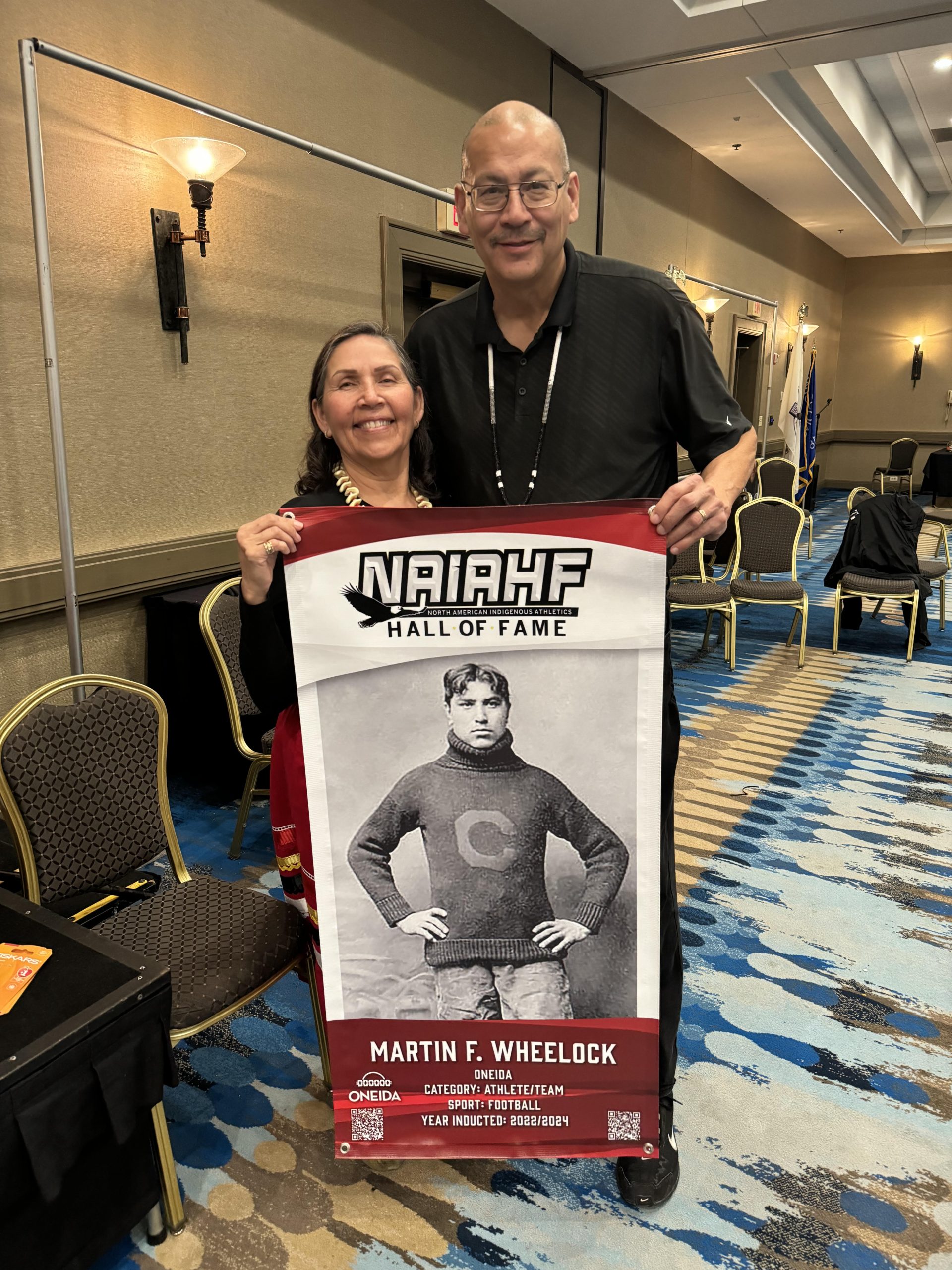
These athletes, ranging across sports, are recognized for their impacts and accomplishments in their respective fields.
What makes this Hall of Fame unique is that it is entirely made up of Indigenous athletes. Ninham hopes it can be a tool used in education and hopes students use it as a resource.
“We encourage people in the education realm to have students do some homework by looking at their bios and that’s really significant as well,” Ninham said.
Eventually, Ninham hopes to create a curriculum that can be shared with schools that will be able to be accessed on the website.
Jaci McCormack, Nez Perce, was one individual bestowed with the honor. She said she was very humbled when she got the news and that it was a representation of the environment she grew up in.
“I grew up in a basketball family. So to me, it just represents, you know, all the sacrifices and the hard work like my dad and his grandfather put forward to create a basketball family,” she said.
McCormack played all sports growing up but fell in love with basketball at an early age. She recalled a story of seeing someone dribble a basketball between their legs and from there, she was hooked.
“It was in those moments where I just knew I loved the game because I was totally intrigued by the move. I didn’t know what happened. Like, ‘How did he do that? What do I need to do to learn this move?,’” McCormack said. “So I’ve just always found things in the game that have kept me going, that just the love for the game was true and is authentic, and it just, it really brought me joy in my life.”
While she went on to play college basketball at Illinois State and competed in the 2005 NCAA Tournament, she fondly remembers the one-on-one battles with her sister, trying to play in the women’s league with her mom and workouts with her dad.
These days, McCormack works as CEO of Rise Above in Seattle. It is a non-profit she co-founded 10 years ago that gives Native youth the skills and resilience to overcome their circumstances and write their own futures.
Growing up, she said she didn’t have someone to emulate as she was striving to become a Division-I basketball player and even as an 18-year-old entering college, knew she wanted to eventually give back.
“We’re using basketball as a modality to educate and empower kids, but it’s all through basketball camps, or health and wellness camps, football camps; we don’t really care about the sport. Basketball is just a primary driver of that,” McCormack said. “Really using sports as a modality to have representation, have safe spaces for kids, but really working upstream from some of our problems that we’re facing, especially as Natives.”
For young athletes looking to continue their careers at the collegiate level, she says you have to love the game, whatever sport it may be.
“If it doesn’t bring you happiness, you know you have to truly find something that does and don’t do things for other people, do things that are satisfying for yourself and that bring yourself joy,” McCormack said. “Because if you don’t love it, it’s a hard road.”
As she continues to work with Native youth, she often shares a quote with them from the late basketball legend, Kobe Bryant.
“‘It’s okay to be unapologetically great,’” McCormack shared. “I think our kids need to hear that, because sometimes we do dim our own light because we’re afraid to be great and that’s what I would tell kids, that it’s okay to be unapologetically great at whatever you do.”
A banquet honoring and recognizing the 2025 inductee class will take place in June in Green Bay, Wisconsin. This year’s inductees, as well as all to have received the honor in years past can be found on at the North American Indigenous Athletics Hall of Fame website.

Our stories are worth telling. Our stories are worth sharing. Our stories are worth your support. Contribute today to help ICT carry out its critical mission. Sign up for ICT’s free newsletter.