Richard Arlin Walker
Special to ICT
A federal judge in Texas has ruled that the city of San Antonio must allow Native American Church members access to a sacred site for ceremonies near the headwaters of the San Antonio River.
U.S. District Court Judge Fred Biery ruled Monday, Oct. 2, however, that the city could resume efforts to deter egrets and herons from nesting in certain trees designated for removal as long as those efforts were not done on dates when ceremonies are scheduled.
SUPPORT INDIGENOUS JOURNALISM. CONTRIBUTE TODAY.
In guaranteeing Native American Church members access to Yanaguana, considered the Coahuiltecan creation site, Biery issued a warning for church members.
“Spiritual reflection and connection contemplate being done in the quiet of a forest or a traditional house of worship,” Biery stated in the order.
““Because of the publicity this matter has engendered, the Court predicts Plaintiffs’ time in the sacred area will be disruptively accompanied by television camera crews, other members of the press and the general public who are also protected by the First Amendment of our Bill of Rights,” he said. “Plaintiffs’ religious experience may not be as satisfactory as hoped for.”
John Greil, one of the attorneys for the Native American Church members Gary Perez and Matilda Torres who filed the lawsuit, told ICT that he and the plaintiffs had mixed feelings about the ruling.
“We were pleased to see first steps toward protecting our clients’ religious rights,” he told ICT. “The court plainly saw through some of the transparent excuses the city was making to deny access to the sacred area. At the same time, the city precludes our clients from properly conducting their ceremonies by preventing the presence and nesting of cormorants. And they do not have access to the sacred area without first seeking permission from the court or city.”
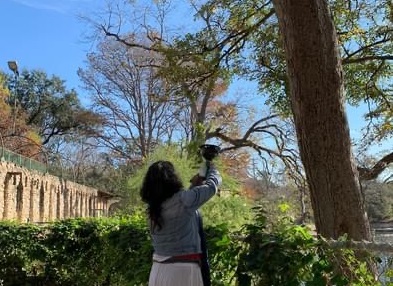
The city fenced off the site in Brackenridge Park earlier this year in anticipation of proposed restoration work there and along other parts of the river. The city contended that a tree on the site is a safety risk because of a large broken limb, and had refused to allow Native American Church members from accessing the site for a ceremony on Aug. 12.
Biery ruled that evidence showed the limb could be removed quickly, and he ordered the city to do so. He also ordered the city to install a gate in the fence, to remain locked except when Native American Church members need access.
Ceremonies are planned on Nov. 17 and Dec. 21, according to the court record.
Related stories:
— Indigenous advocates say ‘enough’ at sacred Yanaguana site
—Indigenous culture bearers sue San Antonio over creation site
—Fight continues over Yanaguana site in San Antonio
Biery did allow the city to resume its efforts to deter egrets and herons from nesting in certain trees, in part because the trees are proposed for removal and in part to reduce the amount of bird feces in the park. The birds are protected by the five-nation Migratory Bird Treaty and, according to the treaty, a tree cannot be removed if a migratory bird is nesting in it.
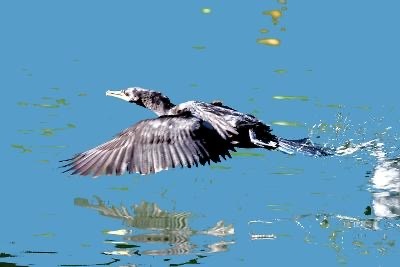
While activities to deter the birds using noise makers and firing blank cartridges will likely also displace double-crested cormorants, whose feathers are used in ceremonies at the site, Biery said those feathers “can be found in other locations.”
Greil said Biery didn’t seem to understand the importance of cormorants to the plaintiffs’ religious beliefs and practices – an importance that goes beyond feathers.
“The collection of cormorant feathers was never a focus of our case,” Greil told ICT. “Our clients explained how cormorants carry their prayers; how their presence grounds the underworld, middle world and upper world together; and how cormorants need to nest in that area to continue the cycle of birth/death/rebirth. The city’s bird deterrent activities make it impossible for our clients to properly perform necessary ceremonies, such as water offerings and Midnight Water.”
‘You can’t just dig out there’
In his Oct. 2 ruling, Biery wrote that he addressed the site access now because it was time sensitive, but that he expected to produce later “a more thorough and detailed analysis, opinion and order.”
Greil said the legal team will file a brief on Friday, Oct. 6, “that lays out the relevant evidence and law in detail. We are hopeful that, in light of that further analysis, our clients can obtain complete relief. Moreover, the Oct. 2 order deferred a decision on the city’s unnecessary destruction of trees, which would permanently destroy the spiritual ecology of the area.”
Perez, Torres and other Indigenous activists ultimately want to prevent the city from removing 48 heritage trees and relocating 19 more as part of a voter-approved plan to restore several historic features in the park.

Restoration is planned for a Spanish-built canal dating to 1719; a waterworks pump house built in 1878; limestone retaining walls at Lambert Beach, developed in 1915; and an outdoor sculpture garden that first opened in 1923. The 343-acre park is also home to the San Antonio Zoo, a golf course, a museum, and a sunken garden.
The city claims in response to the lawsuit that the tree roots are undermining retaining walls along the upper reach of the river and have fallen into disrepair.
“In part, the damage to the retaining walls has been caused by the presence of trees and/or their root systems, which are too close to the walls,” the city stated. “In their current state, the retaining walls present a safety hazard. Some portions of the walls have failed and others are at risk of failing. When a portion of the wall fails, it could cause the soil and/or trees to shift dangerously. These risks increase when there is substantial precipitation.”
According to the Coahuiltecan creation story, the headwaters of the San Antonio River are where life began.
The river begins nearby in a spring known as the Blue Hole and the stretch of river that winds past the worship site mirrors the pattern of a celestial constellation, Perez and Torres said — a sort-of divine signature on a divine plan.
The lawsuit states that members of the Native American Church and other Indigenous peoples from North and Central America recognize the religious significance of the site and refer to it by its Pakahuan name of Yanaguana, which means “spirit waters.”
Perez said pilgrimages to Yanaguana are depicted in a 2,500-year-old mural on a rock face in the Lower Pecos Canyonlands, 150 miles west of San Antonio.
The Blue Hole was a geyser until the beginning of the 20th century, when water sprung forth 20 feet into the air. Perez said the spring was reduced to a trickle as the growing city — now the nation’s seventh-largest — drew an increasing amount of water from the aquifer.
Now, the waters of the Blue Hole flow only during heavy rains. The city bolsters the river flow with recycled water and Brackenridge Park’s swimming beaches are closed. A city landscape architect’s report states that the upper course of the San Antonio River and the riparian corridor are “no longer healthy or accessible.”
‘Common sense’
Alesia Garlock, a cultural and wildlife advocate who is assisting the plaintiffs as a researcher, told ICT on Wednesday, Oct. 3, the natural order has been knocked “out of balance” by the city’s plans.
In deterring the cormorants, egrets and herons, other birds such as hawks and owls have also been driven away, she said. The city contends egret and heron droppings pose “a serious public health risk.” Biery agreed, writing that “large amounts of foul fowl feces mak[e] the area unhealthy for humans, especially, the court notes, for toddlers who put anything and everything in their mouths.”
Garlock said she’s not aware of any toddlers — or anyone of any age, for that matter — putting bird droppings into their mouths at Brackenridge Park. In six years of observing the bird population at the park, Garlock said, she hasn’t seen parents let their toddlers play beneath trees with bird nests where droppings are common, she said.
“That’s common sense,” Garlock said. She did note that birds had moved next to a playground in the park, but the birds relocated there because the city drove them away from their customary nesting areas.
Garlock said city signage never showed great concern for possible health risks from bird droppings, other than warning the public to wash off any bird feces if they come in contact with it.
Garlock said the city’s claims that egret and heron droppings can spread disease are largely unfounded.
According to a 2017 report by the U.S. Department of Agriculture, “Nesting colonies often cause problems in urban areas when urbanization spreads into lowland habitats where colonial nest sites have traditionally existed. Odor from deposited fecal material in these areas is a problem. Histoplasmosis is not commonly found in soils from heron/egret rookeries.”
Histoplasmosis is a lung infection caused by breathing in histoplasma, a fungus that lives in the environment in certain parts of the United States and the world. Even people exposed to the illness do not usually get sick, according to the U.S. Centers for Disease Control and Prevention.
And the U.S. Department of Agriculture concluded that cattle egrets, also found at Brackenridge Park, are not likely to spread diseases such as brucellosis, histoplasmosis and psittacosis without someone coming into direct contact with the birds.
Garlock said the city’s tree relocation plans also ignore the risk of cultural disturbances should trees be dug up and relocated.
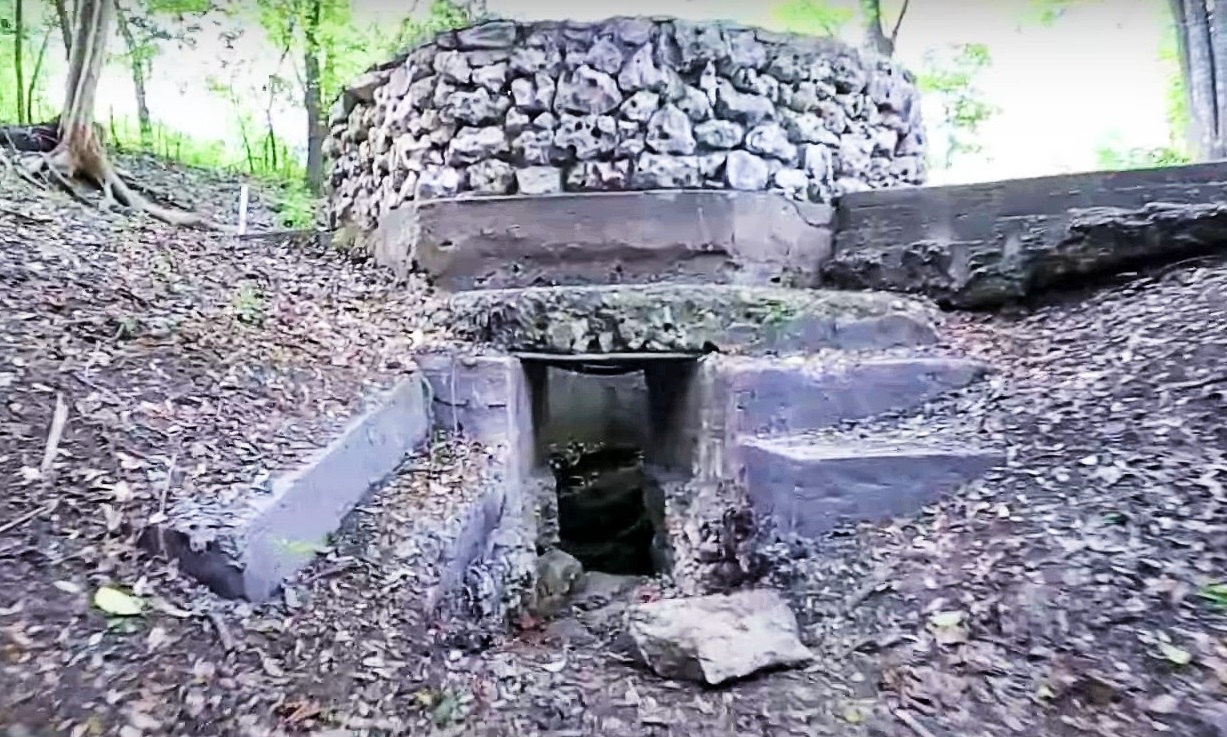
“There are artifacts there dating back 12,000 years,” Garlock said. “The city can’t just dig anywhere, they have to have an archeologist out there. They say, ‘We’ll just relocate the trees.’ Where? Where are you going to relocate them? Because you can’t dig.”
The Brackenridge Park Conservancy, which manages the park for the city, acknowledges that what is now the park “has been an oasis for humans for 12,000 years,” the earliest of which were “Indigenous people who found water, food and shelter here.”
The city’s proposed work along the river has been approved by relevant state and local agencies, but still requires approval from the U.S. Army Corps of Engineers.
“It is our understanding that tribes have until Oct. 26 to object to the project, which would trigger required consultation,” Greil said. “We encourage tribes that oppose this needless and permanent destruction to make their voices heard.”

Our stories are worth telling. Our stories are worth sharing. Our stories are worth your support. Contribute $5 or $10 today to help ICT carry out its critical mission. Sign up for ICT’s free newsletter.