

Mark Trahant
ICT
Hollywood has opened the door to thinking about multiple universes where an action we take in our world causes an alternative future. Imagine a world where we are mitigating or adapting to a warmer climate.
Nah.
Perhaps it’s the blockbuster plot that makes more sense in a world where governments, companies, and people jump from one climate policy to a contradictory one in a flash. Logic be damned.
This week the United Nations released the Synthesis Report of The Intergovernmental Panel on Climate Change (or the IPCC) and its Sixth Assessment Report. A long title that sums up the best science available on climate change produced by the work of hundreds of scientists from around the world. The report breaks down three themes: What’s going on now; future risks and the long-term responses; and, responses in the near term.
The conclusion is yet another warning about what’s coming – and once again a call to take steps now. There are really only three options: Try to mitigate global temperatures by sharply reducing greenhouse gas emissions, start building a world that adapts to a warmer climate, or finally, a future of horrifying doom and gloom. The 8,000-page document compiles the past five years of the best science, identifying climate issues in a range of confidence levels so that policy makers can gauge what’s most important given that the planet is running out of time. “The viability of humanity living within planetary boundaries rests on the actions we take in the next seven years,” the UN report said.
“Climate change is a threat to human well-being and planetary health (very high confidence). There is a rapidly closing window of opportunity to secure a liveable and sustainable future for all (very high confidence),” the Synthesis Report concludes. It says the choices that are made by governments around the world “and actions implemented in this decade will have impacts now and for thousands of years.”
A few takeaways:
- There is no question that human activity is driving climate change. And because of what’s already happened, no matter what we do, the next 30 years will continue to produce catastrophic weather events; droughts, flooding, tropical storms, and heat waves. The melting ice sheets in Greenland and Antarctica will melt at least through the end of the century and global sea level will continue to rise.
- The science is getting better and more precise. This could be good news. That is if policy makers review the data and make changes based on that science.
- There is a path to change course, limiting the damage for our grandchildren, starting with a rapid action to cut Greenhouse Gas Emissions. But that step would require dramatic policy changes and sustained action.
- There needs to be more capital spending, especially investments that support both mitigation – limiting climate change by reducing greenhouse gas emissions – or adaptation – such as building infrastructure that works in a warmer, chaotic climate.
The timing of the report’s release takes us back to that Hollywood fantasy about alternative futures. Instead of government action to sharply reduce greenhouse gas emissions, we remain on course to do too little. Or make the problem worse.
The Biden administration’s approval of Alaska’s $8 billion Willow Project by ConocoPhillips is an example.
The Alaska Federation of Natives was quick to praise the project. “National security, energy security, economic security, and food security all come together and must be consciously addressed. The Willow project bolsters U.S. energy security at an important time when we are trying to raise the urgency of investing in critical needs arising because of Russia’s aggression and its very real implications in the north,” said the federation’s president Julie Kitka, Chugach.
“I thank the Biden Administration for listening to the voices of Alaskans, especially Alaska Native communities,” said AFN Co-Chair Joe Nelson, Tlingit. “As Native people, we can appreciate the balancing act involved when it comes to making big decisions. Strengthening our communities now for the benefit of future generations is always at the front of our minds.”
On the other hand critics see Willow as a failure to take the steps required to mitigate climate change.
“The Biden administration’s decision to greenlight the Willow project is a climate disaster in the making,” said Jade Begay, Diné and Tesuque Pueblo, director of policy and advocacy at NDN Collective. “The Native Village of Nuiqsut has repeatedly voiced their concerns around how the project will impact local ecosystems – including caribou, which they rely on for subsistence. This immoral decision will have devastating impacts on the livelihood of the people of Nuiqsut and beyond.”
A 10-page letter in January to the Bureau of Land Management from the Native Village of Nuiqsut and the city of Nuiqsut raises numerous concerns about the process and how “to permit the continuous expansion and concentration of oil and gas activity on our traditional lands.”
“We point out that it is becoming harder for us to harvest subsistence food, and BLM responds with more research and monitoring (but continued activity). We speak of the significance of our tradition and culture, and BLM schedules meetings during whaling. We emphasize the importance of our life, health, and safety, and we watch as ConocoPhillips employees are evacuated” from accidents, said Mayor Rosemary Ahtuangaruak and Eunice Brower on behalf of the village. “People state opposition to the endless expansion of oil development and the complete encirclement of our village, and they face repercussions.”
— Further reading: A clash in the North Slope
— Opinion: Willow Project: Joe Biden has an opportunity to demonstrate commitment to climate action
Of course people working on climate issues from Indigenous communities have a very different take. Instead of “national security” or even jobs, there is a demand to act and use the climate emergency as a framework.

The range of the debate is extraordinary with some project supporters saying the project doesn’t even go far enough. They cite plans by oil companies to begin more production in the region.
Even government documents don’t agree about what story to tell.
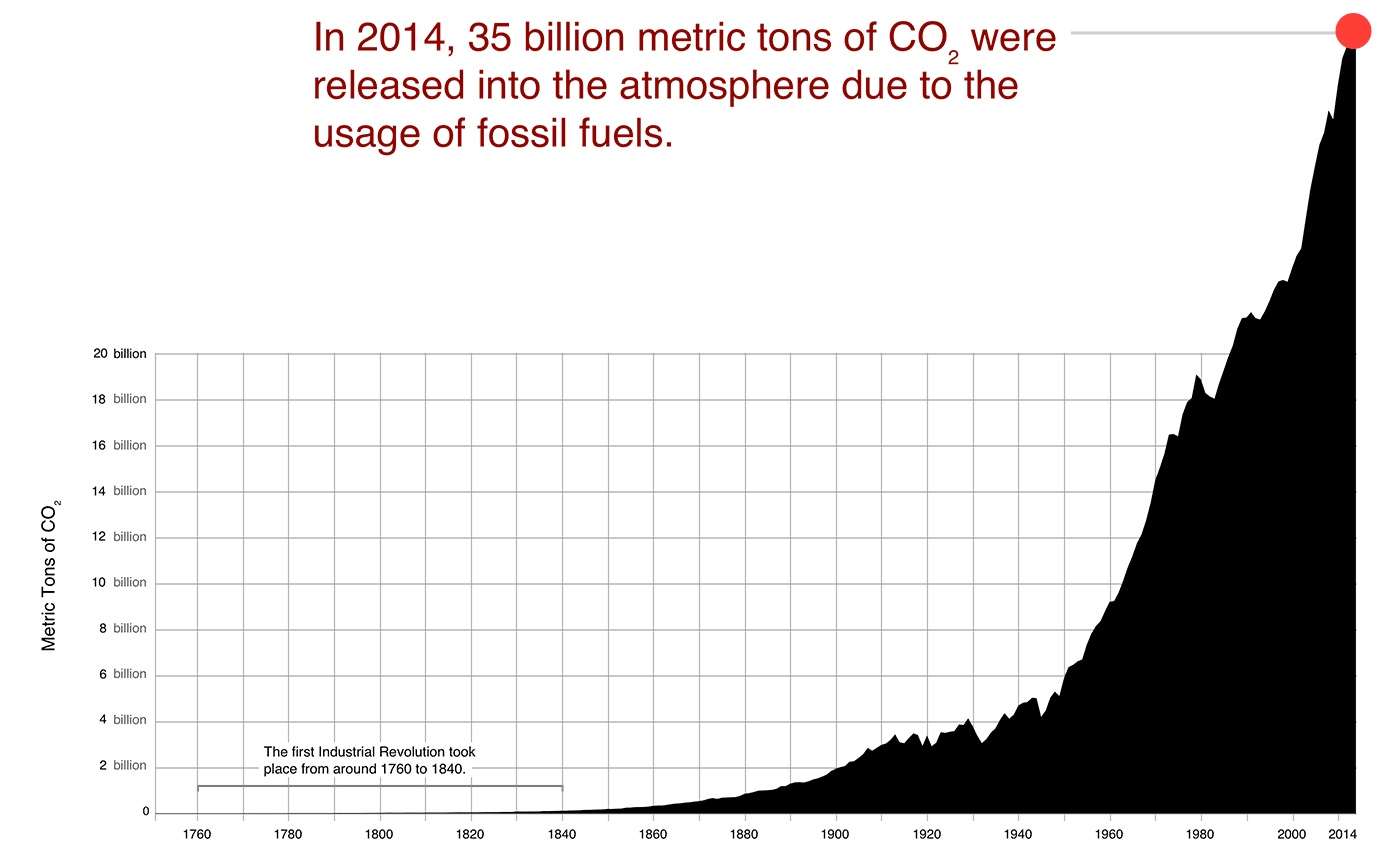
The BLMs assessment of Willow projects that the project would result in the release of roughly 248 million metric tons of carbon dioxide emissions into the atmosphere over the next three decades. That’s roughly during the same time frame that the Biden administration has promised a net-zero future. To add perspective: The average car emits about 4.6 metric tons of carbon dioxide per year.
In April 2021, the “new” Biden administration said it this way in a fact sheet: “… America’s 2030 target picks up the pace of emissions reductions in the United States, compared to historical levels, while supporting President Biden’s existing goals to create a carbon pollution-free power sector by 2035 and net zero emissions economy by no later than 2050. There are multiple paths to reach these goals, and the U.S. federal, state, local, and tribal governments have many tools available to work with civil society and the private sector to mobilize investment to meet these goals while supporting a strong economy.”
There is an interesting debate here, though. And it’s perfect for a multiverse because supporters are calling for energy security now (saving us from the consequences of purchasing oil from Russia and the Middle East) when this project will take years to develop. But what if the market for oil and gas is significantly smaller a decade from now? Will this project still make sense?
“Nearly a year on from Russia’s invasion of Ukraine, global oil markets are trading in relative calm. Oil prices are back to pre-war levels with the exception of diesel, though even these have drifted much lower from last summer’s historical highs. World oil supply looks set to exceed demand through the first half of 2023, but the balance could quickly shift to deficit as demand recovers and some Russian output is shut in,” according to the International Energy Agency.
That gets us to the next multiverse: The economics ahead.
The key question is what happens to the billions of dollars invested in projects like Willow if oil and other energy sources end up being worth less?
Willow is an example of the scale of the problem. One project equals $8 billion. But what happens if oil revenue doesn’t generate enough profit to reward investors for that project (remember this happens 30 years from now)?
Economists call this the problem of “stranded assets.”
A study last year in the journal Nature found that “disruptive policies” will shrink future profits and the value of energy companies. On top of losses by investors, banks are at risk for loans that might not get paid back because of the companies’ failed assets.
The study said companies should have an incentive to move away from fossil fuels but that is not happening (further adding to the risk).
“As a result, there is a potentially perverse incentive in the financial sector of these countries to accept inertia or even slow the low-carbon transition and earn dividends from the continued operation of fossil-fuel production,” the report in Nature said.
Fossil fuel production is also under pressure from renewable energy – and that’s getting much cheaper faster. Russia’s war against Ukraine has contributed to that trend because it forced European consumers to make the shift now, rather than waiting.
The International Energy Agency calls it the “unprecedented momentum for renewables.” And the use of renewable energy is accelerating. Over the next five years the IEA projects an expansion equal to the entire power capacity of China today. “That’s an 85% acceleration from the previous five years, and almost 30% higher than what was forecast in last year’s report, making it our largest ever upward revision,” the IEA said.
Another element in this economic debate is how much information investors should have about the material risk from climate change.
Last week the Biden administration vetoed legislation that would have blocked a Labor Department rule that allows retirement plans to use the ESG framework, Environment, Social and Governance.
Republicans dismiss ESG as a “woke” policy that hurts investors (and in this case, retirement funds) because it measures the impact of social license and other climate on a company’s bottom line.
However Andy Andrew Behar, chief executive officer of As You Sow, a non-profit practitioner of shareholder advocacy and engagement, said “While some politicians are playing politics with retirees’ hard-earned savings, this administration is protecting American workers’ and retirees’ financial security by allowing them to make investment choices without government interference.”
The debate about ESG has been largely about the government – and its role in enforcement. But that misses out something that has been taking place within banks, mutual funds and other investors for decades. Namely: The investors want to protect their cash by having more information about the risks involved.
Investors are picking the multiverse that suits them.

Our stories are worth telling. Our stories are worth sharing. Our stories are worth your support. Contribute $5 or $10 today to help ICT carry out its critical mission. Sign up for ICT’s free newsletter.

