
Miles Morrisseau
ICT
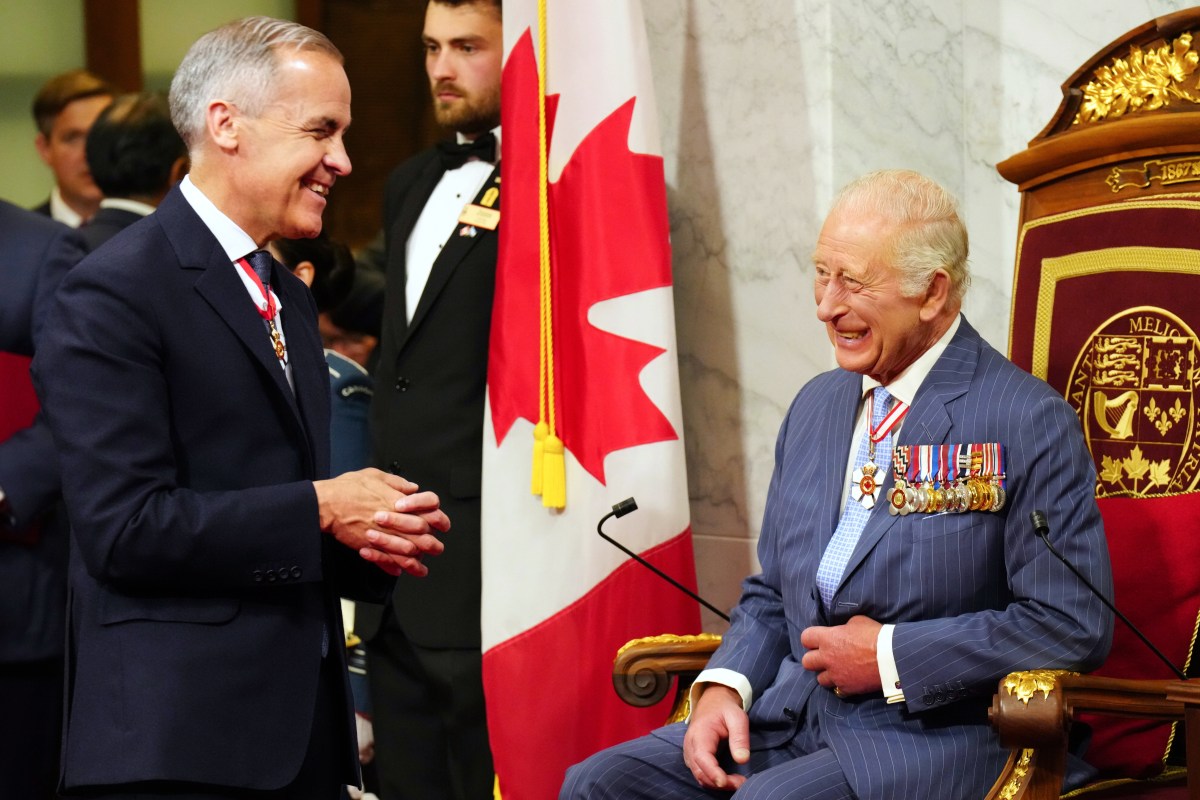
His Majesty King Charles III opened the new session of Canada’s parliament Tuesday with a reading of the “speech from the throne” for only the third time in the country’s 158-year history.
The King started with a land acknowledgement and a personal note.
“I would like to acknowledge that we are gathered on the unceded territory of the Algonquin and the Anishinaabeg people,” said the King, who is head of state for Canada, which is a member of the commonwealth of former British colonies.
“This land acknowledgement is a recognition of shared history as a nation, while continuing to deepen my own understanding,” he said. “It is my great hope that in each of your communities and collectively as a country, a path is found toward truth and reconciliation in both word and deed.”
The speech marked the 20th time that Charles had visited Canada but his first trip as King of England.
“To the First Nations Inuit and Métis peoples, you have welcomed my family and myself to our traditional lands with great warmth and hospitality for which I am humbly grateful.”
The speech from the throne is delivered in the Senate chamber in a ceremony that is filled with a number of actions specific to parliaments in the British Commonwealth, and with the addition of Indigenous representation unique to Canada.
In years past, the parliament was opened by the King’s mother Queen Elizabeth II, who read the speech in 1957 and 1977. The speech from the throne is usually read by the Governor General, who is the official representative of the crown in Canada.
On Tuesday, the King was led into the Senate by the Usher of the Black Rod who later summoned the Members of Parliament into the chamber.
The King entered the front foyer with Queen Camilla; Governor General Mary Simon, Inuk, and her husband Whit Fraser; Prime Minister Mark Carney; and a few other dignitaries. He greeted senior members of the Senate and heads of the Royal Canadian Mounted Police and the Canadian military.
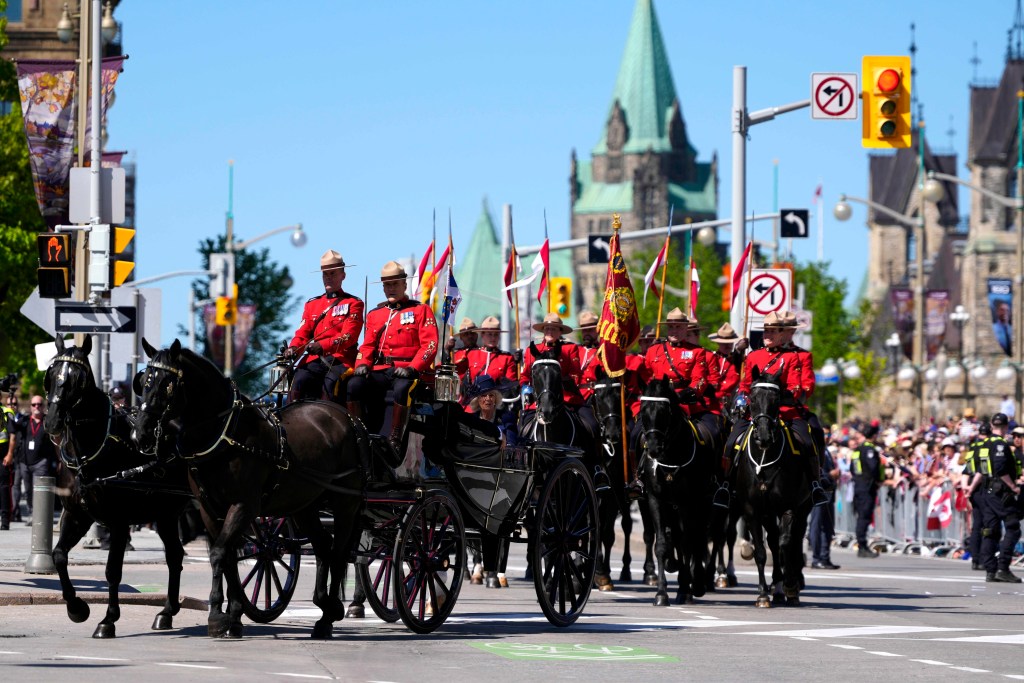
The group were then sung an honor song by a First Nations powwow group before being led by the Usher into the Senate chamber.
In the chamber, there were numerous Indigenous representatives including National Chief Cindy Woodhouse Nepinak, Inuit Tapiriit Kanatami President Natan Obed, Métis National Council President Victoria Pruden, former National Chief Perry Bellegarde, Assembly of Manitoba Chief Kyra Wilson and Manitoba Premier Wab Kinew.
When the King made his rounds, shaking hands and greeting various dignitaries, he held a noticeably lengthy exchange with Kinew, who would post to X later in the afternoon.
“King Charles and I spoke about the wildfires in Manitoba, about building the economy, and how focusing on the climate might help us make investments that connect those issues,” posted the Manitoba Premier. “Before he left, he said we need Indigenous wisdom.”
The King and Queen then took their thrones and people were seated. Métis youth Morgan Grace played a gorgeous reel on her fiddle, and when the song was done, an Inuit elder lit the qulliq – a traditional oil lamp that has been used since time immemorial for heat, light and ceremony.
The throne speech sets out the government’s agenda for its upcoming mandate and is largely written by the prime minister’s staff, but also includes personal statements from the king or queen.
The thrust of his year’s speech was on building a strong Canadian economy and the sovereignty of the nation. The government intends to remove all trade barriers that exist between the provinces by Canada Day on July 1.
In addition, the Carney government indicated it will create a new federal office that will fast track major projects and create a system of one review per one project.
“The government is working closely with provinces, territories and Indigenous peoples to identify and catalyze projects of national significance, projects that will connect to Canada, that will deepen Canada’s ties with the world, and that will create high paying jobs for generations,” the King said. “Through the creation of a new major federal project office, the time needed to approve a project will be reduced from five years to two, all while upholding Canada’s world leading environmental standards and its constitutional obligations to Indigenous peoples.”
The speech also referenced working with the U.S. President Donald Trump, whose repeated references to making Canada the 51st state prompted the prime minister to invite the King to give the speech from the throne outlining his Liberal government’s priorities for the new Parliament.
“The Prime Minister and the President of the United States, for example, have begun defining a new economic and security relationship between Canada and the United States, rooted in mutual respect and founded on common interests to deliver transformational benefits for both sovereign nations,” the King said.
“At the same time, the government is working to strengthen its relations with reliable trading partners and allies,” he said, “knowing that Canada has what the world needs and defends the values that the world respects.”
The changed and chilled relationship with Canada’s southern neighbor was acknowledged directly.
“Many Canadians are feeling anxious and worried about the drastically changing world around them. Fundamental change is always unsettling,” the King said. “Yet this moment is also an incredible opportunity, an opportunity for renewal, an opportunity to think big and to act bigger, an opportunity for Canada to embark on the largest transformation of its economy since the Second World War.”
In addition to cutting taxes, the speech promised to keep pharmacare and child care, and expand dental care. The plan also includes building more houses with Canadian lumber, technology and skilled workers.
A big focus on defense included plans to expand infrastructure in the north and increase spending and investment in the defense industry. Border security with the U.S. was also a big commitment, with an investment in boots on the ground and helicopters and drones in the sky.
The Assembly of Manitoba Chiefs hosted a press conference outside of the Senate chambers following the ceremony.
AMC Grand Chief Wilson, who got to witness the ceremony, believes that the words represent a hopeful change.
“Just listening to some of the words that were shared by the King, there was mention of Indigenous people and mention of reconciliation,” Willson said. “That makes me hopeful to the new relationship that we as First Nations people can have with the Crown.”
Derek Nepinak, chief of Minegoozibe Anishinaabe Nation, did not find the speech as hopeful and said the goal to speed up big resource projects is going to put pressure on First Nations and threaten water.
“Be ready, get your technicians ready, they’re compressing these projects from five years to two years. The junior crowns are lining up behind the big crown, and they’re going to be knocking on your door right away, if not already,” Nepinak said. “This is the time for us to be prepared for what’s next. Some of you can participate. Some of us won’t, but let’s protect the water first. That’s the most important thing we have, is our water. Please stand and protect the water, because this is going to happen quickly.”
Lacey Bird, the youth chief for the Southern Chiefs Organization, who took the podium and spoke for youth across Manitoba, doesn’t believe youth should have to keep waiting for reconciliation.
“We absolutely cannot have another round of generations go through the hundreds of years of being wronged. So keep your word to our people, to the Crown and the Government of Canada, because we need that,” said an emotional Bird. “We want that change for our youth, especially to our elders here standing around us and our chiefs that have gone through everything that Canada has put us through. So it just makes me really emotional. I can’t believe I had to go through what I went through as a child, and I can’t believe we had to go through all of that for generations upon generations.”
Following his duties at the Senate, the Royal Majesties went to lay a wreath on the tomb of the unknown soldier before flying back to England.
The King and Queen arrived on Monday, May 26, and held a small reception hosted by the Governor General in which the majority of invited guests were Indigenous.


