
Sandra Hale Schulman
Special to ICT
Indigenous filmmakers are increasing both by the number and in the depth and quality of their overall work, said the director of the Sundance Film Festival’s Indigenous Program.
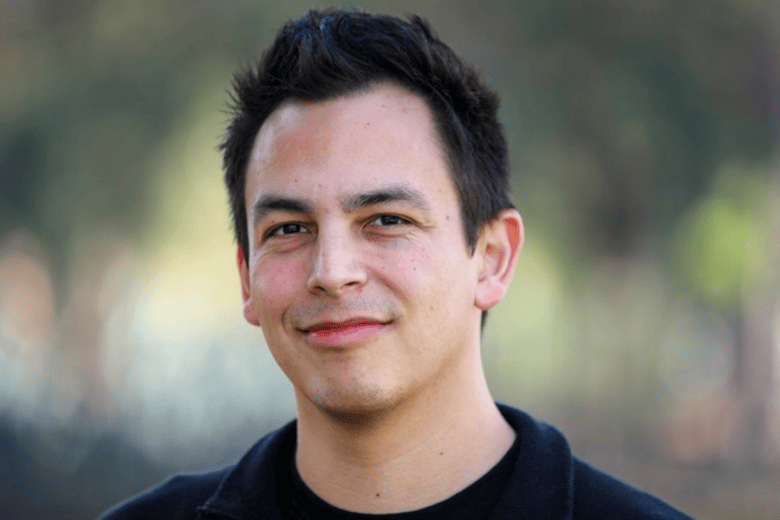
Rounding out his first year as director of the program and as short film programmer for the Sundance Film Festival, Adam Piron, Kiowa and Mohawk from Phoenix, also announced on Wednesday a major donation from one of its own program alums.
“It’s been a phenomenal year!,” he said. “Balancing and expanding the support that our program offers to artists has been a very rewarding experience and I’ve been consistently impressed with the work that the Indigenous Program’s artists have done. The key has always been to meet artists where they are at and to listen to what they’re needs are and to provide what we can to help them get to whatever that next level is for them and their work.”
SUPPORT INDIGENOUS JOURNALISM. CONTRIBUTE TODAY.
Piron was the Indigenous Program’s interim director, associate director, and program manager. He is a co-founder of COUSIN, a film collective dedicated to supporting Indigenous artists experimenting with and pushing the boundaries of the moving image. He was previously the film curator at the Los Angeles County Museum of Art (LACMA). He received his BA in Film Production from the University of Southern California’s School of Cinematic Arts.
He has seen the number of indigenous films being made and submitted to Sundance steadily rising.
”The number of Indigenous-made films in this most recent edition of our festival was a record high and the variety of formats is a testament to what audiences can and should expect from Indigenous artists,” Piron said.
Specifically, he pointed out Erica Tremblay’s and Miciana Alise’s “Fancy Dance,” Fox Maxy’s “Gush” and Taietsarón:sere ‘Tai’ Leclaire’s “Headdress.”
The film scene is always shifting, and Piron says the shift is in an unexpected way.
“The biggest shift that I’ve been able to witness has been less on the thematic and more on the formal side of the type of work being made,” he said. “There’s been a lot more experimentation in terms of how these stories are being told, whether that’s through unexpected comedy or something more personal, like an essay film. I think there’s also a larger question of how much longer Indigenous artists in these more recent generations have had access to accessible filmmaking tools, which I think has yielded to some very striking styles and unique ways in which they are able to express themselves through film.”
Specifically, Piron pointed out Tai Leclaire’s “Headdress,” a 2023 short about an LGBT youth mentally confronting a non-Indigenous person wearing a headdress.
“The film centers on the central character dealing with an instance of casual racism and variations of himself debating how to respond within his own mind,” Piron said.
Another example is Fox Maxy’s “Gush,” which was assembled from over a decade’s worth of the filmmaker’s personal archive. The footage is “used to build a portrait of healing from violence through the collective joy of the filmmaker’s friends and community,” he said.
Sign up for ICT’s free newsletter.
Piron says the best part of his job is directly working with the filmmakers, offering them support in any way the program can to help them take their work to the next level.
“There’s a kind of alchemy that happens when you just listen to Indigenous artists and give them some part of what they need creatively and to get out of their way,” he said. “If there’s any sort of metric of success that I can place on myself or my team, it’s if the artists that we support can feel that their visions are validated and that they have some added sense of sovereignty over their own work on the platform we are able to provide.”
The Sundance program offers labs and workshops to help filmmakers. He referenced the program’s most recent Native Lab workshop in Santa Fe in May..
Eight filmmakers were chosen for this year’s six day lab, five are established filmmakers and have worked on projects including Rutherford Falls, Residential and Positions. Three others are part of the program’s Full Circle Fellowship for younger creatives between the ages of 18 and 24 years old. All are directors, screenwriters or both and take writing, directing, and technical workshops during the lab. They are encouraged to sharpen their creative and technical skills from mentors including Indigenous alums Shaandiin Tome, Diné, Nat Geo’s “First Native Congresswoman Elected in America” and Erica Tremblay, Seneca-Cayuga, “In the Turn.”
The Indigenous Program, under Piron’s direction, organizes the Native Lab, by structuring it around workshops of the artist’s scripts, Piron said. The goal is “to help them achieve creative breakthroughs, as well as to get their projects to new and unforeseen next levels.” The program also handpicks advisors for the entire cohort, pairing them one-on-one.
“It’s about curating and setting the right elements for an environment that will allow them to achieve these breakthroughs,” Piron said.
“Their work is really strong and I can’t wait to see what the next phase of each of their projects will be,” Piron said.
In big news he announces the largest gift Sundance has ever received from an alum, Greg Sarris, the chairman of The Federated Indians of the Graton Rancheria in Northern California. Sarris completed both the Native Lab and the Sundance Institute’s Screenwriters Lab. In turn, the tribe gifted the program a $4 million endowment, the largest in Sundance history, Piron said.
The endowment will be used to continue supporting artists from California-based tribes.
“It’s an incredible gift and presents an opportunity that we hope can begin to change a long history of film and television being made on Native Californian land all the while never providing opportunities for the very people on whose land has been used to tell their own stories,” Piron said. “Native Californian communities have a rich legacy of storytelling and artistic traditions and it’s our hope that this very generous gift from Chairman Sarris and his tribe will go toward supporting those sustaining it through film.”
There is also an Indigenous Film Tour returning – the 2023 Sundance Film Festival Indigenous Film Tour is a 78-minute program of two films directed by Indigenous filmmakers selected from the 2023 Sundance Film Festival.
The tour features I AM HOME by Kymon Greyhorse and Gush by Fox Maxy, giving new audiences a taste of what the Festival’s Indigenous filmmakers have to offer. This year, the tour will be available to watch in June 2023 in person at various partner venues throughout the country. Piron says to find a venue near you and register for the events on the partner websites.
● Vibes With The Tribes, Detroit, MI
● Autry Museum – Los Angeles, CA
● Cinedoom x Tulsa Artist Fellowship – Tulsa, OK
● Cinedoom – Santa Fe, NM
● Honolulu Museum of Art – Honolulu, HI
Applicants interested in the fellowship and scholarships created by this new endowment from the Graton Rancheria, people can visit: https://sndnc.org/graton-fellowship

ICT is a nonprofit news organization. Will you support our work? All of our content is free. There are no subscriptions or costs. And we have hired more Native journalists in the past year than any news organization ─ and with your help we will continue to grow and create career paths for our people. Support ICT for as little as $10. Sign up for ICT’s free newsletter.

