

Joaqlin Estus
ICT
ANCHORAGE, Alaska — Hundreds of Indigenous people in Alaska didn’t get their votes counted in the last election in part because of a shortage of U.S. Postal Service workers in rural communities, which are predominantly Alaska Native. That’s according to Michelle Sparck, who is Yup’ik, and director of Get Out the Native Vote, a nonprofit advocacy group.
Mail-in ballots have to be date stamped by a certain date and received in Juneau by the Alaska Division of Elections by a deadline. When postal workers only work a few days a week or call in sick, they often don’t get the ballots date-stamped or sent in on time.
Sparck said 1,194 rural votes weren’t counted in the June 2023 all-by-mail special primary, which is four times the state average. She told ICT the U.S. Postal Service needs to follow through in the hiring of postmasters and postmaster relief workers.
“In regard to the postal service and how that plays into being a possible systemic barrier, we don’t have a good recruitment effort for these rural post offices. When the post office published a list of vacancies, of the 77 (positions), I saw 75 were in rural, and what Get out the Native Vote considers to be tribal precincts. And if we have 75 locations that are vulnerable to closures because it’s not fully staffed, then that affects our economy, that affects our medical attention, and that affects our ability to vote.”
She said holding an election relies on a tripod approach, “It’s the Division of Elections, it’s (the) Postal Service and it’s the air carriers (making mail delivery a priority). And sometimes whether it’s weather or other situations, some things can become a barrier to voting. And this is before we even get into extreme weather.”
She said when ballots don’t get counted, that compounds low turnout.
“I think the fact that there is such a high vacancy rate in rural postal offices, that kind of builds into I think our decades of voter apathy. It’s developed like a callous over time because when we have failures, systemic failures that affect village life, and that can bleed into our idea of what civics, what is involved in being a civic citizen, being an active citizen that involves volunteering to work with the Division of Elections, volunteering as a concerned member of your community to make sure that our constitutional right and ability to vote on elections (are fulfilled).”
She said another problem occurs when no one in a local community steps up to be an election official. “I know it sounds cheesy, but really it takes a village to make an election happen. And we need people in the villages stepping up to say,’ I volunteer.’ You are compensated. You will get paid. It may not be …a rate that you’re crazy about for a 20-hour commitment in an average election, but we need people on the ground to be able to open these polling locations for the community.”
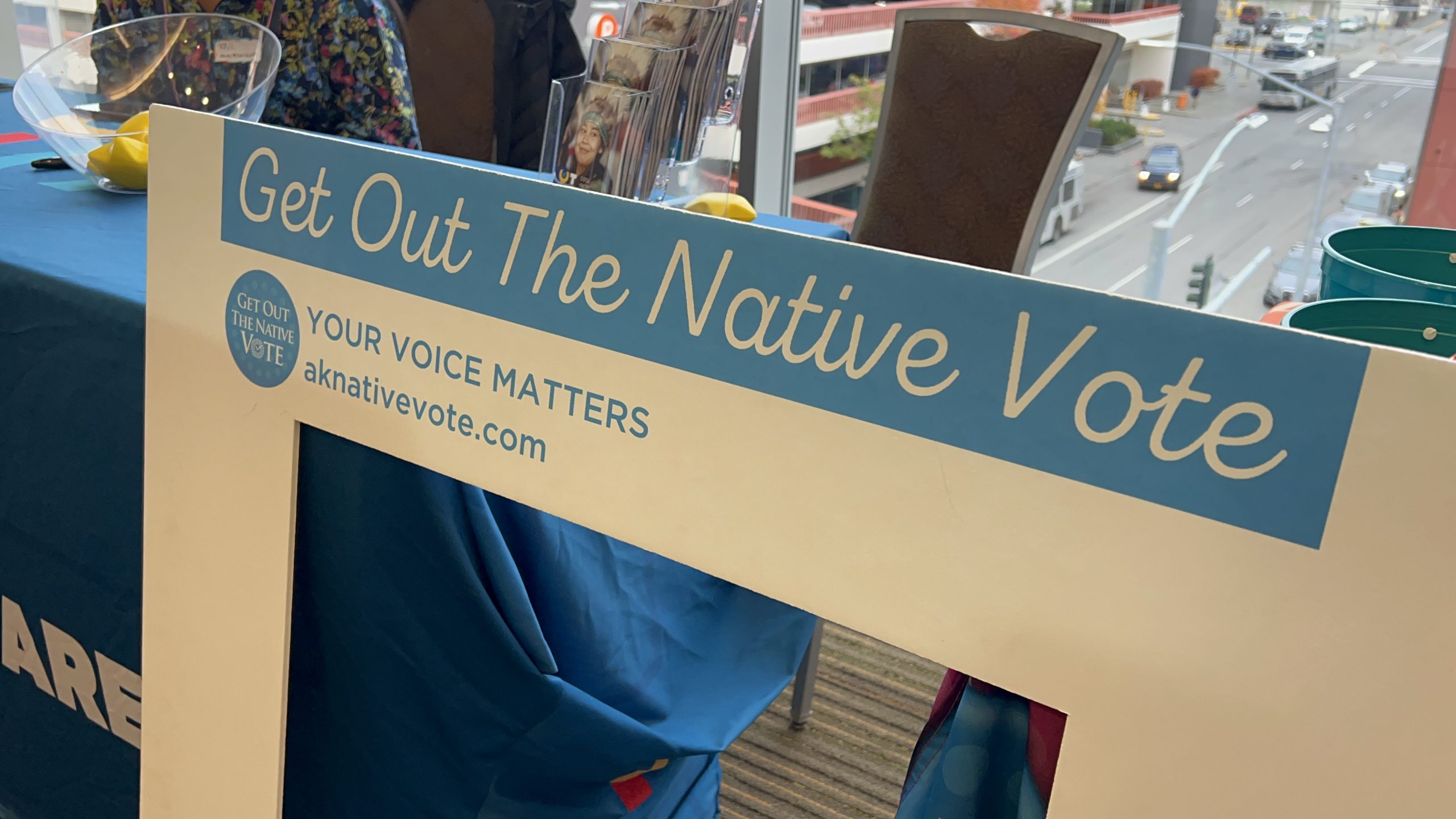
Sparck said when Alaska’s Native people see a direct link between their day-to-day lives and elections, they turn out in great numbers. In 1982, when there was an initiative to overturn Alaska’s rural preference for subsistence, turnout in some villages was 97 percent. These days in the most recent elections, Alaska Native voter turnout is more like 22 percent.
As Native Americans commemorate the 100-year anniversary of the law allowing Indians to become U.S. citizens, Sparck said, “We’re going to have a government whether or not we participate, and if people are unhappy with the way things are or the fact that their program that they hope to be eligible for is underfunded, government affects our lives every day, all the way up to our kitchen table. And we should care about who is representing us because we need them to be our advocate. We need them to be responsive to our concerns.
“And if you’re not voting, and if we’re voting at a rate of just like 22 percent, you’re not going to get a very responsive government,” she continued. “You’re not going to get an accountable leadership. And if we vote and vote in the numbers that we’re capable of, like we were in 1982 and 1992 and 1994 where we had an average 77.7 percent turnout rate, then you are going to get the government that you are looking for.”
A Postal Service public information officer sent the following comments on the issue of shortages of postal workers and other mail-related delays.
“The U.S. Postal Service is committed to the secure, timely delivery of the nation’s Election Mail. In 2024, just as we have in previous elections, the Postal Service will fulfill our role in the electoral process when public policy makers choose to utilize the mail as a part of their election system or when voters choose to utilize our services to participate in an election. We employ a robust and proven process to ensure proper handling and delivery of all Election Mail, including ballots,” the officer said in an email to ICT.
“In the year-long run up to the November elections, the Postal Service works closely with election officials, including in Alaska. In fact, we are meeting today (Monday, June 3, 2024) with Alaska’s Division of Elections, its director and team, to support their successful efforts.
“Regarding concerns about staffing or weather challenges, we are not currently experiencing any specific concerns at this time. While weather and access to some communities can at times pose challenges, our Alaska team works hard to have reliable and consistent mail service throughout the state. When we experience a temporary vacancy at a Post Office and there are no local personnel, we will often dispatch available personnel from neighboring offices to assist,” the postal employee stated.
“As reminder, for domestic, nonmilitary voters who choose to use the mail to return a completed ballot, our general recommendation is that, as a common-sense measure, voters should mail their completed ballots before Election Day, and at least one week before the deadline by which their completed ballot must be received by their local election official. Some states may recommend allowing even more time for mailing completed ballots. Voters should always check to make sure they understand their state’s requirements and recommendations on mailing completed ballots. Voters can look for information about their state’s requirements and recommendations here: Find your state election website.
“The Postal Service is confident in our more than 640,000 employees who are committed and actively working to deliver the nation’s Election Mail securely and in a timely manner.
“For additional information about our historic successful election efforts, please see the 2020 and 2022 Election Mail reports,” the officer stated.
The issue of institutional barriers to voting rights has drawn the attention of Alaska’s Congressional delegation, which is working to have enacted the Frank Harrison, Elizabeth Peratrovich, and Miguel Trujillo Native American Voting Rights Act of 2021. According to Congess.gov, the bill includes provisions:
- increasing polling site accessibility, including by expanding early in-person voting and providing ballot drop boxes;
- providing enforcement power to citizens and attorneys general;
- requiring approval for actions like moving a polling place;
- validating certain tribal identification for voting or registering to vote;
- permitting voters to designate another individual to return a ballot on their behalf; and
- expanding requirements for bilingual voting accessibility.
In addition, the bill establishes a Native American voting task force grant program for the purpose of increasing voter outreach, education, registration, turnout, and accessibility for Native American communities.
The bill also directs the Government Accountability Office to study and report on (1) the prevalence of nontraditional or nonexistent mailing addresses among Indians, members of tribes, and individuals residing on Indian lands; and (2) the alternatives for removing barriers to voter registration, receipt of voter information and materials, and receipt of ballots.
June 20 is the deadline for Alaska voter registration for statewide primaries coming up on Aug. 20.
The Alaska Division of Elections did not respond in time for publication of this story.

Our stories are worth telling. Our stories are worth sharing. Our stories are worth your support. Contribute $5 or $10 today to help ICT carry out its critical mission. Sign up for ICT’s free newsletter.
