
Help ICT make strides in 2024. Our goal is to raise $150,000 by the end of the year with generous contributions from funding partners and collaborators like you. We’re thankful for your support, and we’re thriving because of it. DONATE TODAY!
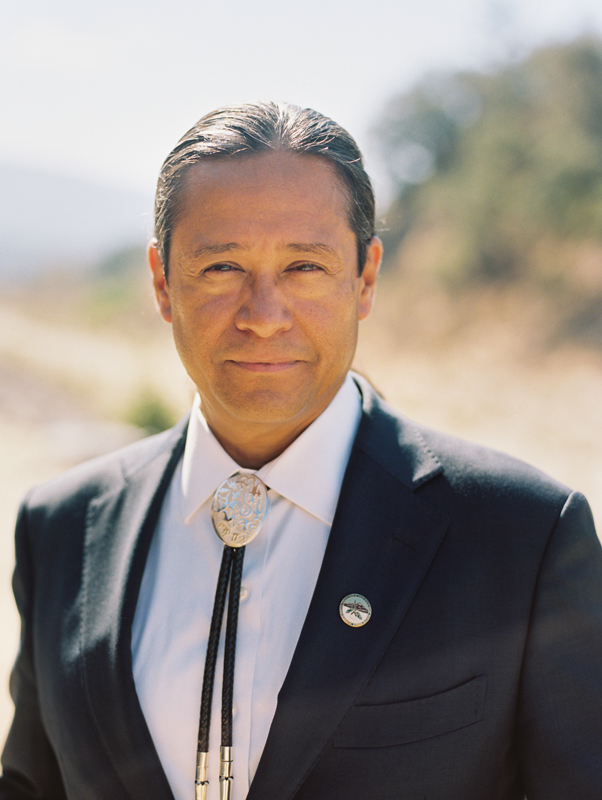
Mark Macarro has served as tribal chairman of the Pechanga Band of Indians in southern California since 1992. During his tenure he has fought to strengthen his tribe’s tribal sovereignty, self-determination and economic self-sufficiency while maintaining its distinct cultural identity.
Elected this month as president of the National Congress of American Indians he sets out now to work toward those same goals for tribes across the country. He recently spoke with ICT’s Editor-at-Large Mark Trahant about the challenges ahead.
The following conversation has been lightly edited for length and clarity.
Mark Trahant: The president of NCAI in a lot of ways is like being the president of Indian Country. You’re called first to testify and your words carry great weight both on Capitol Hill and internationally. Talk a bit about your vision for the role.
Mark Macarro: Well, the vision here is to reset our footing in Washington, D.C. We really need to reestablish a strong presence inside the Beltway, in Congress and administration officials and with the White House. Ninety percent of life is being present, right? So I think what we need to do – and what I have already talked to our new executive committee about doing – is scheduling of a series of meetings between now and the (NCAI) executive council winter session in February to reestablish our mission in Washington, D.C. physically, and then to do some strategizing and begin to have a discussion about our priorities especially as we end one congressional year and begin another.
I want to hit the ground running by the time the executive council winter session rolls around in February.
(Related: NCAI vote to exclude state recognized nations fails)
Trahant: One of the challenges of that is you have a Congress that’s so divided. Even on issues that normally wouldn’t take a lot of extra thought, there’s deep divisions for no other reason than partisanship. How do you get above that?
Macarro: My approach is this: I present neither as a “D” for Democrat nor as an “R” for Republican. I present as an “I” for Indian Country. And the goal is to let those in the House and in the Senate know that these issues are not partisan. Indian Country is a trust responsibility that they have. When they swore the oath under the constitution. Upholding trust responsibility to tribes is embedded in the constitution. It’s part of their duty. So you can begin to bring them along that, you know, this is a duty of office, of holding office. That’s the beginning. Now the rest becomes a challenge because there is a constant flux of legislators.
I want to point out that 36 states have tribes in them. Fourteen states do not have tribes in them. That amounts to about 156 members of Congress who are from states that don’t have tribes. And, you know, a term for members of the House is two years, right? So there’s a constant need for education of folks that become members of Congress and likely know very little about tribes and possibly what they know is not accurate or it’s distorted.
And so we have to educate them. And that’s part of being present. That’s part of being on Capitol Hill when it matters when they’re in session. So that’s going to be a hallmark of what I’m going to bring literally to the table over the next coming weeks, beginning this month. With this constant flux of members of Congress you have to go through a learning curve with each one of them.
And we have champions that are retiring, Dan Kildee, (Democrat) from the state of Michigan, is going to be leaving. He’s been a champion for for Indian Country. He’s been a go-to there. There are a number of go-tos in Congress, and he’s been a big one. And so, when he leaves, you know, ultimately somebody else should come up to replace him, but we’ll be short a champion.
And so that further provides a challenge for us to try to overcome. And that makes our job that much tougher.
Trahant: When you were campaigning for the presidency, you talked about tribes as governments and the importance of that role. Other governments can raise tax revenue and can use it to fund an array of services. Tribes have to do the same thing without that taxing authority. Is that something that is time to have a discussion about?
Macarro: Well, it’s always on the table for discussion. And really what it points to is protecting funding for Indian Country. You know that, now, fortunately, Congress has reestablished funding into the new year so we’re not looking at a government shutdown. But, you know, what we are looking at is chronic underfunding of Indian Country across the board in all kinds of program and subject matter areas.
And so that is, along with all the other priorities, a No. 1 priority: to protect the funding that we have and advocate for a growth of that funding. There are plenty of funding issues to talk about and to get across the finish line to protect the modest gains that have been accomplished.
So this is a big challenge, especially with this Congress where there are those that would like to cut the government down to bare bones. Indian Country funding has already been bare bones and it’s not acceptable. And that’s part of what we need to be present for, it is, “Look Mr. Congressperson, your responsibility is to hold up your side of the bargain and undergird your trust responsibility under treaties.
The funding of Indian Country is paramount and it is a duty. These are not discretionary funds that Congress can say yes or no to, in our view. And so we need to make that known, bringing that education forward is our challenge. And that’s what we intend to do.
Trahant: Next week the White House Tribal Nations Summit will take place. It’s an opportunity to talk with the executive branch about some of these issues. What are some of your primary objectives for that?
Macarro: Well, that’s a time when the White House likes to highlight a lot of the positives that it has brought to Indian Country and emphasize those. Also, new initiatives are often rolled out at that time. So that’ll be a chance for Indian Country to to have a look at what those initiatives are and have an honest conversation or dialog with the White House, with the administration, on the relative merits of those initiatives.
Are they hitting the mark with them? Did they leave something out? Because if they do, you know, they will be called out and we will have to point to them and say, look, we need you to pay attention to this. We need focus on this now and over the next two years.
I think we’ll be prepared to do that. At this point we don’t have any indication, at least I don’t yet, what will be rolled out by the administration in the various agencies.
Trahant: Tribes have become much more sophisticated in dealing with the global nations. Do you have a vision for that?
Macarro: Well, in the short term, I do. Under my predecessor, Fawn Sharp, there were substantial gains made at the U.N. and with COP (the United Nations Framework Convention on Climate Change.) And those gains – especially in the international climate discussion and the role of Indigenous communities, Indigenous knowledge, especially from tribes in the United States, in terms of helping solve global climate change – that we’ve been able to establish through NCAI President Sharp, those need to be preserved.
And so in the short term, I would look to protect that seat at the table that we have at the U.N. as well as at COP. And I don’t think it’s automatic that, you know, because we were invited or President Sharp was invited one or two years ago, that that stays there in the end.
But I hope it does. But we’ll find out and work to maintain that seat so that we have that voice in those international forums.
Trahant: I want to turn inward for a minute and talk about citizens in tribal communities. Is there some education needed in terms of what tribal people should know about their own governments and their bargaining power?
Macarro: That’s an interesting question there. Tribal citizens should always know where their tribes sit as governments and as sovereigns, among other sovereigns. It’s a fundamental knowledge base that makes the community stronger. Those tribal communities that understand the things that are ensconced in treaties and the powers that tribes have that begin with the U.S. Constitution, but actually began before there was a constitution.
And those tribes in those communities, have citizens that empower those particular tribal communities to flex their sovereign authorities and jurisdictions when and where necessary. Sometimes there may be communities that don’t’ understand that they don’t focus on that. And I think the more that what we all do – and that our individual citizens do – all of Indian Country can continue advancing and strengthening tribal sovereignty.
I mean, we speak often in the collective, but the collective is each individual tribe. Tribal governments are like links in a chain or a patch on a quilt. And, you know, as strong as some tribes are in terms of sovereignty and jurisdiction, there are some tribes that don’t appear to exercise that. And that is either due to lack of knowledge base or just, you know, doing other things, I suppose.
So what we’d like to do is set the stage for tribes to be able to empower themselves so we can advance and continue to push positively the boundaries of tribal sovereignty, of tribal jurisdiction. And in doing that, strengthen tribal sovereignty for all of Indian Country.
Trahant: One of the takeaways for me from the Biden administration has been its recognition of talent in Indian Country. It doesn’t take long to see the depth of that talent and it’s really extraordinary. How do we make sure that people know about that and take advantage of it?
Macarro: Well, I think that’s a role that NCAI can play in letting the world know, letting the United States know, that this particular administration has appointed more Native Americans to posts in all agencies than ever before. There are more Native Americans in these positions and more in top posts and key decision making positions, including the cabinet now with Secretary of Interior Deb Haaland.
And so people need to know that we have Native Americans in these administration positions working for Indian Country. And so that’s a huge positive. You know, as much as has been made public about these positions and our individuals today, we can do better and we can amplify that. I would look for that to happen, especially over the next 12 months.
Trahant: Well, just one last question. What excites you most about the next two years?
Macarro: Well, every challenge means that there’s an opportunity. And I think we have a bunch of challenges coming at us. You know, one we didn’t talk about is the upcoming election in November 2024. And you know, how the membership in Congress will be shuffled. It’s opportunity but it’s work, it’s hard work to always be in the position of having to educate members of Congress.
But that is exciting work. That’s where we get to tell our story individually and the collective national story. That’s the role that NCI plays. I’m looking forward to it and it is exciting. And it’s an ongoing effort.
And one that doesn’t end. We have to keep pushing. We have to keep educating. We have to create new champions in Congress because they don’t stay there forever. We have to try to create that base of knowledge for these decision makers who hold keys to our budgets and, in the end, you know, are key to, I think, safe and healthy communities across the country.
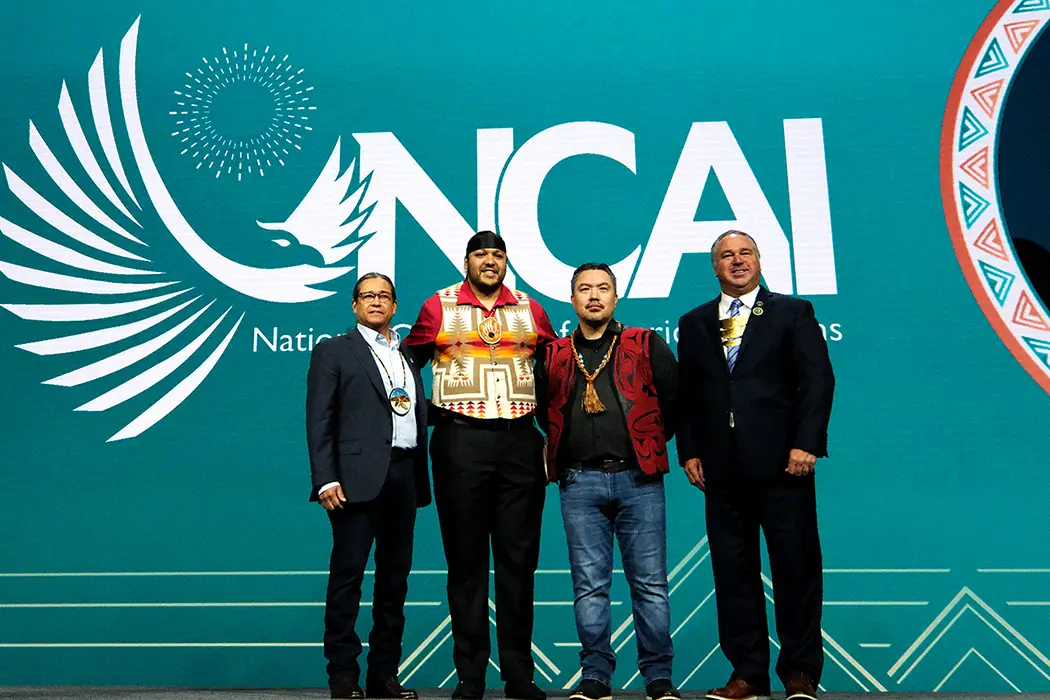
Other NCAI elected officials
The members of the National Congress of Indians elected Mark Macarro as their new president for the 2023-2025 term.
Joining him on the Congress’s Executive Committee is:
First Vice President: Brian Weeden, chairman of the Mashpee Wampanoag Tribe.
Recording Secretary: Nickolaus D. Lewis, Lummi Nation council member.
Treasurer: David Woerz, Chickasaw Nation legislator.
Also elected were regional vice presidents and alternates from the 12 NCAI regions.
Alaska Vice-President: Brian Ridley, Native Village of Eagle
Alaska Alternate: Clinton Cook, Craig Tribal Association
Northwest Vice-President: Leonard Forsman, Suquamish Tribe
Northwest Alternate: Melvin Sheldon, Tulalip Tribes
Great Plains Vice-President: Ryman Lebeau, Cheyenne River Sioux Tribe
Great Plains Alternate: J. Garrett Renville, Sisseton-Wahpeton Oyate
Western Vice-President: Randi Lone Eagle, Summit Lake Paiute Tribe
Western Alternate: Warren Graham, Duckwater Shoshone Tribe
Southwest Vice-President: Raymond Aguilar, Pueblo of Santo Domingo
Southwest Alternate: Gary Lujan, Pueblo of Taos
Southern Plains Vice-President: Reggie Wassana, Cheyenne and Arapaho Tribes
Southern Plains Alternate: Christie Modlin, Iowa Tribe of Oklahoma
Midwest Vice-President: Leonard Fineday, Minnesota Chippewa Tribe – Leech Lake Band
Midwest Alternate: Michelle Beaudin, Lac Courte Oreilles Band of Lake Superior
Eastern Oklahoma Vice-President: Joe Deere, Cherokee Nation
Eastern Oklahoma Alternate: Brad Killscrow, Delaware Tribe of Indians
Pacific Vice-President: Leo Sisco, Santa Rosa Rancheria Tachi Yokut Nation
Pacific Alternate: Jack Potter Jr., Redding Rancheria
Rocky Mountain Vice-President: Jennifer Finley, Confederated Salish and Kootenai Tribe of the Flathead Reservation
Rocky Mountain Alternate: Loni Taylor, Chippewa Cree of the Rocky Boy’s Reservation
Northeast Vice-President: Lance Gumbs, Shinnecock Indian Nation
Northeast Alternate: Rodney Butler, Mashantucket Pequot Tribe
Southeast Vice-President: Reggie Tupponce, Upper Mattaponi
Southeast Alternate: Lora Ann Chaisson, United Houma Nation

Our stories are worth telling. Our stories are worth sharing. Our stories are worth your support. Contribute $5 or $10 today to help ICT carry out its critical mission. Sign up for ICT’s free newsletter.

