You can help elevate meaningful stories from Indigenous nations when you support ICT during Arizona Gives Day! ICT is headquartered in Arizona, and covers the Indigenous world across North America. Help us reach our goal to raise $10,000 for reliable, compelling, Indigenous-led journalism in Arizona and across the U.S.
Richard Arlin Walker
Special for ICT
Professional baseball, football, basketball and hockey have changed their rules over the years to improve the health and safety of athletes.
A hall of fame musher says it’s time for the Iditarod Trail Sled Dog Race to do the same.
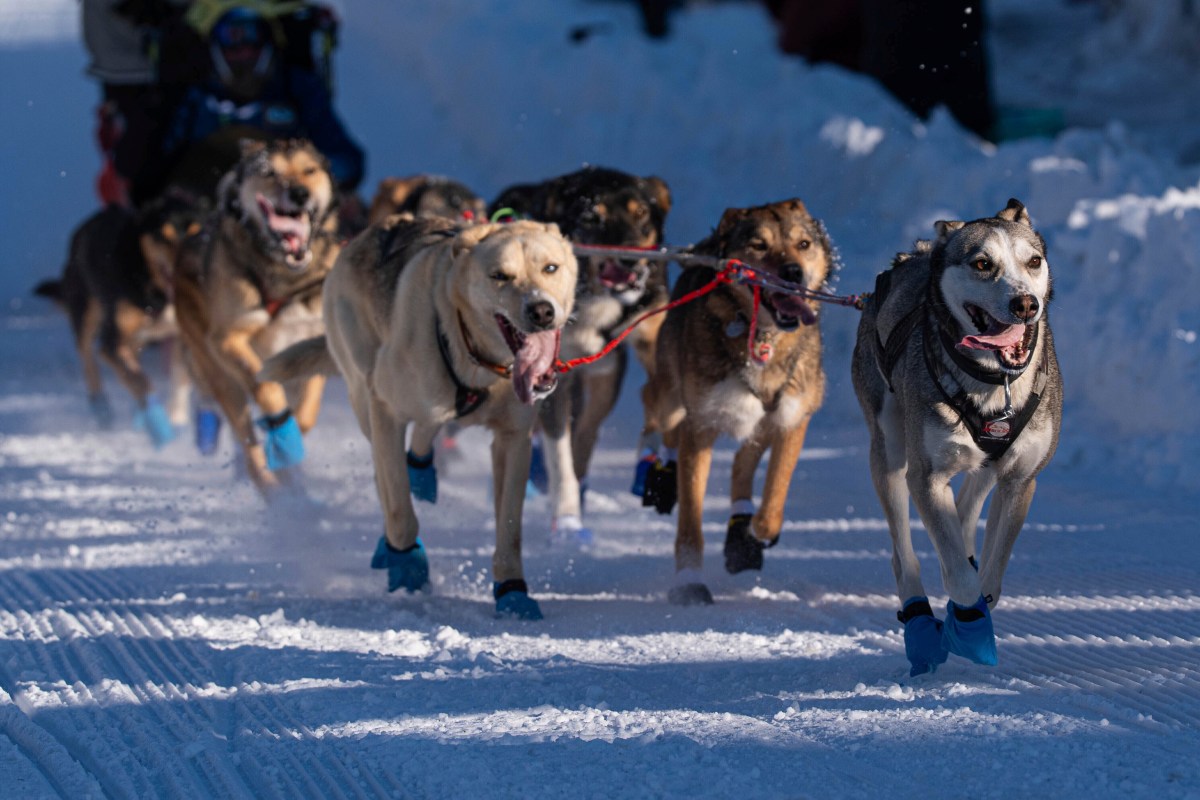
Jeff King, a veteran of 30 Iditarods and a four-time race champion, told ICT on March 21 that the 1,000-mile race should “slow down” a bit, with dog teams taking a required additional 48 hours of rest. Mushers and dog teams are currently required to take an eight-hour rest at a Yukon River checkpoint, an eight-hour rest in White Mountain, and a 24-hour rest at any checkpoint of their choosing.
King said additional required rests – he recommends breaking the 48 hours into six eight-hour rests – would not reduce the competitiveness of the race but would result in healthier dogs. With an additional 48 hours of rest, this year’s race would have been won in 11 days, rather than nine.
“I don’t see a downside to getting the race to slow down,” said King, who has retired from the Iditarod but supports younger mushers; one of his dog handlers, Amanda Otto, placed eighth this year.
“I am a huge fan of the Iditarod but this year’s race felt like a tipping point. We’ve had more dog deaths, I’m sure, per capita in the race [in other years] and we’ve had many years with none. I think ‘none’ needs to be the goal. If you give the dogs more rest, that means more hands-on care by mushers and veterinarians.”
King proposed the additional rests – first on social media and then in an interview with ICT – after three dogs died in this year’s race, which began March 3 in Anchorage and ended in Nome. Six-time champion Dallas Seavey and his team were first to cross the finish line on March 12, clocking a time of 9 days 2 hours 16 minutes 8 seconds. Rookie Jeff Reid and his team were last to cross the finish line, closing out the race on March 16 with a time of 12 days 11 hours 22 minutes 1 second.
The dogs’ deaths prompted renewed calls from PETA for an end to the Iditarod. Some 118 dogs have died during the race since the event’s inaugural run in 1973, according to the website HumaneMushing.org, although PETA estimates the number of dog deaths is higher.
Causes of death have included gastric ulcer, hypothermia, pneumonia and accidents, according to HumaneMushing.org and Iditarod records available online. In some cases, dogs have gotten loose from their teams and been fatally struck by vehicles, while others have been killed on the trail by reckless snowmachine drivers. One dog died from asphyxiation in 2013 at a checkpoint when it was buried by a snowdrift.
The deaths in this year’s race were the first since 2019, when one dog died from pneumonia. Necropsy results in the 2024 deaths were not reported as of this writing, although ABC News reported March 15 that, according to Iditarod officials, “initial necropsies have not provided causes of death for the dogs.” Two dogs from separate teams collapsed on March 10 at or near the checkpoints in Nulato (mile 582) and Kaltag (mile 629), and a dog from another team collapsed March 12 near the checkpoint in Shaktoolik (mile 754).
PETA Executive Vice President Tracy Reiman, in a statement posted on the PETA website, called the Iditarod “the shame of Alaska” and called for Liberty Media, a top sponsor of the event, to pull its support. “How many more dogs need to die before this stops? Dogs’ lives are worth more than this,” Reiman wrote.
The Washington Postreported receiving an additional statement from Reiman: “Only in the Iditarod can people force dogs to run to their deaths and be caught on video trying to force a collapsed dog to stand and carry on — reprehensible actions that PETA points out would bring cruelty-to-animals charges anywhere else in the country.”
Akiak Native Community Chief Mike Williams Sr. is a veteran of 15 Iditarods whose best time was 10 days 15 hours 45 minutes 2 seconds in 1997, good enough for 18th place. He defends the care given to sled dogs in the Iditarod but said he’s “not opposed” to more mandatory rests.
“Iditarod mushers have done a very good job of keeping their dogs healthy, in my observation during my lifetime of mushing,” Williams said. “The dogs are checked by veterinarians, they’re vaccinated. Over time, nutrition, equipment, feeding, resting and training have changed a lot. We have good rules, but if there are more required rests, that’s fine.”
Williams said PETA’s dog welfare concerns would be better focused elsewhere. More dogs are killed by vehicles or illness per capita on city and village streets, he said. “What about those?,” he said of PETA’s concerns.
All told, 2,393 teams have completed the Iditarod since the first race in 1973, according to records on Iditarod.com. Each musher is required to have 14 dogs on his or her team at the start and must have no fewer than five at the finish (mushers will customarily leave a dog in the care of handlers at a checkpoint if the dog is not well or is underperforming).
Another option — restart in McGrath
Another option King is floating: Require all mushers and teams to reach McGrath (mile 311) by a predetermined time and date and have a race restart there.
“You’d still have the same purse. The race would still cover a thousand miles,” King said. “There would be no changes at all; everything would be the same except the first team to reach McGrath couldn’t leave until the slowest team arrived and was ready to go as well. The faster mushers would run the first third of the race very differently. We wouldn’t be forced to hurry. We would stop and rest, we would be in the villages along the way more, we would be taking even better care of our dogs.
“The villages would have mushers in them longer. The villages used to really embrace us because we would stay there. Now we’ve got mushers zooming through.”
Many mushers and dogs take their required 24-hour rest, or layover, in McGrath after having crossed 1,900-foot Rainy Pass, descended a twisting and winding Dalzell Gorge, and traversed a forested ridge that burned in Alaska’s largest forest fire in 1978.
By not having to hurry to McGrath, mushers could take their 24-hour rest in, say, Galena (mile 545), Kaltag (mile 629) or Unalakleet (mile 714), King said. “What a great place for the dogs to have a 24-hour break and they’re still going to take an 8 and another 8 in White Mountain,” King said. “It’s still going to be a 12-day race and at the finish there wouldn’t be so much space between the first and last place teams.”
Celebration of a heritage
Alaska sled dogs have long been an important part of Alaska Native and rural Alaska life, powering sleds to and from villages, trading centers, and fishing and hunting grounds. The world took notice of the Alaska sled dog’s endurance in 1925, when a relay of dog teams delivered a life-saving diphtheria antitoxin from Seward to Nome.
The sled dog was supplanted by snowmobiles (called snowmachines in Alaska) as a means of transport beginning in the 1950s. Joe Redington Sr. and Dorothy Page founded the Iditarod in 1973 to celebrate the heritage of the sled dog, using routes traveled by Alaska Natives for centuries as well as the route used in the 1925 Serum Run.
In addition to Rainy Pass, Dalzell Gorge and the Farewell Burn, the route bumps along over frozen tussocks. crosses windblown tundra and frozen rivers, and courses along an icy coastline that is prone to whiteouts. It’s an expanse of breathtaking beauty though, and the Northern Lights often dance across the sky.
Some of the checkpoints are in Alaska Native communities where residents turn out to cheer mushers and teams. The first musher to reach Nikolai (mile 263) in recent Iditarods has received a pair of musher’s mitts with beaver and beaded leather by Loretta Maillelle, Athabascan, of McGrath; and a beaver hat made by Oline Petruska, Athabascan, of Nikolai.

Dick Wilmarth and his dog team won the inaugural Iditarod, crossing the finish line with a time of 20 days 0 hours 49 minutes 41 seconds. At the time, King said, completing the race in nine days or less seemed as improbable as running a four-minute mile was pre-Roger Bannister. And yet, mushers and dog teams continued to set time records.
In 1975, Emmitt Peters, an Athabascan musher known as the Yukon Fox, set an Iditarod record of 14 days 14 hours 43 minutes 15 seconds. In 1981, Rick Swenson and his team finished in 12 days 8 hours 45 minutes 2 seconds; in 1986, Susan Butcher finished in 11 days 15 hours 6 minutes 0 seconds; in 1992, Martin Buser finished in 10 days 19 hours 17 minutes 15 seconds; in 1995, Doug Swingley finished in 9 days 2 hours 42 minutes 19 seconds; and in 2002, Buser finished in 8 days 22 hours 46 minutes 2 seconds.
The current record holder is three-time champion Mitch Seavey, whose team finished the 2017 race in 8 days 3 hours 40 minutes 13 seconds.
Faster times drive the pressure on mushers to keep up, King said. Forcing teams to cut down on rest is part of Dallas Seavey’s strategy; he’s been known to rest out of sight off-trail instead of at checkpoints to compel teams to cut their rest and drive on, thinking he’s still racing. They end up losing steam.
Seavey told Iditarod Insider, the race’s online video channel, during the 2024 race: “I like having the lead and I like having it at the right place because it puts pressure on them to catch up and almost invariably, they will feel the pressure and cut some rest and before they catch you, they’ve lost their speed because they were cutting rest in there.”
‘The dogs have the final say’
King and other mushers said dog teams are faster today because of breeding, nutrition, training and sled technology. Mushers and dogs train for much of the year for the Iditarod, and many test their readiness in mid-distance races during the winter months leading to the big race.
ICT reached out to the Iditarod Trail Committee for comment on dog care and the changes proposed by King; officials did not respond, but the Iditarod website outlines the measures race officials take to protect the health and safety of canine athletes.
Within 30 days of the start of the Iditarod, each dog receives an electrocardiogram to check for heart abnormalities and undergoes blood tests and a complete physical examination, the Iditarod website states. There are 22 race checkpoints between Anchorage and Nome, each staffed by race veterinarians who are available to provide canine wellness checks.
In addition to the required 24-hour and eight-hour rests at checkpoints on the Yukon and at White Mountain, mushers and dog teams customarily take breaks as needed between checkpoints.
“What I try to do is take a four-hour run and then a four-hour rest, a six-hour run and a six-hour rest – an equal amount of time running and resting,” Williams said. “A lot of rests are taken along the way, outside the checkpoints. At the checkpoint, there’s hot water and a good place to sleep, but there’s a lot of commotion and a lot of other teams at some of those checkpoints. It’s nice and peaceful when you rest them out there on the trail.”
Even the best run-rest strategy succumbs to the unpredictability of the Alaska frontier. Nic Petit, a six-time top-10 finisher (career best 2nd in 2018), scratched in 2019 some 754 miles into the race when his dogs refused to continue onto the icy, windblown Norton Bay coast. King was within 25 miles of his fifth Iditarod title in 2014 when he had to scratch because he and his team lost the trail in a windstorm.
Mushers often scratch in the best interest of their dogs. 2023 champion Ryan Redington, Inupiaq, has completed 10 Iditarods and scratched in seven, each time citing the well-being of his team.
“You are only as fast as your slowest dog,” said Kristy Berington, a veteran of 13 Iditarods (career-best 16th place, 2019). “In the end, the dogs have the final say in how fast and hard to push, and if they don’t want to go you don’t go.”
‘Likely to end if nothing is done’
Berington is not opposed to additional mandatory rests, but she doubts race officials will embrace the idea.
“Jeff is an amazing dog driver. He undoubtedly has one of the best race records out there,” Berington said. “Jeff is also an intervenor and would like to see the race succeed even if that means stepping away from tradition. And I think that is something that the Iditarod isn’t willing to do. They want the race to be challenging. In their view, it can’t be easy – it’s the ‘Last Great Race.’ But the Iditarod Committee, the Iditarod Finishers Club and veterinarians need to discuss what changes can be made annually.”
Changes are not unknown to the Iditarod. The race was reduced to 832 miles in 2021 in response to the COVID-19 pandemic. In 2019, the Iditarod Trail Committee reduced from 16 to 14 the maximum number of dogs required for a team to start the race. In 2017, the committee appointed an advisory group of veteran mushers to develop mandatory “best care” standards for kennels.
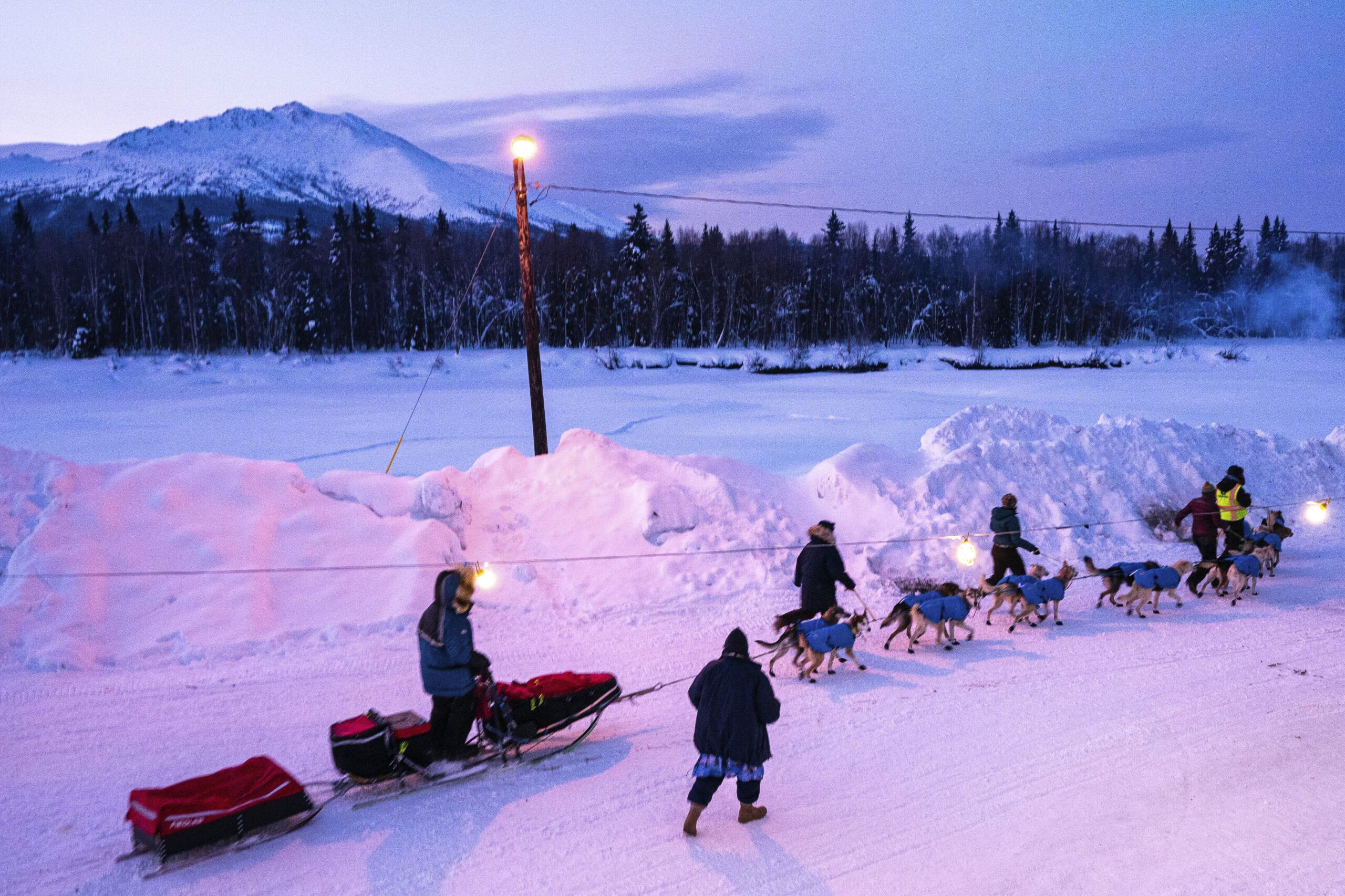
The Yukon Quest was reduced in 2021 from 1,000 to 450 miles, also because of the pandemic. The Quest has since split into two separate races: one in Alaska and one in Canada.
“In the middle-distance races, we do have a collective amount of rest required in addition to one mandatory rest,” Berington said. “For example, the Copper Basin 300 has 18 hours of mandatory rest; one of those rests needs to be a six-hour stop. Maybe the Iditarod needs to adopt 60 hours of rest at checkpoints with one mandatory 24-hour stop? Even the Yukon Quest Canada monitors stops taken on the trail outside of checkpoints and factors that into mandatory rest requirements. It will be interesting to see and hear proposed ideas from mushers and veterinarians as to how to make the race better.”
King worries about the Iditarod’s future if changes aren’t made.
“The race doesn’t need to be 20 days as in Dick Wilmarth’s day, but we don’t have to keep making it shorter,” King said. “Let’s have some balance. We have learned so much about animal husbandry and nutrition, but we have to recognize the rules that were right 30 years ago are not anymore. There was a time when the NFL didn’t have faceguards on their helmets. They evolved and changed the rules.”
He added, “A rule change isn’t going to end the Iditarod, but I think it’s likely to end if nothing is done.”

Our stories are worth telling. Our stories are worth sharing. Our stories are worth your support. Contribute $5 or $10 today to help ICT carry out its critical mission. Sign up for ICT’s free newsletter.