
This story was originally published by the Michigan Advance.
Kyle Davidson
Michigan Advance
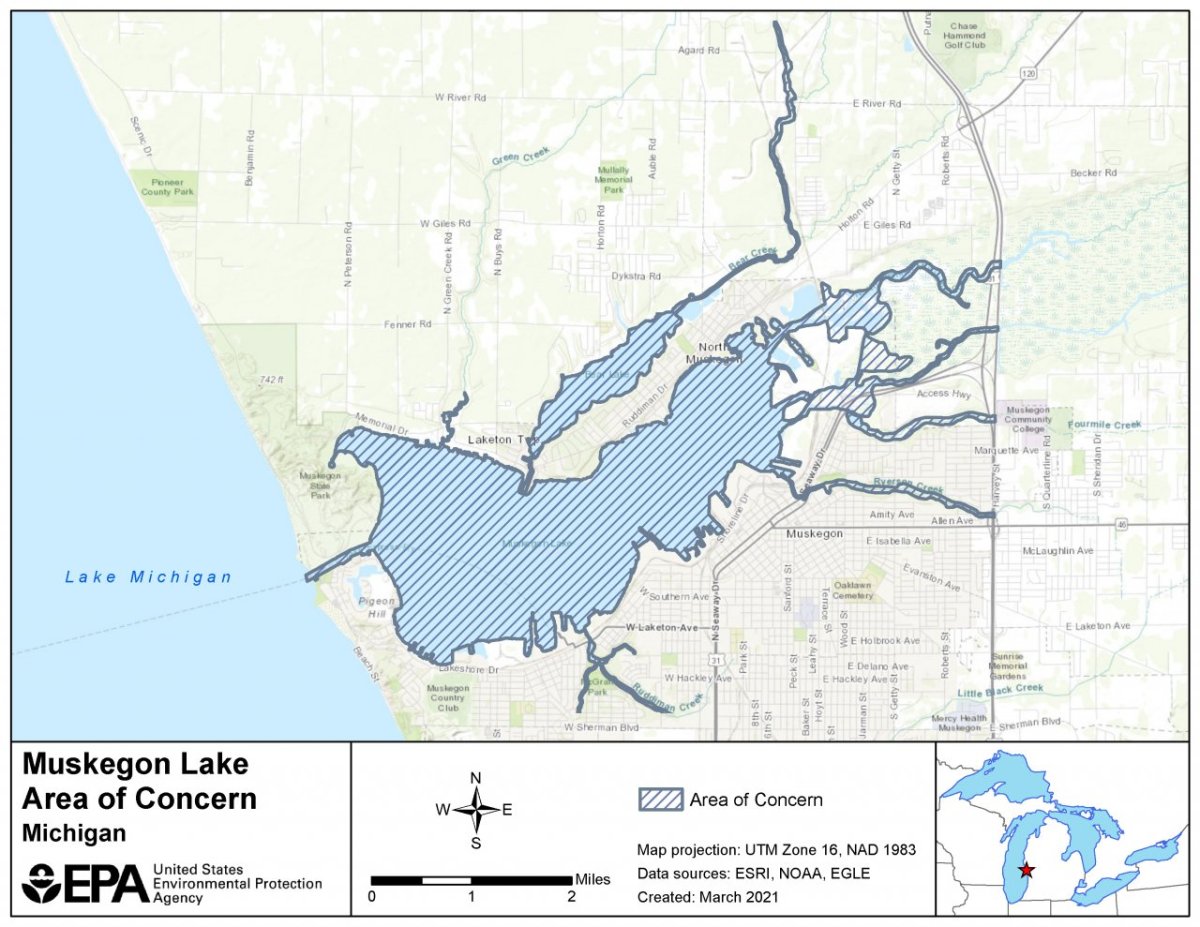
The Michigan Department of Environment, Great Lakes and Energy announced Wednesday that, after decades of community engagement and cleanup efforts, a West Michigan Lake has been removed from a list of the most polluted sites in the Great Lakes region.
EGLE officials gathered with federal and local leaders, including from the Great Lakes and St. Lawrence Cities Initiative, at Heritage Landing park in Muskegon to celebrate the removal of Muskegon Lake from the U.S.-Canadian roster of Areas of Concern around the Great Lakes.
These sites are characterized by high levels of historical pollution requiring cleanup, with the 1987 U.S.-Canada Great Lakes Water Quality Agreement establishing the Areas of Concern program to address the worst pollution. However, Muskegon was considered an area of concern before the program came into place, earning the label in 1985 after a century of pollution from industry and municipal waste.
“Completing this long journey of recovery, restoration, and renewal is a tremendous community achievement that EGLE has been proud to assist,” EGLE Director Phil Roos said in a statement. “Along with many partners, we celebrate today’s success and look forward to supporting tomorrow’s stewardship and growth.”
Muskegon Lake covers 4,149 acres and flows into Lake Michigan from its location along the coast of the lower peninsula.
The cleanup was a joint effort between EGLE, the U.S. Environmental Protection Agency, local governments and tribes, and partners including Grand Valley State University, the Muskegon Conservation District, the West Michigan Shoreline Regional Development Commission and federal agencies including the National Oceanic and Atmospheric Administration, the U.S. Army Corps of Engineers and the U.S. Fish and Wildlife Service.
According to EGLE, federal, state, and local project partners remediated more than 190,000 cubic yards of contaminated sediment and restored approximately 134 acres of habitat and more than 6,000 feet of shoreline including nearly 100 acres of open water and emergent wetlands, as well as habitat for fish and native plants.
The groups also removed more than 110,000 tons of logging-era sawmill debris from the lake.
EGLE says total remediation and restoration costs totaled more than $84 million, including $67 million in federal funds largely through the Great Lakes Restoration initiative alongside $17 million in state, local and private contributions.
Muskegon Lake is the fourth area of concern in the state to be delisted, while ten sites remain.
