Amelia Schafer
ICT + Rapid City Journal
RAPID CITY, S.D. — Rapid City’s Main Street Square was lined with Indigenous artists showcasing their work on the weekend of July 8-9 for the eleventh annual Native POP: People of the Plains market.
This year’s Native POP kicked off Friday, July 7 with a juried art show at the Journey Museum, followed by the two-day market and Saturday fashion show.
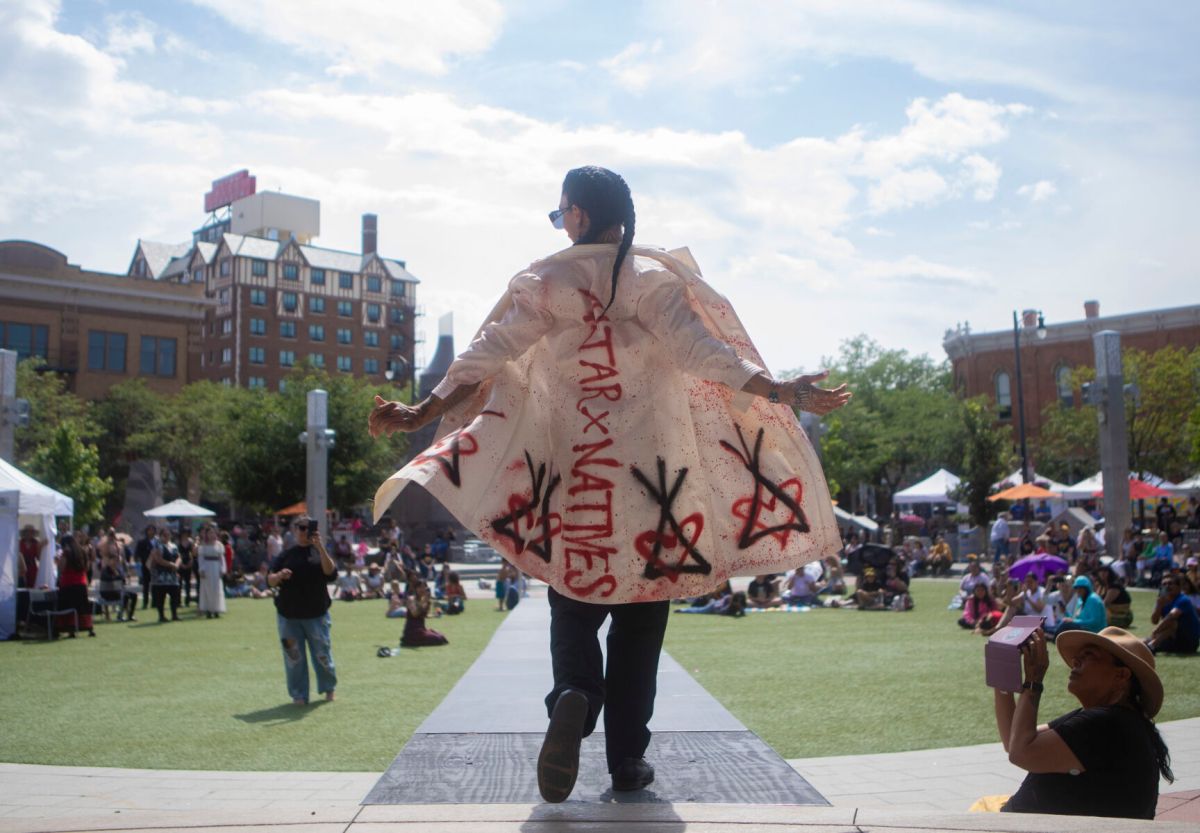
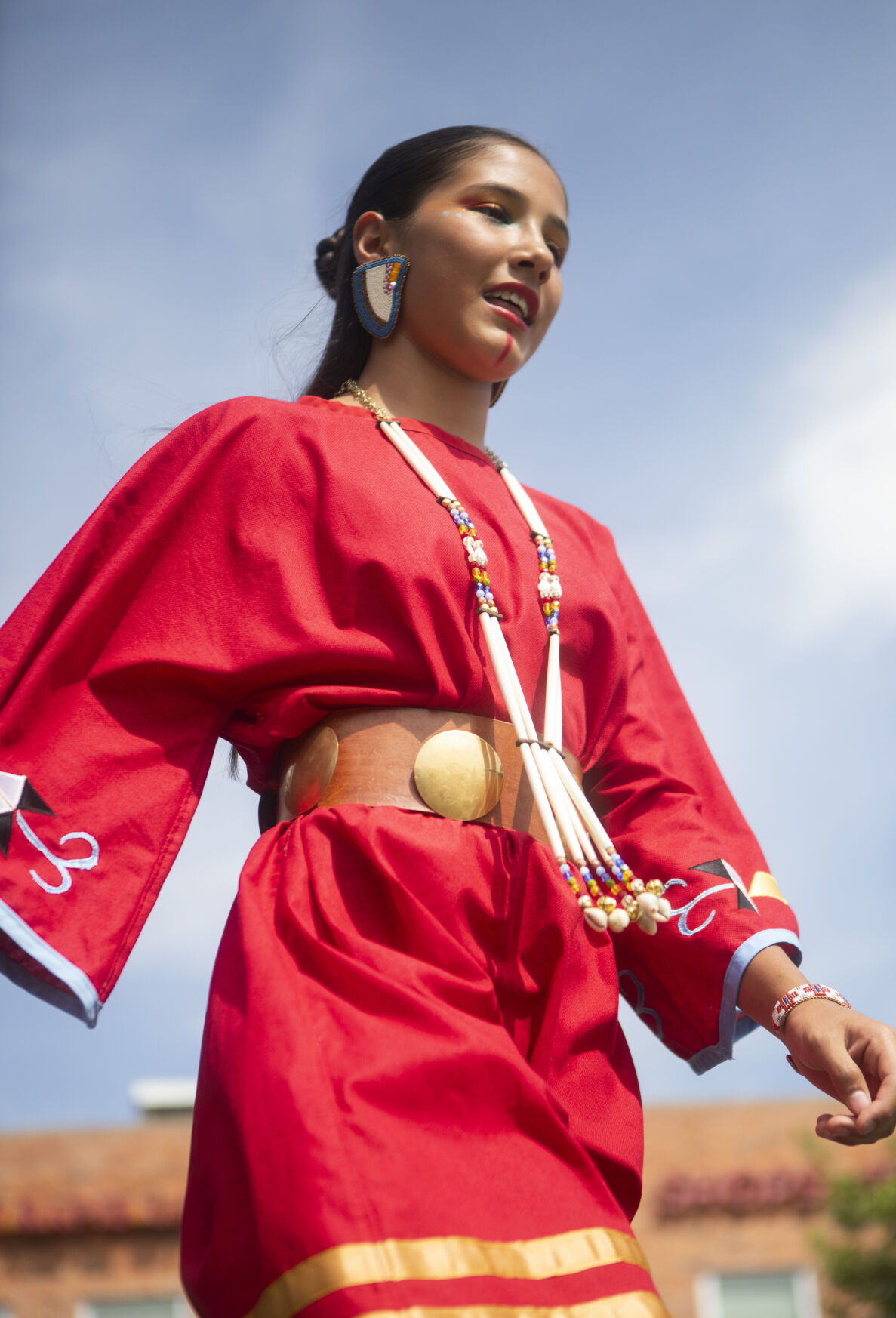
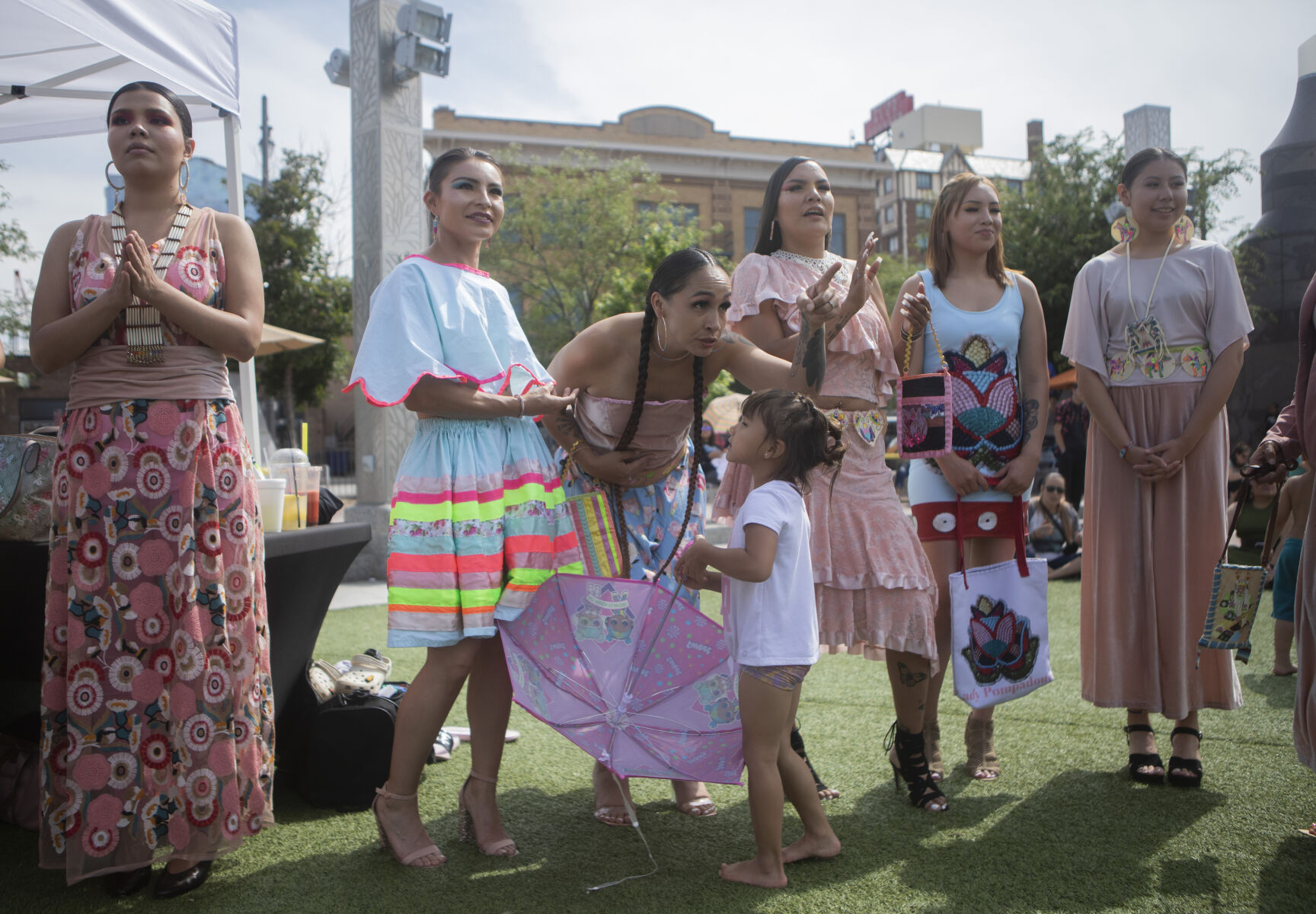
During the fashion show, Indigenous models representing six Indigenous designers graced the runway in stacked ribbon dresses, leather, fringe, beadwork and more.
Among the designers was the AltarxNatives trio: seamstress and small business owner Caitlin Hein, Sicangu Lakota from Mission, S.D.; leather worker Ryia LeBeau, Oohe Nunpa Lakota from Eagle Butte, S.D.; and visionary Eunice Straight Head, Mniconju Lakota from Eagle Butte, S.D.
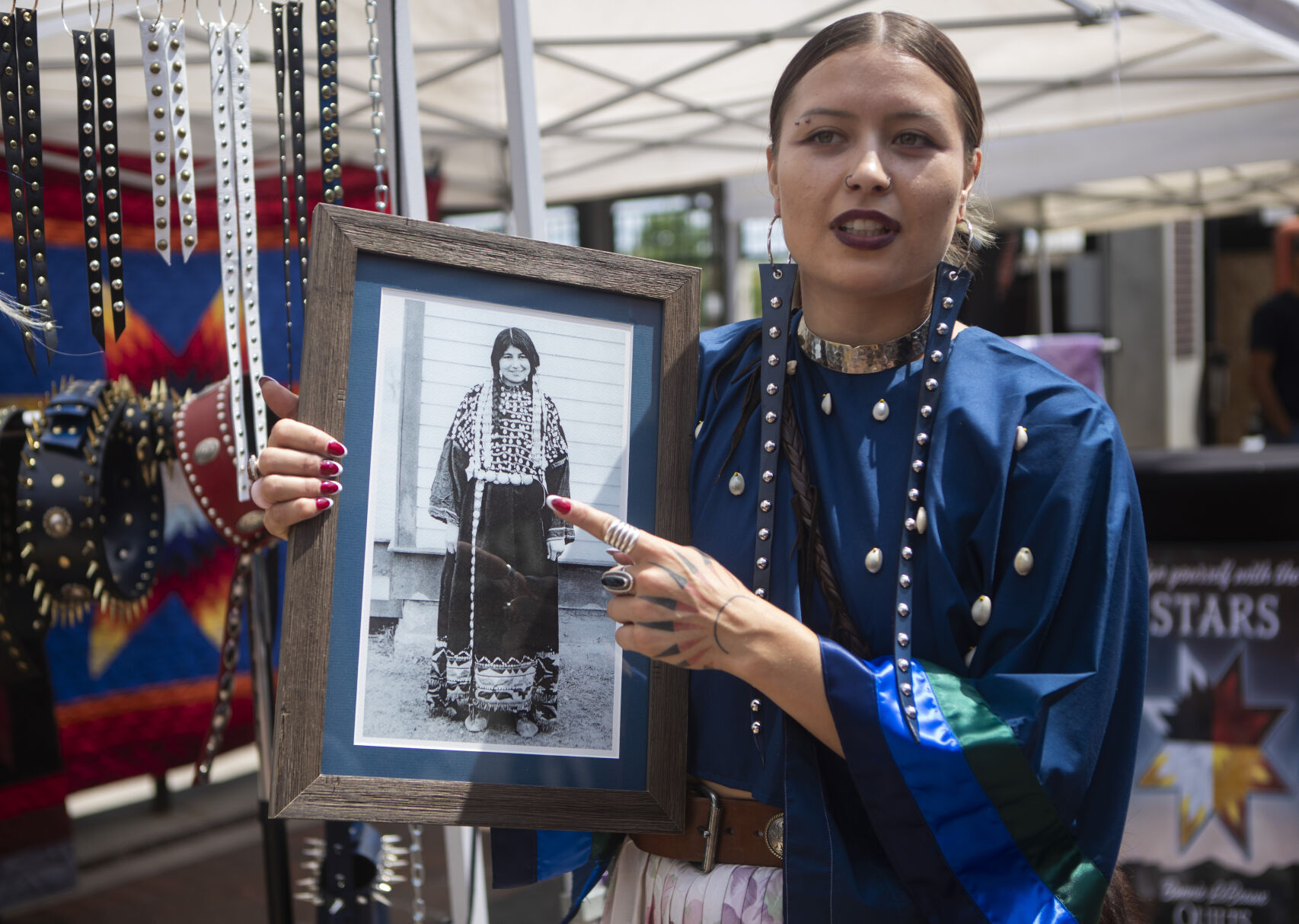
All three also vended during the market portion. LeBeau had a booth alongside her mother Bonnie LeBeau’s star quilts. The booth featured a photo of her great-great grandmother, whose son (her great-grandfather) inspired her to become a leatherworker. LeBeau still uses her great-grandfather’s leather-working tools today and used them to create her pieces for the collection.
The AltarxNatives collection was inspired by alternative fashion with an Indigenous twist. Models walked the catwalk to Beyonce’s “Alien Superstar” in studded leather chokers, leather earrings and leather concho belts. Straight Head finished out the AltarxNatives portion of the show wearing a massive wide-brim hat with floor-length fringes.
(Related: Bringing alterNative fashion to Rapid City)
This was the first test run for AltarxNatives, and it went extremely well, Straight Head said. The trio is now planning on making logos and a fall collection that will lean more toward goth/punk with warm-colored pieces.
“I think we’ve found ourselves, an expression of ourselves, and we complement each other so well,” LeBeau said.
On Friday, Straight Head was awarded best in the photography division for her image, titled “Liberation Day,” which documented the 50th annual Wounded Knee Anniversary.
“We are very ambitious and passionate and expressive of our creative outlets,” Straight Head said.
The group is hoping to be at the Santa Fe Indian Market next summer. The Native POP pieces are currently available for purchase through Garbage Tale Vintage at 626 St. Joseph St. in Rapid City or online by messaging Garbage Tale Vintage on social media.
Also among the designers was Darla Takes The Knife, Hunkpapa Lakota and a citizen of the Cheyenne River Sioux Tribe. After 17 years, in 2001, Takes The Knife quit her job at Indian Health Service (IHS) to pursue a full-time career in fashion design for her brand, Ohopa.
“I have a dream to make clothing for our Lakota culture and for people to be able to wear, just everyday clothing,” she said.
Takes The Knife’s line for Native POP, called Ni Hopé, means “you look stunning” in Lakota. The Ni Hopé collection featured ribbon t-dresses, shirts and skirts alongside Lakota symbols and art.
Takes The Knife said her dream is to have her own small-scale factory where she can spread out and work. For the time being, Takes The Knife spends her days sewing all over her house.
“It takes over my kitchen and my living room,” she said.
Takes The Knife’s collection will be on sale following Native POP. She is hoping to establish a website where she can sell her clothing.
Aside from the fashion show, the goal of Native POP is to expose the Black Hills area to the art of their Native neighbors, executive director LaFawn Janis, Oglala Lakota, said.
“It brings an opportunity for the Indigenous artists to have an Indigenous-led effort and the economic impact goes directly back into our Native American households,” Janis said.
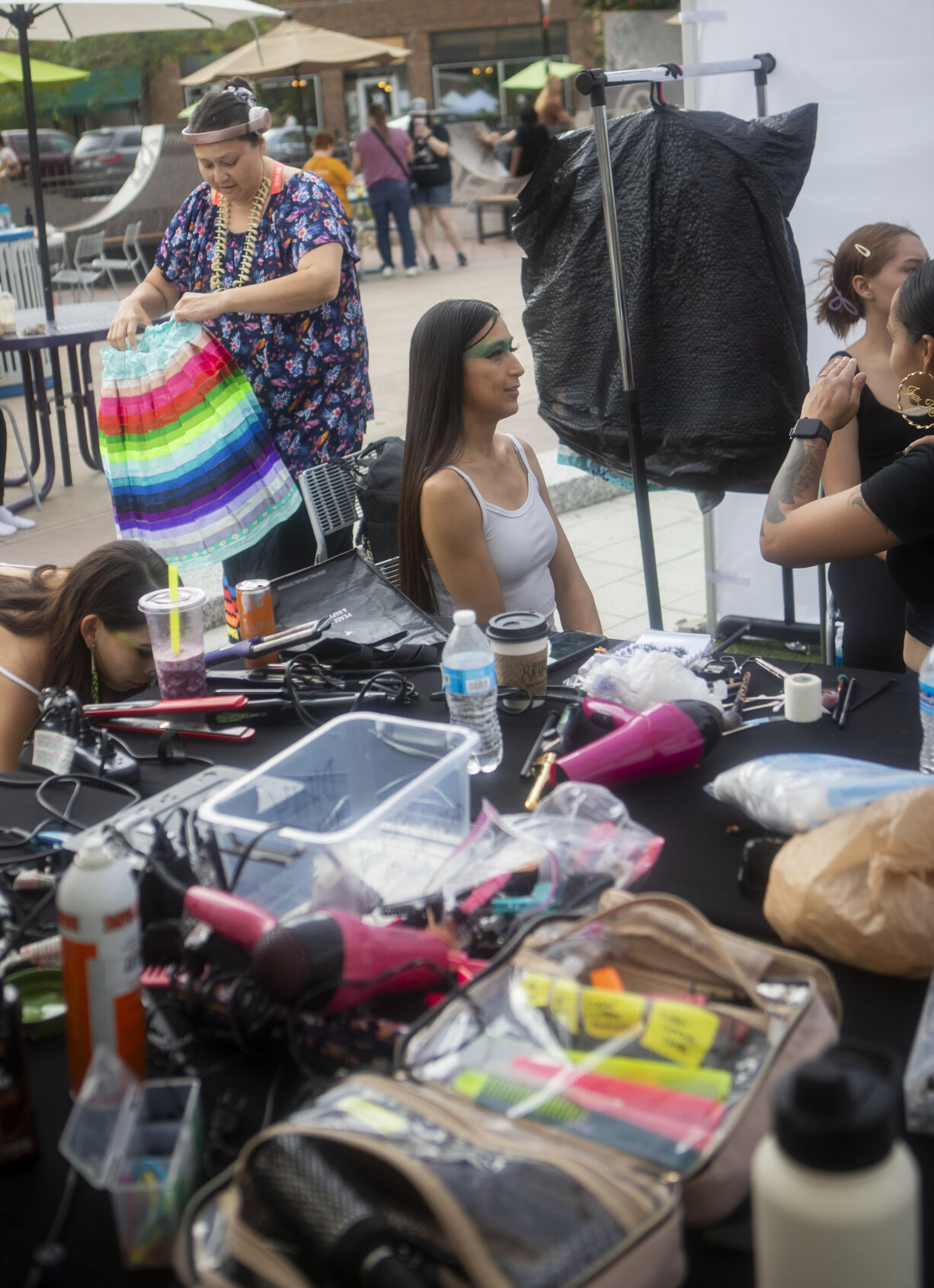
This year, 40 vendors showcased their art during the two-day market, and two booths of culture-bearers were set up to educate attendees. Indigenous musicians played at Aby’s Bar and Grill and Murphy’s Pub.
Tawa Ducheneaux, Cherokee Nation, has been involved with Native POP since 2018 and serves on the board. Ducheneaux said that she’s brought back every year because she feels the need to support the community.
“Obviously, the Black Hills is a tourist destination, but to be able to stop by and have conversations with culture-bearers, see the fashion show, hear the music, all forms of creative expression are supported in this event,” Ducheneaux said. “And I think we’re really proud that we’re entirely volunteer driven.”

This story is co-published by the Rapid City Journal and ICT, a news partnership that covers Indigenous communities in the South Dakota area.
ICT is a nonprofit news organization. Will you support our work? All of our content is free. There are no subscriptions or costs. And we have hired more Native journalists in the past year than any news organization ─ and with your help we will continue to grow and create career paths for our people. Support ICT for as little as $10. Sign up for ICT’s free newsletter.