
Amelia Schafer
ICT + Rapid City Journal
RAPID CITY, S.D. – Downtown Rapid City was alive during the last weekend of June with the return of Pride in the Park, the second annual Two-Spirit powwow and the 12th annual Native POP art market.
On Saturday and Sunday, Rapid City’s Main Street Square was engulfed in Indigenous culture as Native artists gathered to display and sell their artwork.
Artists came from all walks of life, mostly from local tribes and the Great Plains area in general.
“It started from a group of people who felt that there needed to be an art market on this side of the state,” said Raine Nez, Sicangu Lakota and the Native POP executive director. “Beforehand there was one in Sioux Falls and I don’t even know if that’s still running, so that makes it even more critical for us to keep going.”
One artist vending at the market, Tani Gordon, said she gains inspiration from her lived experience. The Sicangu Lakota painter represents her trauma, growth, self-love and resilience through her abstract colorful pieces.
“I’ve been through a lot in my life, so art is really what helped me and I intuitively draw,” Gordon said.
Gordon, who is from the Okreek community on the Rosebud Reservation, has been coming to Native POP to sell her art for nine years.

“I get to talk about my art and show my art and that’s all I ever really want to do,” Gordon said. “This is one step that helps me grow in my art path and as an artist, I’m broke. So the more opportunities we have to sell to the public with no weird strings attached, the better for us.”
Gordon has been an artist her entire life, practicing several different mediums. At her Native POP booth, she displayed a variety of colorful paintings alongside a beadwork stand.
Many of her paintings feature rabbits, which Gordon said is a representation of one’s inner child. Other paintings focus on addiction, body image, toxic relationships and issues that have affected those surrounding Gordon.
“I kind of shied away from [art] for a while and I’ve been in a lot of abusive relationships,” Gordon said. “Then eventually I decided to go to art school on the Rosebud Reservation.”
Gordon received a bachelor’s degree from Sinte Gleska University, a tribally operated college in Mission, South Dakota, which allowed her to expand her horizons and explore different mediums.

“If you’re feeling creative just do it,” Gordon said. “I think fear and anxiety limit us but there’s no such thing as bad art. I think creation is healing, just go for it.”
While several returning artists like Gordon traveled to the Black Hills to showcase their art, new artists, new elements and new leadership also entered the scene.
Nez herself took over as the executive director in February, replacing LaFawn Janis. Nez previously served as a board member and has been involved in Native POP for three years.
“I decided to pick up the executive director position because I understood that this needs to keep going not only for the community but for the artists of the Great Plains,” Nez said.
Aside from new leadership, this year the Cheyenne River Youth Project came down to paint several murals in downtown Rapid City in art alley.
“This was in collaboration with the Dahl Art Center,” Nez said. “Because we have culture bearers we wanted them to display something, display their art and how they do it.”
While Nez doesn’t consider herself to be an artist, she was raised surrounded by art. Her father and brother are both artists.
“It was just all around me, and it was an interest of mine,” Nez said. “It was definitely a passion of mine.”
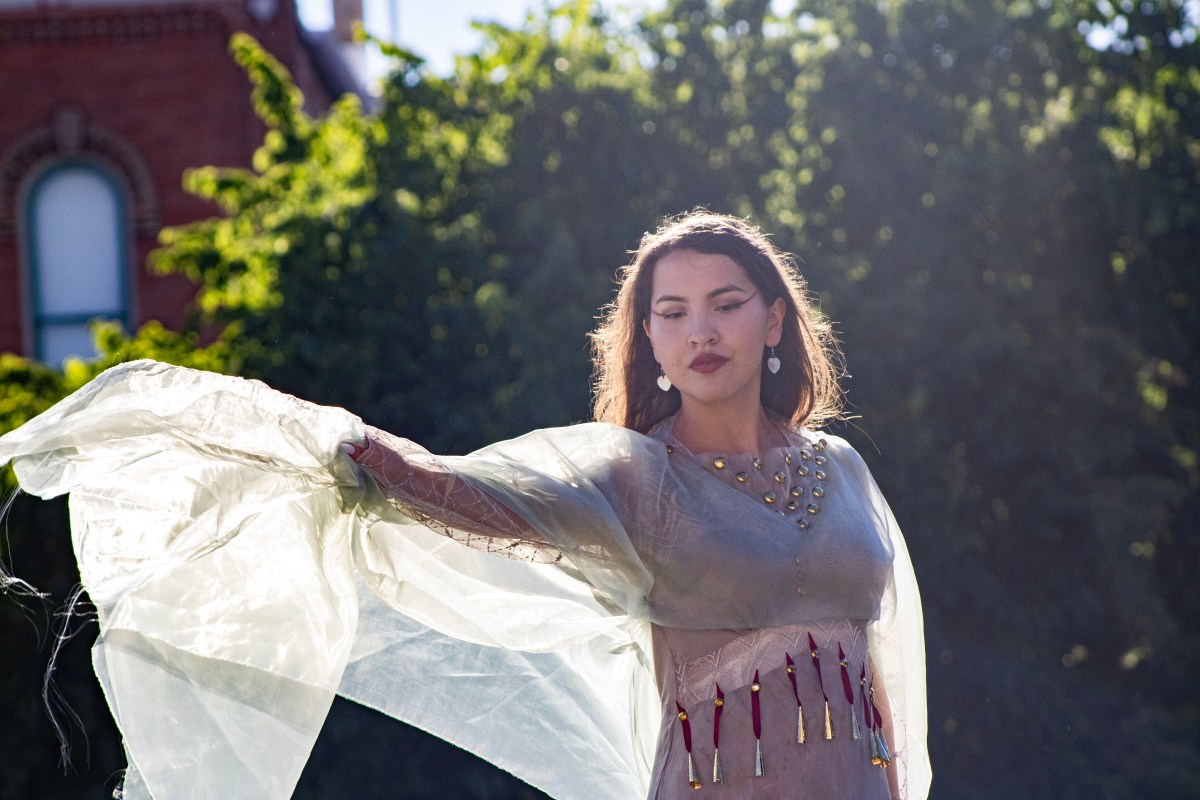
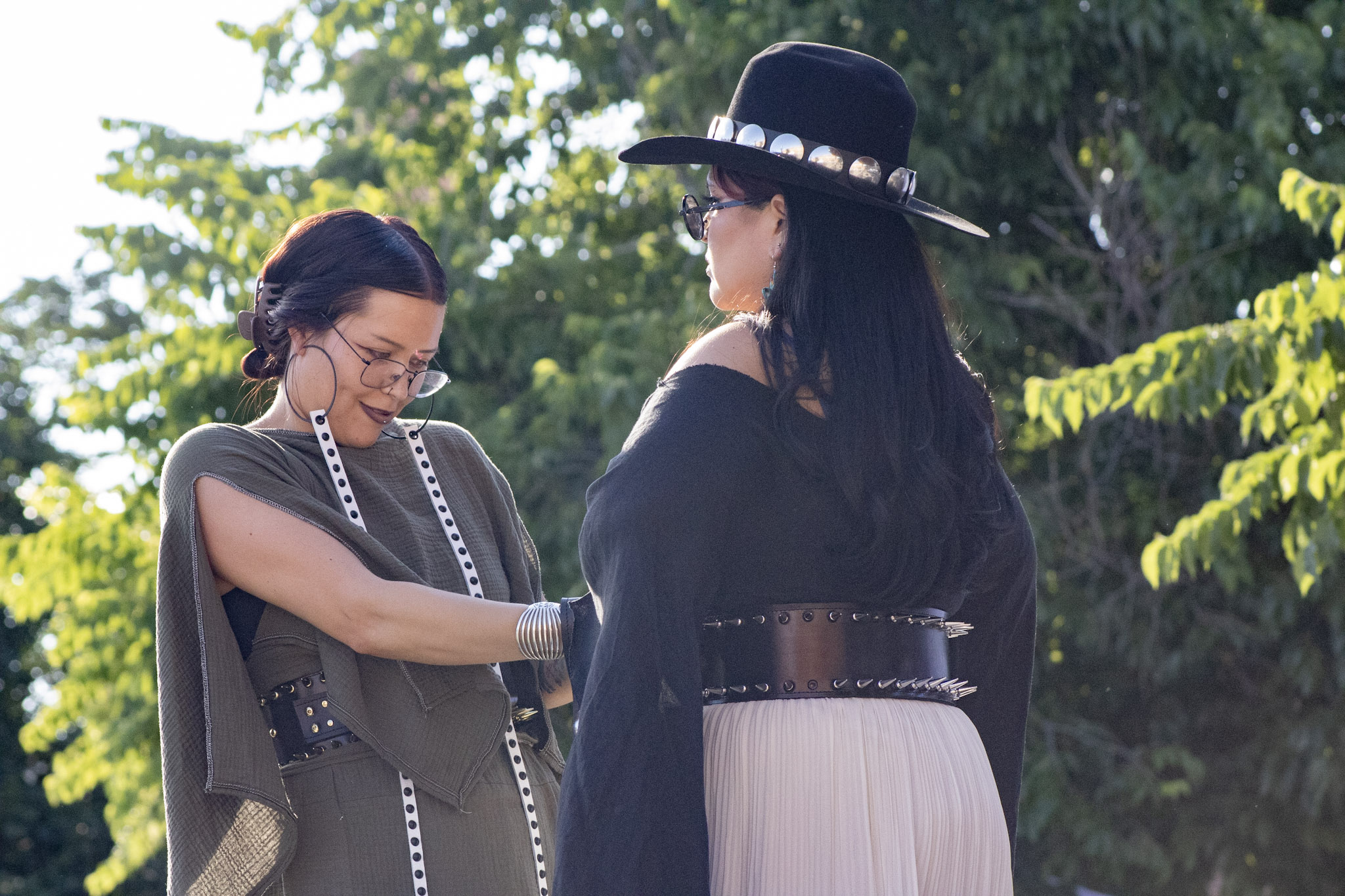
On Friday, artists submitted their creations to be judged at the Suzie Cappa Art Center in downtown Rapid City. On Saturday, the market began and the annual fashion show kicked off that evening.
This year, newcomer James Star Comes Out kicked off the fashion show with his elaborate parfleche-inspired ribbon skirts. Star Comes Out also took Best-In-Show from Friday night’s juried art show.

Star Comes Out won with his piece “Ciye, hena taku ca yakin hwo?” That name translates to “older brother, what are you carrying on your back?” The piece was an iktomi, or trickster, doll made from glass beads, buffalo hide, horse hair and brass.
The fashion show featured designs from Indigenous Amazonian culture, Lakota culture and contemporary ribbon applique influences.

This story is co-published by the Rapid City Journal and ICT, a news partnership that covers Indigenous communities in the South Dakota area.
Our stories are worth telling. Our stories are worth sharing. Our stories are worth your support. Contribute today to help ICT carry out its critical mission. Sign up for ICT’s free newsletter.

