
Jourdan Bennett-Begaye
ICT
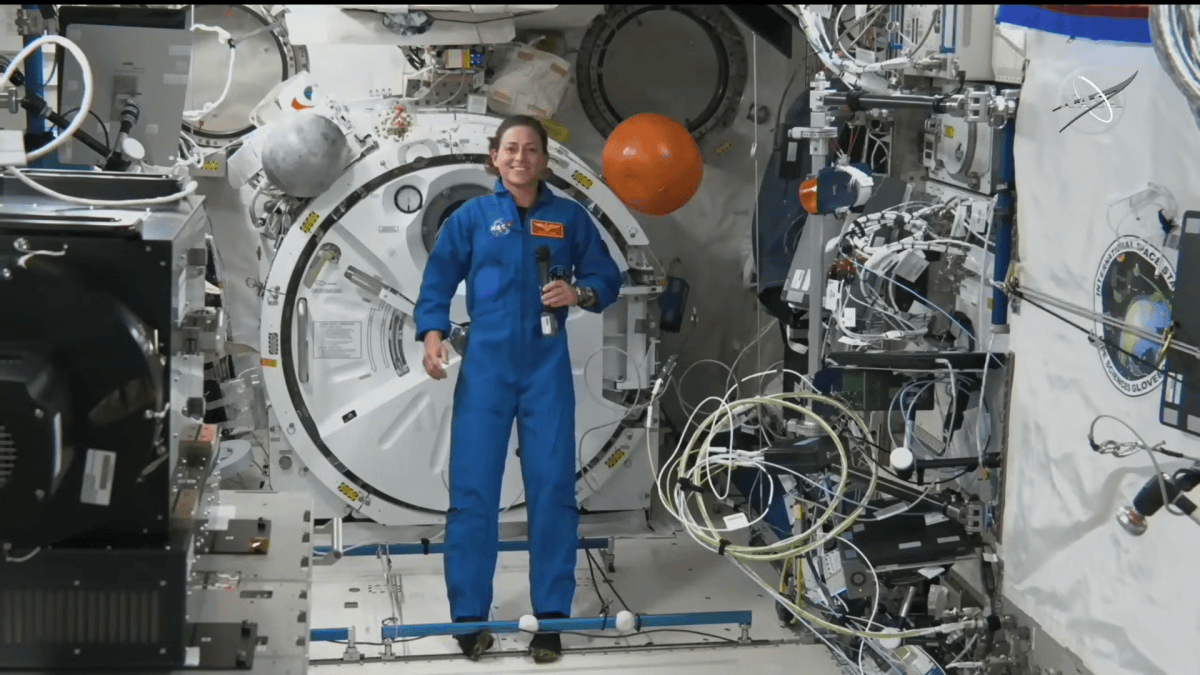
NASA Astronaut Nicole Mann’s feet hooked under a blue post on the International Space Station to prevent her from floating out of the camera frame. She occasionally allowed the microphone to float in front of her while answering media questions, and would grab the microphone before it floated too far from her.
The first Native woman to travel to space left a message for children in her community: “Please know that I carry your hopes and your dreams with me to the International Space Station. And I hope for you that you will be able to achieve your dreams and I pass along the energy for you to persevere in your childhood to do everything that you aspire to do in life.”
The Associated Press’ Aerospace writer Marcia Dunn tossed questions to Mann gathered from Indigenous news outlets from across the country and AP members for a 20-minute interview. The first in-flight interview with the International Space Station Expedition 68 since NASA’s SpaceX Crew-5 docked the space station Oct. 6.
Mann, Wailacki of the Round Valley Indian Tribes, has been living aboard the space station since and will for the next five months conducting 200 scientific experiments. “There’s a lot of incredible science that we’re doing,” she said.
The view of Earth in the last couple of weeks has blown her away.
“It is an absolutely incredible experience. I thought about it a lot before launch and wondered what it was going to feel like and it’s difficult to explain because the emotions are absolutely overwhelming. It is an incredible scene of color, of clouds and land,” she said. “And it’s difficult not to stay in the cupola all day and just see our planet Earth and how beautiful she is and how delicate and fragile she is against the blackest of black that I’ve ever seen space in the background.”

Her legacy is part of the larger legacy of Native women — and Native people — contributing to the aerospace industry that dates back 80 years when Cheroke citizen Mary G. Ross’ was hired by Lockheed. Mann is the second Native astronaut in space. Navy veteran John Herrington, Chickasaw, was the first Native person 20 years ago.
The 45-year-old said she is grateful for those breaking down those barriers before her.
“There’s a long line of people that broke down barriers throughout the years to create these opportunities, and I feel grateful to be able to participate and represent onboard the International Space Station and I really hope to continue that inspiration to other young children around the world,” Mann said. “It makes me proud to be able to follow in the footsteps of those trailblazers of those other Native Americans and Native American women that have been involved in aerospace industry and in engineering.”
As Herrington did, Mann showed us her personal keepsake she took with her: a dream catcher her mother gave her as a kid.
Related:
— First Native woman in space
— First Indigenous woman launching into space
— First Indigenous woman on the space station
— Indigenous astronauts in space
She usually keeps it in the crew quarter but tucked it into her pants pocket for the interview. She brought it out to show the camera how the feathers float in different directions.
“It’s a very small one because space is limited on the International Space Station. It’s pretty amazing in microgravity because it just floats and the feathers kind of go every which way,” Mann said. “And so I have that in my crew quarters every night to remind me of my family and my community.”
In fact, the biggest inspiration for her career was the importance of family and community. They are the ones she draws strength from when times are difficult or frustrating, and, in this case, a successful mission.
“I’ve received lots of blessings and prayers from my family and lots of strength,” she said.
Mann said she also relies on her mother’s advice of positive energy.
“I think I focused on that positive energy quite often, especially on launch day there was so much going on. It was such a very exciting day. There was actually a lot of really great energy,” she said. “But when it came time for us to launch and to execute our operations on board Dragon, we really needed to maintain a focus on executing that mission. The same holds true here on the International Space Station.”
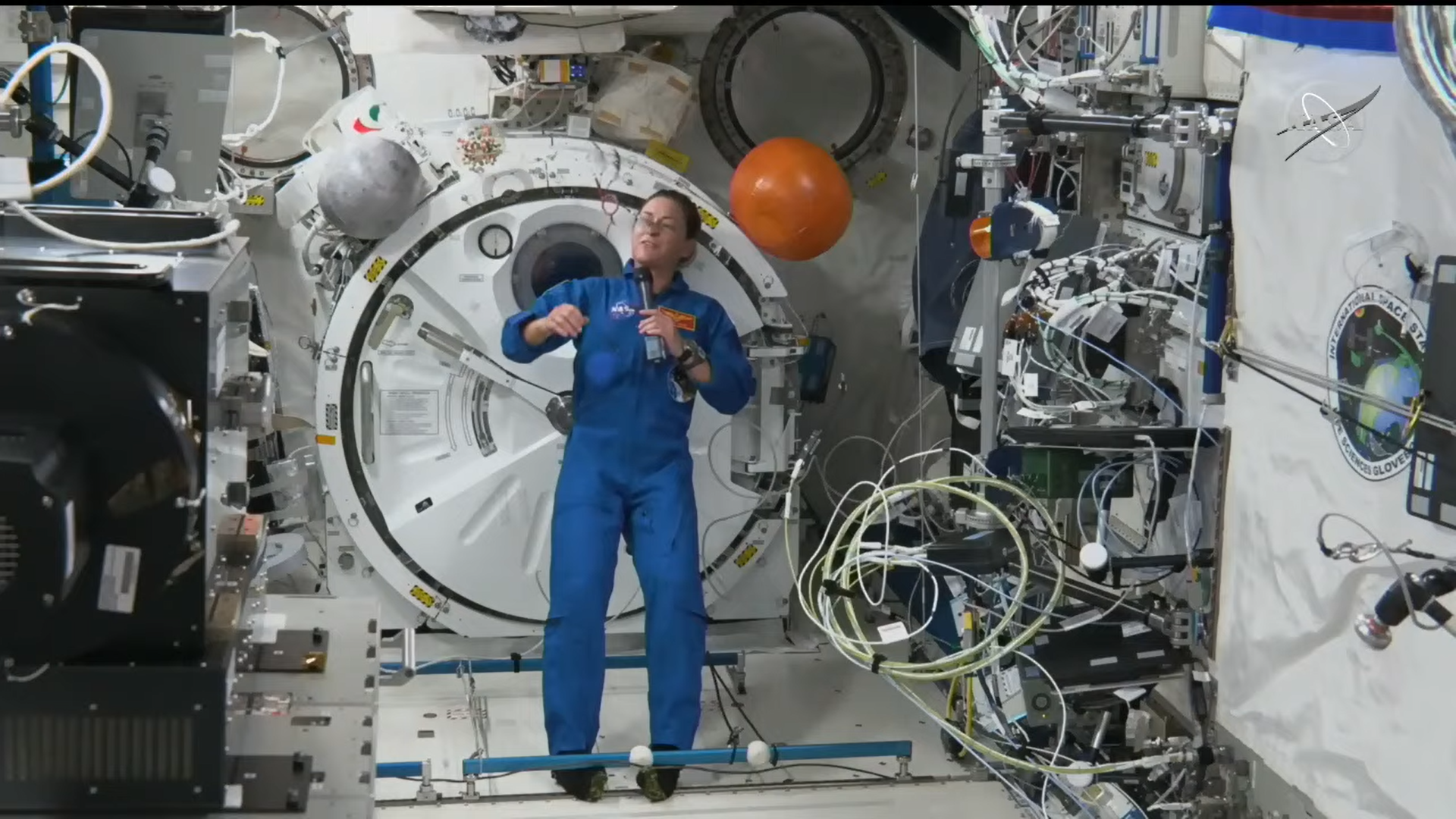
The same focus will come into play for space walks, which Mann says, will be a “high stressful time” for the two weeks leading up to it.
“It’ll be important that the entire crew focuses during that time and stays focused on the mission,” she said. “And at the same time, make sure that we take care of our own well-being so that we can sustain and have that endurance to last throughout these high stressful situations.”
Mann hopes to find time to do the “fun things” in between work and living on the space station like looking at the constellations.
“There’s a lot of lights on board, so you need to find the time after working hours when it’s dark. Unfortunately, I haven’t had a chance to do that yet since I’ve only been up here two weeks, but it’s definitely on my bucket list.”

Our stories are worth telling. Our stories are worth sharing. Our stories are worth your support. Contribute $5 or $10 today to help ICT carry out its critical mission. Sign up for ICT’s free newsletter.

