
Amelia Schafer
ICT + Rapid City Journal
RAPID CITY, S.D. – The recent blocking of a proposed uranium mine is just one of the many steps the Oglala Sioux Tribe says it’s taking to protect the Black Hills.
Throughout the summer, the Oglala Sioux Tribe and other Oceti Sakowin nations have taken several different pathways toward change, including memorandums of understanding with the U.S. Forestry Service and even blocking a proposed uranium mine.
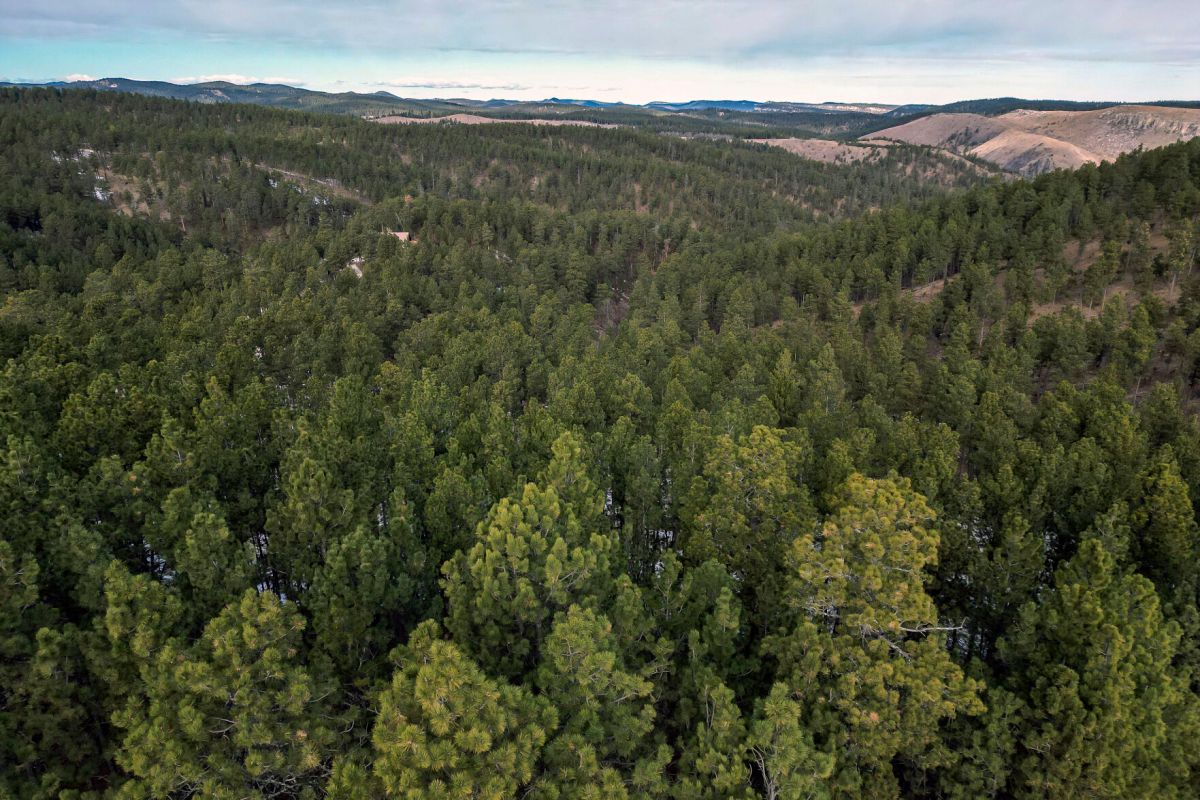
The Black Hills, or He Sapa, are sacred ancestral territory for over a dozen tribes. The hills are central to different creation stories and pivotal oral history passed down through generations. For Oceti Sakowin tribes – Lakota, Dakota, Nakota – He Sapa is the center of the universe. To the Oglala Sioux Tribe and others, protecting these lands is paramount, said President Frank Star Comes Out.
Mining project delayed
On Sept. 5, the Oglala Sioux Tribe announced it had successfully sued to have mining permits rejected for the Powertech Dewey-Burdock uranium mine in Fall River and Custer Counties.
“We have these aquifers we’re concerned about,” said Star Comes Out in an interview with ICT and the Journal. “Ultimately, if one of these mines were to contaminate the aquifer, that’s our main water supply.”
The proposed project would involve situ leach uranium mining, which is done directly in a water-bearing aquifer. For this particular project, mining would be done in the Inyan Kara aquifer, which comprises the Lakota and Fall River formations. The Fall River Formation is the largest producing aquifer in Fall River County, according to the South Dakota Sierra Club.
The tribe filed with the Environmental Appeals Board, a federal agency, which ultimately ruled in favor of the tribe on Sept. 3. Now, the Environmental Protection Agency itself will review the initial permits. The permit process could continue after this, but for now, the mine is delayed.
“Consistent with the Environmental Appeals Board’s decision, EPA is reviewing documents to ensure that the record includes all materials required by the part 124 regulations. That review will determine EPA’s next steps,” said Marisa Lubeck, public affairs officer for Region 8 of the Environmental Protection Agency, in an email.
The permitting errors were linked to a failure to disclose necessary records, the tribe said in a Sept. 5 press release.
“This is a significant decision, requiring EPA’s broad reconsideration of the illegal and rushed
decision to issue the permits in late November 2020 at the post-election close of the Trump
Administration,” said Reno Red Cloud, water resources director for the Oglala Sioux Tribe, in a press release. “The ruling provides EPA flexibility to finally grant the tribe’s longstanding
requests to require Powertech to fund or complete the required groundwater tests and a cultural
resources survey of the renowned historic site it seeks to mine.”
Memorandums provide opportunities for stewardship
In another move, the tribe, alongside several other Oceti Sakowin nations, signed a Memorandum of Understanding with the U.S. Forest Service on Aug. 22 in Rapid City, opening a path toward joint stewardship.
The Forest Service owns a majority of land in the Black Hills, just over 1 million acres. Around 42 percent is privately owned, and the rest of the hills are owned by state, local and federal governments.
“The government feels that the tribes could be influential on this, the effort to protect the Black Hills,” Star Comes Out said. “It could also get our people involved as far as creating economic development programs for our youth, our culture, and our buffalo industry. It’s a win-win situation there.”
In June, the Forest Service announced a partnership with several Oceti Sakowin nations to share co-stewardship of the Pactola/He Sapa visitor’s center, allowing tribes to provide interpretive services to the public at the center.
“We’re looking forward to working with the Forest Service and creating a relationship,” Star Comes Out said. “My administration is about unity, that’s what we’re going for.”
Star Comes Out said protecting the Black Hills has been a pivotal focus of the tribe for decades, and that focus has continued during his time as president.
Tribal elections will be held Oct. 1.
“I feel like I’m just getting started and we’re coming to an end,” he said. “So it’s one of my reasons for running again, to finish getting what I started across the finish line.”

This story is co-published by the Rapid City Journal and ICT, a news partnership that covers Indigenous communities in the South Dakota area.
Our stories are worth telling. Our stories are worth sharing. Our stories are worth your support. Contribute today to help ICT carry out its critical mission. Sign up for ICT’s free newsletter.
