
Amelia Schafer
Special to ICT
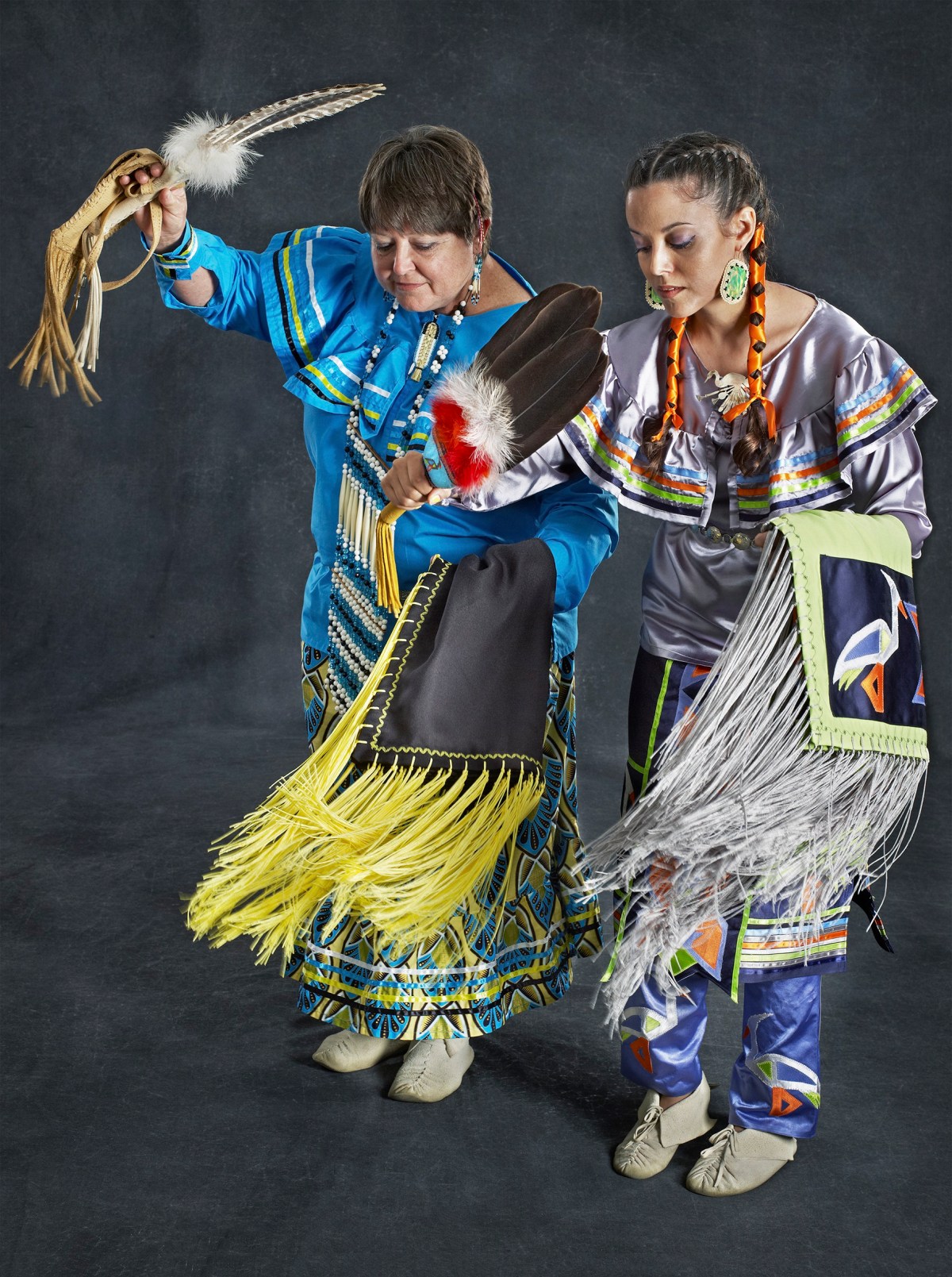
CHICAGO — For the last 12 years, photographer Sharon Hoogstraten of the Citizen Potawatomi Nation has been capturing the joy and resilience of citizens of all nine Potawatomi nations reflected through their dance and regalia.
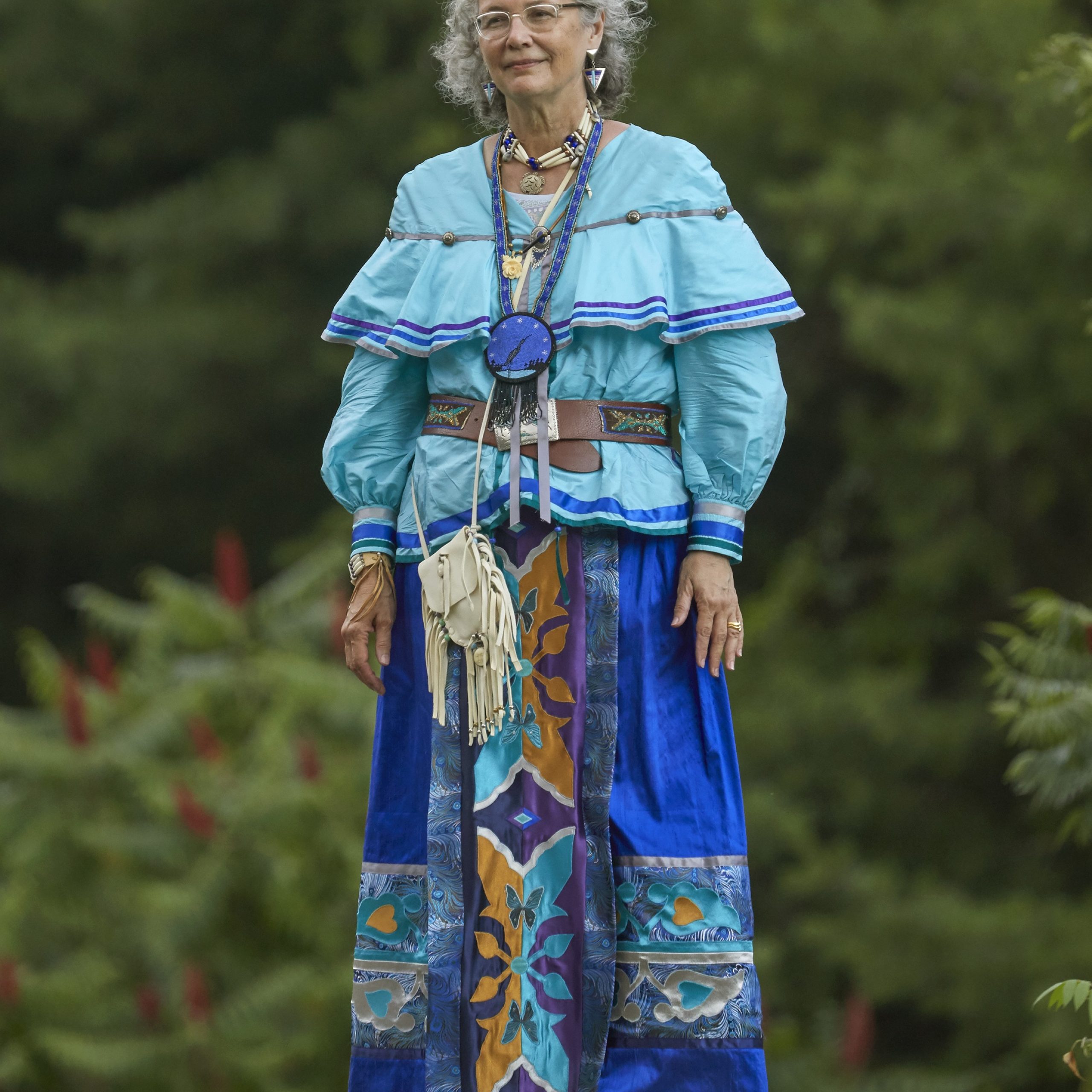
Inspired by her discovery of a photograph of a long-ago ancestor at the Wilmette Historical Society, she wanted to preserve photographs of current Potawatomi citizens for future generations, in vibrant color with smiling faces and laughter.
“Photography is a way to tell a story,” Hoogstraten told ICT recently. “It opened up a whole new world for me. It’s storytelling, and in Native life, storytellers are a guardian of your history.”
Her work has now been published in a new book, “Dancing for Our Tribe: Potawatomi Tradition in the New Millennium,” by the University of Oklahoma Press, featuring tribal citizens in their own regalia.
She traveled to each of the Potawatomi nations to photograph those who showed up, starting with the Pokagon Band of Potawatomi Indians, located between Chicago and Kalamazoo, Michigan. She would later travel to her own nation, the Citizen Potawatomi Nation in Oklahoma, as well those in Kansas, Ontario and elsewhere in Michigan.
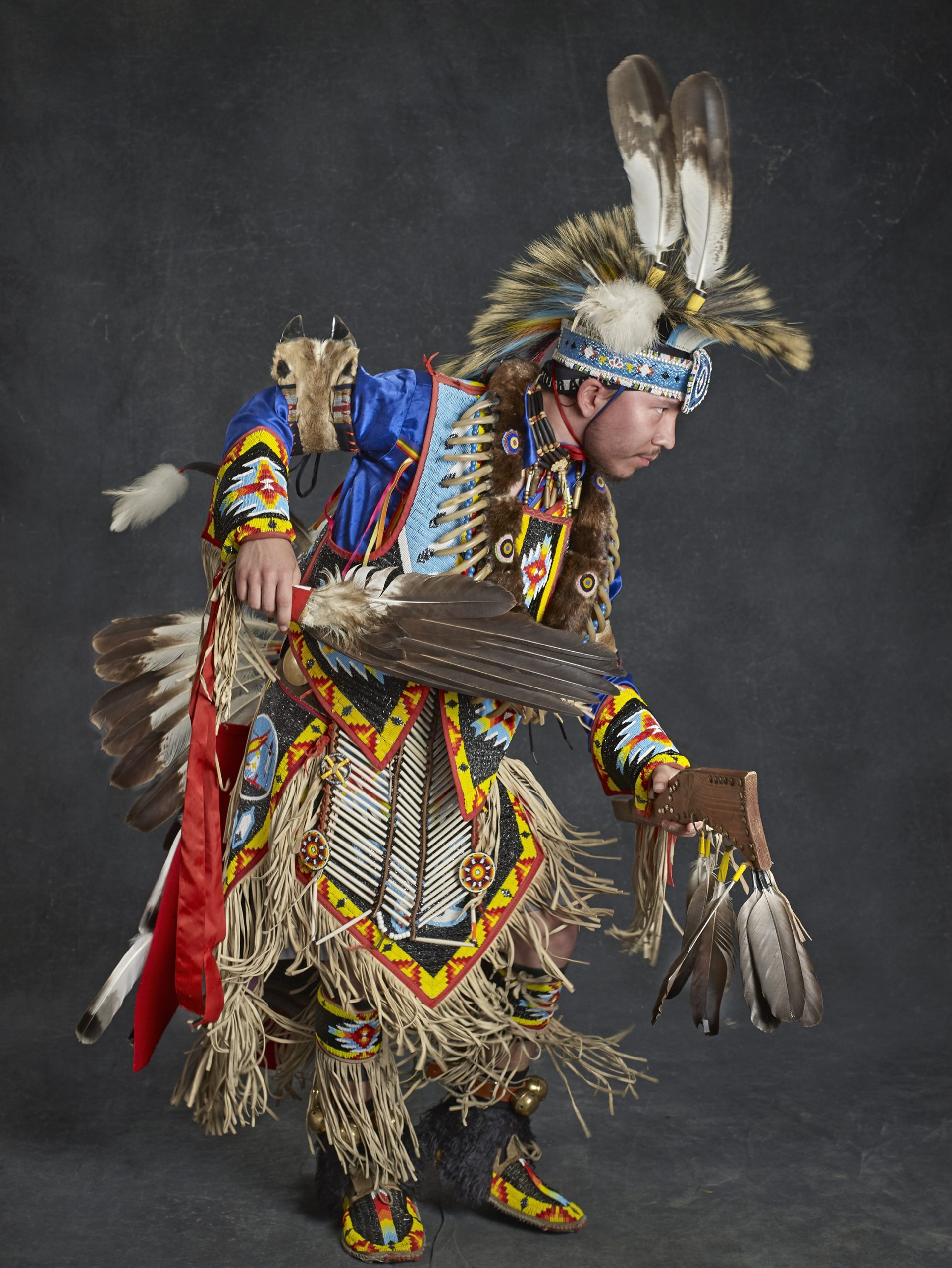
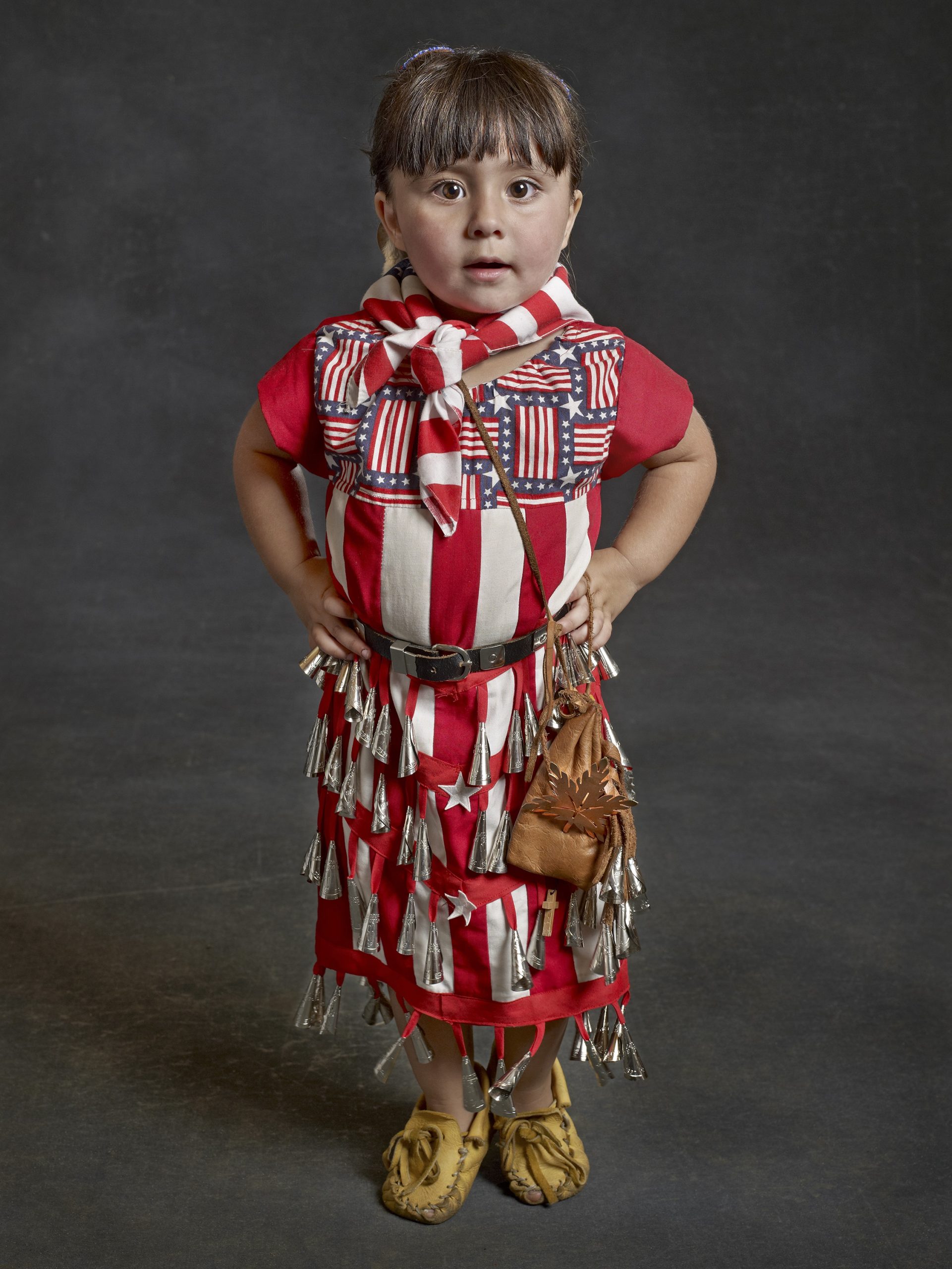
Some of the regalia included pop-culture elements, such as duct tape, and other personal touches that make them unique. One child had an American flag on one side of his shirt and a Canadian flag on the other, so he could switch them depending on which pow wow he attended.
SUPPORT INDIGENOUS JOURNALISM. CONTRIBUTE TODAY.
Nearly every element has meaning, and each photo comes with a story. Hoogstraten asked participants in the project to write a brief description to highlight the meaning behind each ribbon, each stitch and each element.
“It just got its hooks in me,” Hoogstraten said.
Stories to tell
Credit: Photo by Sharon Hoogstraten
The idea to include the meaning behind each photo came from the first photo she shot for the project.
A man came in to be photographed wearing a ribbon shirt. At the time, she hadn’t been expecting to have subjects write what their regalia meant to them, but the man’s explanation sparked the idea.
“It was so touching and interesting that I asked him to write it down because I was afraid I’d forget,” Hoogstraten said.
The man’s shirt was white to represent mourning, he said, as he’d just lost his wife. The green, white, red and black ribbons represented the medicine wheels. He used green, he explained, because he found in his studies that green had been the old color used rather than the typical yellow.
During each shoot, Hoogstraten provided space for subjects to dance. She played music in the background to help capture genuine photos, though it did prove to be a bit difficult, especially when it came to fancy shawl dancers, she said.
The Prairie Band Potawatomi Nation shoot in Kansas took place on a 105-degree day. Hoogstraten shot in a shed while her niece managed the computer in an air-conditioned closet, with a hole drilled through the wall to connect the two.
But despite the heat and the swarming bugs, the dancers still came.
“These people come in and they’re in their full regalia and they don’t complain,” Hoogstraten said. “They were invested. They did it for their descendants, they did it for their ancestors — to let everyone know that we’re still here.”
A gift for future generations
The project provided Hoogstraten with insight into her own Potawatomi roots.
Before she moved to Chicago to obtain her master’s in fine arts, Hoogstraten knew family stories of her ancestor, Archange Ouilmette, living in what are now the Chicago suburbs of Evanston and Wilmette. But she wasn’t sure if the stories were anything other than myth.
During a talk at the Wilmette Historical Society, however, she saw a photo of Ouilmette.
Credit: Photo by Sharon Hoogstraten
“I didn’t know through my research on the internet that there were any photos,” Hoogstraten said. “I was in shock. The internet had bad-quality images and maybe they were her or maybe they weren’t. But this was so clearly her, so that was super exciting.”
She realized the importance of creating a record for the future.
“Anytime I see a quality image of someone from seven generations back I get goosebumps all over because I just hope that their descendants will find it,” Hoogstraten said. “Whatever the source is, you know, it’s still a record.”
Hoogstraten, now 68, grew up near Kalamazoo, Michigan, and obtained a bachelor’s in photography from the Rochester Institute of Technology before she moved to Chicago to obtain her master’s from the University of Illinois at Chicago.
Hoogstraten worked as a professional photographer until 2017, when she began to focus on personal projects, including “Dancing for Our Tribe.”
She has also worked in graphic design and animation, winning Emmy awards for her animation for WLS-TV Chicago in 1983 and for two animations for WTTW-TV, Chicago’s PBS station, in 1985.
Originally titled, “Dancing for My Tribe,” the title for the 304-page final product was changed to “our” to reflect the effort of all participants, though not every person who was photographed made it to the final version.
Hoogstraten said she believes her work can serve as a gift to future generations. It also gave back to her by providing a way for her to better get to know her community.
“That’s been maybe the real prize out of this project, is that I got to go to these places,” Hoogstraten said. “It’s just to be known in your own community. Isn’t that really a gift?”
Currently, Hoogstraten is touring the United States to promote her book and is planning on retiring from photography. She said “Dancing for Our Tribe” serves as her “last hurrah.”
“I want to put together some projects that I have been working on over the years, but they’re all personal projects,” Hoogstraten said. “I’m 68. I want to make sure I work on things that matter to me.”
Hoogstraten will make a presentation at the Field Museum in Chicago in January, with several more-intimate presentations around Chicago in December.

Our stories are worth telling. Our stories are worth sharing. Our stories are worth your support. Contribute $5 or $10 today to help ICT (formerly Indian Country Today) carry out its critical mission. Sign up for ICT’s free newsletter.
