Amelia Schafer
ICT + Rapid City Journal
PINE RIDGE, S.D. – After returning home from the Vietnam war, the annual Oglala Lakota Vietnam Veterans Wacipi began as a way to embrace and honor veterans. Eventually, the name Vietnam was dropped, but the powwow continued bringing in new veterans.
“The only place we were honored was home,” said Bryan Brewer, a Vietnam Veteran. “Lakota veterans, we came home and we were honored. Right now we’re trying to honor all the veteran’s coming back, trying to encourage them and welcome them, make sure they have what they need.”
On Friday, the annual Veterans Stand Down provided access to resources that are generally difficult to access. Veteran’s Stand Downs are generally one to three-day events that provide access to food and VA benefits. The Oglala Lakota Stand Down offered free clothing, food, access to VA benefits, legal assistance, employment services, housing referrals and more.
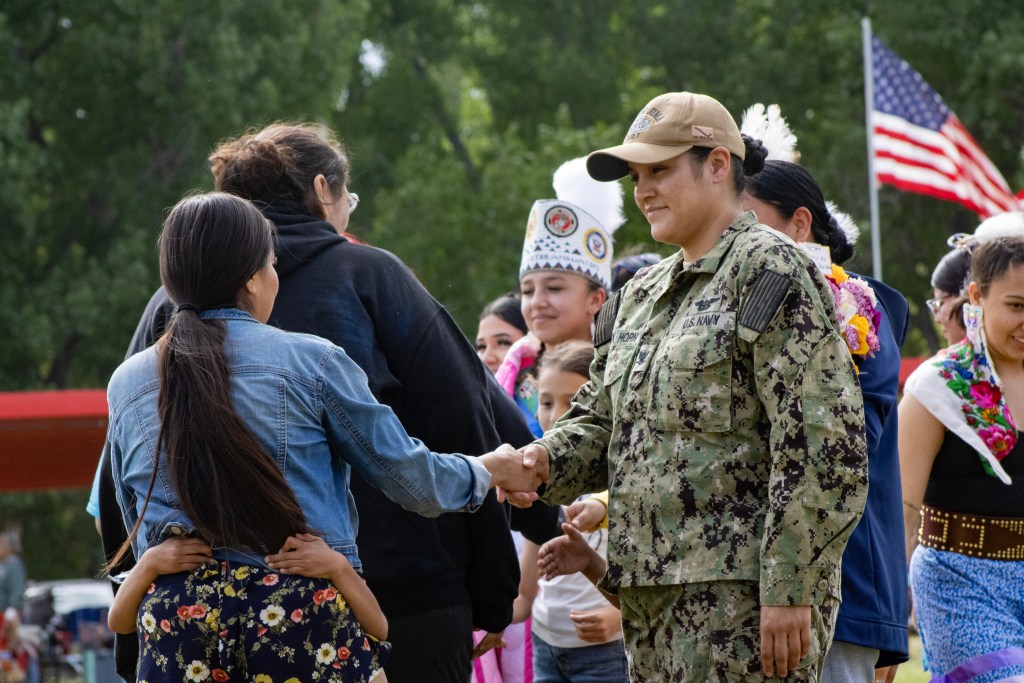
The tribe also worked to bring a mobile optometrist and health clinic to the Stand Down.
“We live in a highly rural environment, our closest hospital is in Hot Springs, when you come down here to the reservation there’s a misunderstanding of the type of treatment that veterans should get,” said Julian Spotted Bear, president of the Veterans Wacipi committee.
On Pine Ridge, 797 people, or 6.4 percent of the reservation’s population, are veterans – half of which said they were not aware of the services and benefits they’re eligible for and were uncertain what was available to them.
“In the past, we’ve talked about how can we get a facility here, how can we bring those services here,” Spotted Bear said. “How can we build something here that’s a full-stop reintegration for our veterans? Or even just a place to go have coffee and sit amongst each other and share stories and whatnot. By having the stand down, I think that’s a huge start.”
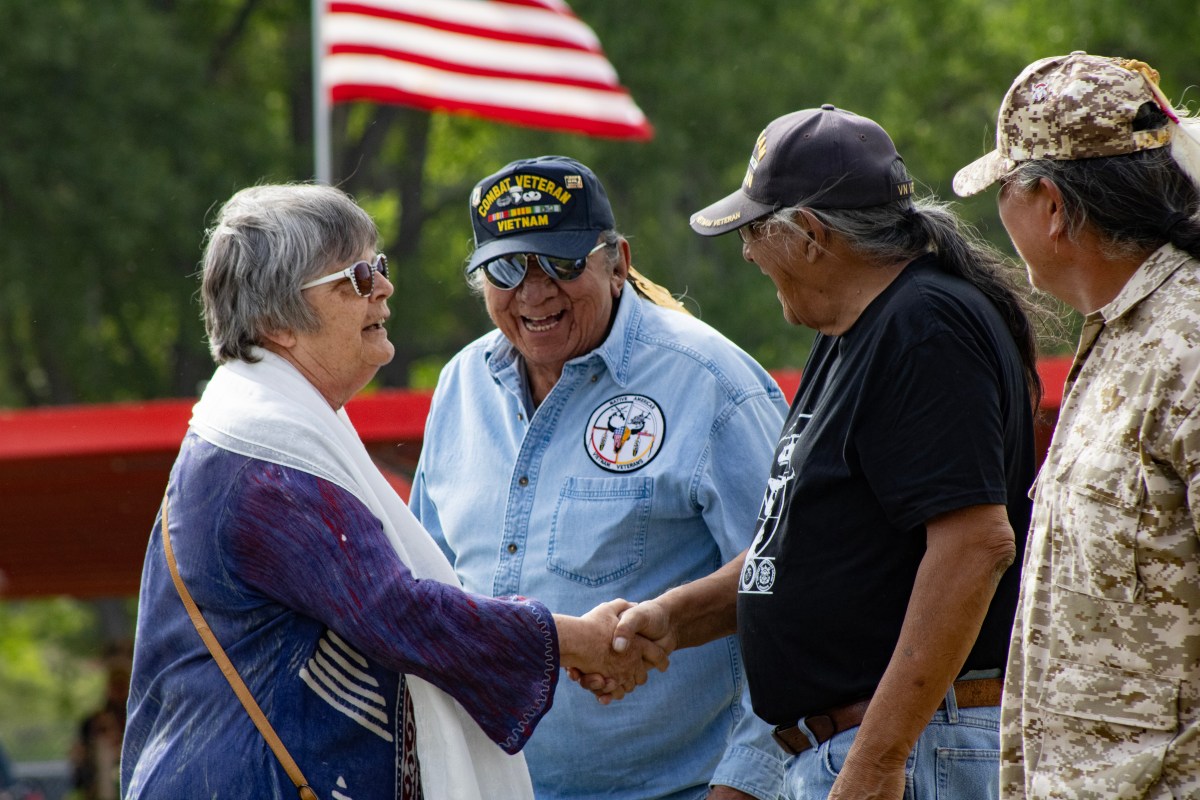
Throughout the weekend, free coffee and meals were provided in the veterans tent. Veterans of all ages gathered to share a meal, stories or just a good laugh.
“We see this (powwow) as part of a healing process,” Spotted Bear said. “After the World War, the Korean War, Vietnam War, we always welcomed back our veterans and celebrated them. This is just continuing the tradition as we move forward.”
Throughout the weekend, several specials and honoring ceremonies peppered the event, dancers competed until after midnight, and community members gathered to watch.
Despite being a contest powwow, traditional elements were still incorporated. Brewer held a red feather honoring ceremony, a very old ceremony that now honors any veteran who has received a Purple Heart. The ceremony was restarted around the 1980s to honor veterans wounded in battle.
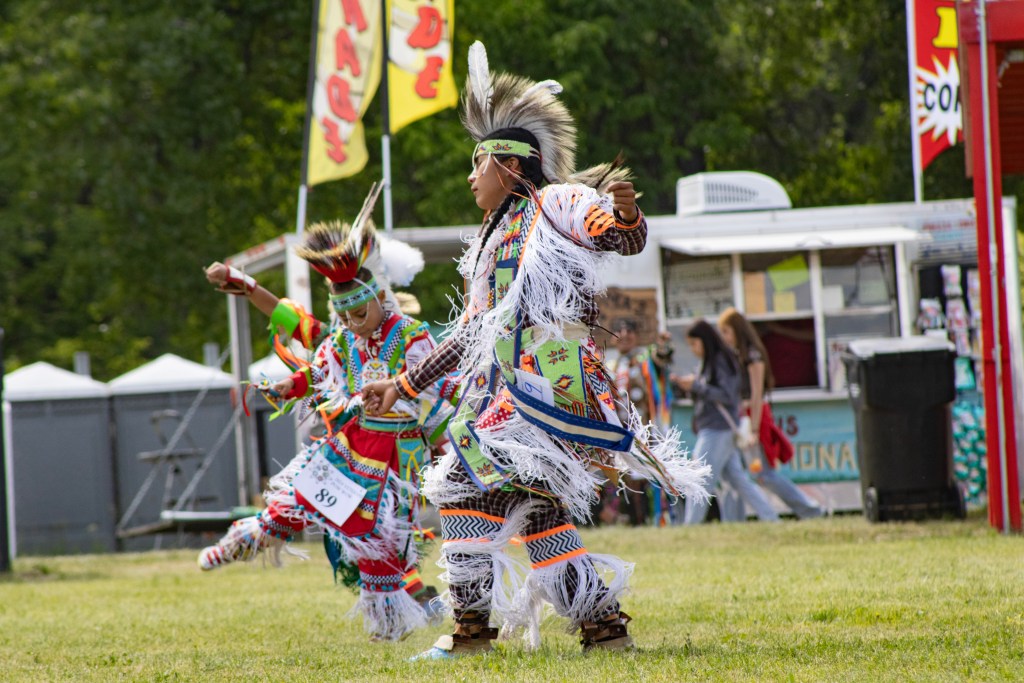
“It’s a celebration of our veterans, it’s about bringing our veterans home,” Spotted Bear said. “We still have Native veterans in active duty, national guard, or abroad. We want them to know that we do this in celebration of our veterans. Inherently, that’s who we are as Lakotas. We fight for our people.”
Native Americans are believed to be among the highest-serving demographic group in the U.S. military, according to the United Service Organizations. Native women in particular serve at a much higher rate than women of any other demographic, with 20 percent of all Native veterans being women as opposed to 15 percent of other groups.
Tribal warrior traditions, a sense of responsibility for protecting one’s community and homeland can all be a driving force behind why so many Lakota serve in the military.
“When it comes to why we should honor our veterans I think inherently that’s why we are. Ultimately we come from warriors,” Spotted Bear said. “When I was a little girl that’s what I wanted to be, a soldier.”
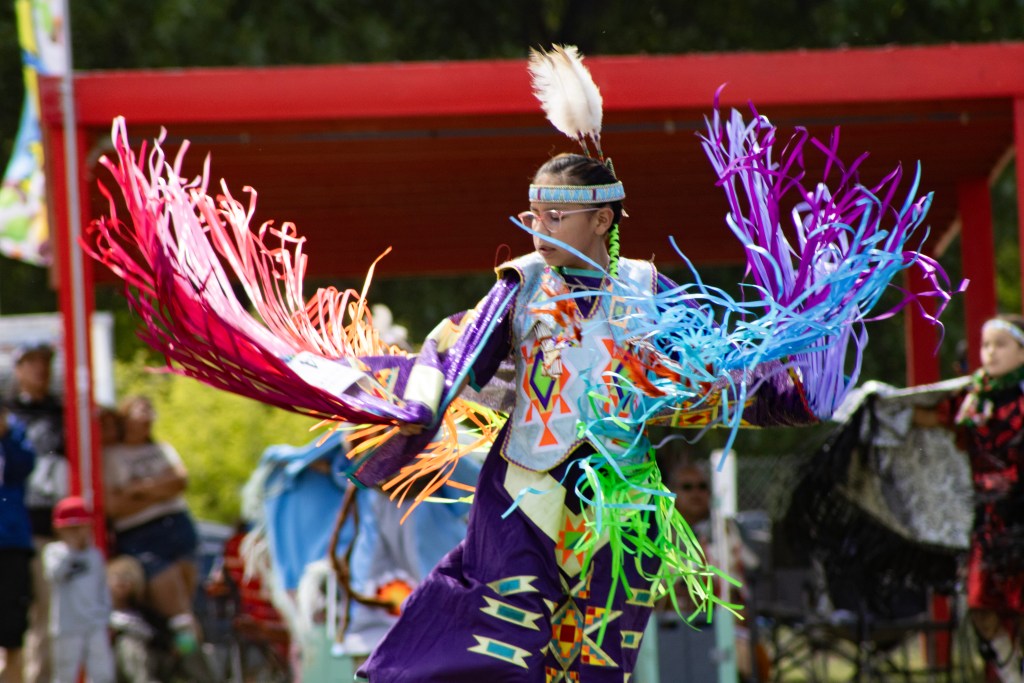
Aside from the powwow, several different organizations and individuals held their own events to honor veterans.
On Saturday, tribal member Marcus Palmier walked 22 miles to remember the between 20 and 22 veterans who die by suicide every day. Throughout the weekend, the veteran’s co-ed softball tournament, horse races, prayer walk and skateboard tournament brought the community together.
The powwow and events throughout the weekend are meant to welcome and embrace veterans, Spotted Bear said.
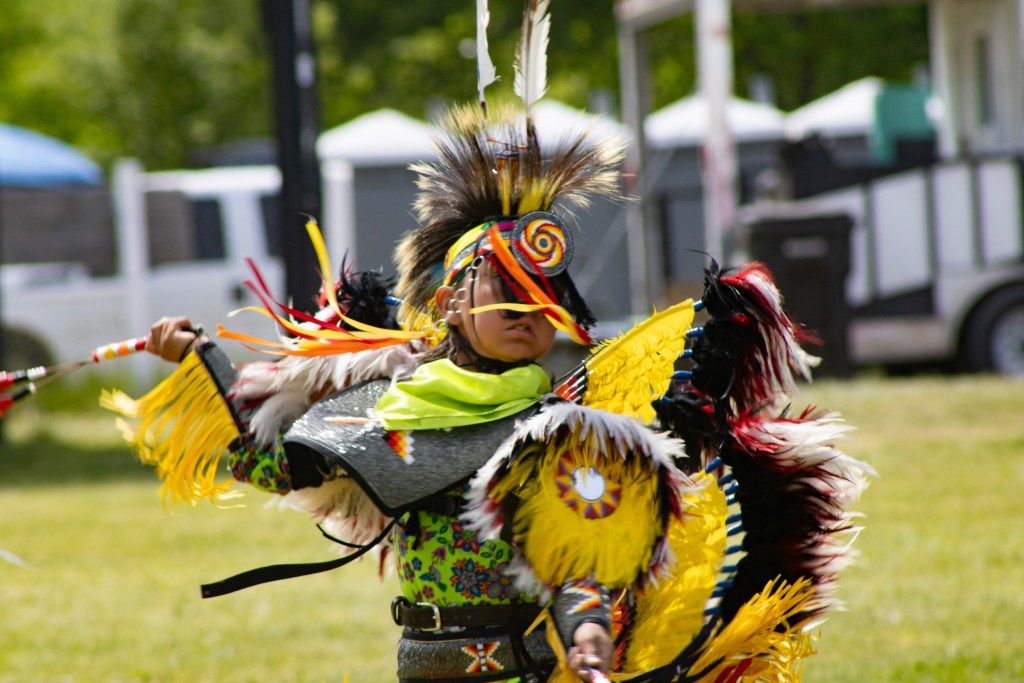
“You walk two worlds when you’re in the military,” Spotted Bear said. “You walk the Western world and then you carry your spirituality with you. Balancing that and then coming back home, you’re looked at differently. It’s hard to reintegrate into your community. By having a powwow we embrace our veterans and we show them that we understand you went out there and fought for our people.”

This story is co-published by the Rapid City Journal and ICT, a news partnership that covers Indigenous communities in the South Dakota area.