Mary Annette Pember
Indian Country Today
The Interior Department is on the verge of releasing a report on its investigation into the federal government’s past oversight of Native American boarding schools.
Interior Secretary Deb Haaland, Laguna Pueblo, told journalists during a March call that the report will come out in April but didn’t specify a date. She first outlined the initiative last June, saying it would uncover the truth about the loss of life and the lasting consequences of boarding schools.
The work on boarding schools will include compiling and reviewing records to identify past schools, locate known and possible burial sites at or near those schools, and uncover the names and tribal affiliations of students, Haaland said.
It is unclear, however, how much information will actually be included in the report.
“The Department is committed to sharing the historical analysis conducted as part of the Federal Boarding School Initiative with Tribal communities, the media, and the public as soon as possible,” read a statement from the Interior on March 31.
“The analysis that has been undertaken is expected to form the basis for future efforts intended to honor Tribal Nations and the families of the Indigenous children who may be interred at boarding school sites, as well as to provide a foundation for ongoing research, site visits, and stakeholder engagement to address the intergenerational impact of these assimilationist policies.”
Research into the vast collection of archives held by the National Archives and Records Administration relating to Indian boarding schools is a monumental task; the Interior began its work in June. Although records created by the Bureau of Indian Affairs, for instance, are held by the National Archives there is no comprehensive index to these records. Additionally, boarding and day school records held by the National Archives include only those schools that received funding from the federal government and may not include comprehensive data about the hundreds of schools run by Christian missionaries.
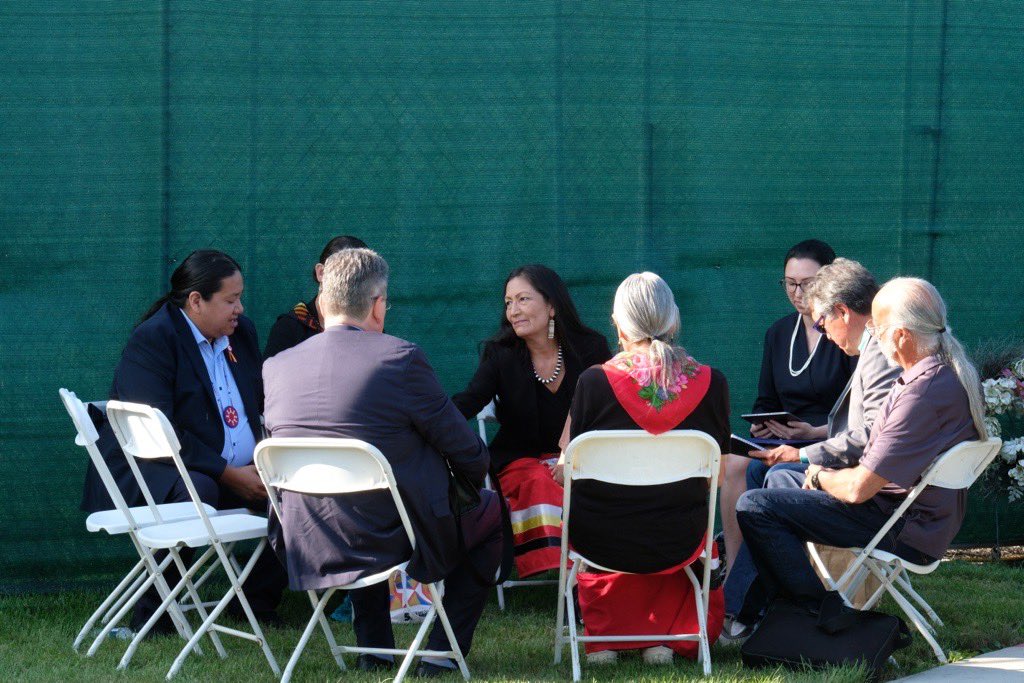
Discoveries of the remains of more than 1,000 children in Canada renewed a spotlight in the U.S. and stirred strong emotions among tribal communities that included grief, anger, reflection and a deep desire for healing.
Indigenous leaders from Canada and survivors of the country’s notorious residential schools met with Pope Francis this week and told him of the abuses they suffered at the hands of Catholic priests and school workers, in hopes of securing a papal apology from him and a commitment by the church to repair the harm done.
The National Native American Boarding School Healing Coalition signed an agreement with the Interior in December to share research but has noted that Interior’s authority is limited. The coalition was recently in Washington for the National Indian Education Association Hill Week lobbying for bills containing provisions for a full inquiry into policies that pushed for boarding school attendance by Native children.
Related:
— US boarding schools to be investigated
— Deb Haaland addressing legacy of Indigenous boarding schools
— Churches starting to face facts on boarding schools
— Additional unmarked graves likely at US Indian boarding schools
— Indigenous leaders tell pope of abuses at residential schools
Deborah Parker, a citizen of the Tulalip Tribes and CEO of the Coalition, spoke to attendees at the Associations’ meeting.
“Senate Bill 2907, and House Resolution 5444, the Truth and Healing Commission on Indian Boarding Schools Act can help capture information about the number of children forced to attend boarding schools,” Parker said.
“Our elders deserve to know the truth about what happened and what continues to happen to us today without that knowledge. It is a crime to withhold information from our people and it is a sin to keep that information locked in basements.”
Parker called for not only the federal government to provide reasonable access to its records but also for churches and private industry to bring its documents forward so that the Coalition can digitize the information making the information available to survivors and their descendants.
Starting with the Indian Civilization Act of 1819, the U.S. enacted laws and policies to establish and support boarding schools for Native Americans across the nation. For over 150 years, Indigenous children were taken from their communities and forced into these assimilation-focused schools.
“We have been very cognizant of the fact that we need to create a safe space for people to share information and seek resources,” Haaland said. “We recognize this is a very traumatic experience for many people.”
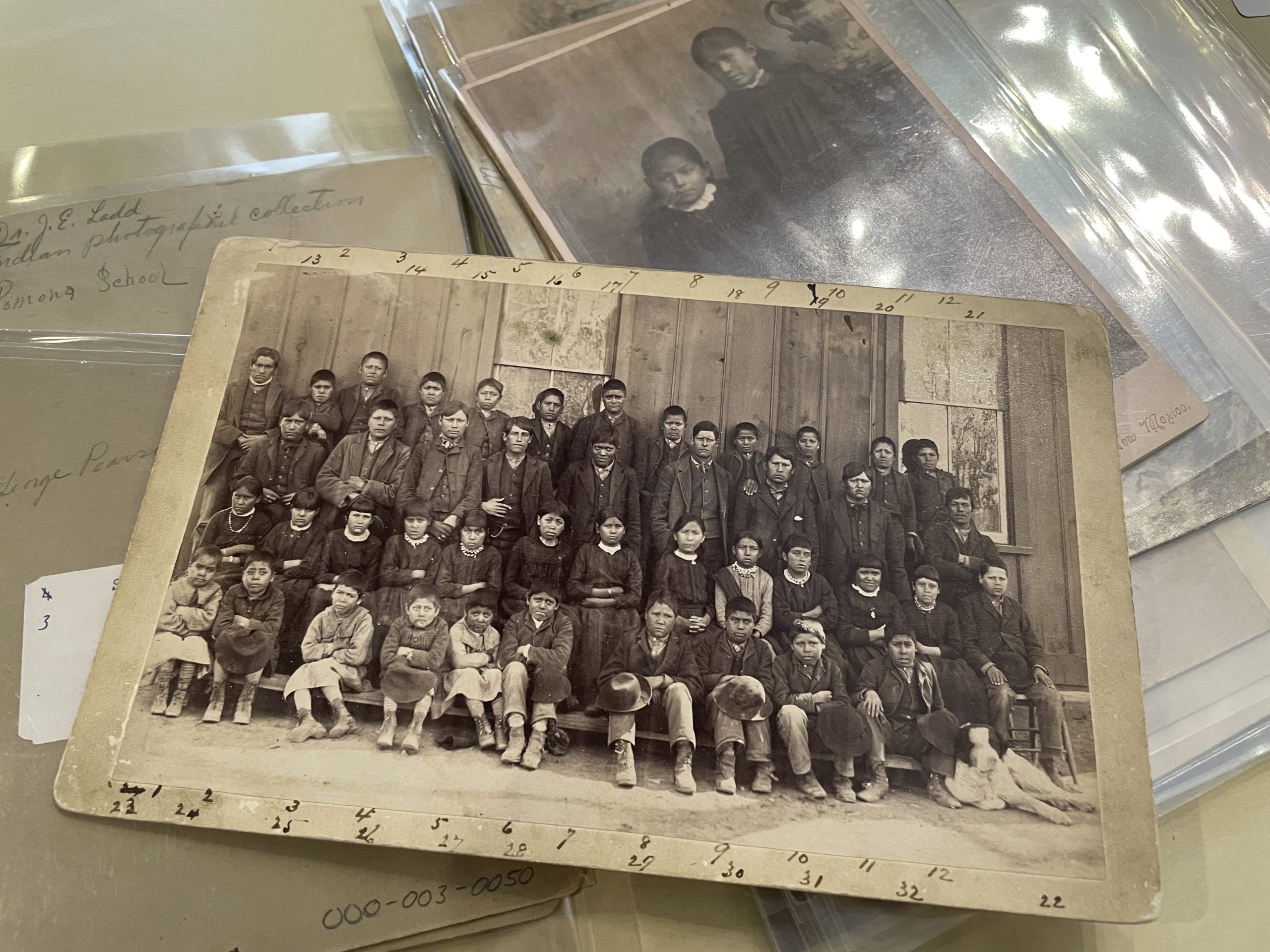
U. S. Senator Sen. Elizabeth Warren, a Democrat from Massachusetts, stated in an email to Indian Country Today, “The federal government needs to reckon with the legacy of its Indian Boarding School Policies that created unimaginable suffering, and continue to have a lasting impact on thousands of Native families. I have been fighting to pass my Truth and Healing Commission on Indian Boarding School Policy in the United States Act and NABS has been a valued partner in that effort.”
Warren first introduced the bill along with then Rep. Deb Haaland, a New Mexico Democrat, in 2020.

3/31: The article has been updated with comment from the Interior.
The Associated Press contributed to this article.
Like this story? Support our work with a $5 or $10 contribution today. Contribute to the nonprofit Indian Country Today. Sign up for ICT’s free newsletter.