

Amelia Schafer
ICT + Rapid City Journal
NEAR STURGIS, South Dakota – A thunderous roar echoed through Bear Butte State Park early Sunday, Aug. 6, as streaks of red ribbons flew in the wind and over 100 motorcyclists took off from the park to take part in the Medicine Wheel Ride.
Lynette Kills Back, Oglala Lakota, led this year’s ride. She rode for two family members, her cousin Leatrice “Leah” Jealous of Him, whose remains were found on the railroad tracks in Rapid City in 2008, and cousin Sharyn Kills Back, who was killed in 1985 and whose killer was caught. Fifteen years later, Jealous of Him’s murder still remains unsolved.
The Medicine Wheel Ride is an annual motorcycle ride to honor and bring attention to victims of the Missing and Murdered Indigenous Relatives crisis. Riders came from all over the United States, some from as far as Hawaii and several from the Navajo Nation.

“I think everybody needs to know that there are missing and murdered Indigenous women,” Kills Back said. “I stress that because when Native people go missing there’s no publicity through the national media. I want to change that narrative and give our Indigenous people that voice.”
The ride generally takes place on the first or second day of the annual Sturgis Motorcycle Rally. Rider registration funds are used to provide financial aid to victims’ family members for whatever they need, whether it be transportation, legal fees or other costs.
Lorna Cuny, Oglala Lakota and one of the Medicine Wheel Ride founders, said originally the group was formed as an Indigenous women’s motorcycle club but as time went on, the group felt it was important to use the ride to uplift community voices and concerns.
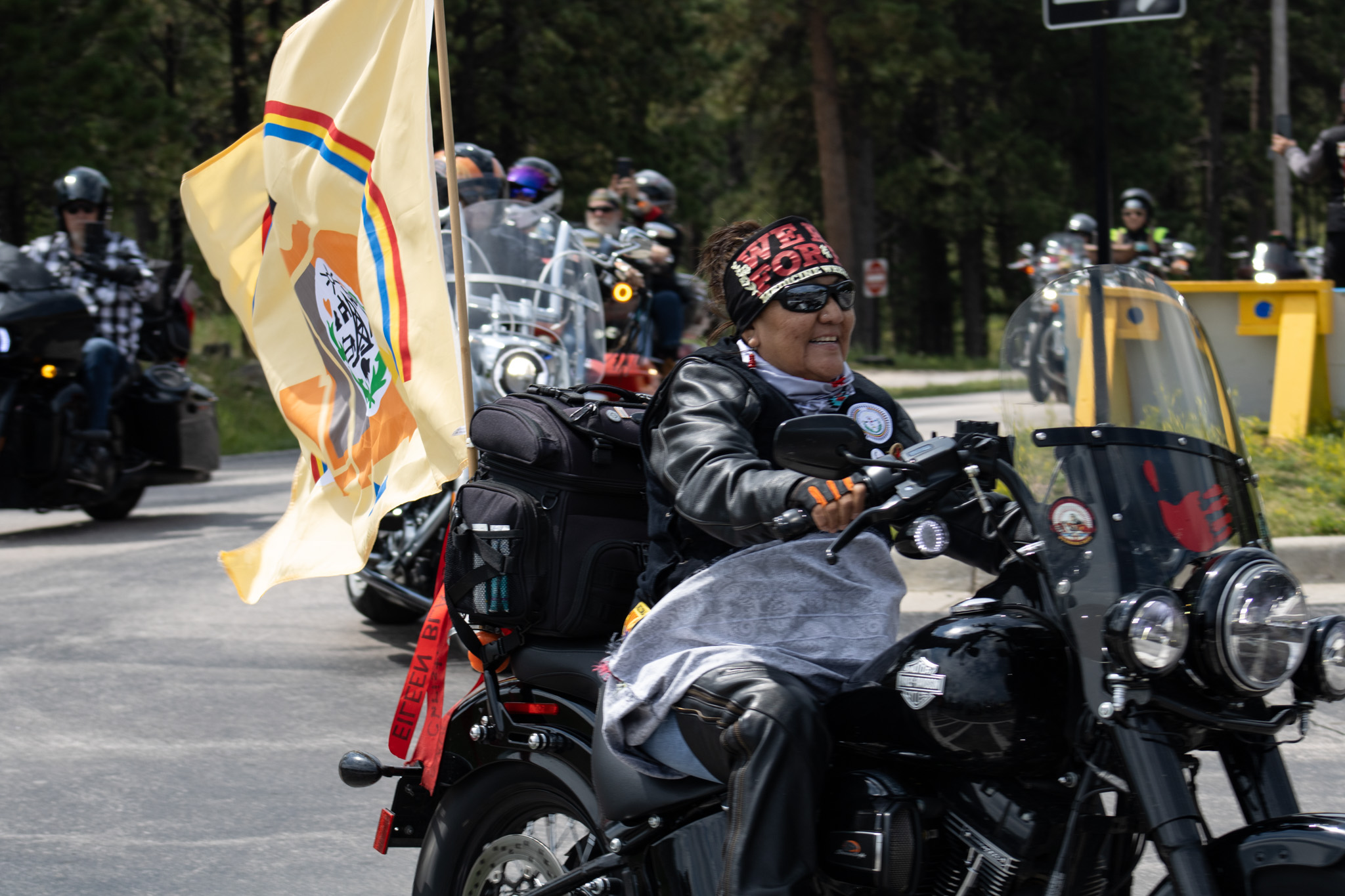
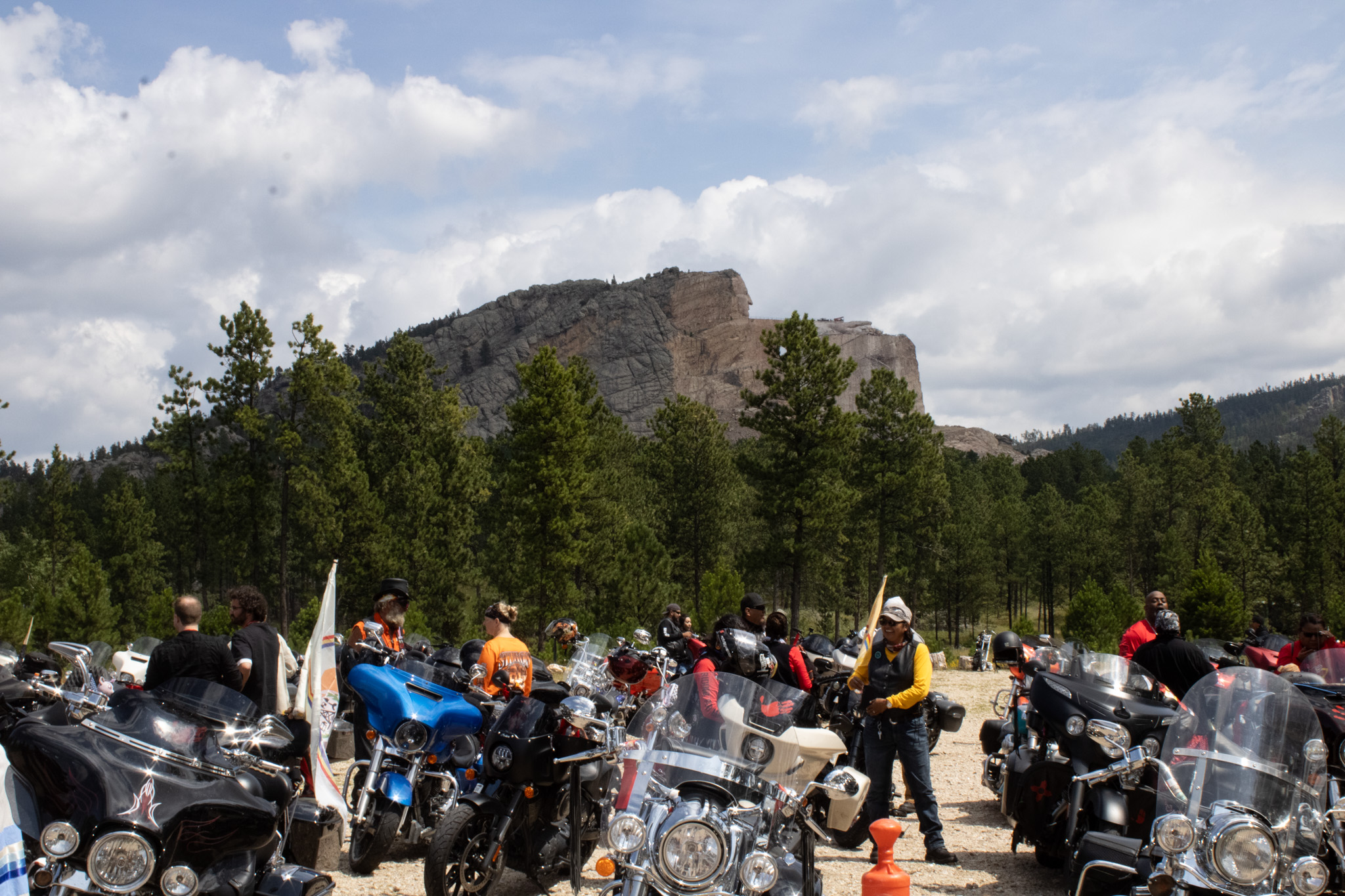
During the nearly two-hour, 70-mile ride from Bear Butte to the Crazy Horse Memorial, Kills Back prayed. She said she prays for her Indigenous relatives whose lives have been lost and whose bodies have never been found.

“I ask Creator to help find those women and bring justice to their families. We have children growing up without mothers, grandmas, sisters and nieces or even without their male relatives,” Kills Back said.
Many of the riders remarked on the importance of bringing attention to missing and murdered Indigenous people during the Sturgis Rally, a time when hundreds of thousands of people pour into the Black Hills and sex-trafficking increases. Since 2020, authorities have arrested 23 individuals on human trafficking charges during the rally.
A 2022 report from the Subcommittee on Civil Rights and Civil Liberties Hearing stated that 40 percent of sex-trafficking victims in South Dakota are Native American women, despite Native women only making up 8 percent of the state’s population.
From July 28 to Aug. 4, several of the Medicine Wheel riders rode from Phoenix up through Wyoming into Montana and finally to the Sturgis Rally. During the ride, riders stopped in several locations to screen their documentary “We Ride For Her”: Chandler and Tuba City, Ariz.; Towaoc, Colo.; Riverton and Worland, Wyo.; Lame Deer, Mont.; and Rapid City.
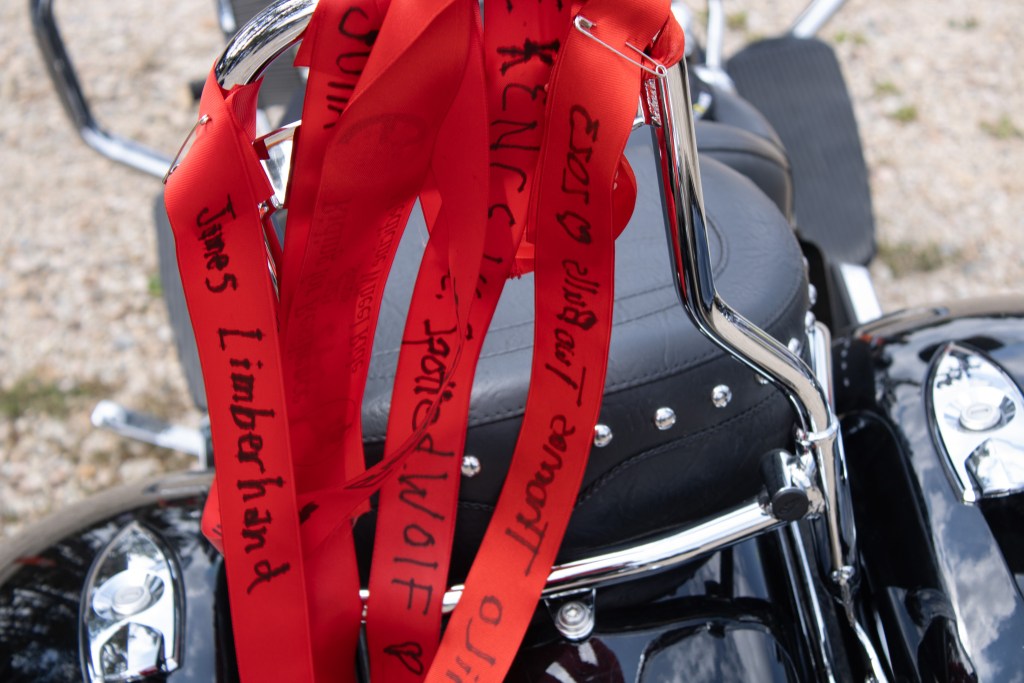
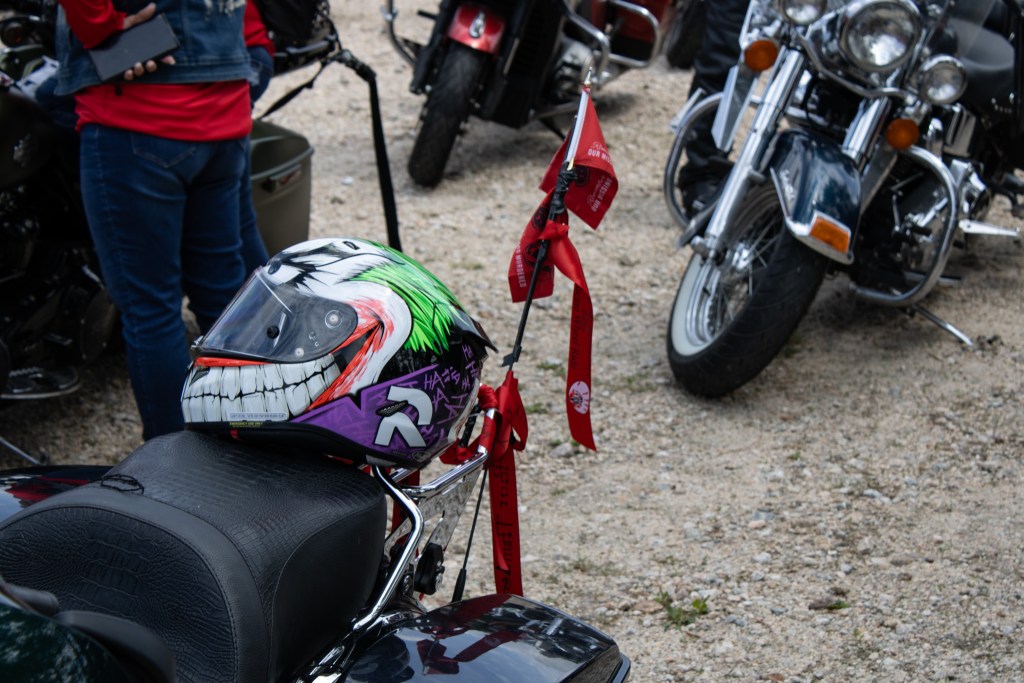
In each community, family members or loved ones of a victim could write their names on a red ribbon, which was then attached to one of the motorcycles, carrying the victim’s name and memory along the route.
“I think they (the families) felt really supported, just being able to hear from others and from us,” Cuny said.
The ride itself also provided exposure for MMIP to non-Native communities. Cuny said when the group would stop to get gas they’d often have curious individuals come up and ask them what the red hands represented and for what reason they were riding.
“We Ride for Her” is an 18-minute short film that details the Medicine Wheel riders, their journey and focuses on the disappearance of Susan Fast Eagle, who was last seen in Rapid City in 2021. Several members of Fast Eagle’s family discuss her disappearance and the struggles they’ve faced ever since.
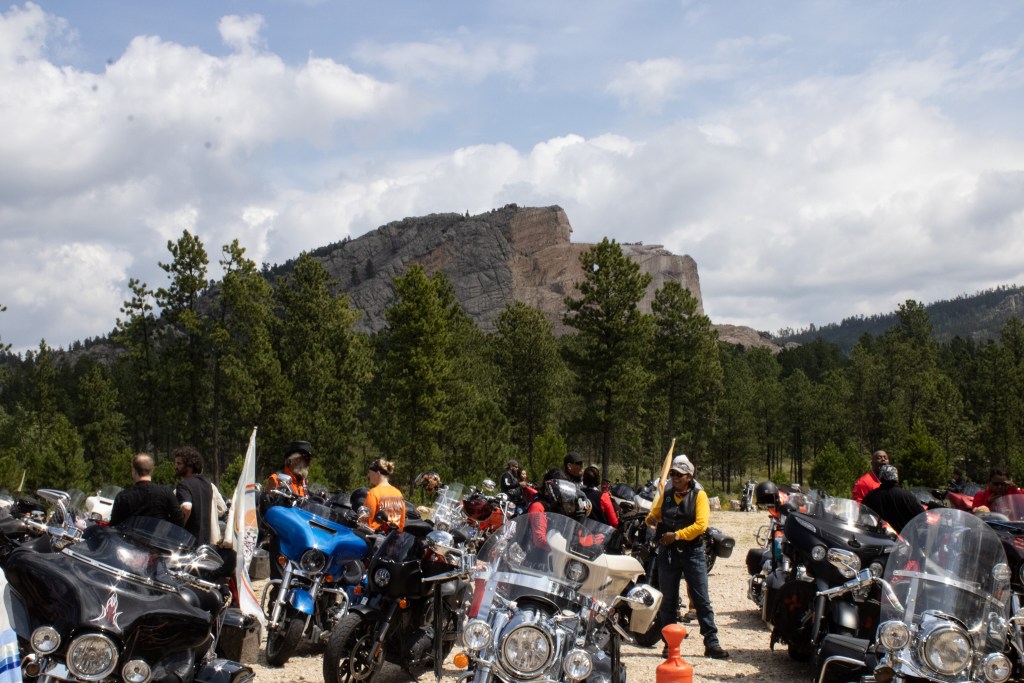
To finish out their ride, “We Ride for Her” was screened again at the Crazy Horse Memorial.
“I hope that we can impact everyone in a positive way and that maybe they can share our message and collaborate with us in some way,” Kills Back said.
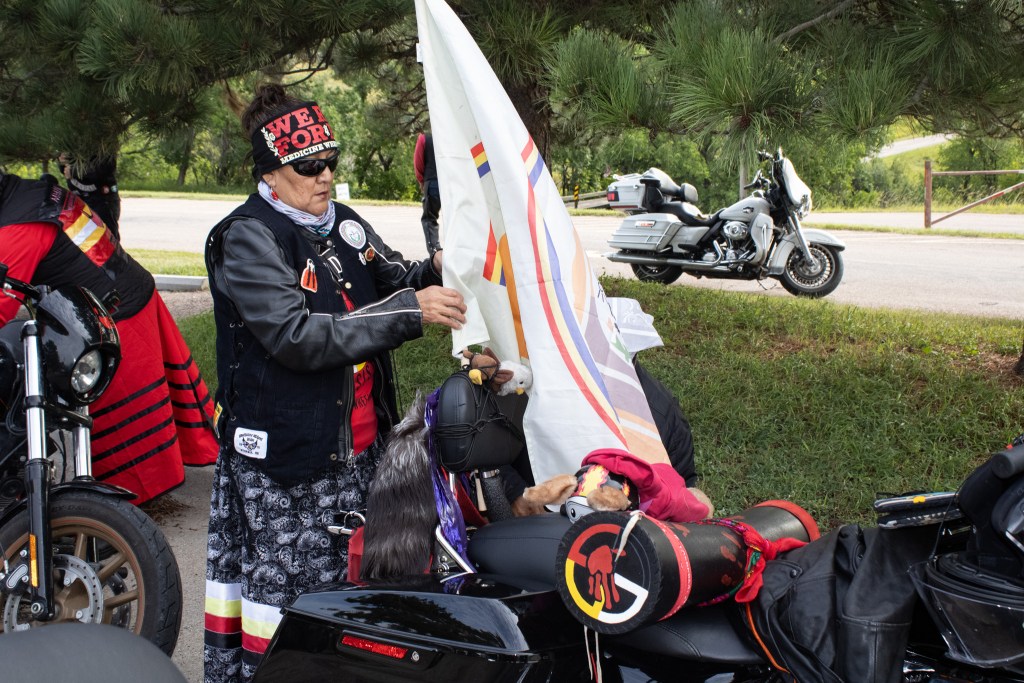
A Medicine Wheel rider secures the Navajo Nation flag to the back of a motorcycle before the 2023 ride took off from Bear Butte State Park on Sunday, August 6, 2023. (Amelia Schafer for ICT and the Rapid City Journal)
Credit: A Medicine Wheel rider secures the Navajo Nation flag to the back of a motorcycle before the 2023 ride took off from Bear Butte State Park on Sunday, August 6, 2023. (Amelia Schafer for ICT and the Rapid City Journal)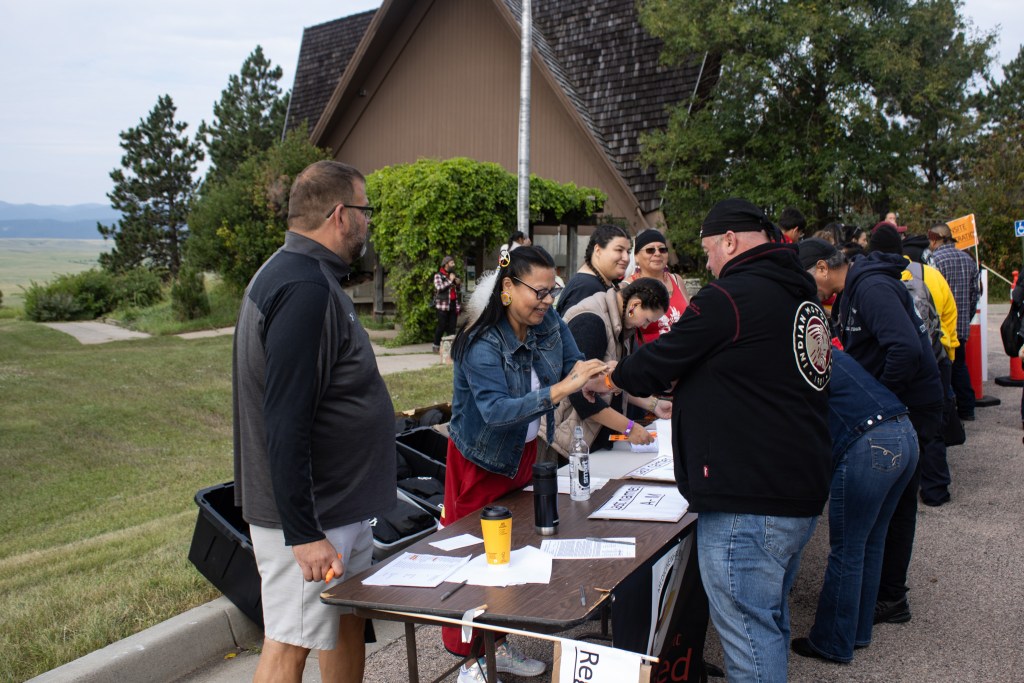
Riders register to take place in the Medicine Wheel Ride early on August 6, 2023, at Bear Butte State Park. (Amelia Schafer for ICT and the Rapid City Journal)
Credit: Riders register to take place in the Medicine Wheel Ride early on August 6, 2023, at Bear Butte State Park. (Amelia Schafer for ICT and the Rapid City Journal)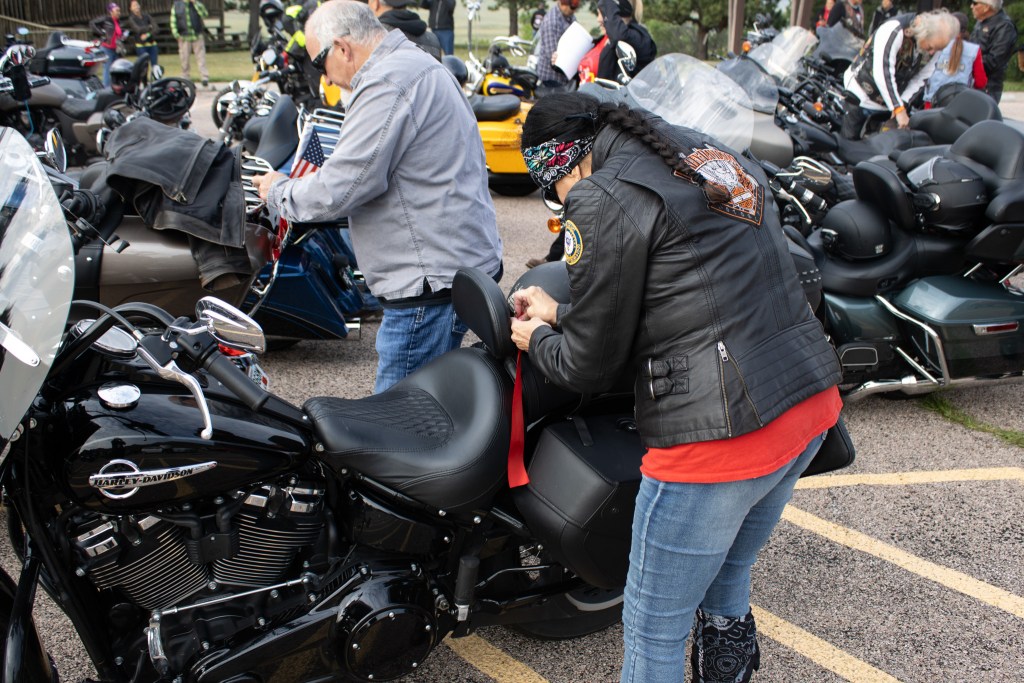
Medicine Wheel Ride participants attach ribbons to their motorcycles before taking off from Bear Butte State Park on Sunday, August 6, 2023. The red ribbons are meant to honor victims who are missing and murdered Indigenous people. (Amelia Schafer for ICT and the Rapid City Journal)
Credit: Medicine Wheel Ride participants attach ribbons to their motorcycles before taking off from Bear Butte State Park on Sunday, August 6, 2023. The red ribbons are meant to honor victims who are missing and murdered Indigenous people. (Amelia Schafer for ICT and the Rapid City Journal)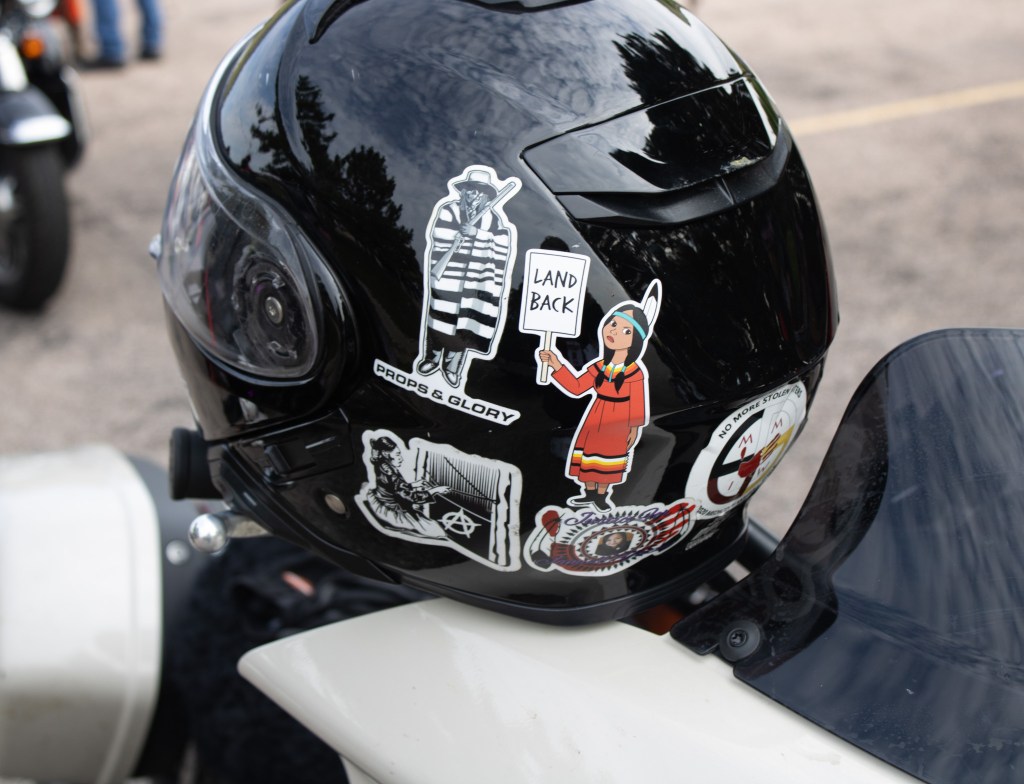
A Medicine Wheel Rider’s helmet is decorated with contemporary stickers. Riders took off from Bear Butte State Park on Sunday, August 6, 2023. (Amelia Schafer for ICT and the Rapid City Journal)
Credit: A Medicine Wheel Rider’s helmet is decorated with contemporary stickers. Riders took off from Bear Butte State Park on Sunday, August 6, 2023. (Amelia Schafer for ICT and the Rapid City Journal)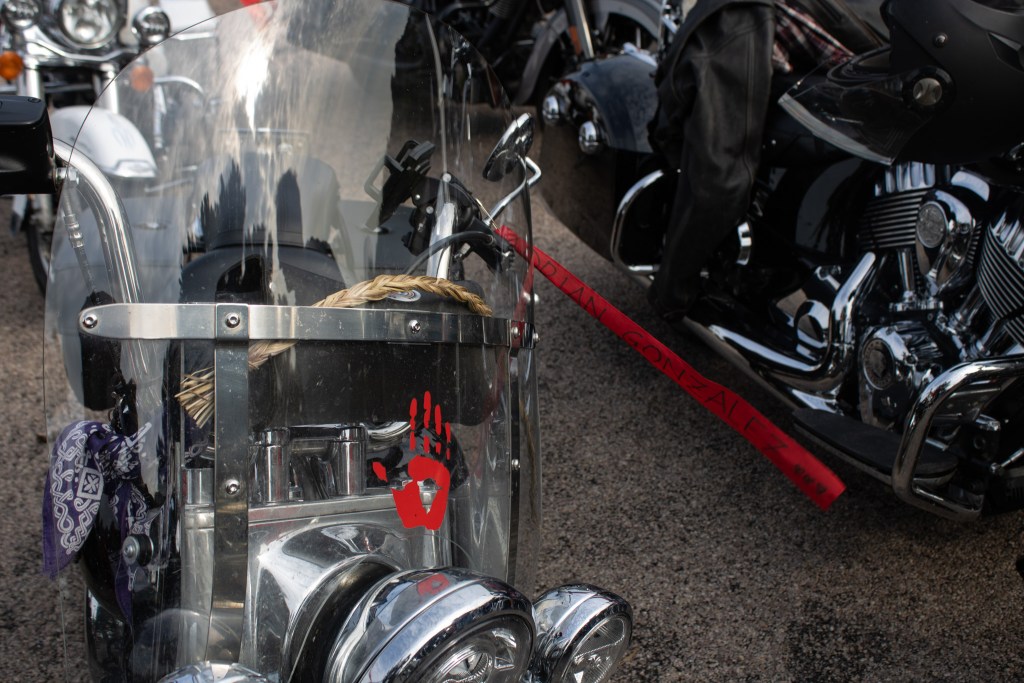
A ribbon in honor of an MMIP victim hangs off of a motorcycle accompanied by a sweetgrass braid for protection. Family members from Native communities that the riders visited could add their loved ones’ names to ribbons to be taken along the week-long journey back to the Black Hills. (Amelia Schafer for ICT and the Rapid City Journal)
Credit: A ribbon in honor of an MMIP victim hangs off of a motorcycle accompanied by a sweetgrass braid for protection. Family members from Native communities that the riders visited could add their loved ones’ names to ribbons to be taken along the week-long journey back to the Black Hills. (Amelia Schafer for ICT and the Rapid City Journal)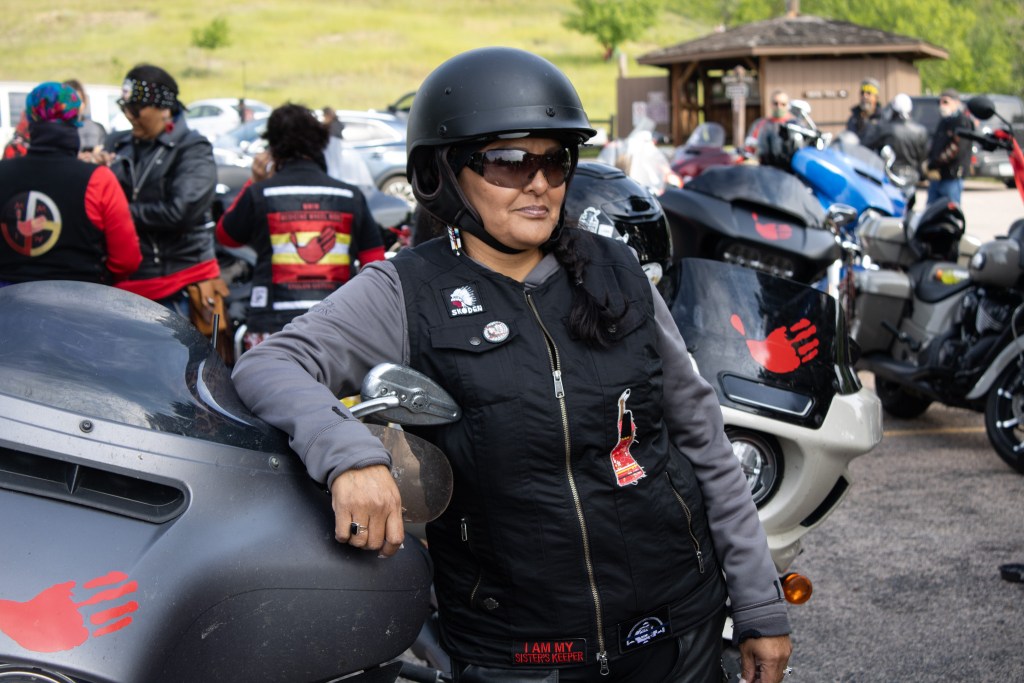
A rider poses on her bike before taking off from Bear Butte State Park on Sunday, August 6, 2023. (Amelia Schafer for ICT and the Rapid City Journal)
Credit: A rider poses on her bike before taking off from Bear Butte State Park on Sunday, August 6, 2023. (Amelia Schafer for ICT and the Rapid City Journal)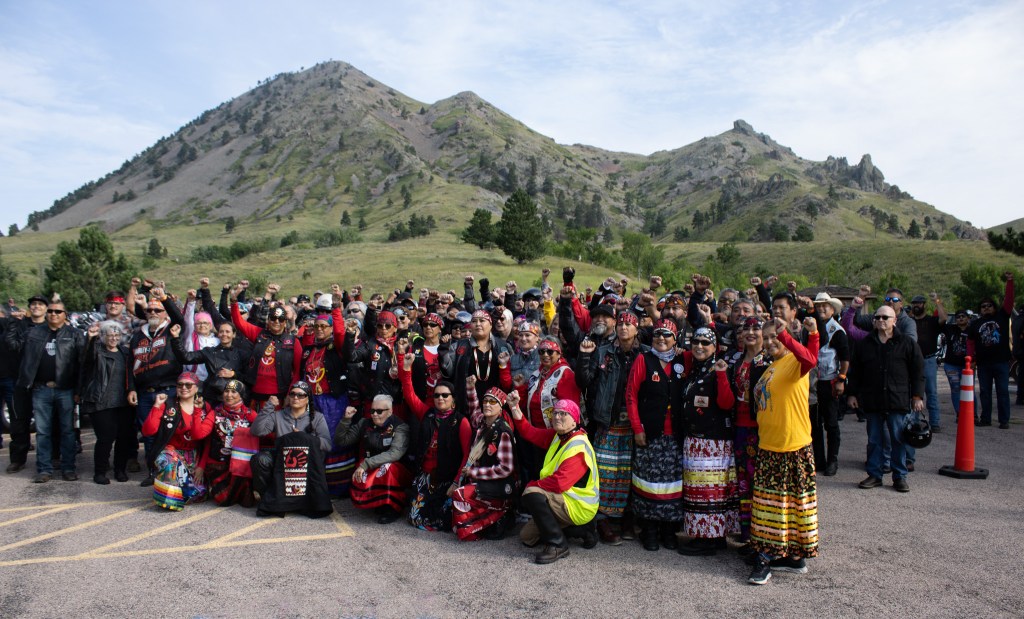
Participants in the 2023 Medicine Wheel Ride pose for a group photo before departing from Bear Butte State Park on August 6. An estimated 200 riders took part in the two-hour ride to Crazy Horse to spread awareness about missing and murdered Indigenous people. (Amelia Schafer for ICT and the Rapid City Journal)
Credit: Participants in the 2023 Medicine Wheel Ride pose for a group photo before departing from Bear Butte State Park on August 6. An estimated 200 riders took part in the two-hour ride to Crazy Horse to spread awareness about missing and murdered Indigenous people. (Amelia Schafer for ICT and the Rapid City Journal)
Bell Brings Plenty, Lakota, sings a prayer song to Medicine Wheel Riders before they depart from Bear Butte State Park on Sunday, August 6, 2023. (Amelia Schafer for ICT and the Rapid City Journal)
Credit: Bell Brings Plenty, Lakota, sings a prayer song to Medicine Wheel Riders before they depart from Bear Butte State Park on Sunday, August 6, 2023. (Amelia Schafer for ICT and the Rapid City Journal)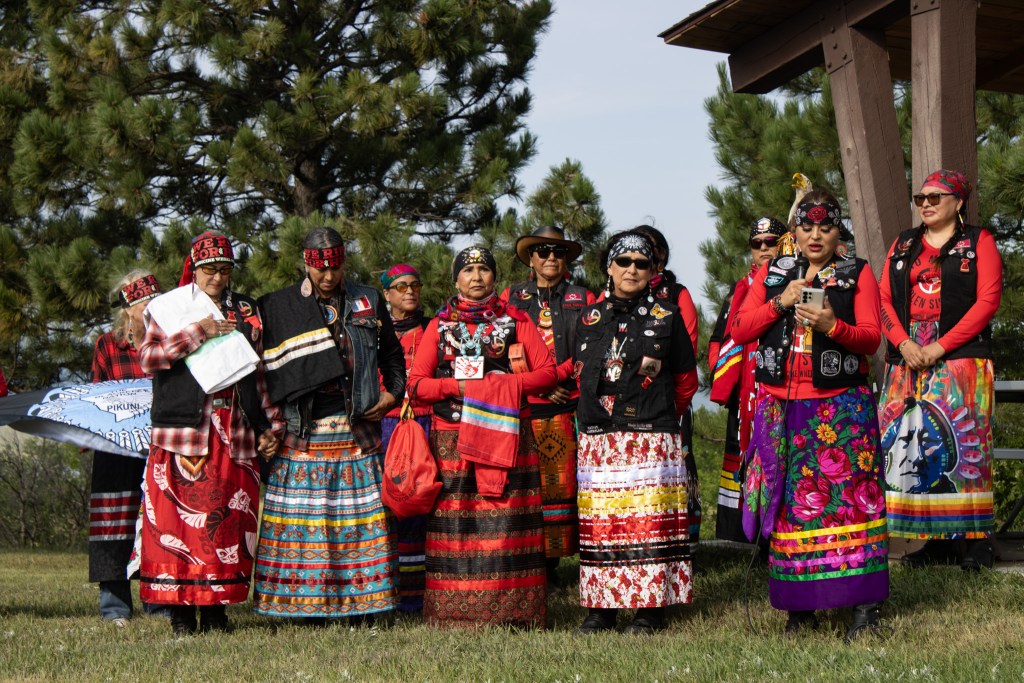
Four of the main Medicine Wheel Riders are honored with a statement by Phoenix Indian Center CEO Patricia Hibbeler, Navajo, in carrying a ribbon skirt on their journey to Crazy Horse. Each ribbon skirt represents one of the four directions in the Medicine Wheel. (Amelia Schafer for ICT and the Rapid City Journal)
Credit: Four of the main Medicine Wheel Riders are honored with a statement by Phoenix Indian Center CEO Patricia Hibbeler, Navajo, in carrying a ribbon skirt on their journey to Crazy Horse. Each ribbon skirt represents one of the four directions in the Medicine Wheel. (Amelia Schafer for ICT and the Rapid City Journal)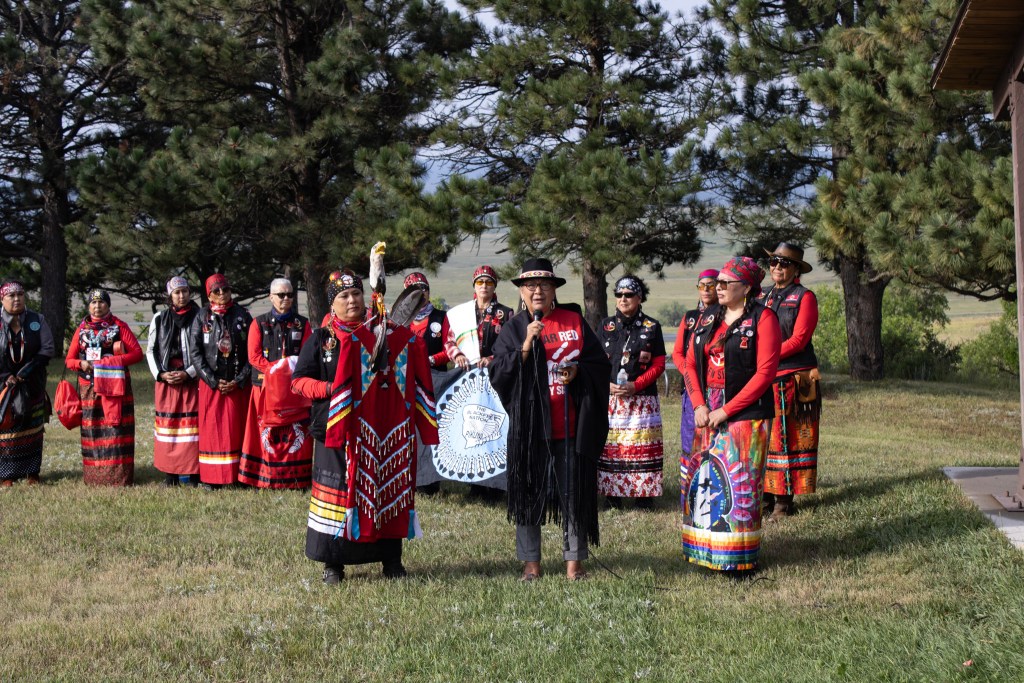
Oglala Lakota Elder Norma Rendon speaks about the importance of the Medicine Wheel Ride and the importance of the Black Hills to the Lakota people and Indigenous people of the area to start the fifth annual Medicine Wheel Ride on August 6, 2023. (Amelia Schafer for ICT and the Rapid City Journal)
Credit: Oglala Lakota Elder Norma Rendon speaks about the importance of the Medicine Wheel Ride and the importance of the Black Hills to the Lakota people and Indigenous people of the area to start the fifth annual Medicine Wheel Ride on August 6, 2023. (Amelia Schafer for ICT and the Rapid City Journal)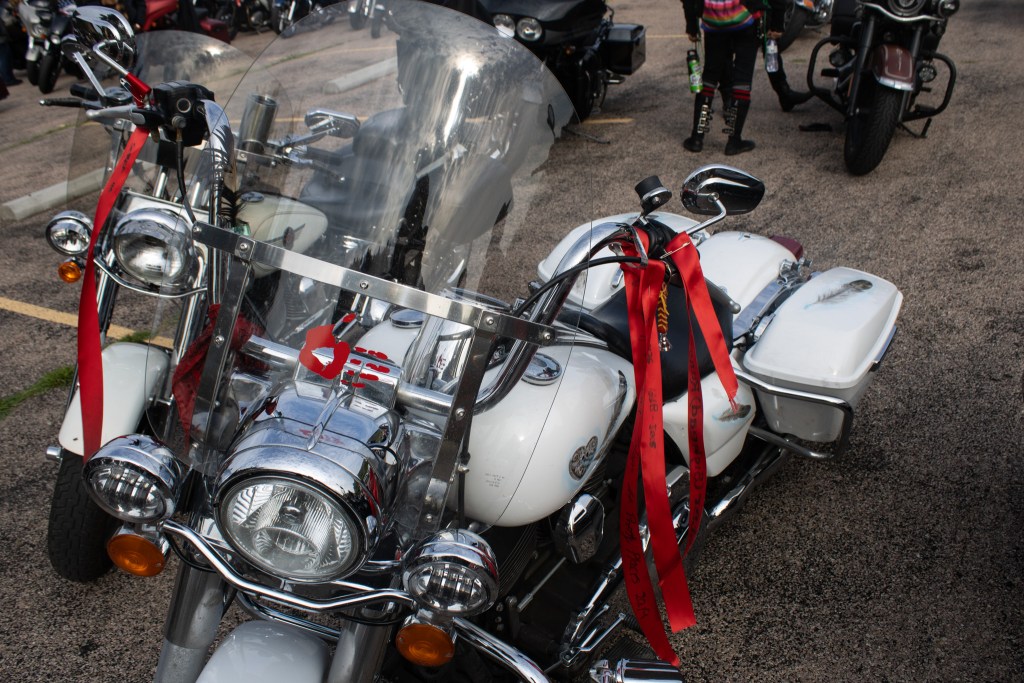
Medicine Wheel Rider’s motorcycles sported red ribbons memorializing victims of the MMIR crisis. Family members from Native communities that the riders visited could add their loved ones’ names to ribbons to be taken along the week-long journey back to the Black Hills. (Amelia Schafer for ICT and the Rapid City Journal)
Credit: Medicine Wheel Rider’s motorcycles sported red ribbons memorializing victims of the MMIR crisis. Family members from Native communities that the riders visited could add their loved ones’ names to ribbons to be taken along the week-long journey back to the Black Hills. (Amelia Schafer for ICT and the Rapid City Journal)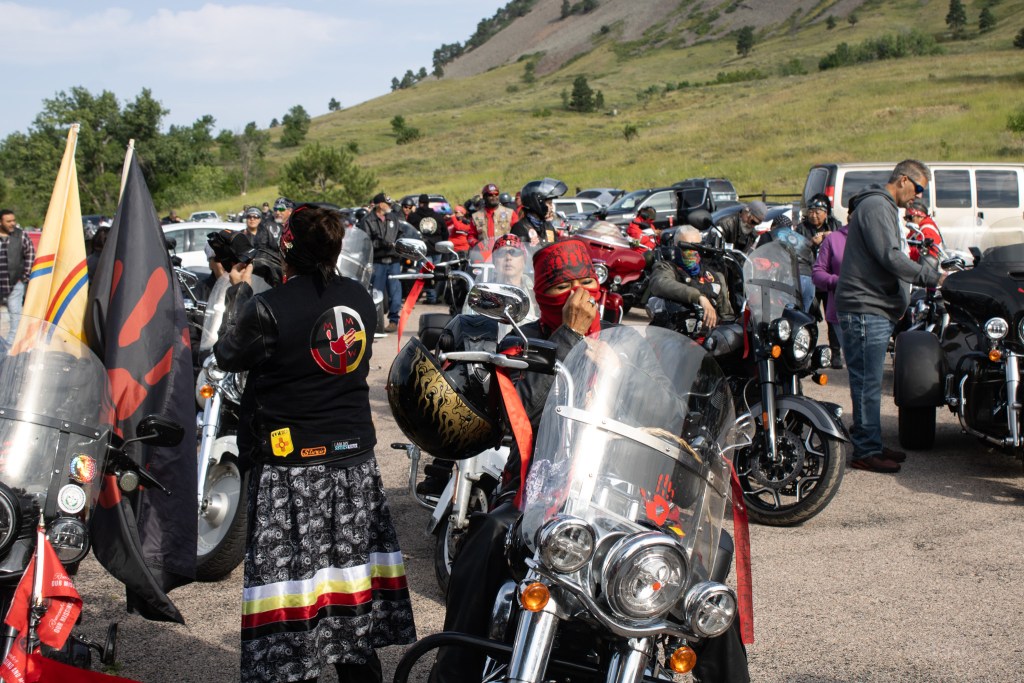
Riders prepare for the fifth annual Medicine Wheel Ride on Sunday, August 6, 2023. (Amelia Schafer for ICT and the Rapid City Journal)
Credit: Riders prepare for the fifth annual Medicine Wheel Ride on Sunday, August 6, 2023. (Amelia Schafer for ICT and the Rapid City Journal)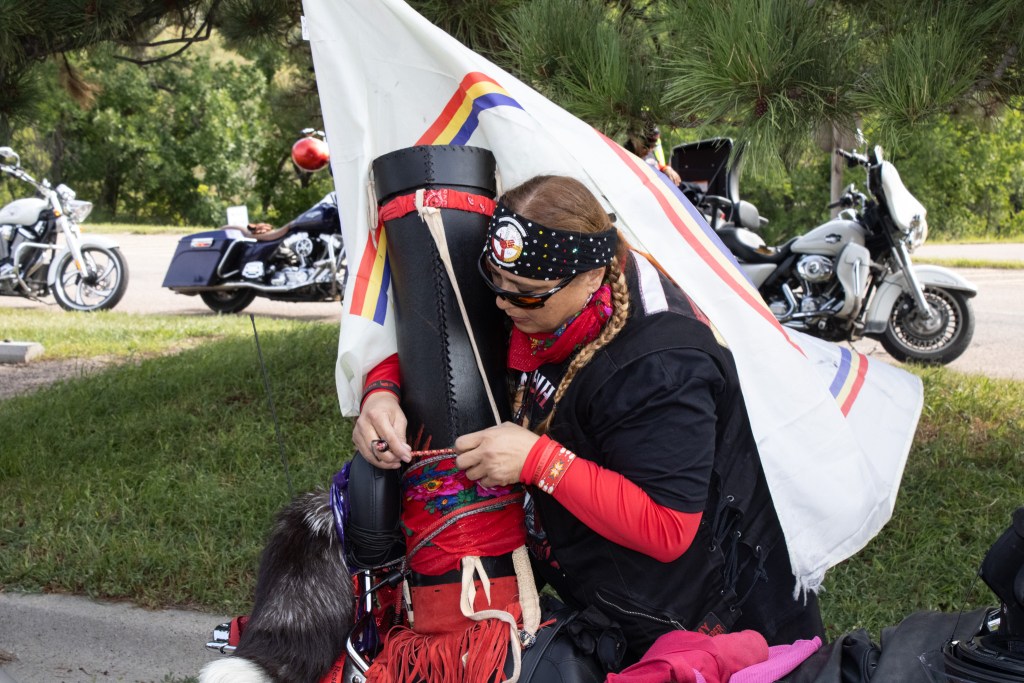
Luvy Yonnie, Navajo and the Medicine Wheel Ride Eagle Staff bearer prepares her motorcycle for the two-hour journey to Crazy Horse on Sunday, August 6, 2023. (Amelia Schafer for ICT and the Rapid City Journal)
Credit: Luvy Yonnie, Navajo and the Medicine Wheel Ride Eagle Staff bearer prepares her motorcycle for the two-hour journey to Crazy Horse on Sunday, August 6, 2023. (Amelia Schafer for ICT and the Rapid City Journal)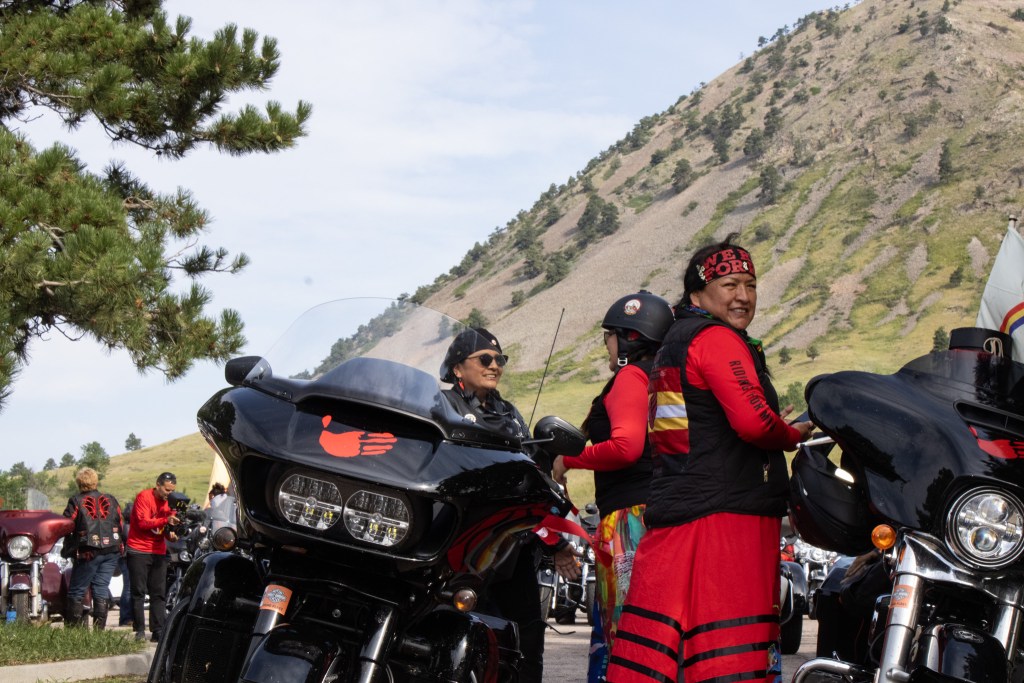
Medicine Wheel Ride lead rider Lynette Kills Back prepares to take part in the fifth annual Medicine Wheel Ride on Sunday, August 6, 2023. (Amelia Schafer for ICT and the Rapid City Journal)
Credit: Medicine Wheel Ride lead rider Lynette Kills Back prepares to take part in the fifth annual Medicine Wheel Ride on Sunday, August 6, 2023. (Amelia Schafer for ICT and the Rapid City Journal)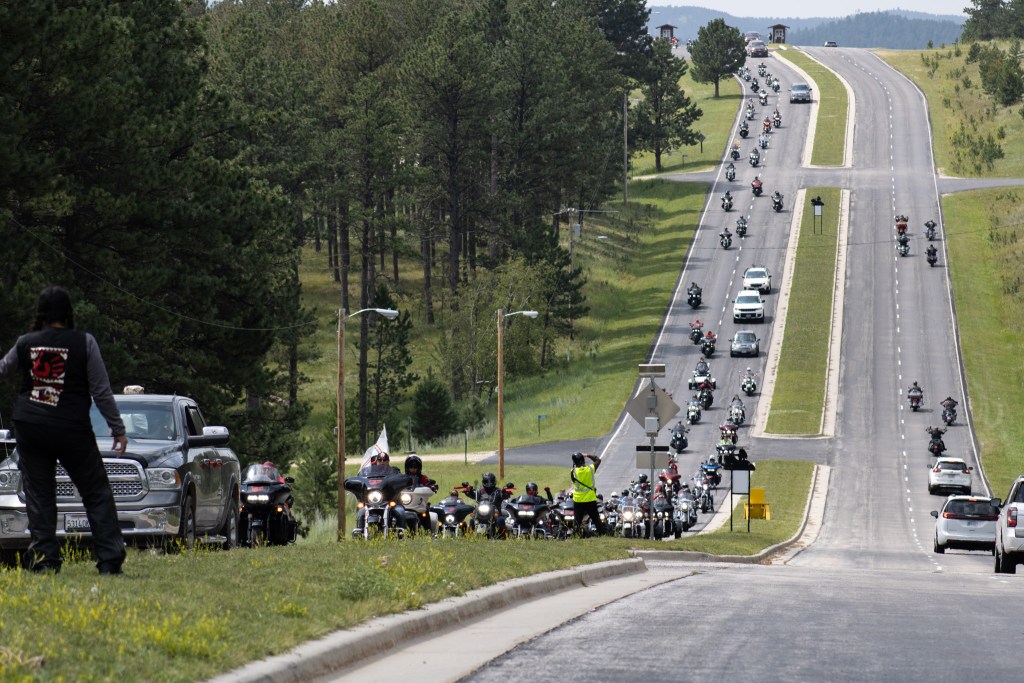
The Medicine Wheel Ride processional was nearly one mile long at points, with nearly 200 riders and 100 bikes taking place in the annual ride to bring awareness to missing and murdered Indigenous people. (Amelia Schafer for ICT and the Rapid City Journal)
Credit: The Medicine Wheel Ride processional was nearly one mile long at points, with nearly 200 riders and 100 bikes taking place in the annual ride to bring awareness to missing and murdered Indigenous people. (Amelia Schafer for ICT and the Rapid City Journal)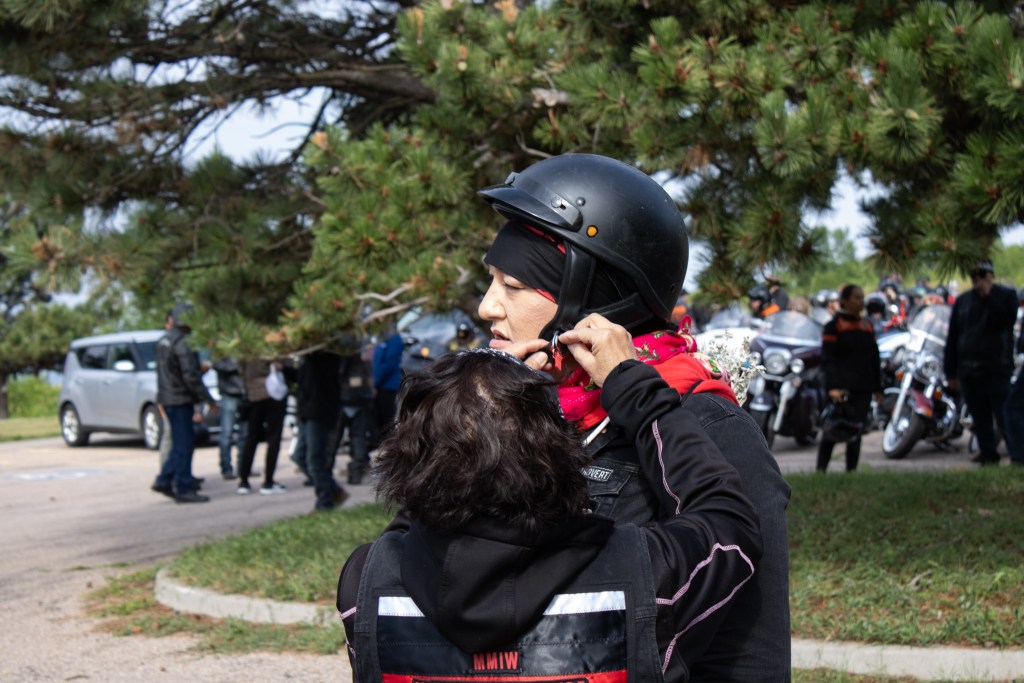
“We Ride for Her” producer Prairie Rose Seminole prepares to participate in the fifth annual Medicine Wheel Ride on Sunday, August 6, 2023. (Amelia Schafer for ICT and the Rapid City Journal)
Credit: “We Ride for Her” producer Prairie Rose Seminole prepares to participate in the fifth annual Medicine Wheel Ride on Sunday, August 6, 2023. (Amelia Schafer for ICT and the Rapid City Journal)
A Navajo participant in the annual Medicine Wheel Ride sports a medicine wheel ride jacket vest featuring Navajo language. (Amelia Schafer for ICT and the Rapid City Journal)
Credit: A Navajo participant in the annual Medicine Wheel Ride sports a medicine wheel ride jacket vest featuring Navajo language. (Amelia Schafer for ICT and the Rapid City Journal)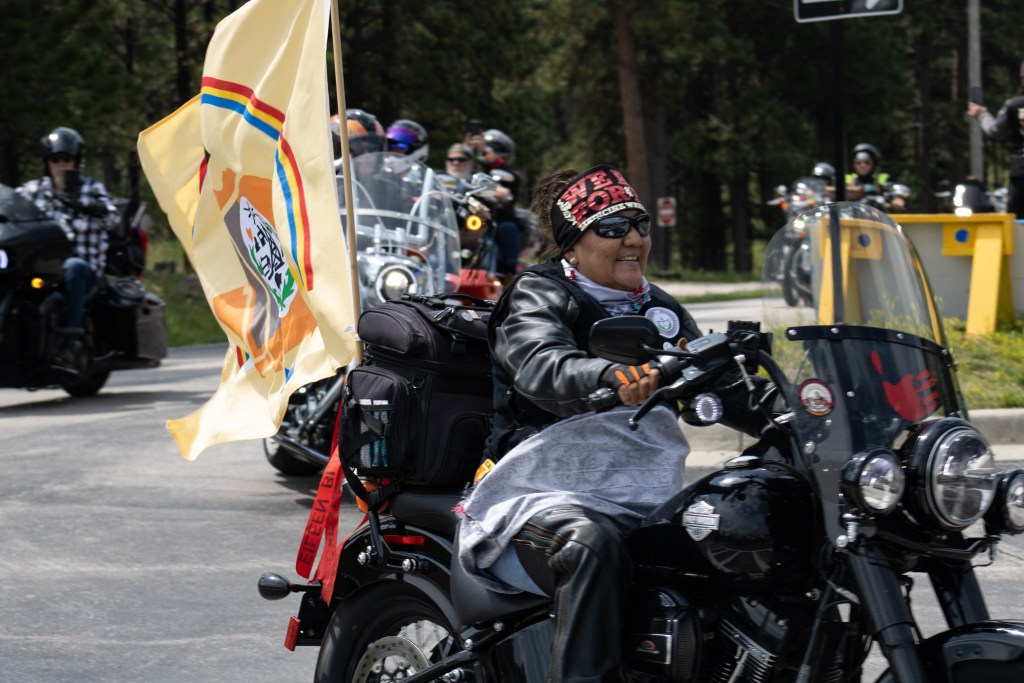
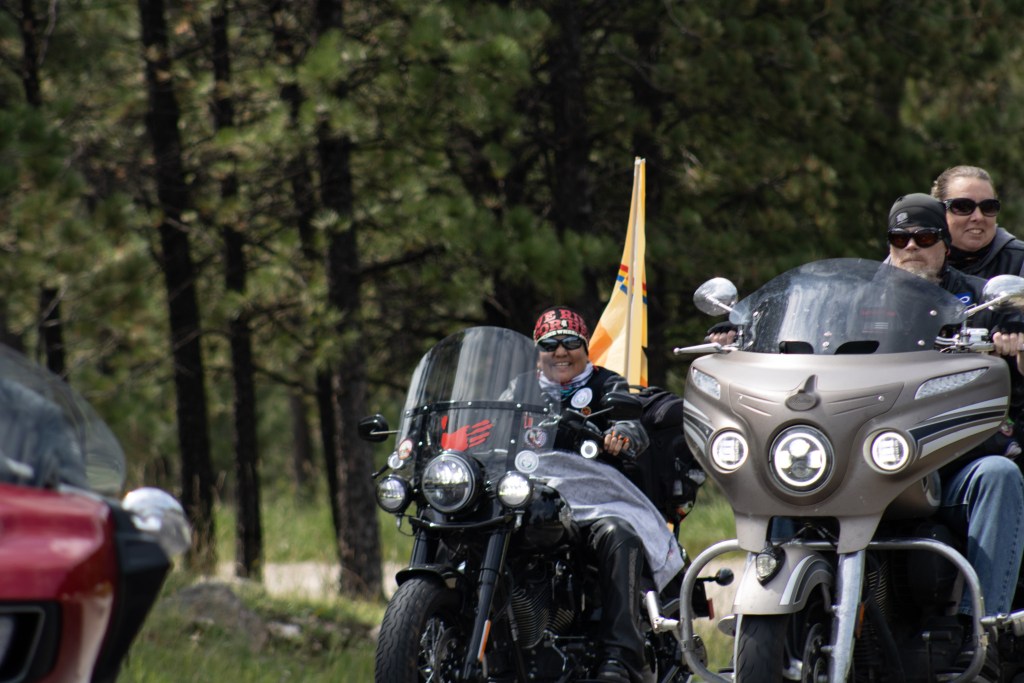
A Medicine Wheel Rider smiles as she pulls into the Crazy Horse Memorial waving the Navajo Nation flag on August 6. (Amelia Schafer for ICT and the Rapid City Journal)
Credit: A Medicine Wheel Rider smiles as she pulls into the Crazy Horse Memorial waving the Navajo Nation flag on August 6. (Amelia Schafer for ICT and the Rapid City Journal)
Two Medicine Wheel Riders enter the Crazy Horse Memorial towards the end of the over 100 motorcycle-long processional from Bear Butte State Park on August 6. (Amelia Schafer for ICT and the Rapid City Journal)
Credit: Two Medicine Wheel Riders enter the Crazy Horse Memorial towards the end of the over 100 motorcycle-long processional from Bear Butte State Park on August 6. (Amelia Schafer for ICT and the Rapid City Journal)
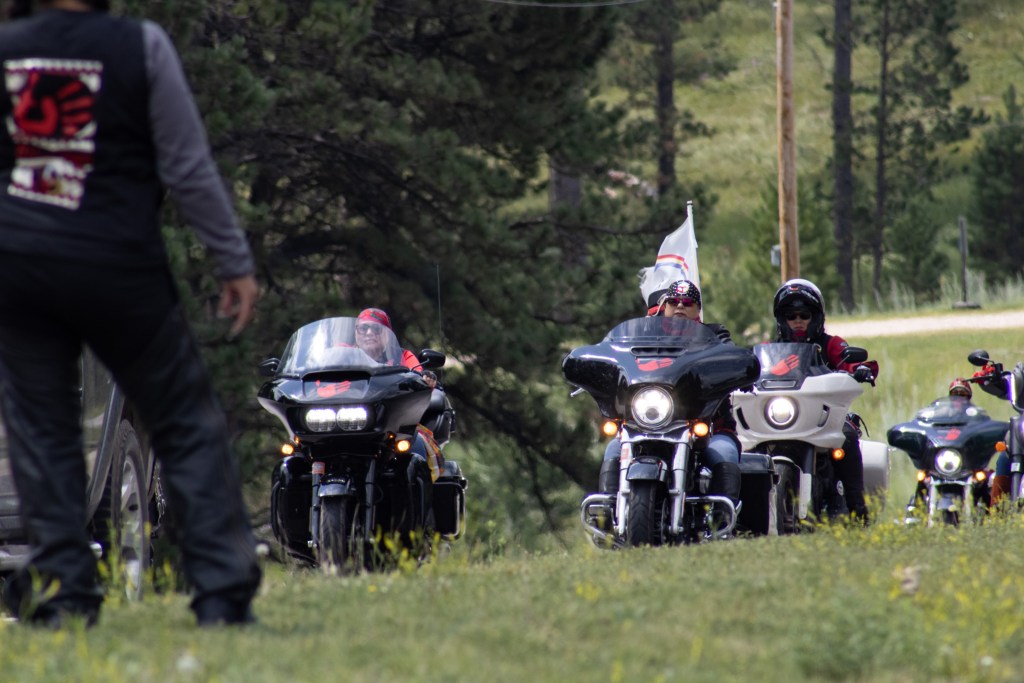

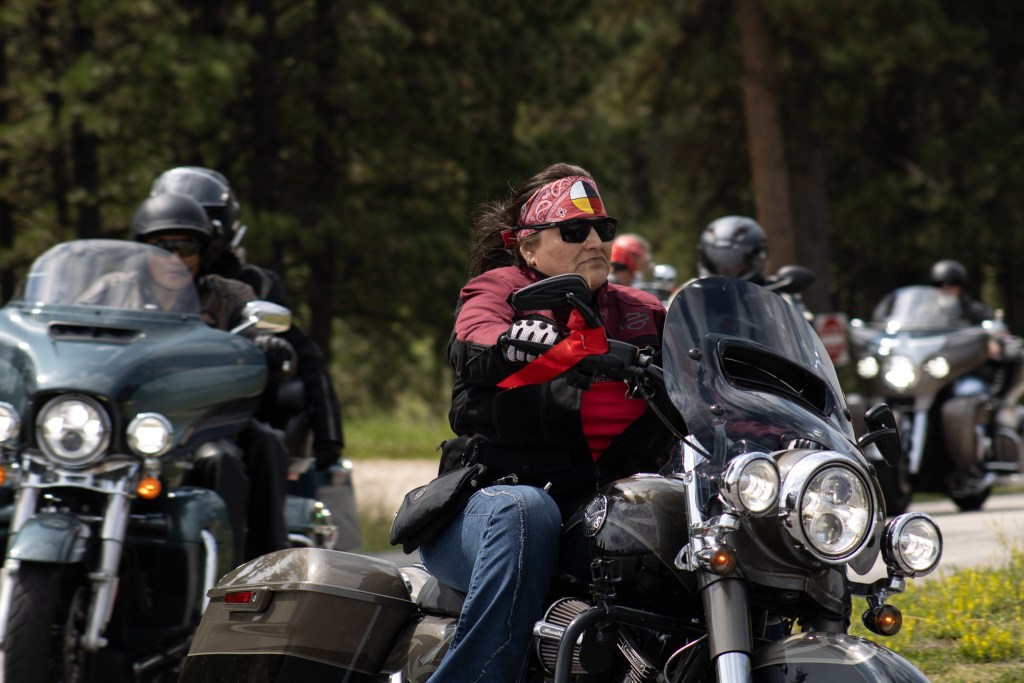

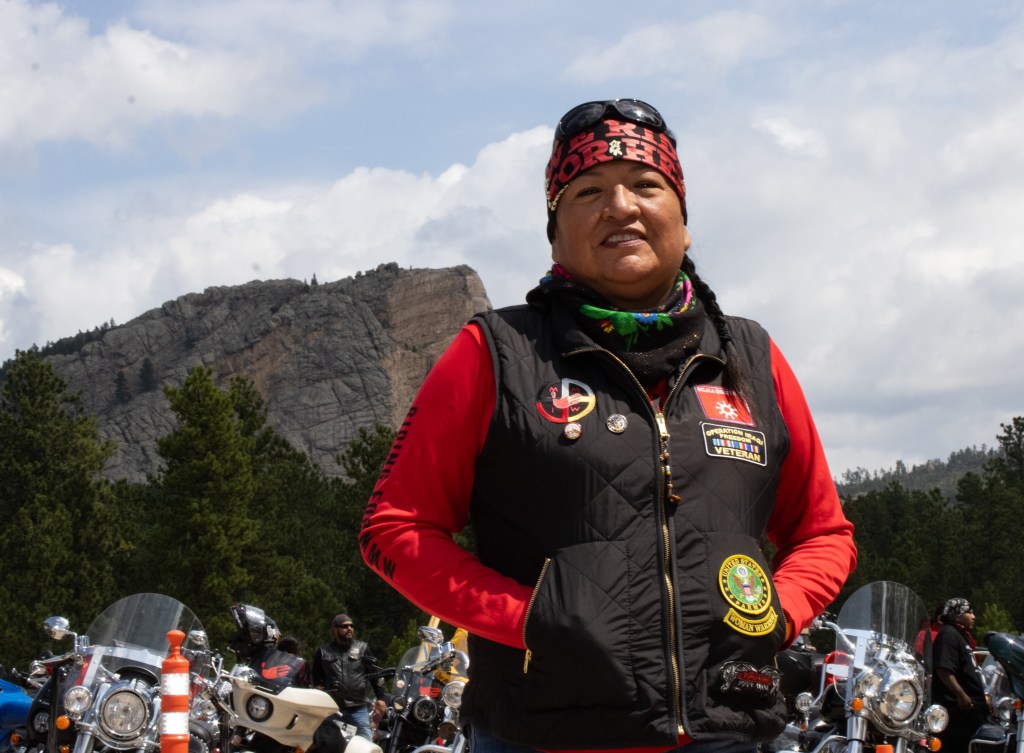
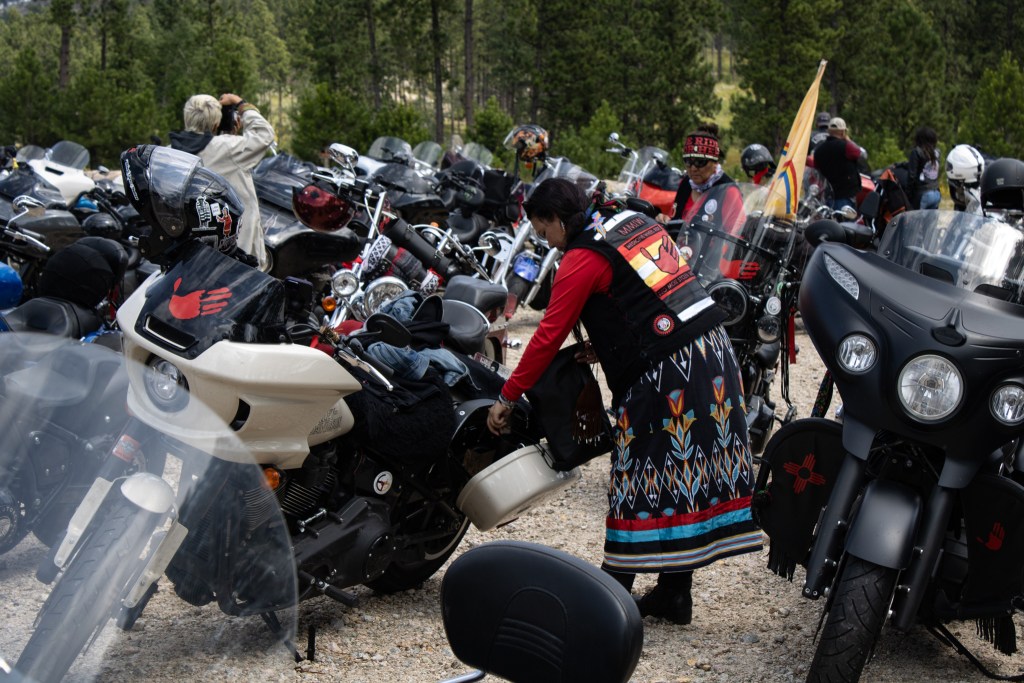
Medicine Wheel Riders donned ribbon skirts, ribbon jackets and beadwork during the ride as they traveled through the Black Hills on August 6. (Amelia Schafer for ICT and the Rapid City Journal)
Credit: Medicine Wheel Riders donned ribbon skirts, ribbon jackets and beadwork during the ride as they traveled through the Black Hills on August 6. (Amelia Schafer for ICT and the Rapid City Journal)
Prairie Rose Seminole, a citizen of the Three Affiliated Tribes, raises her fist as she rides out of Bear Butte during the 2023 Medicine Wheel Ride. Seminole produced the documentary about the ride, “We Ride for Her”. (Amelia Schafer for ICT and the Rapid City Journal)
Credit: Prairie Rose Seminole, a citizen of the Three Affiliated Tribes, raises her fist as she rides out of Bear Butte during the 2023 Medicine Wheel Ride. Seminole produced the documentary about the ride, “We Ride for Her”. (Amelia Schafer for ICT and the Rapid City Journal)
This story is co-published by the Rapid City Journal and ICT, a news partnership that covers Indigenous communities in the South Dakota area.
Our stories are worth telling. Our stories are worth sharing. Our stories are worth your support. Contribute $5 or $10 today to help ICT carry out its critical mission. Sign up for ICT’s free newsletter.
