Sandra Hale Schulman
Special to ICT
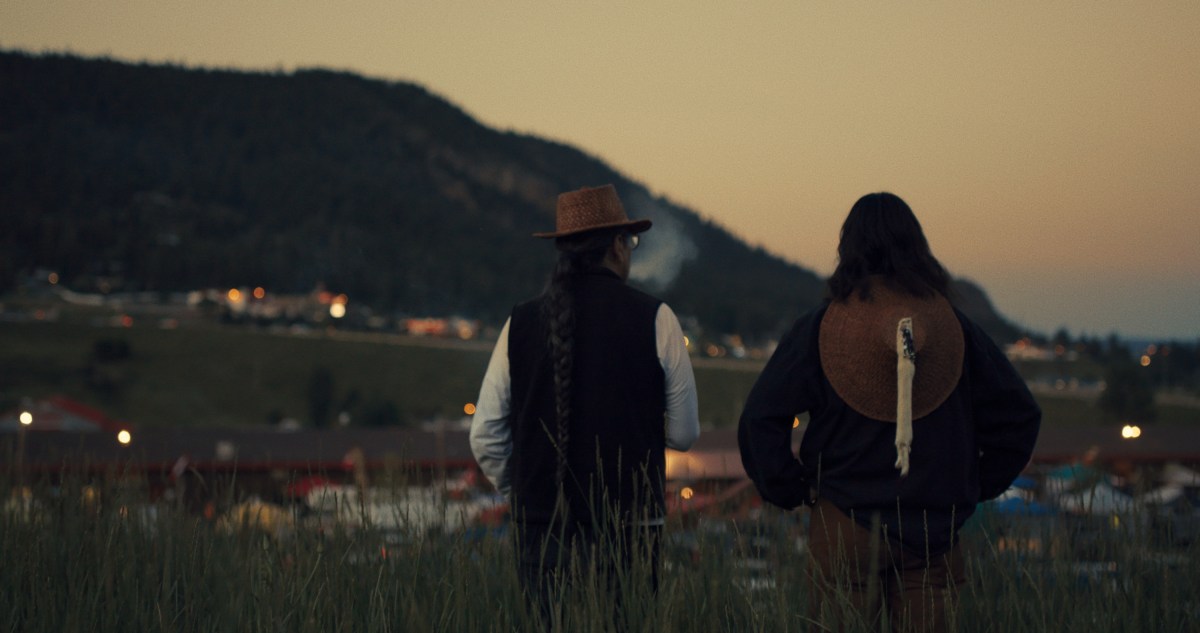
Julian Brave NoiseCat was on a plane when the announcements were made in Los Angeles Thursday that his emotional residential school documentary, “Sugarcane,” had been nominated for an Academy Award.
The film, by first time Secwépemc filmmaker NoiseCat and Toronto journalist Emily Kassie, is nominated by the Academy of Motion Picture Arts and Sciences for best documentary feature at the Oscars airing March 2.
“I’ve been praying a lot,” NoiseCat told ICT from the plane. “Went up to Mount Currie to visit some family last week and sit by one of our lakes at the foot of the mountain where our ancestors survived the Great Flood. I’m so grateful to the Academy for this historic nomination, and especially to my people, my ancestors, my family and all of Indian Country.”
The film left audiences openly weeping at a packed screening in Santa Fe Indian Market in August, as heart-wrenching stories unfolded of the children who attended St. Joseph’s Mission Residential School near Sugarcane reserve in Williams Lake, British Columbia.
Rape. Murder. Death by incinerator. Called “a gut punch of a documentary” by The Hollywood Reporter, the film uncovers for the first time evidence of a pattern of infanticide at St. Joseph’s mission, including the deaths of babies fathered by priests.

NoiseCat followed the trail of his father, Ed Archie NoiseCat, who is stunned at the revelations that are uncovered. Archie was the only child saved from the incinerator at the school, and many were disposed of in unmarked graves that have been discovered in recent years.
Sugarcane premiered at the 2024 Sundance Film Festival where it won the directing award for a U.S. documentary, and it has since garnered more than a dozen other awards. Acquired by National Geographic Documentary Films, “Sugarcane” is now streaming on Disney+ and Hulu.
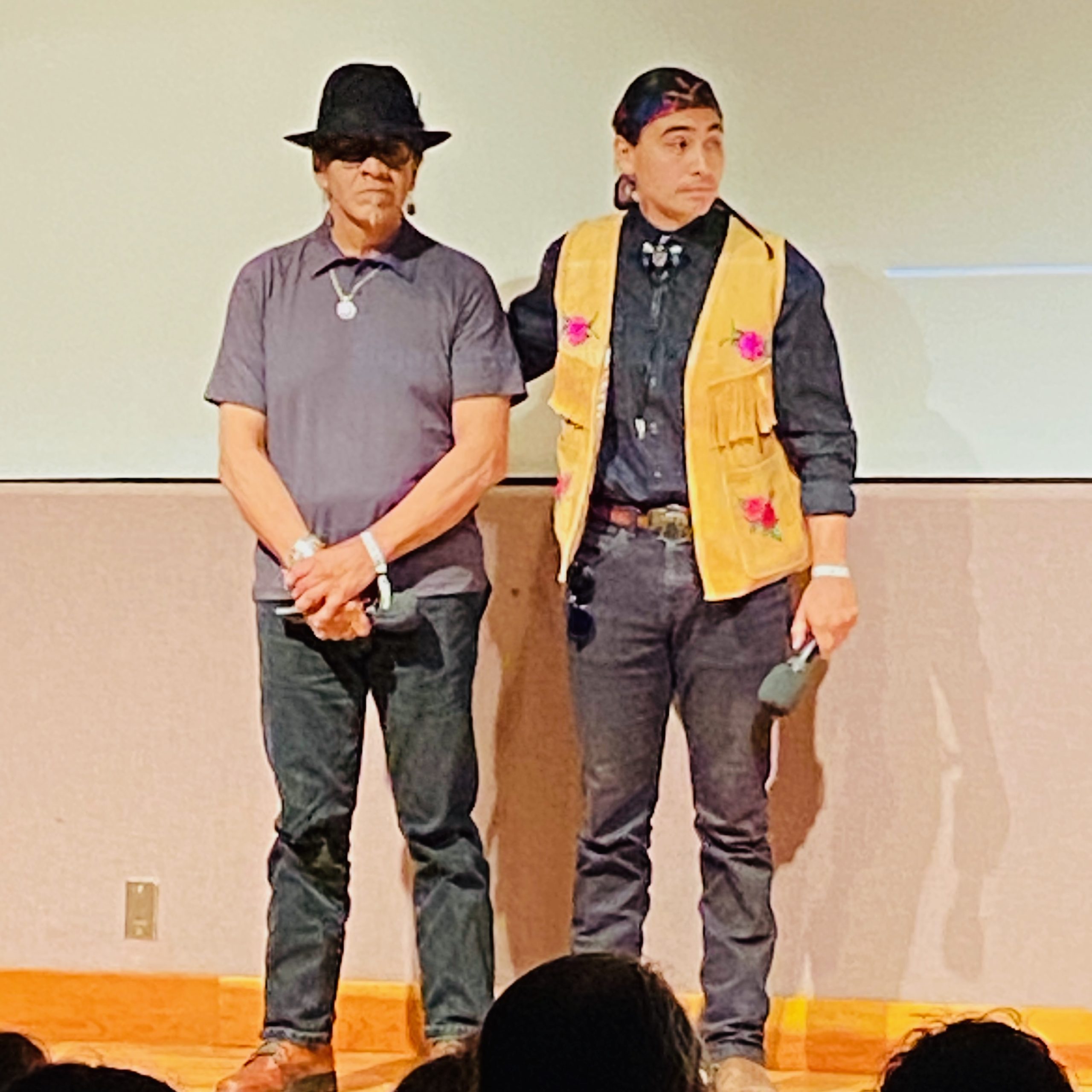
At the Santa Fe screening in the theater at the Museum of Indian Arts and Culture, NoiseCat and his father were introduced by Chris Eyre, director of “Dark Winds.”
They spoke of the hidden trauma Archie held inside for decades, not knowing what had really happened at the school. To have his son unravel the dark mystery for and with him provided a measure of closure that he said he will continue to grapple with the rest of his life.
The incidents at the school are just one story of many as the revelations continue to come to light, prompting then-President Joe Biden and Pope Francis to issue apologies for the abuses committed at the schools under the watch of the Catholic Church in both Canada and the United States.
Julian NoiseCat appears in the film with his father, taking road trips to follow the trail of documents, DNA, abandoned schools, and unmarked graveyards.
Kassie is an Emmy- and Peabody-nominated investigative journalist who connected with NoiseCat to work on the film after she began looking into St. Joseph’s Mission.
When the news of potential unmarked graves were discovered on the grounds of a former Indian residential school in British Columbia, Kassie felt pulled to the story. She contacted Julian, with whom she had worked on a previous reporting job nearly a decade earlier.
The school she decided to investigate was the one Julian’s father had been sent to.
“I just about fell out of my chair,” Julian said in an interview with NPR. “That’s really crazy. Did you know that’s the school that my family was taken away to and where my father was born? Out of 139 Indian residential schools in Canada, she had chosen the one school that my family was taken away to and where my father’s life began without even realizing it.”
The story goes beyond just the facts about the school, however, he said.
“I felt that one of the most important parts of this story, as with any story, is not just the investigative truth or the intellectual truth, it’s also the emotional truth,” he said. “And it’s really important for people to understand what the intergenerational impacts and emotional stakes are of these schools for survivors and their descendants. I think that a big part of what we were trying to get at, through my story and through others, was that piece of it.
“I think that’s part of what’s special about film,” he continued. “Film is a full sensory experience that lets you into the lives of the people who you’re following. I think it would be a mistake to tell a story with such deeply personal, intimate, often quite visceral stakes without letting people into what that has meant for the people who are living that reality. “
The film flows in an organic way, he said.
“We’re not getting a cut-and-dry explanation or narration of exactly what happened,” he said. “But it’s coming out in vignettes through all these different subjects and different interactions that we’re having. It brings the past into the present because you’re not just looking back and saying what happened all those years ago.
“It’s continually looking at how it’s still impacting the current generation,” he said. “This is life or death right now for Indigenous peoples.”
The other feature film with 13 Oscar nominations being noted as Indigenous is “Emilia Perez,” the musical story of a cartel leader who transforms into a woman to escape the law. It features several Mexican and Spanish actors and is controversial due to the star Karla Sofia Gascon being the first openly trans actor nominated for an Oscar.

Our stories are worth telling. Our stories are worth sharing. Our stories are worth your support. Contribute today to help ICT carry out its critical mission. Sign up for ICT’s free newsletter.