

UPDATE: Yup’ik musher Pete Kaiser finished ninth March 13 in the 975-mile Iditarod Trail Sled Dog Race. He and his team crossed the finish line in Nome at 9:30 a.m. Alaska time, completing the race in 9 days 18 hours 30 minutes 50 seconds.
Kaiser’s Iditarod career now includes nine top 10 finishes, including the championship in 2019. He’s also the winningest musher in the Kuskokwim 300, a highly regarded mid-distance race that takes place in Bethel the last week in January. Kaiser won his eighth Kuskokwim 300 on Jan. 28.Ryan Redington, Inupiaq, placed 14th, crossing the finish line at 8:48 p.m. March 13. He completed the race in 10 days 5 hours 48 minutes 49 seconds.
Redington and his dog team won the Iditarod in 2023 and had four consecutive top 10 finishes. He’s a two-time winner of the Kobuk 440 in Kotzebue, Alaska; and the 300-mile John Beargrease Sled Dog Marathon in Duluth, Minnesota.
Richard Arlin Walker
Special to ICT
By the time Dallas Seavey and his dog team blew through Koyuk – mile 804 in the 975-mile Iditarod Trail Sled Dog Race – the race was his to lose.
“He’d have to stumble big time to lose this,” race analyst Bruce Lee said on Iditarod Insider, an online program presented by the Iditarod Race Committee. “Those dogs went right up to 8 mph the first three steps. There was no hesitation and no confusion – ‘Are we parking or are we going?’ You don’t see a lot of dog teams leave Koyuk as briskly as those guys headed out.”
Seavey and his team never stumbled and on March 12 he became the winningest musher in Iditarod history, finishing the run from Anchorage to Nome – over mountain pass, down a steep gorge, across frozen tundra and along windswept coastline – in 9 days 2 hours 16 minutes. He crossed the finish line at 5:16 p.m. Alaska time.
It’s Seavey’s sixth Iditarod title in nine years and his 12th consecutive top 10 finish. With his win, Seavey will take home $55,600 of the race’s $574,000 purse.
Matt Hall, a two-time top 10 finisher who placed fourth in 2023, was about 30 miles behind and in second place. Jessie Holmes, known for the NatGeo TV series “Below Zero,” was about 45 miles behind Seavey and in position to finish third. It would be his fifth top 10 finish in seven Iditarods.
The two Alaska Natives in the race – 2019 champion Pete Kaiser, Yup’ik, and 2023 champion Ryan Redington, Inupiaq – were in a good position to finish in the top 10 and top 15, respectively.
This year’s race was fraught with unforeseen dangers and unfortunate circumstances that at one point seemed to derail Seavey’s title bid.
Seavey and his team crossed paths with an angry moose on March 4, some 83 miles into the race. Seavey dispatched the moose after it injured one of his dogs, Faloo. (Holmes, who was leading at this point, had also encountered a moose; race officials did not know whether it was the same moose that later tangled with Seavey’s team.)
Race officials penalized Seavey, adding two hours to his time, after they determined he didn’t properly gut the animal as required by race rules so the meat can be salvaged. Rather than return to the previous checkpoint for help, a distance of 14 miles, Seavey put his injured dog on his sled and continued on to the next checkpoint about 40 miles away, stopping to camp for three hours en route.
Seavey apologized and said race officials made the right call. He said he had been shaken up by the incident and made “a terrible shock decision.”
Holmes, Travis Beals and Nicolas Petit seemed to have a sizable advantage to Nulato (mile 582), having taken their mandatory 24- and eight-hour layovers before Seavey did. But Seavey slowly chipped away at those leads.
Seavey has proven to be a masterful strategist who, once he has the lead, can sow confusion in the field. He’s been known to pass checkpoints and camp off trail, leaving other competitors to think he’s continued on and to cut their rest in order to chase a phantom.
Seavey had switched in McGrath (mile 311) to a lightweight carbon fiber sled March 5 and his team was settling into a pace, getting breaks, eating well and staying hydrated. He talked later about his strategy: Be patient and work into the lead over time. If you need to make up an hour, do it over the next 150 miles, not the next 80.
He was in 10th place at this point.
“The first third of the race is about putting the team together and getting them through this section safely,” Seavey told Iditarod Insider after traversing Rainy Pass, the highest point on the trail; down steep and twisty Dalzell Gorge; and through Farewell Burn, an oft-treacherous stretch that was altered by a 1978 forest fire.
“The next third we’ll focus on positioning – do you need to have speed, do you need to have a lead, what do you need to have? And by then we start to have a better idea of who it is we’re racing.
“The goal is to maximize the team’s strength and the second objective is to make the other mushers play the game that draws them away from what they should be doing. Especially with speedy teams, I like having the lead and I like having it at the right place because it puts pressure on them to catch up and almost invariably, they will feel the pressure and cut some rest and before they catch you, they’ve lost their speed because they were cutting rest in there.”
Kristy Berington, a veteran of 13 Iditarods (career best 16th place, 2019), sat out this year‘s race but was supporting her sister, Anna, in her Iditarod run.
“There’s still a lot of race left and every team is different,” Berington told ICT on March 7.
“For the most part, no team will run straight to Cripple [mile 435]. There will be a rest stop somewhere on the trail to break up that run. The following run to Ruby [mile 495] is rather hilly and also another 70-plus miles. Somewhere on the Yukon River, all teams must do an 8-hour rest.
“Mushers who are going for the championship will chisel away at the lead, then maybe make a big move around Unalakleet and or Elim.”
Seavey made his move there, checking in to Unalakleet (mile 714) in second and moving on after nine minutes while other top 10 contenders rested there from three to five hours. His team had gas when they blew through Koyuk two checkpoints later. They never yielded the lead from then on.
“Did we see just greatness pull in here and leave?” Iditarod Insider commentator Greg Heiser said after Seavey and his team pulled out of Koyuk.
Seavey pulled into White Mountain (mile 898) on March 12 for a mandatory eight-hour layover, three hours ahead of Hall and more than four hours ahead of Holmes. But Seavey wasn’t taking his lead for granted. It was on this final 77-mile run to Nome in 2014 that four-time Iditarod champ Jeff King had to withdraw after he and his team got disoriented in a blizzard and lost the trail. Seavey, who had been in third at White Mountain, went on to win his second championship.
“I’m still in the mindset that the race isn’t over because it’s never over until it’s official and the timesheet is signed,” Seavey told Iditarod Insider in White Mountain on March 12. “What does it take to lose the race at this point – that’s the right question to be asking. It takes not getting bogged down and having enough power to get through a storm.”
The race was marred by the deaths of three dogs.
Bog, a two-year-old male on musher Isaac Teaford’s team, collapsed at about 9:46 a.m. March 10 approximately 200 feet from the checkpoint in Nulato (mile 582), the race committee reported. A veterinarian administered CPR for 20 minutes, race officials said, but the dog did not survive.
George, a four-year-old male from musher Hunter Keefe’s team, collapsed on the trail at about 10 a.m. the same day, roughly 35 miles outside of Kaltag en route to Unalakleet (mile 714). Attempts to revive George were unsuccessful, race officials reported.
And at about 10:15 a.m. March 12, Henry, a three-year-old male from musher Calvin Daugherty’s team, collapsed on the trail roughly 10 miles before reaching the Shaktoolik checkpoint (mile 754). Daugherty administered CPR but his attempts to revive Henry were unsuccessful.
Necropsies would be performed to determine causes of death, race officials reported.
All three mushers withdrew from the race in accordance with race rules. All told, 38 mushers started the race and 31 were expected to finish.
The Age of Seavey
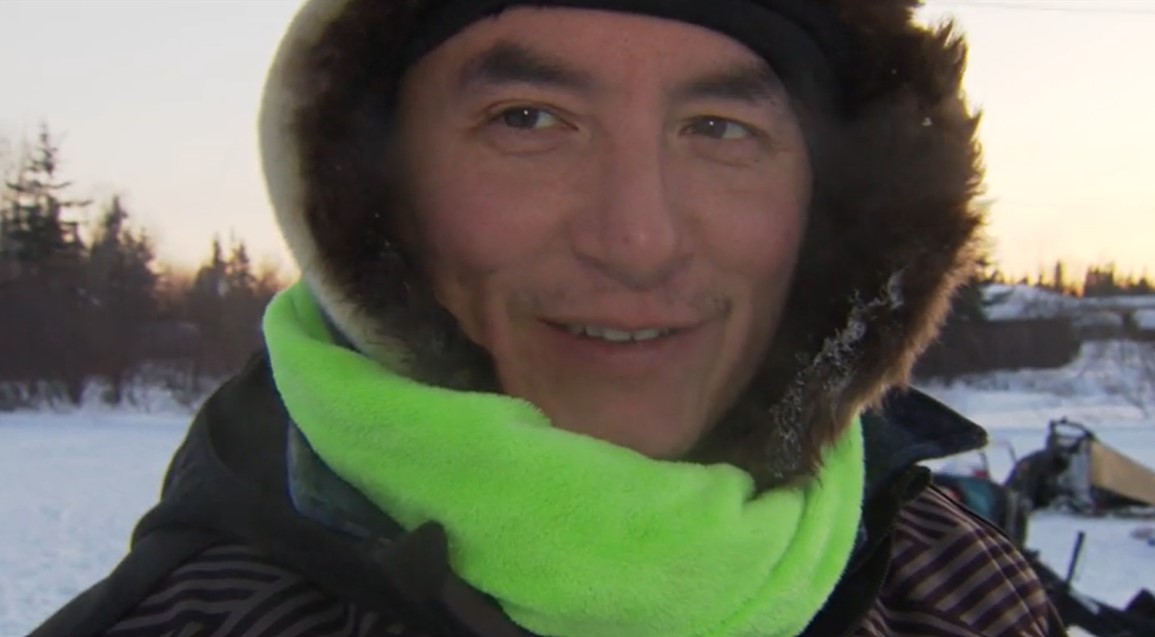
The 1970s were a time of Alaska Native triumph in the Iditarod Trail Sled Dog Race. It was founded in 1973 by Redington’s grandfather, Joe, to celebrate the heritage of the Alaska sled dog, an important part of Alaska Native life for centuries. The 1974, 1975 and 1976 Iditarods were won by Athabascan mushers Carl Huntington, Emmitt Peters and Jerry Riley.
The 1980s produced the only women champions thus far of the storied race: Libby Riddles in 1985 and Susan Butcher in 1986, 1987, 1988 and 1990.
The 1990s were dominated by Martin Buser, Jeff King and Doug Swingley. Lance Mackey made a permanent imprint on the 2000s when he won both the 1,000-mile Yukon Quest and the Iditarod four consecutive years.
But the ensuing decade was the Age of Seavey. Dallas became the youngest Iditarod champion in 2012; his father Mitch won in 2013; Dallas won in 2014, 2015, 2016; and Mitch again won in 2017 (Dallas finished second).
Dallas took a hiatus from the Iditarod to compete in the Finnmarkslopet, a 745-mile race in Norway, placing third in 2019. He won his fifth Iditarod title in 2021, the year of his return.
On March 12, he extended the Age of Seavey into the 2020s.
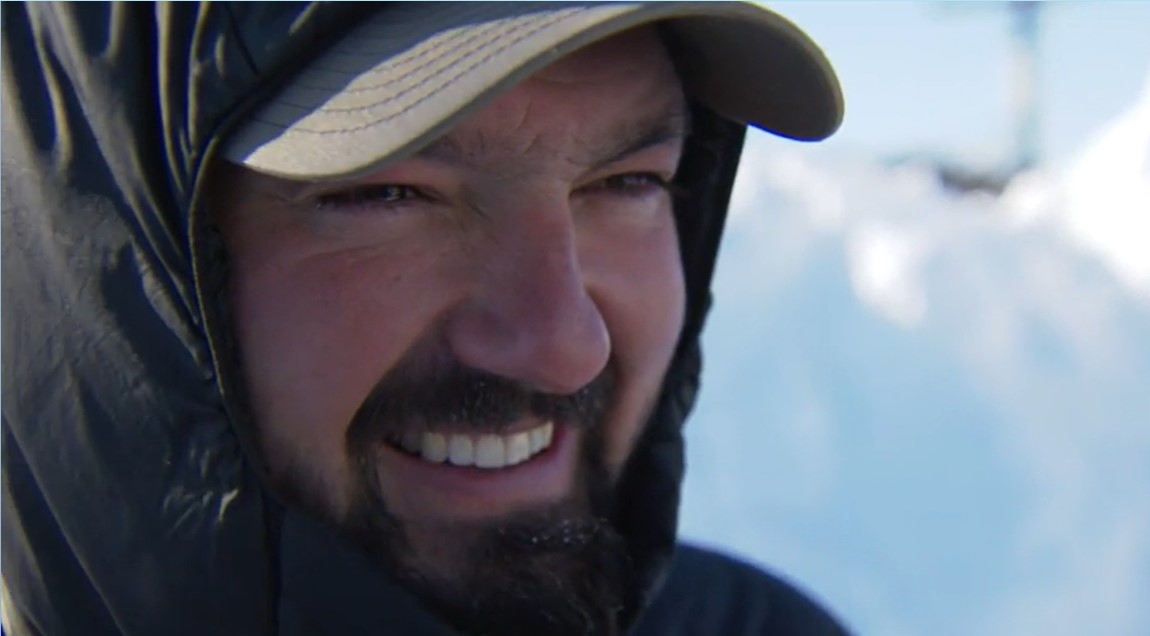
Kaiser, who in January won his eighth Kuskokwim 300 mid-distance title, was in the top 10 for much of the 2024 Iditarod. He was the seventh musher March 9 to pull into Galena (mile 545), a community on the north bank of the Yukon River. This is where strategy and pace really come into play, he told Iditarod Insider.
“You’re going to see a series of moves from here on out,” Kaiser said. “If you swing too early, it doesn’t work out, but if you don’t make a move early enough you run out of trail. It’s definitely going to pick up pace from here.”
All mushers start with 16 dogs but may leave dogs at checkpoints if they feel the dog is not performing well or is not feeling optimum. Kaiser had 11 dogs in Galena.
“I would like to have a couple of clean runs in a row before I can think about making any moves,” he told Iditarod Insider. “I’m trying to assess the team and make our way down the trail. They’re doing well but may not be in a position to make a move right now. If we can manage them just right, we’ll be able to maybe sneak in somewhere. We have to make the right calls for the team.”
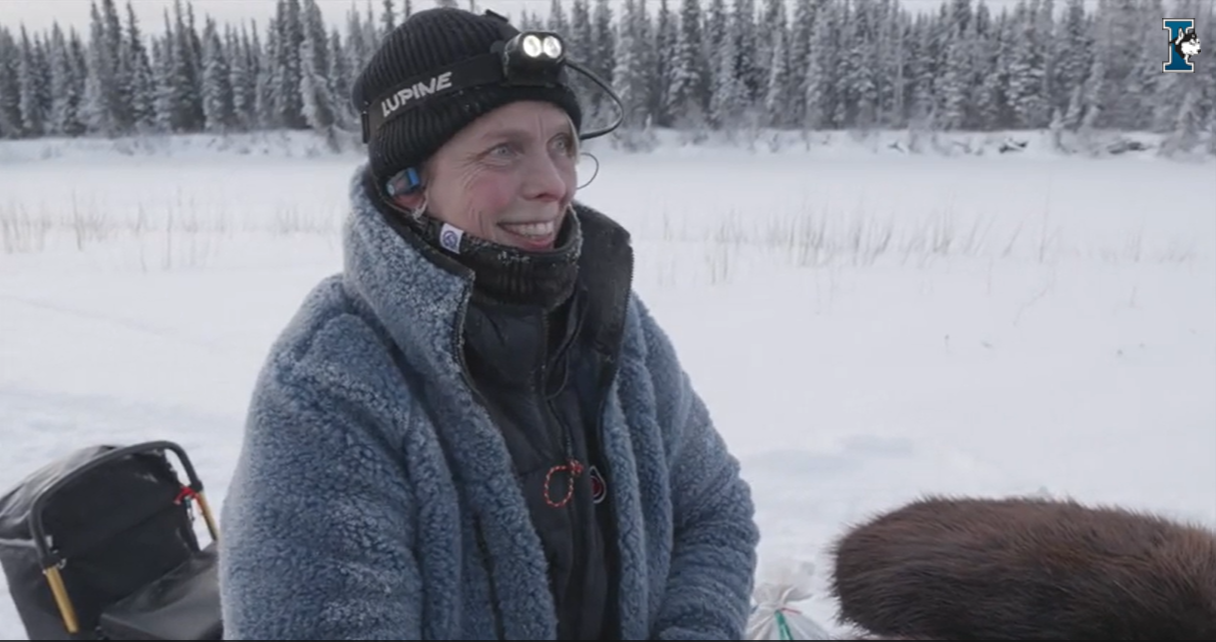
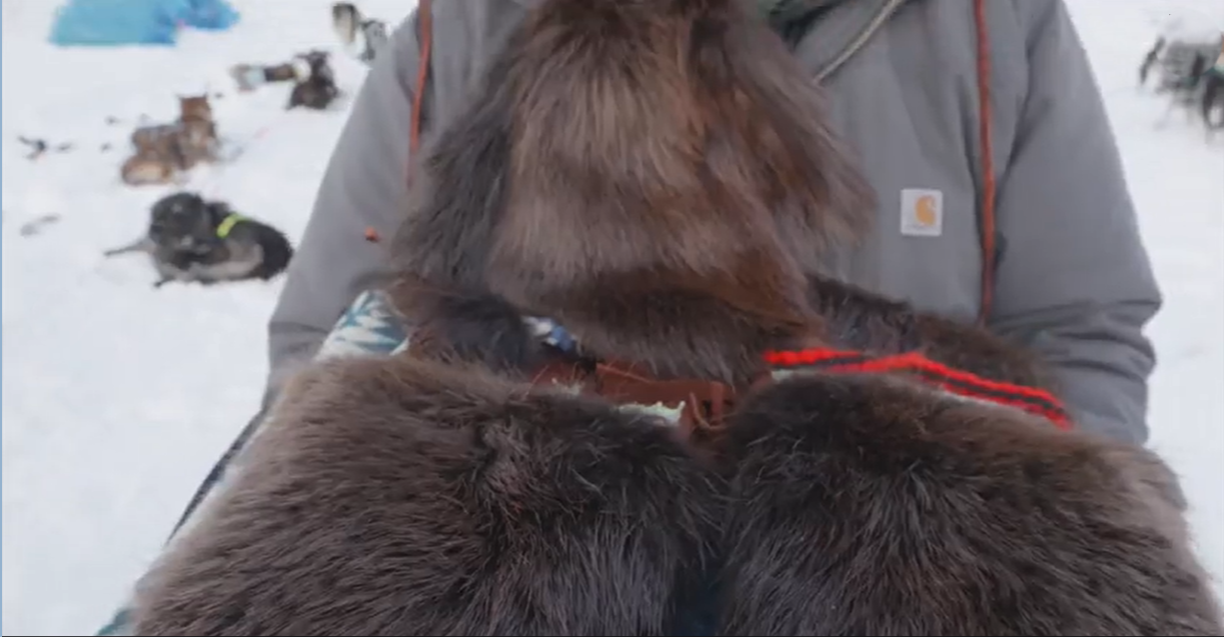
The Iditarod trail offered as much breathtaking beauty as it did challenges: sunrises on the sea ice, the Northern Lights dancing in the nighttime sky, the hospitality of villagers and volunteers. (Musher Mille Porsild of Denmark was the first to reach Nikolai, mile 263, and received a pair of beaver fur musher’s mitts with beadwork on moose hide, handmade by Athabascan artist Loretta Maillelle; a beaver fur hat made by Oline Petruska, Athabascan; and a Pendleton wool blanket from Alaska Air Transit).
Redington, a four-time top 10 finisher, arrived March 9 at Kaltag (mile 629) in sixth place with 12 dogs in harness. “I’m having a lot of fun,” he told Iditarod Insider. “It’s been a rollercoaster every day, highs and lows, but coming in here was a nice run. Nothing spectacular, but we’re having fun and taking it one run at a time.”
He added, “I’ve got 12 nice dogs on my team and I’m having fun with them.”
IDITAROD: ALASKA NATIVE WINNERS
1974: Carl Huntington, Athabascan
1975: Emmitt “The Yukon Fox” Peters, Athabascan
1976: Jerry Riley, Athabascan
2011: John Baker, Inupiaq
2019: Pete Kaiser, Yup’ik
2023: Ryan Redington, Inupiaq
IDITAROD: WINNINGEST MUSHERS
Dallas Seavey: 2024, 2021, 2016, 2015, 2014, 2012
Rick Swenson: 1991, 1982, 1981, 1979, 1977
Lance Mackey: 2010, 2009, 2008, 2007
Jeff King: 2006, 1998, 1996, 1993
Martin Buser: 2002, 1997, 1994, 1992
Doug Swingley: 2001, 2000, 1999, 1995
Susan Butcher: 1990, 1988, 1987, 1986

Our stories are worth telling. Our stories are worth sharing. Our stories are worth your support. Contribute $5 or $10 today to help ICT carry out its critical mission. Sign up for ICT’s free newsletter.

