

Editor’s Note: This story is part of the ICT’s powwow guide set to release April 2024. Include your powwow or a powwow near you by filling out this form.
Kalle Benallie
ICT
Nakeisha McDonald felt shame and bullying from growing up in a spiritual household in Cross Lake, Manitoba, in Canada that spoke Cree and practiced Cree culture. She said it was different from others in her community who primarily practiced Christianity.
But when she moved to Winnipeg at 17, people were stunned to learn that she spoke Cree and could dance. They excitedly asked McDonald, Swampy Cree, if she could teach them.
“I had so many people coming up to me all the time that I tried individual teaching but that wasn’t always possible so that’s when I started TikTok in 2020 when Covid hit and I was just a stay-at-home mom at the time. I had a newborn baby,” she said. “To have something to do, I kind of started to find my passion and start to share my passion with people.”
The 24-year-old teaches all various ages from early elementary, middle school to students at the University of Manitoba. She said a lot of them have never been to a powwow, don’t know how to dance, and always wanted to learn.
“I’m starting to notice knowing the culture and spirituality is a privilege. It’s something I want to share with people. It’s part of decolonization, reconnecting to our roots and helping people who don’t know, know,” she said. “Teaching comes naturally to me. It’s something I find a lot of joy in.”
One of the reasons why she started dancing in the first place is her struggle with eczema, a skin condition. Her mother had her dance at 5 years old in a jingle dress, due to the story of the jingle dress helping a person to heal.
“I would dance every summer in my jingle dress and pray for my healing,” she said.
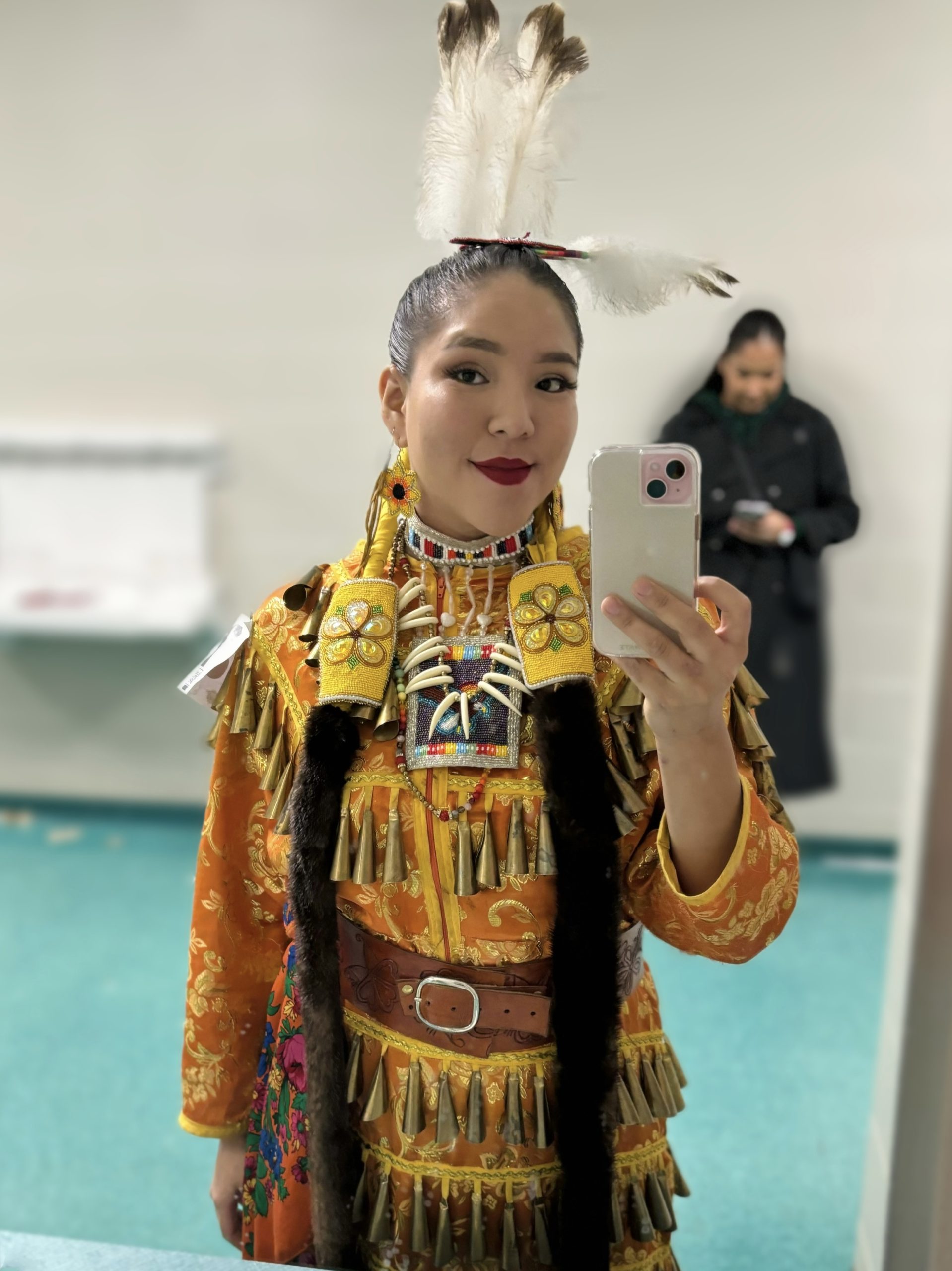

McDonald dances jingle dress, old style fancy shawl, and grass dance.
She said she starts off the powwow season by smudging. On the mornings of the powwow, she prays while getting ready and while she braids her hair to set good intentions which she says sets the tone of the dance. She also puts sage, cedar and tobacco in her moccasins to protect her spiritually and for healing prayers.
The process takes about two hours.
McDonald said the most important thing about powwow dancing is that it’s for healing, for you and your family. The competition and prize money are not the priority.
“Our culture is really beautiful and if you know the stories behind it you’ll understand,” she said.
McDonald said one of her dresses is really heavy from the 365 cones on them. She said she notices its weight only when she’s not praying or having fun. But if she prays before and is in the moment, her dress feels light.
“People say it looks like I’m flying when I’m dancing because of how light my steps are, but I honestly believe that’s because of the prayer,” she said.
A piece of advice McDonald wants to give to those who are thinking about dancing is to be persistent.
“For all the people out there, keep reconnecting. Don’t be shy. Keep going. We’re all learning; I’m still learning,” she said.

Our stories are worth telling. Our stories are worth sharing. Our stories are worth your support. Contribute $5 or $10 contribution today to help ICT carry out its critical mission.
