
Amelia Schafer
RAPID CITY, S.D. – South Dakota Gov. Kristi Noem and Attorney General Marty Jackley announced a new opportunity for tribal law enforcement training and have reached out to the Regional Bureau of Indian Affairs to collaborate.
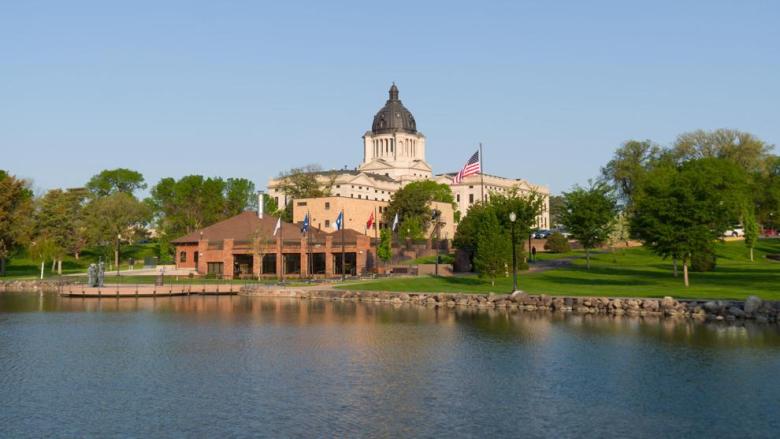
The training would take place from June through August this year in Pierre, South Dakota. The training is open to law enforcement from all nine tribes within South Dakota.
The initiative is aimed at providing training to potential officers in the wake of a statewide tribal police shortage but is also open to current tribal law enforcement personnel looking to participate in more training.
“People in tribal communities continue to suffer because of the well-documented shortage of tribal law enforcement officers. This hurts all of South Dakota’s nine reservations, so we are taking the lead on training more officers as quickly as possible,” Noem said in an April 11 press release. “South Dakota is proud to announce a tribal law enforcement-specific basic certification course this summer – right here in our state.”
Potential tribal law enforcement officers are required to attend a 13-week training at the United States Indian Police Academy in Artesia, New Mexico. The academy delivers specific training on different needs for police officers, criminal investigators, correctional officers, dispatchers and command staff working in Indian Country.
“This is going to help officers receive their South Dakota law enforcement certification while remaining close to home and their tribal communities,” Noem said in a video published to X on April 11. “They won’t have to fly to New Mexico anymore and spend 13 weeks away from their families.”
The South Dakota training will function similarly, said Tony Mangan, Communications Manager for the South Dakota Attorney General’s Office.
“We’ve trained a lot of tribal law enforcement officers in the past,” Mangan said to ICT and the Rapid City Journal. “We’re talking here about a separate training session for just tribal law enforcement. We have had tribal officers train here in the past based on availability.”
The attorney general’s office was unable to confirm if law enforcement training in South Dakota would be reciprocal between tribal law enforcement outside of South Dakota if an officer transferred.
“We’re opening this up for tribal law enforcement in South Dakota,” Mangan said.
The two government organizations are hoping that this initiative will boost officer retention and lead to the graduation of more certified officers.
“This is not going to address every single challenge, but this training is a crucial first step towards addressing public safety issues in our tribal communities,” Noem said in her statement on X.
The State of Montana offers a similar program for all law enforcement personnel in the state, including tribal officers.
Nearly all nine tribes in South Dakota are experiencing a shortage of law enforcement officers.
The Oglala Sioux Tribe launched a lawsuit against the United States in July 2022 arguing that the United States has failed to uphold its treaty obligation to protect the tribe from “bad men.” The police department only has 30 employees covering a land base the size of Connecticut and has struggled to keep up with an influx in emergency calls.
The Crow Creek Sioux Tribe created its citizen police force in June 2023 and requested additional law enforcement personnel and general public safety assistance.
On Jan. 31, Noem alleged that drug cartel anre operating on tribal land in South Dakota. In February, she requested that the United States Senate Committee on Indian Affairs enhance public safety measures on tribal land.
In March, Noem again alleged cartel presence on tribal land in South Dakota and alleged that some tribal governments were failing youth and benefiting from drug cartel operations. Later in March, she requested that all nine tribes be subject to single audits, to help understand what funding is needed for law enforcement.
In her video statement, Noem again called for audits of all nine tribal nations to ensure they are “spending their money wisely” and for the Biden Administration to address public safety in Indian Country.
All tribes in the United States are required to conduct single audits and many have been regularly.
After her March statements and an appearance at the quarterly Pe’ Sla meeting on March 29, Noem was banned from four tribes in South Dakota. The Gov. was banished from entering the Oglala Sioux Tribe, Cheyenne River Sioux Tribe, Rosebud Sioux Tribe and Standing Rock Sioux Tribe.

This story is co-published by the Rapid City Journal and ICT, a news partnership that covers Indigenous communities in the South Dakota area.
Our stories are worth telling. Our stories are worth sharing. Our stories are worth your support. Contribute $5 or $10 today to help ICT carry out its critical mission. Sign up for ICT’s free newsletter.

