Joaqlin Estus
ICT
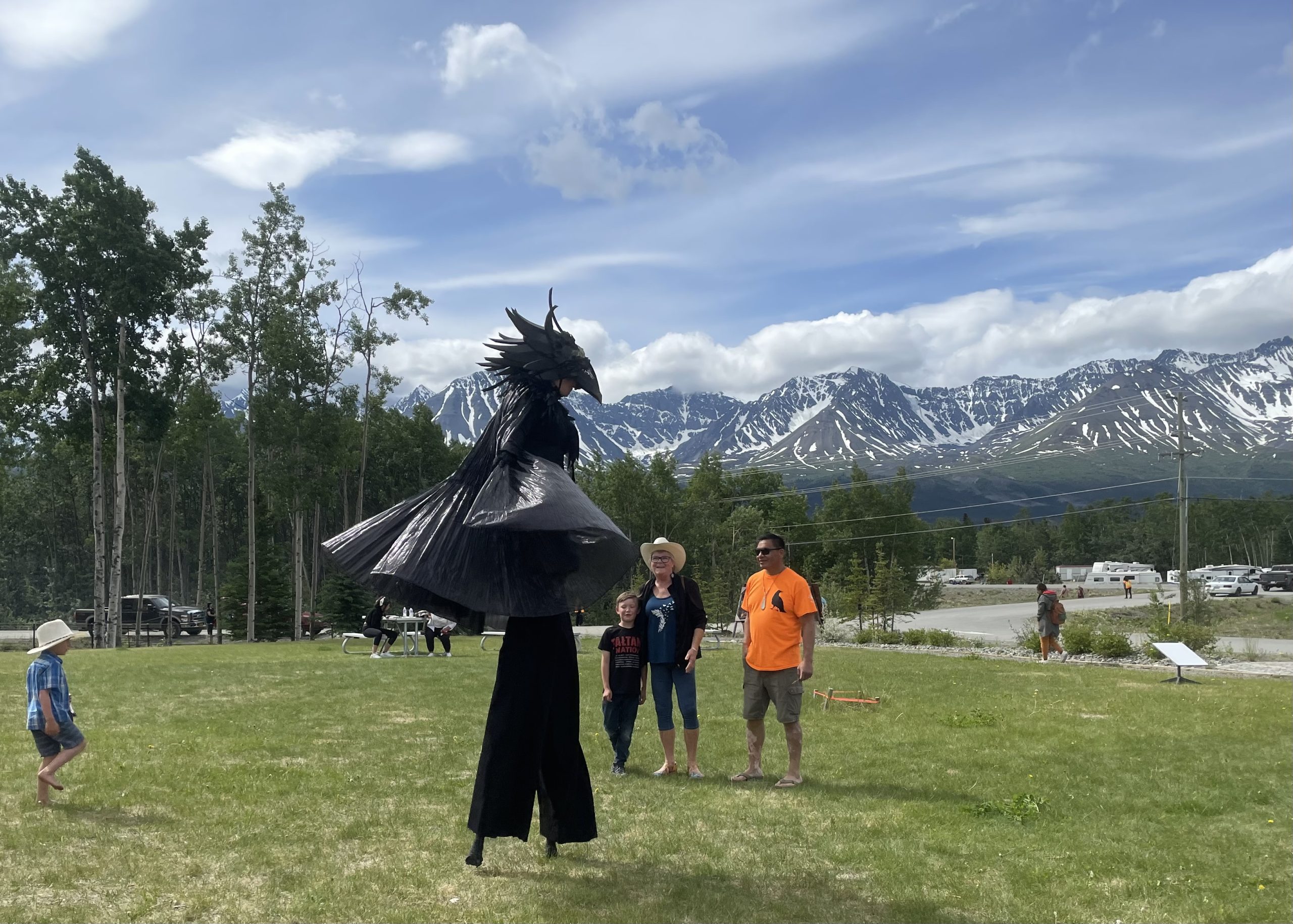
HAINES JUNCTION, Yukon Territory — The Champagne Aishihik First Nations had a lot to celebrate as they hosted the Da Kų Nän Ts’étthèt Dance Festival. The name means “Our House is Waking Up the Land.” The gathering was held the weekend of June 23-25.
The nation’s successes include language and cultural revitalization, sovereignty, and the launch of a healing canoe. Then there’s the joy of being together after the COVID-19 pandemic. And the weather was perfect: sunny, 75 degrees Fahrenheit with a light breeze and scattered clouds. There’s also a spectacular view of the St. Elias Mountains from the Daku Cultural Center in Haines Junction, Canada where the festival was held.
Warren Smith, of the Vuntut Gwich’in First Nation, said the dance festival is “a place to come meet with family, friends, get into culture, singing, dancing with all the people of the Yukon. Just a good time, place to be.”
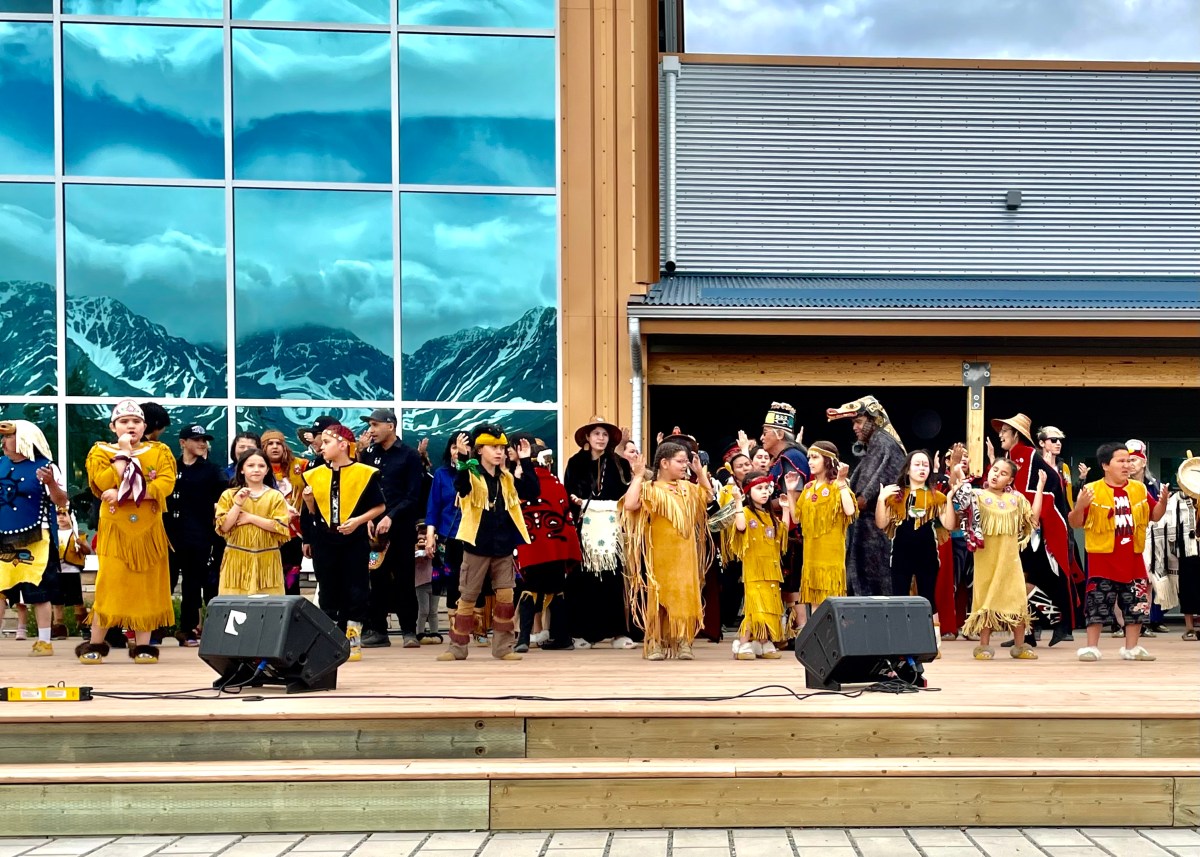
The main stage featured Indigenous dance group performances and, at times, live contemporary music.
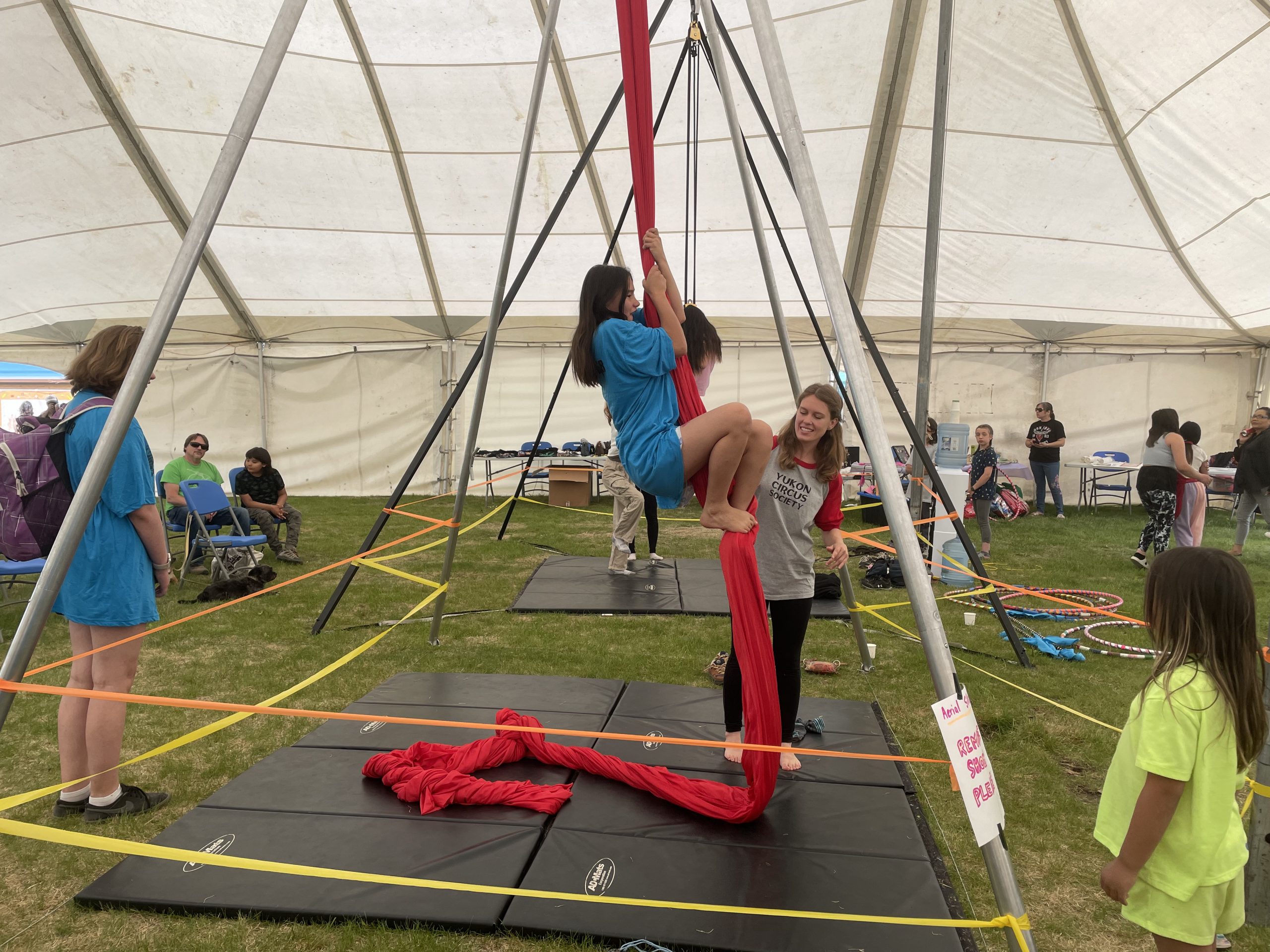
While workshops on regalia and protocol and other classes were underway in one tent, kids got their faces painted, played with hula hoops and learned how to safely use aerial equipment from Yukon Circus Society members.
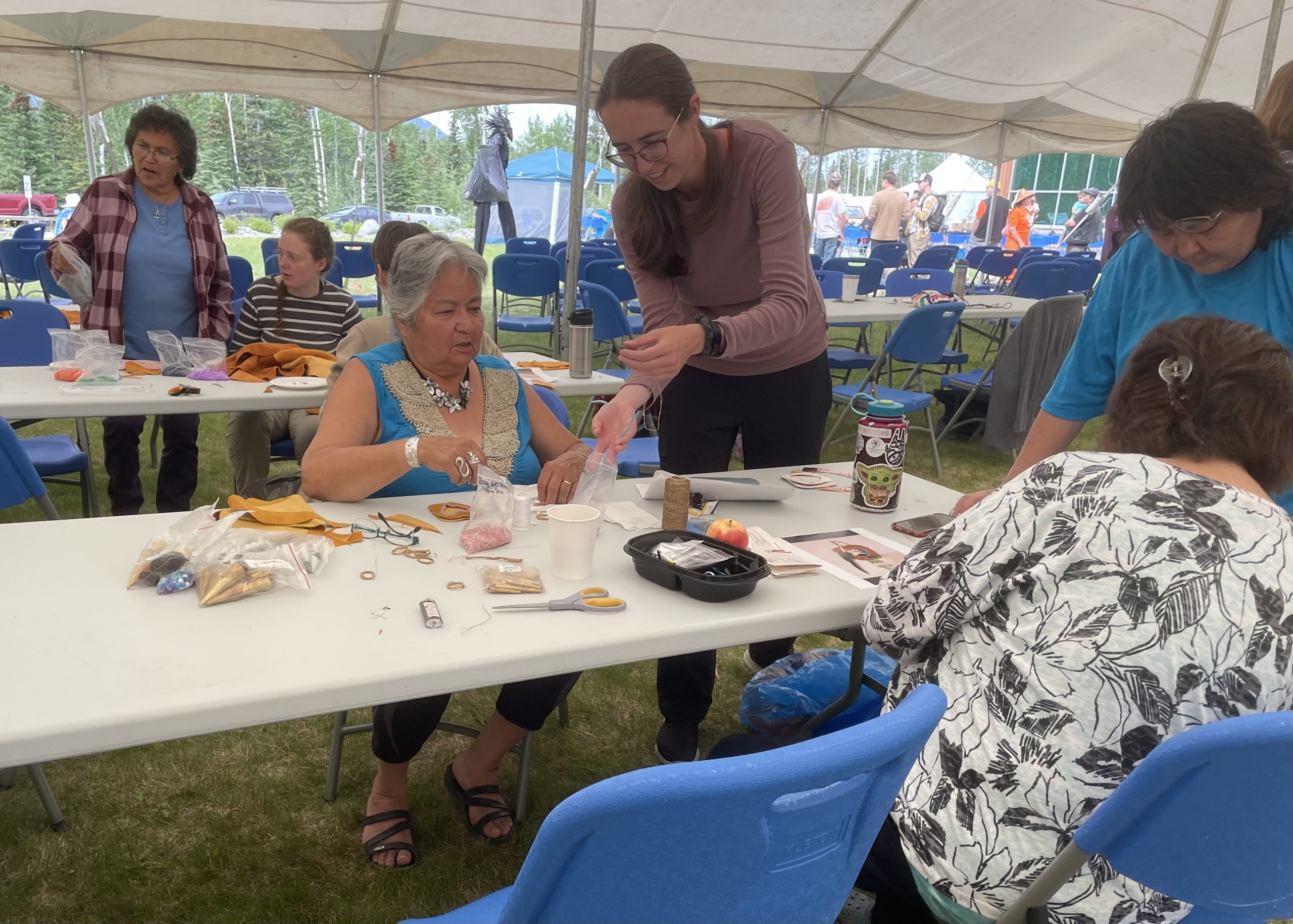
In another tent, people attended workshops on painting, beading, and storytelling. Indoors were workshops on museum exhibits and genealogy.
“One of our big objectives is to learn, live and share our language, knowledge, culture, and what we call dan k’e’, our traditional ways,” said Nations Chief Barb Joe.

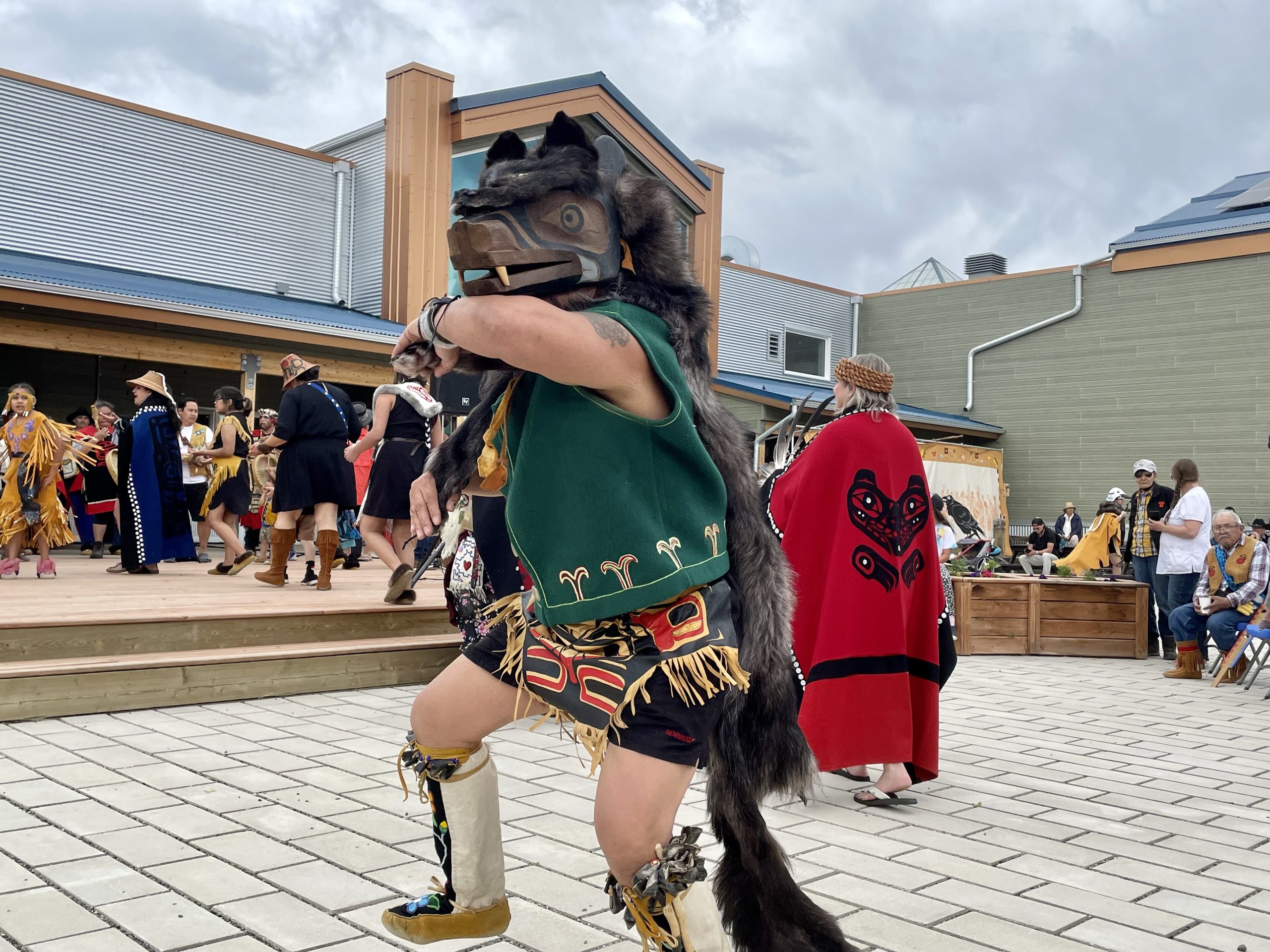
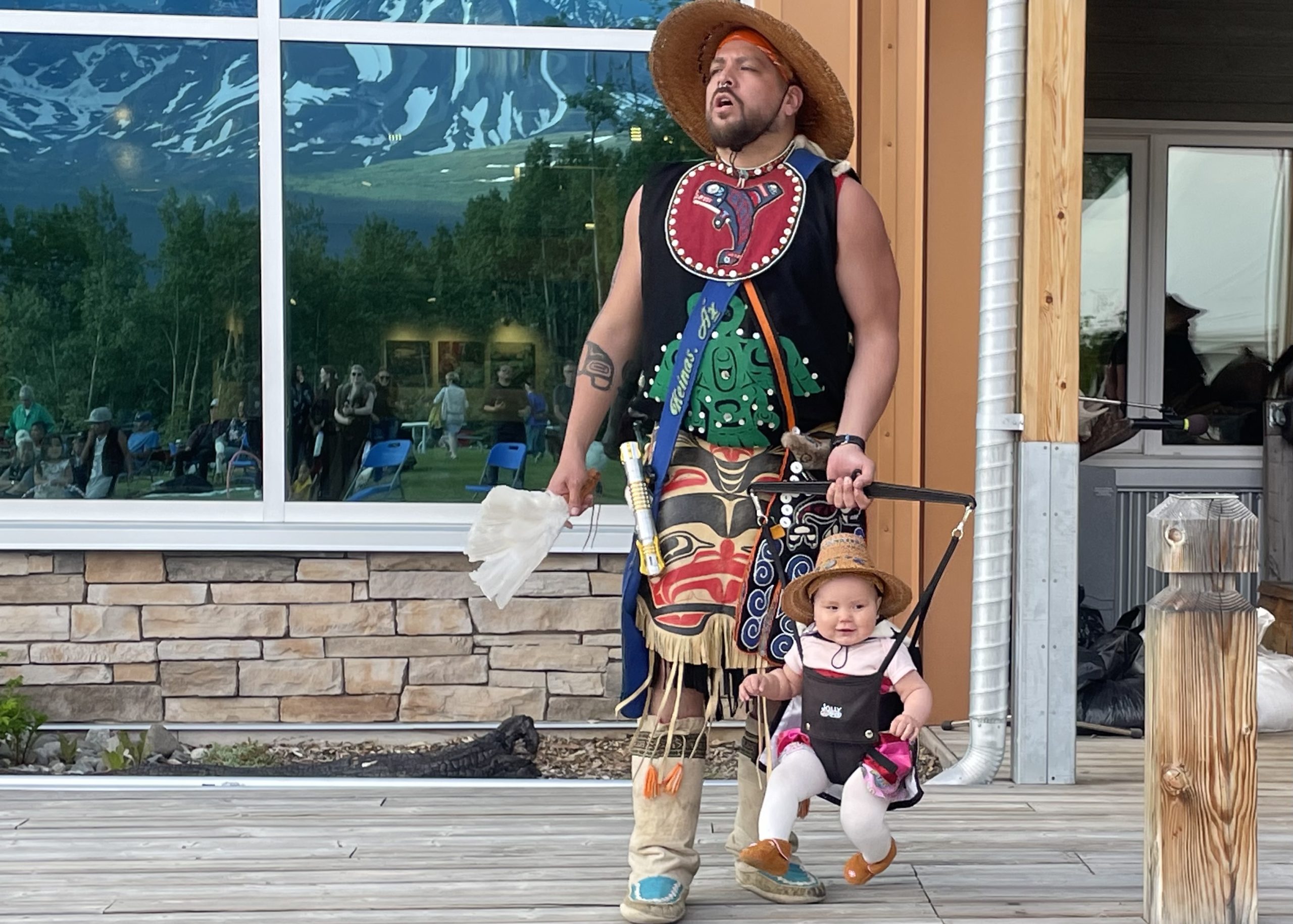
Many of the more than 300 people who attended are part of the dozen or so Indigenous dance groups who came from across the Yukon, British Columbia, and Alaska. The dancers brought painted drums, masks, rattles and hand-sewn regalia.
The Nations are also celebrating the 30th anniversary of their land claims settlement.
Tlingit Elder Chuck Hume said the agreement recognizes the sovereignty of the Southern Tutchone and Tlingit people who had been removed from their Champagne and Aishihik village homelands. The Nations own 940 square miles of land, have access to fish and wildlife and are co-managers of natural and cultural resources in their traditional territory.
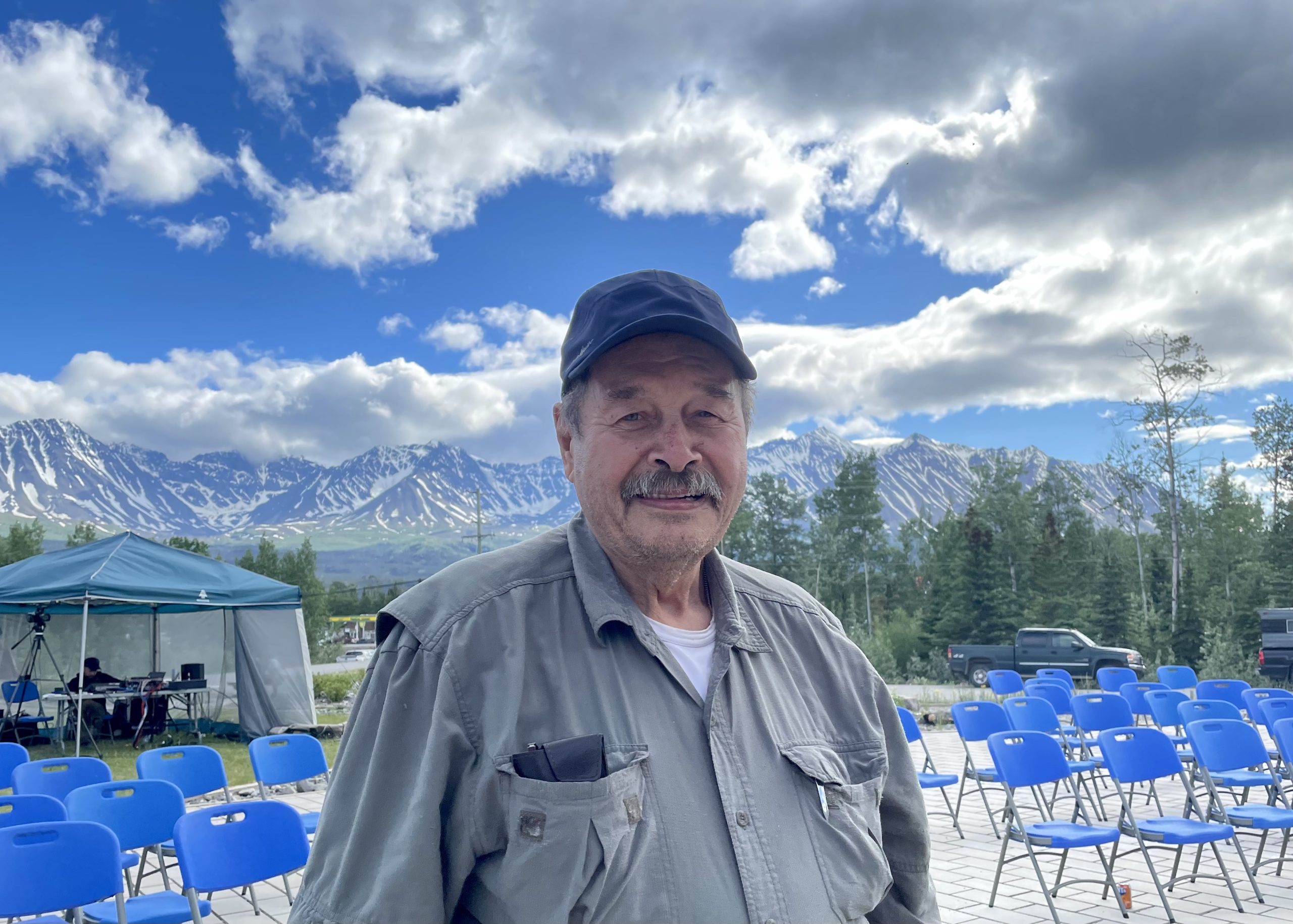
“Yeah, we are self-governing. We make our own laws. Any laws that we make supersede YTG (the Yukon Territorial Government), federal laws,” Hume said. The Nations have to be vigilant, though, for incursions such as development on trapping lands, he said.
Historically furs were part of the trade goods exchanged between coastal Tlingit, and interior Southern Tutchone and other Athabascan people in this region, along with copper, shellfish and fish oil. Now, Haines Junction is at the crossroads of two roads that follow ancient trade routes. The community is also near Kluane National Park Reserve, which is recognized as a world heritage site for its spectacular beauty and wilderness values.

“We are of Tlingit ancestry and then a lot of the ancestry here too is Southern Tutchone. And a lot of the Southern Tutchone and northern Dene’ have gotten together. So there’s a lot of mixture happening in this area, but it was kind of a cutoff point where you have the Tlingit boundary,” Hume said.
The Nations also launched a 30-foot canoe named “Bring Back the Spirit.” The launch of the healing dugout honored the youth apprentices who carved it with Tlingit master carver Wayne Price of southeast Alaska. He’s an art professor at University of Alaska Southeast in Juneau.
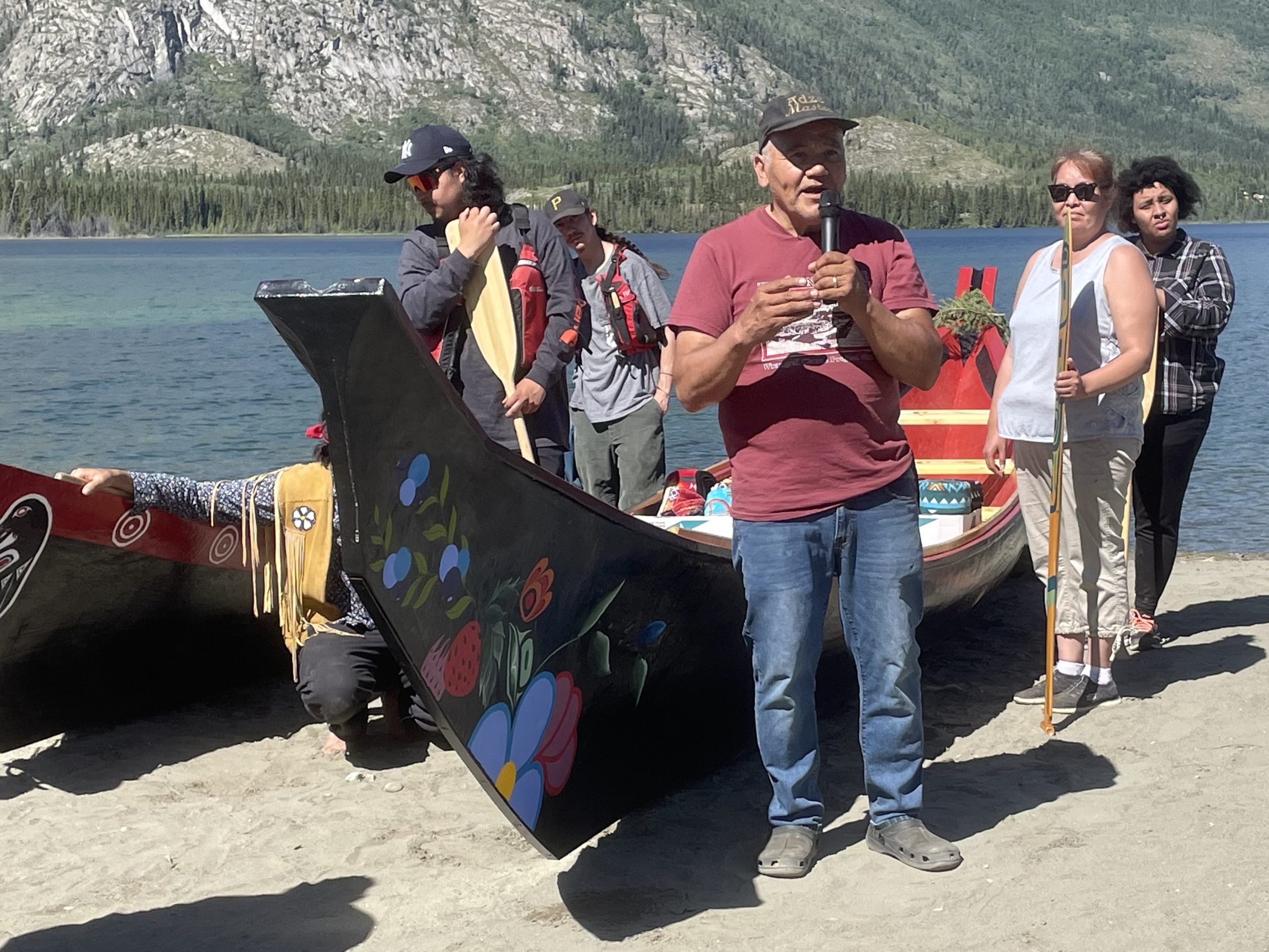
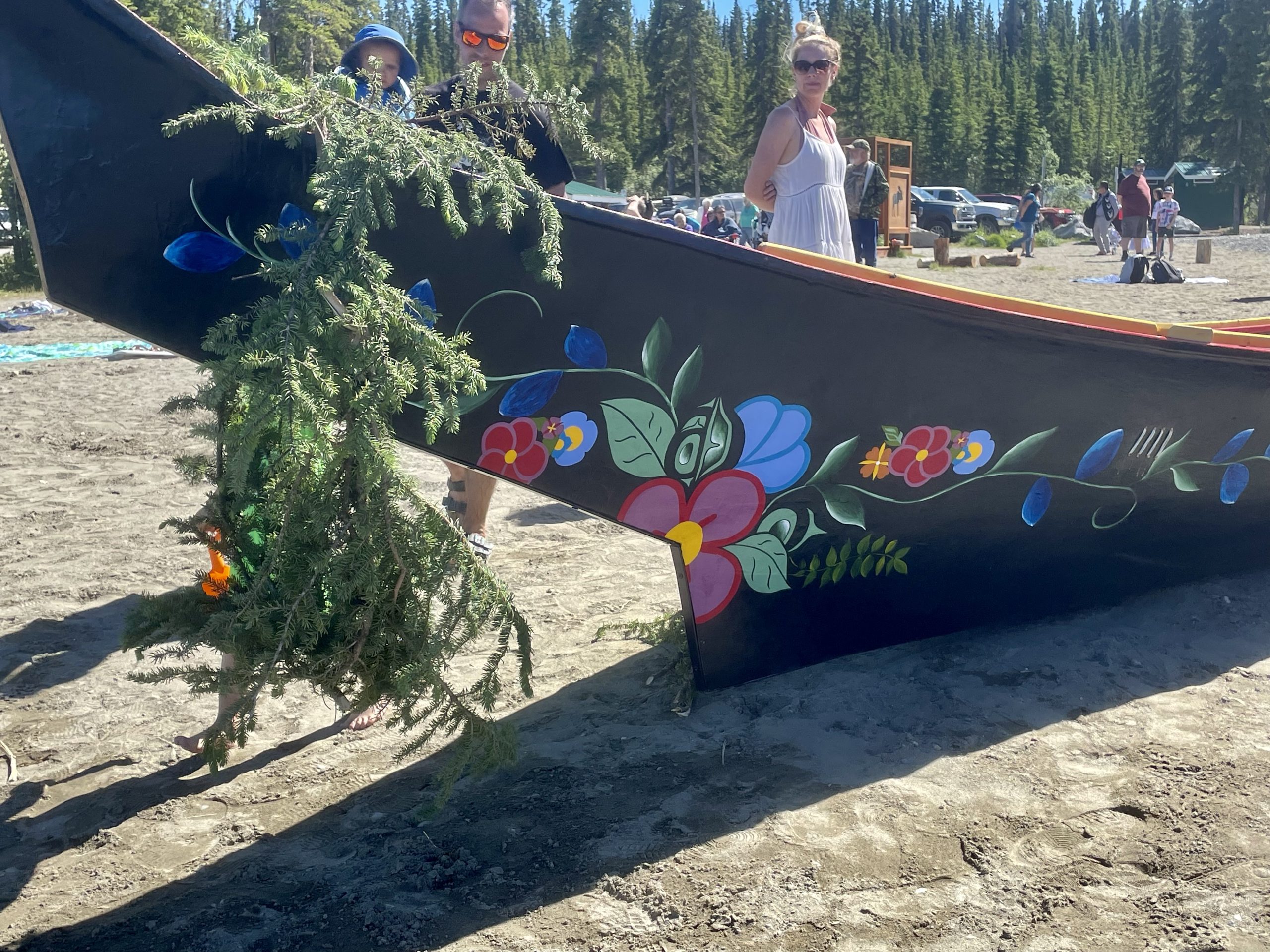
Price described the boat as a symbol of the healing and camaraderie it takes to carve a dugout, and the cooperative nature of paddling it as part of a team. He said the carving takes intention and resilience.
After the launch, the wood chips from the carving were burned. The chips number in the thousands yet are too few to represent the lives of Indigenous people lost to alcohol and drugs, said Price.
“But you look at it on the bright side, we’re still here,” he said. “These people are still here, they’re still strong and they’re still looking ahead.
“I see all the young people here that they can grow up having experienced riding in this dugout when they put it on the water here and it goes on the journeys down south. … riding a dugout, it’s the closest you’re going to get to touching your culture,” Price said.
This is the third time the Champagne Aishihik First Nations have hosted the biannual gathering.

Like this story? Support our work with a $5 or $10 contribution today. Contribute to the nonprofit ICT.