You can help elevate meaningful stories from Indigenous nations when you support ICT during Arizona Gives Day! ICT is headquartered in Arizona, and covers the Indigenous world across North America. Help us reach our goal to raise $10,000 for reliable, compelling, Indigenous-led journalism in Arizona and across the U.S.
Dalton Walker
ICT
AVONDALE, Ariz. — Col. Nicole Mann misses space life. She thinks about it every day. She even thinks about space in her sleep.
“I had a dream the other night that I was floating, I was in microgravity,” Mann said.
Mann, Wailacki of Round Valley Tribes, made history in 2022 when she became the first Native woman to reach space. The NASA astronaut spent about six months on the International Space Station conducting scientific research and only returned home about a year ago this month. She wants to go back, perhaps on a future mission to the moon.
“I miss (space) not only because it’s incredibly fun, the work is so rewarding,” Mann said. “You’re working with an international group of people throughout the world. I really enjoyed that work. Also, that view of planet Earth from the Earth’s orbit is something that I miss, and unfortunately, pictures and video, they just can’t do it justice.”
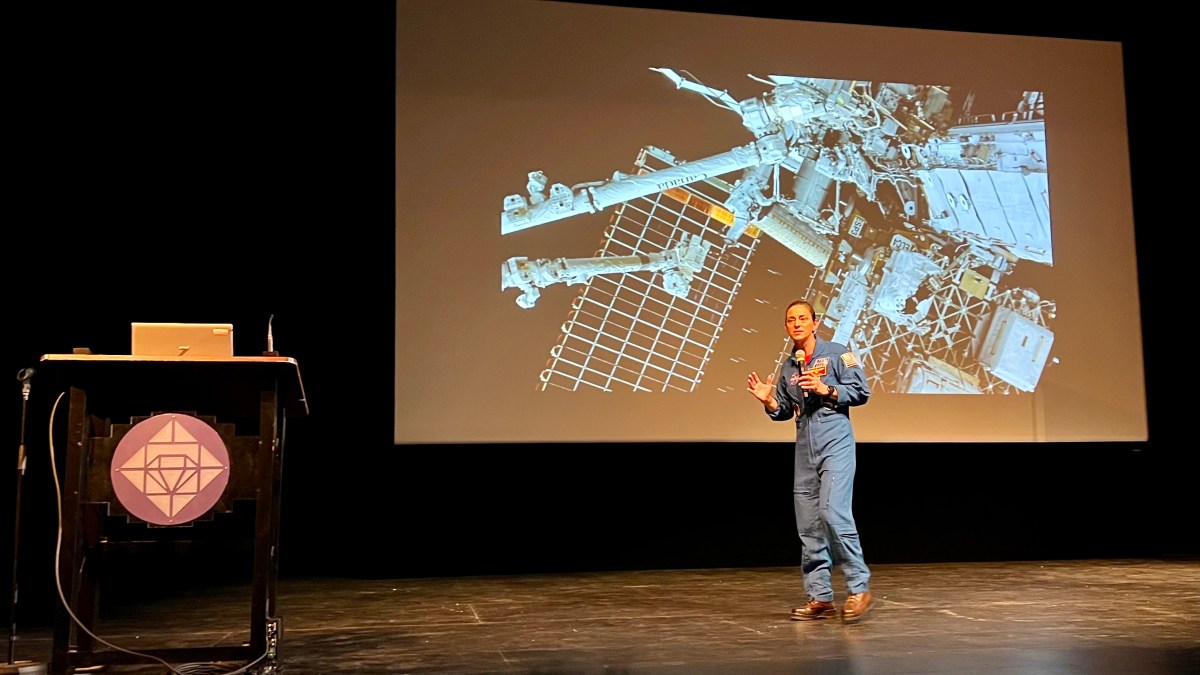
Wearing her blue NASA jumpsuit, Mann shared her space experience in a presentation at Estrella Mountain Community College in the Phoenix Valley to a group of students on March 26 as part of a Women’s History Month visit. She also answered a variety of questions from the students before posing for individual photos. Students even received a signed portrait of Mann in her spacesuit.
Mann showed a video of space station activities from how they ate food, drank water, exercised and of course, mission duties.
Afterwards, she briefly answered questions from an ICT reporter.

SUPPORT INDIGENOUS JOURNALISM. CONTRIBUTE TODAY.
Mann is a colonel in the Marine Corps and served as a combat fighter pilot and test pilot. She deployed twice aboard aircraft carriers in support of combat operations in Iraq and Afghanistan, according to her NASA bio.

As commander of NASA’s SpaceX Crew-5 mission, Mann spent 157 days in orbit and conducted two spacewalks totaling 14 hours.
Up there, at times, she was more than an astronaut. At any time she and her crew members became plumbers, an IT person and electricians if something needed to be fixed. Living in microgravity had its perks, including when it came to rest. “It was the best sleep that I ever got in my whole entire life,” she said.
Card: First Native woman in space is home
Justice Gonzales, Santo Domingo Pueblo, is a student and American Indian Science and Engineering Society chapter president at Estrella Mountain. He was one of the students in the audience and enjoyed Mann’s presentation.
“For me, for my heritage, and also because it’s Women’s History Month, that’s really important to me as well. I want her to be able to continue to tell her story everywhere she goes so I wanted to show support for her, and I wanted our college to know that we want people like her sharing her story,” Gonzales said.
Since Mann has been back on Earth, she has been working to support operations happening on the International Space Station, future missions to the moon under the Artemis program and development of new hardware needed to execute those missions.
When asked if going back to space was something she wanted to do in the future, Mann said “space is definitely still an option for me.”
She added: “And I certainly hope to fly to space again, perhaps that’s to low Earth orbit and the International Space Station, or maybe that’s a mission to the moon.”
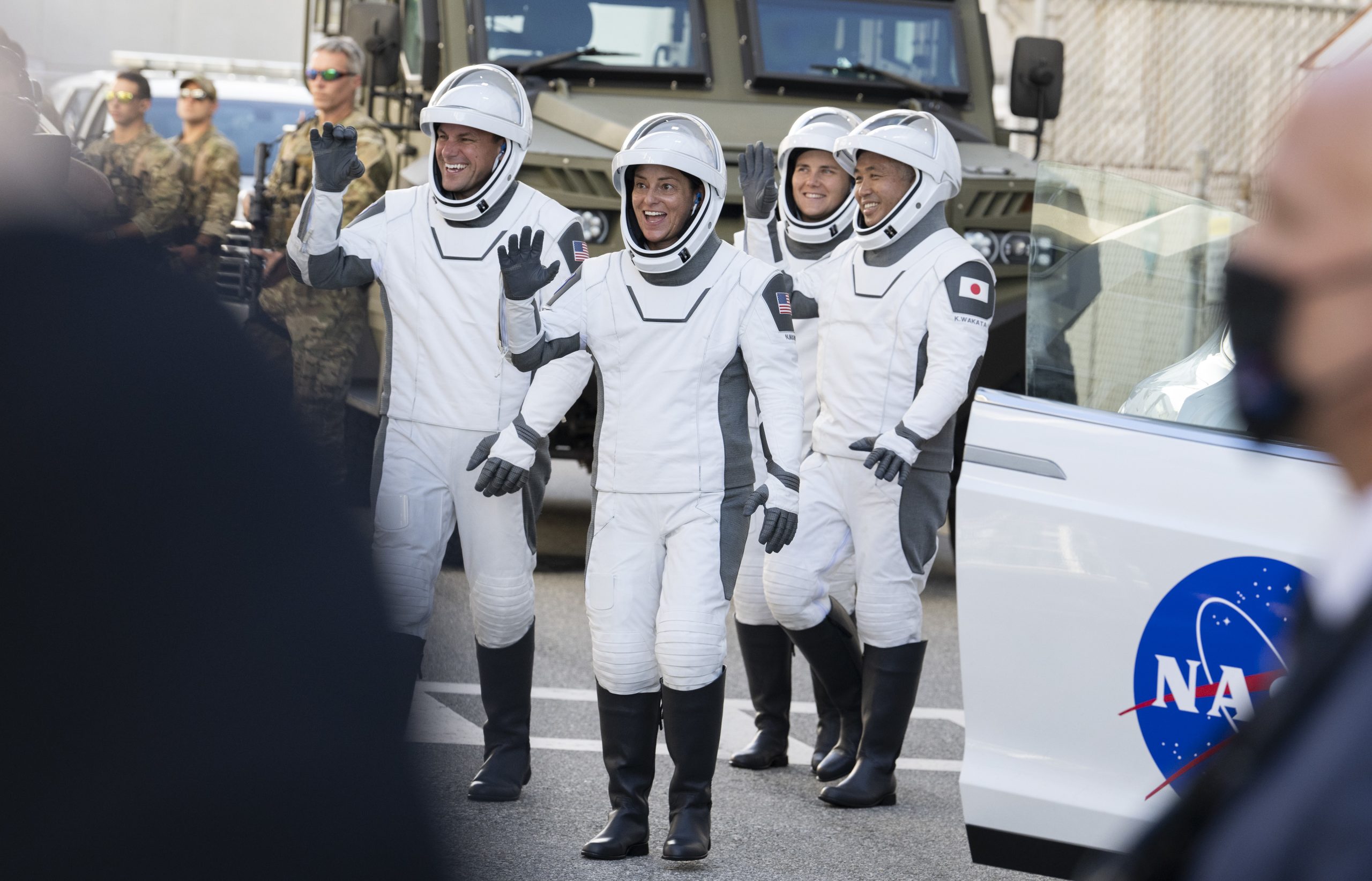
Mann is one of nine women in the running to be the first woman to walk on the moon.
Not everything has been NASA work. One of Mann’s first ventures out after her return was to Round Valley to meet the Native youth following her space mission.
“I had no idea the impact that would have on these young children,” she said. “It was just incredible to see their eyes light up and their little brains spinning, thinking of the possibilities that they have for their future. I think it’s so important that I share my journey, especially with that young generation so that they know that there are opportunities there for the taking.”

Our stories are worth telling. Our stories are worth sharing. Our stories are worth your support. Contribute $5 or $10 today to help ICT carry out its critical mission. Sign up for ICT’s free newsletter.