
Kalle Benallie
ICT
This story is part of ICT’s series on the 10th anniversary of the Standing Rock movement.
Water protectors came from far and wide. It was 2016 and the protest against the Dakota Access Pipeline just begun. ICT shares the stories of those who were there.
TAYLAR DAWN STAGNER
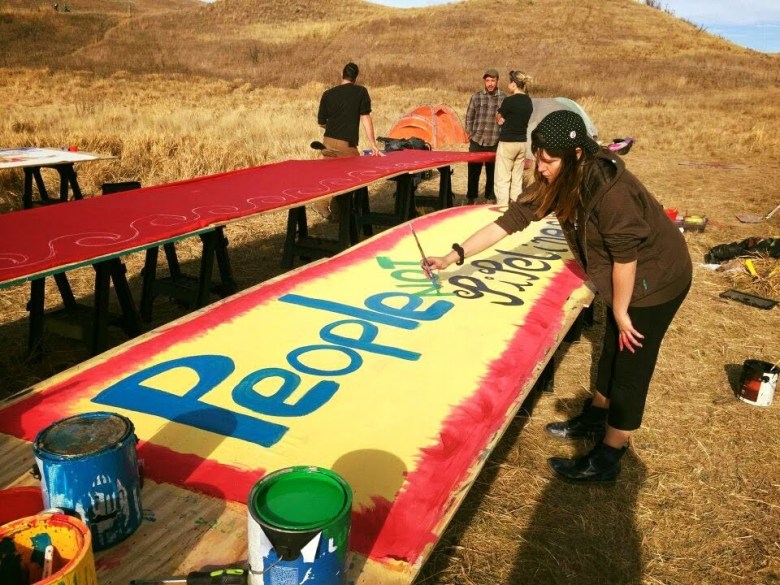
Stagner was 23 years old and decided with two other people that she wanted to help fight against the pipeline. She helped cook and clean at a camp for a couple days in the fall of 2016.
Stagner said it developed her personally and professionally, as she later became a journalist and writer. It helped her reconnect with her roots, being Cheyenne Arapaho and Eastern Shoshone.
“I remember pulling in, throwing my stuff in a communal tent, and running to the main fire,” Stagner recalled. “I was so emotional the whole time, and talked to so many people from across the nation.”
She said being with so many Indigenous people was powerful.
“It just made me feel very like, there’s so many of us, and I don’t know how else to put it. It made me feel not alone, which sounds weird, but at the time I was reconnecting,” she said. “I mean, the energy was palpable. There was an electrified understanding of purpose of why we were there, and the importance of what we were doing.”
Stagner added how there was a lot of healing and medicine there.
“It’s made me be more connected to my own community, to fight for Buffalo rematriation on the Wind River and just better information systems everywhere in Indian Country because I truly believe that that’s really important too,” she said.
JULIE RICHARDS
Julie Richards, Oglala, said she was at the Red Warrior Camp at Standing Rock. She saw the progression of the Standing Rock community since she was there earlier in August.
“I remember in November coming over the hill from Cannonball and just seeing all the tipis and just looking at them and I was like, ‘Wow, this must have been kind of what [The Battle of] Little BigHorn looked like.'”
Richards said she did a lockdown, which is a tactic by demonstrators by physically attaching themselves to objects or each other, with her camp to stop construction of the pipeline. She said the mercenaries for the pipeline were trying to get through and the farmers who supported the pipeline were shooting off guns.
“We didn’t know if they were aiming at us or whatever, but I just put my head down and then I started praying. When I looked up, there were just hundreds of people there. I was like, where do these people come from?” Richards said.
She said she was at Standing rock to bring awareness to the crisis of missing and murdered Indigenous people. She was there originally with the Mothers Against Meth Alliance before joining the Red Warrior Camp.
“It felt like every Indigenous person was there. It was really powerful to see the solidarity of like, all of the tribes coming together and even the Crow tribe coming out to support,” Richards said.
