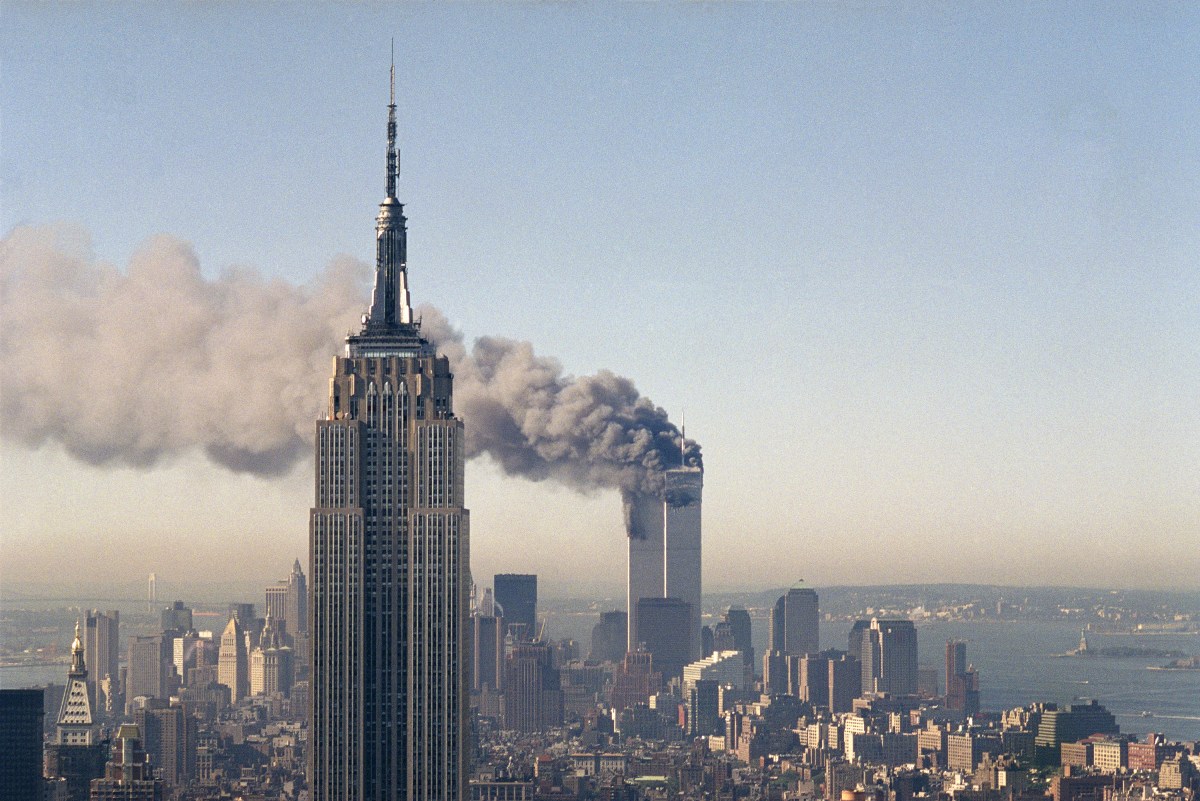
On the anniversary of the Sept. 11, 2001, terrorist attacks, ICT News is sharing past stories that we’ve published over the years about the attacks and their lingering impact on Native people.
“Lummi Nation brings healing to 9/11 crash sites,” by Christine Graef, published Oct. 30, 2003:
“SHANKSVILLE, Pa. – Traveling 4,380 miles in 13 days with 13 people through 13 states, a 13-foot high totem pole arrived this fall with healing and remembrance of the 9/11 Flight 93 crash site in Somerset County.
The pole’s theme, “It is not forgotten,” took root when Lummi tribal leaders witnessed the terrorist attacks in Washington D.C.
“We saw the chaos and shock,” said Jewell James, master carver of the nation’s House of Tear’s Carvers. “When we came home, we listened to counseling about how to get over the grief the children and families of lost ones were suffering. We wanted a way to say, ‘we understand your grief. You are not alone.’””
Read the rest of the story here.
“Lummi Youth Academy Students Honor 9/11 Victim’s Family,” by Richard Arlin Walker, published Aug. 29, 2011:
“Fourteen Lummi Youth Academy students visited New York City and participated in a ceremony honoring a family whose son was killed in the September 11, 2001 terrorist attack on the World Trade Center.
Lummi Nation, in northwestern Washington, established a relationship with the family of Peter Alderman when a healing pole carved by Lummi artist Jewell James was installed in Sterling Forest, an hour north of New York City, a year after the attack.
The ceremony was held in the American Indian Community House, 11 Broadway, New York, New York. The students were accompanied by Lummi Youth Academy director Darrell Hillaire, who was chairman of the Lummi Nation when the healing pole was delivered to New York.”
Read the rest of the story here.
“The Genus of Tears: A Mohawk Ironworker’s Widow Remembers 9/11,” by Leslie Logan, published Sept. 10, 2011:
“In the days and months immediately following the terrorist attacks of September 11, 2001 the country was awash in tears of astonishment and horror. Thousands of people perished in four strikes against America. In one way or another everyone was indelibly touched, some more than others.
September 11th is one of those historic days of infamy never to be forgotten. Everyone old enough can tell you where they were and what they were doing.
I was two months pregnant with my daughter and rushing to drop off my three year-old at Nancy’s, my babysitter’s house before going to work at Cornell University. On the drive I heard NPR report a developing story—something about a plane crash at the Pentagon. When I got to Nancy’s she had an odd look on her face and greeted me with: “Did you hear?””
Read the rest of the story here.
“9/11: A crime and recovery scene,” by ICT Staff, published Sept. 9, 2021:
“In the spring of 2001, Charlie LeDuff was a reporter at the New York Times. LeDuff, Anishinaabe, had just won his first Pulitzer Prize. For the next year, he reported from ground zero. He would go on to win his second Pulitzer Prize as part of The New York Times’ coverage. LeDuff joins us to describe his reporting.
Two Osage and Cherokee citizens Diane Fraher and Steve Thornton made their way from Oklahoma to the Big Apple over 30 years ago. They join the show to describe what they experienced on September 11, 2001.”
Read the rest of the story here.

Our stories are worth telling. Our stories are worth sharing. Our stories are worth your support. Contribute $5 or $10 today to help ICT carry out its critical mission. Sign up for ICT’s free newsletter.