

Kevin Abourezk
ICT
Researchers interviewed 600 Native people and discovered what most Native people know already: Native Americans oppose the appropriation of their cultures and identities and feel angry and sad when they see it happen.
To be fair, the study – which appeared in the “Ethnic and Racial Studies” journal in an article entitled “Native Voices on Native Appropriation” – is considered one of the first to interview actual Native people about the topic of appropriation. Researchers defined Native appropriation as when non-Natives use Native cultures and identities for their own purposes (think “Indian princess” costumes at Halloween and Native sports mascots).
Researchers surveyed Native American people from 112 federally recognized tribes and 11 state-acknowledged tribes. They examined the impact of appropriation of Native cultures and identities, and even offered a few recommendations on how to end Native appropriation.
The Native Voices on Native Appropriation Research Project conducted the research, which found that those interviewed experienced incidents of Native appropriation once a month on average. Most of those surveyed said they perceived acts of appropriation as oppressive, disrespectful and ignorant.
“We conclude that this appropriation operates as microaggressions, which generate a hostile climate for Native Americans,” researcher wrote in a press release about the study.
Acts of Native appropriation include non-Natives dressing up as “Indians” for Halloween, selling sweat lodge ceremonies, falsely claiming Native ancestry, or calling themselves tribal names at Boy Scout camp. Others use Native American imagery to sell products (like Indian Motorcycles) or misuse Native American terminology (like calling a business meeting a “powwow”).
The five types of appropriation that were most objectionable were: having no ancestry but claiming to be Native American; wearing Native regalia or ceremonial clothing; selling Native spiritual items or ceremonies; dressing like a Native (such as for a party or in school); manufacturing and selling items that are associated with Native Americans but that were not made by Native Americans; and using phrases in everyday language that reference Native American cultures.
The survey presented participants with a list of 26 possible reasons why they might view Native appropriation as harmful. Those surveyed agreed with nearly all of the reasons.
The most commonly endorsed reasons were: Native appropriation reflects and reinforces stereotypical beliefs about Native people; Native appropriation portrays Native Americans as all the same — obscuring individual and tribal differences; Native cultures are turned into saleable commodities for profit; and Native appropriation is disrespectful of Native American spiritual beliefs and practices.
“Thus, it is clear that Native appropriation creates a hostile climate,” researchers said. “Based on these findings, we recommend action to address and eliminate Native appropriation.”
Researchers recommended that tribal nations be consulted when making decisions about Native issues, and they cited several Native organizations that could be consulted to avoid Native appropriation, including the National Congress of American Indians, Native American Journalists Association and IllumiNative.

Francine Compton, associate director of the Native American Journalists Association, said her organization has worked for years to train and support Native storytellers in order to ensure Native stories are told accurately and authentically. She said NAJA also supports Indigenous-owned and -operated media outlets.
“They’re showing others by example how to do the best reporting,” she said. “If it’s about us, then it should be for us and by us.”
She cited as an example the reporting of the Aboriginal Peoples Television Network in Canada and its work revealing a practice in Saskatoon, Saskatchewan by police called the “starlight tours,” whereby police would leave intoxicated Natives on the outskirts of town. Several Native men were left at night in freezing temperatures and died.
“We took those stories seriously that we were hearing from people, and we started reporting on stories on a larger scale and that drew attention to the stories,” she said.
She said NAJA also has championed the establishment of Indigenous affairs desks at mainstream media outlets, though she said only a handful of such desks exist today. She said non-Native journalists must work to establish relationships with the Indigenous communities they are covering, rather than visit those communities only when bad things happen.
“People can feel like that is a form of appropriation, too,” Compton said. “That’s why it’s really important to take time and build those relationships.”
She urged non-Native journalists to also be willing to ask Native sources about their family, including who their parents and grandparents are and what Indigenous communities they call home. She said those questions ensure non-Native journalists are talking to actual Native people, not people posing as Natives, but those questions can also add greater depth to stories about Indigenous people.
“That is part of storytelling,” she said. “It’s not unethical to ask those questions.”
She said media coverage that only focuses on negative issues affecting Native communities or perpetuates stereotypes about Indigenous people can impact Native youth, who already deal with high rates of suicide and depression.
“The reporting on our people should be uplifting our youth, empowering our communities, educating them and showing them that journalism can change their lives for the better,” Compton said.
She said NAJA has several programs designed to encourage and train Native people, including young people, who are interested in becoming storytellers. The organization also works to support investigative journalists who are Indigenous.
“We’re here to shine this light and say, ‘Hey, here’s this beacon that is journalism and you have every right to tell stories because it’s our inherent right as Indigenous people to tell stories,’” she said. “Our ancestors told stories. They passed those stories down to us.”
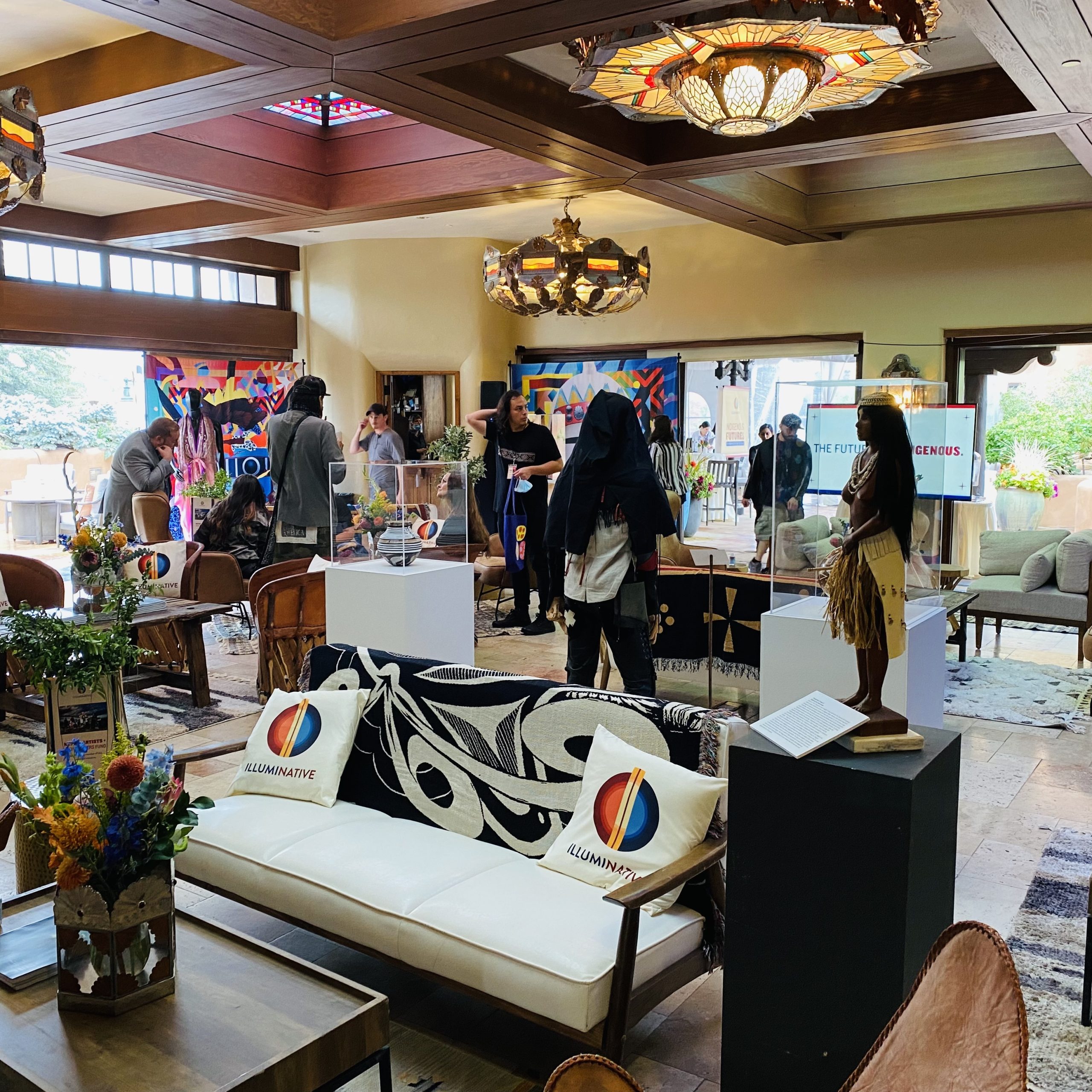
Lashay Wesley, director of communications and storytelling at IllumiNative, said her organization also has worked to dispel harmful stereotypes of Native people and to stop appropriation of Native cultures and identities.
She said IllumiNative was founded on a body of research known as Reclaiming Native Truth, which found that the modern form of racism that Native people endure is invisibility. In America, 78 percent of people know little to nothing about Native people, said Wesley, who is Choctaw.
“Native appropriation, it’s rooted in colonialism,” she said. “It’s rooted in white supremacy. It perpetuates our erasure and leads to the oppression of Native peoples.”
(Related: IllumiNative celebrates first five years with an eye to the future)
IllumiNative seeks to create “contemporary, authentic stories” of Native people in order to prevent inauthentic, inaccurate portrayals from cropping up and perpetuating toxic stereotypes and appropriation of Native people, she said.
She credited the Native Voices on Native Appropriation Research Project for conducting the research, which she described as one of the first studies to interview Native people about the topic of Native appropriation. The research team included two Native researchers: Adrienne Keene, Cherokee, and Desi Small-Rodriguez, Northern Cheyenne.
“It’s really important to see Native people doing this research and actually engaging with Native participants, who are able to voice their concern,” she said.
One of IllumiNative’s campaigns is ending the use of Native mascots. Wesley cited two recent sports team name changes as victories for Native organizations dedicated to ending the use of Native mascots: the Cleveland baseball team changing its name to the Guardians and the Washington NFL team changing its name to the Commanders.
(Related: Fight continues against ‘mockery’ of Kansas City’s mascot)
Wesley said there are still many sports teams with problematic names and mascots.
“I want to see a future where there are zero Native mascots, that our imagery isn’t appropriated, that our traditions aren’t appropriated,” she said. “We’re not going to stop fighting until that goal is reached.”
She said she would like to see additional research conducted that looks at people’s changing attitudes toward Native appropriation, as well as research that examines the impact of such appropriation on Native children.
“There’s certainly more in the research space that can be done.” Wesley said.
Another campaign that IllumiNative has spearheaded is an effort to educate those in the entertainment industry about Native appropriation and stereotypes. The organization has created an entertainment industry guide that lays out toxic Native stereotypes and what Native appropriation is and how to avoid it.
IllumiNative also has launched a program that works to promote Native producers and writers in the entertainment industry. She said the entertainment industry benefits from the inclusion of Native producers and writers, as evidenced by the critical acclaim of such TV shows and movies as “Reservation Dogs” and “Prey.”
“We can’t live in this system where you’re creating Native stories without us,” she said. “There’s no story without us. We need that narrative sovereignty.”
Our stories are worth telling. Our stories are worth sharing. Our stories are worth your support. Contribute $5 or $10 today to help ICT carry out its critical mission. Sign up for ICT’s free newsletter.
