
ICT is working to shape the future of journalism and stay connected with readers like you. A crucial part of that effort is understanding our audience. Share your perspective in a brief survey for a chance to win prizes
Greetings, relatives.
A lot of news out there. Thanks for stopping by ICT’s digital platform.
Each day we do our best to gather the latest news for you. Remember to scroll to the bottom to see what’s popping out to us on social media and what we’re reading.
Also, if you like our daily digest, sign up for The Weekly, our newsletter emailed to you on Thursdays. If you like what we do and want us to keep going, support and donate here.
Okay, here’s what you need to know today:
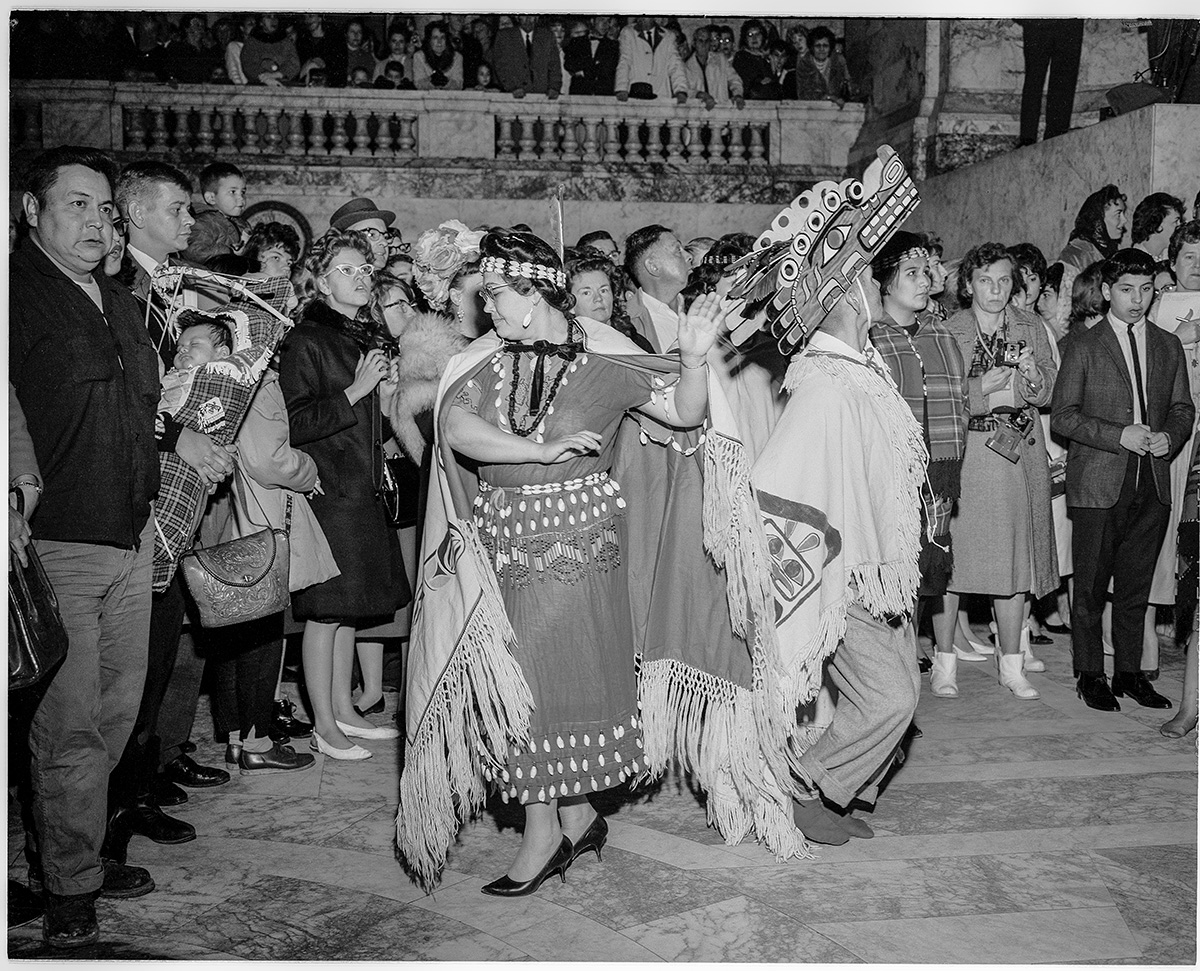
Billy Frank Jr.’s father used to tell him, “When the tide is out, the table is set.” Frank Jr. grew up in a small house on the Nisqually River, where glacier water from Mount Rainier flows into the Puget Sound. Traditional fishing knowledge was passed down to Frank Jr. who caught his first fish at 11 years old. Just four years later, on a brisk winter morning in 1945, everything changed. In the first light of daybreak, dog salmon and steelhead with its glowing pink belly slapped their bodies against Frank Jr’s fifty-foot net as he pulled them ashore.
Soon after he heard, “You’re under arrest!” yelled by state game wardens.
“Leave me alone, goddamn it,” Frank Jr. a Nisqually Indian Tribe citizen, and one of the leaders of what is now known as the Fish Wars told them. “I fish here. I live here!”
The first time Frank Jr. was arrested for fishing in his traditional waters he was just 14. This arrest motivated young Frank Jr. to become the impactful activist needed to change the treatment of Native fishers and fight back for his fishing rights. Frank Jr. became a leader of what is now referred to as the “Fish Wars.” The activism of tribal members during the Fish Wars, inspired by the civil rights movement at the time, led to a lawsuit that affirmed the treaty rights of over a dozen Native nations in what is now Washington state. READ MORE — Luna Reyna, ICT + Underscore News
SUPPORT INDIGENOUS JOURNALISM. CONTRIBUTE TODAY.
ANCHORAGE, Alaska — Fifteen Southeast Alaska tribes have approached an international commission to gain support for a stronger voice in Canadian decision making on mining projects just across the border from Southeast Alaska.
This story involves two commissions: the Southeast Indigenous Transboundary Commission and the Organization of American States Inter-American Commission on Human Rights, which is within the United Nations. And the story is about two petitions, one filed Monday, the other submitted in 2020.
The Indigenous commission of 15 federally-recognized Southeast Alaska tribes was formed in 2014 to protect tribal lands and waterways for future generations. The environmental law nonprofit Earthjustice is representing the Indigenous commission on transboundary issues with Canada.
On Feb. 19, the Indigenous commission submitted a brief asking for a hearing on whether their rights are being violated in the Canadian permitting process.
In a statement the Indigenous commission said that “by approving the mines without getting the free, prior, and informed consent of the Southeast Alaskan Tribes threatened by water pollution and other adverse impacts, the governments of British Columbia and Canada are violating their internationally recognized human rights, including to a healthy environment.” READ MORE — Joaquin Estus, ICT
TULSA, Okla. – Cherokee Chief Chuck Hoskin Jr. on Feb. 16 announced the tribe’s purchase of north Tulsa’s Greater Sunrise Church building for community gatherings.
The building will be leased to the North Tulsa Cherokee Community Organization, which serves Cherokee citizens who do not live in Tahlequah but participate in the various programs and services of the Cherokee Nation.
The building, located at 1205 E. 46th St. North, will be renovated and available for the North Tulsa Cherokee Community Organization or any other Cherokee organization that needs a spot for gatherings, meetings and more.
Additionally, “the Cherokee Nation plans to analyze the biggest need in north Tulsa and will place Cherokee Nation departments and resources accordingly in the building,” said Canaan Duncan, the Cherokee Nation deputy secretary of state.
Hoskin made the announcement at the tribe’s Black History Month Celebration at the Greenwood Cultural Center. The Descendants of Freedmen of the Five Tribes and the North Tulsa Cherokee Community Organization attended the event. READ MORE — Felix Clary, ICT + Tulsa World
Sign up here to get ICT’s newsletter
TULSA, Okla. – A 16-year-old student’s recent death in Oklahoma after being attacked by alleged bullies has ignited a firestorm on social media and calls for accountability by some who say school officials failed to protect the student.
Nex Benedict, who is of Choctaw descent, died February 8, one day after being attacked in an Owasso High School bathroom. Owasso is a community of 39,000 in northeast Oklahoma not far from Tulsa. Nex was a sophomore who reportedly identified as nonbinary, which is an umbrella term for those who identify with more than one gender, no gender or having a fluctuating gender identity.
ICT will use they/them pronouns to refer to Nex, as their family has stated this was their preference.
On Wednesday, Feb. 21, in the wake of threats made against the school, Owasso police said Nex’s death was not the result of trauma.
“While the investigation continues into the altercation, preliminary information from the medical examiner’s office is that a complete autopsy was performed and indicated that the decedent did not die as a result of trauma,” police said. READ MORE — Felix Clary, ICT + Tulsa World
Other top stories:
- Feds deny permits for hydroelectric projects on Navajo land: The Federal Energy Regulatory Commission’s new policy requires tribal approval for energy projects on tribal lands
- Head of Alaska Federation of Natives Julie Kitka stepping down: ‘Julie Kitka has been a true champion for Alaska Native people’
- Illegally adopted during Chile’s dictatorship, biological families are reuniting: 20,000 adoptions are being investigated by Chilean justice officials and other social groups that extend back to the 1960s
- Fargo, Standing Rock among airports awarded federal funds: The Biden administration will send close to $1 billion to airports across the country to upgrade terminal facilities, Transportation Secretary Pete Buttigieg announced
- You know Ben Jacobs for co-founding Tocabe. But his mission to support healthy habits among Indigenous communities goes beyond food
- Effort to boost tribal early learning collapses 3 years after mandate by Oregon Legislature

We want your tips, but we also want your feedback. What should we be covering that we’re not? What are we getting wrong? Please let us know. dalton@ictnews.org.

