Greetings, relatives.
A lot of news out there. Thanks for stopping by ICT’s digital platform.
Each day we do our best to gather the latest news for you. Remember to scroll to the bottom to see what’s popping out to us on social media and what we’re reading.
Also, if you like our daily digest, sign up for The Weekly, our newsletter emailed to you on Thursdays. If you like what we do and want us to keep going, support and donate here.
Okay, here’s what you need to know today:
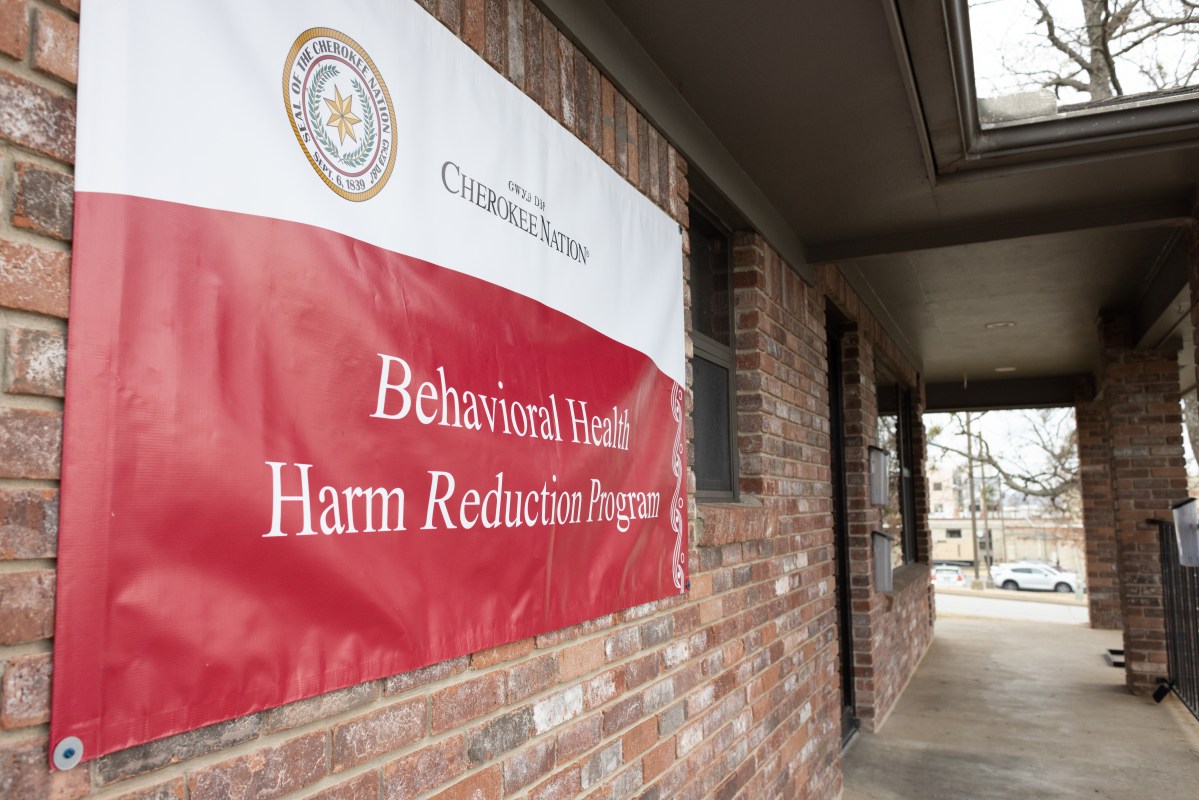
TULSA, Okla. – The Cherokee Nation’s newest approach to substance abuse recovery is harm reduction, a therapeutic method of protecting addicts from their own actions that has drawn criticism.
“Harm reduction is a pretty controversial topic. A lot of people feel it can be enabling drug users. It can feel counterproductive and counter intuitive,” Jennifer Steward, director of the University of Tulsa’s Behavioral Health Clinic, told ICT and the Tulsa World.
She said the controversial aspect comes from the fact that harm reduction does not require abstinence from drug use, which is different from traditional rehabilitation programs. Harm reduction instead focuses on keeping active drug users safe, healthy and alive.
The Cherokee Nation harm reduction program utilizes a mobile unit that brings supplies to drug users on the streets: clean needles, cotton swabs and Narcan, which can reduce cravings and stop the effects of overdose. READ MORE— Felix Clary, ICT + Tulsa World
SUPPORT INDIGENOUS JOURNALISM. CONTRIBUTE TODAY
This spring, Oregon Gov. Tina Kotek promised to visit all nine federally recognized Native nations across the state. So far, she has visited eight and attended the annual Tribal-State Government-to-Government Summit in July. That time marked a span of months when Kotek heard from Native leadership across the state.
In an interview on Aug. 14, Underscore Native News + ICT followed up on those conversations, asking Kotek to clarify her commitments to Native nations and Indigenous community members in Oregon.
She expressed a commitment to strengthening sovereign-to-sovereign consultation, pointing to the new state task force on tribal consultation and acknowledged that the structure of the legislative session makes proper consultation difficult. Consultation is better when it happens before potential policies are even introduced in the legislature, she said.
Kotek also talked about her trip to the Klamath Tribes, where the community is reeling from the recent murder of two teenage sisters. The tragedy comes as Indigenous community members across the state continue decades of advocacy, and continue to call on Oregon to address the crisis of missing and murdered Indigenous people (MMIP). READ MORE — Nika Bartoo-Smith and Karina Brown, Underscore Native News + ICT
Two weeks have passed since presidential nominee Kamala Harris, the current vice president, chose Gov. Tim Walz as her running mate. Leading up to the pick, elected tribal leaders across Minnesota voiced their support of Walz as choice for VP in a letter to the Harris campaign.
Leadership from all 11 tribal nations in the state signed the letter of support, citing Walz’s commitment to tribal-state relations.
President of Lower Sioux Indian Community Robert Larsen signed the letter. He says the biggest change in tribal-state relations over the past several years has been access to decision-makers.
“When it comes to certain things, you’re able to go to the top of the agency,” said Larsen. READ MORE — MPR News
The state of Alaska is continuing its effort to oppose Alaska Native tribes’ effort to protect traditional lands via federal trust.
On Friday, the Alaska Department of Law filed a notice stating that it intends to ask the U.S. 9th Circuit Court of Appeals to review an Alaska U.S. District Court decision that upended decades of precedent by stating that under certain circumstances, the federal government has the power to take land into trust on behalf of tribes.
The Alaska Native Claims Settlement Act of 1971 extinguished most “Indian country” in Alaska, but Judge Sharon Gleason, ruling in favor of tribes and the federal government, determined that the law didn’t preclude the federal government from creating new trust land.
The state of Alaska disagrees with that ruling, Attorney General Treg Taylor said on Friday. READ MORE — Alaska Beacon
Sign up here to get ICT’s newsletter
A week after attending a roundtable with the nation’s top law enforcement official and tribal leaders, U.S. Sen. Mike Rounds, R-South Dakota, is urging the head of a federal department to change the funding formula for tribal law enforcement.
The U.S. Interior Department includes the Bureau of Indian Affairs, which provides policing services for some tribes and funding for other tribes to run their own police departments. Federal support for tribal public safety on reservations in South Dakota is required under the terms of treaties that date to the 1800s.
Rounds’ office said Thursday that he sent a letter to Interior Department Secretary Deb Haaland, a member of the Pueblo and Laguna Tribes in New Mexico.
“The funding formula for tribal law enforcement programs is failing Great Plains reservation communities,” Rounds wrote. READ MORE — South Dakota Searchlight
For some citizens of the Confederated Tribes of the Colville Reservation, it’s not so easy to see a doctor.
There’s a single physician at the Indian Health Service clinic that serves a population of more than 5,000 in northeastern Washington. Wait times for appointments are long — and that’s if you can get a call back to schedule one. And, like other IHS facilities in the Northwest, the Colville Service Unit does not provide specialty care, forcing citizens to drive to Spokane or other cities for those treatments.
The impediments to access are so severe that some Colville tribal citizens are turning away from using the clinic entirely, according to tribal Chairman Jarred-Michael Erickson.
“Some just got, I think, sick and tired of it,” Erickson said. “I still go there for occasional things, but even me personally, I can’t trust that things will be done or handled properly.” READ MORE — InvestigateWest
- Judge throws out Winnebago lawsuit seeking remains from Carlisle: Tribe vows to appeal ruling in fight for the remains of two boys who died at the boarding school *Updated
- The Indigenous voices at the Democratic National Convention: ‘I want to say that my people, the Oceti Sakowin, are still here. The Seven Council Fires are still here’
- A boy named E-Stah-mo-sah: Great-granddaughter of Henry Roan, whose life was portrayed in ‘Killers of the Flower Moon,’ embarks on search for his true life story
- National Health Institute Launches $260M Program for Native-Led Substance Abuse Research
- Feds file new indictment in Trump Jan. 6 case, keeping charges intact but narrowing allegations
- Social platform X edits AI chatbot after election officials warn that it spreads misinformation
We want your tips, but we also want your feedback. What should we be covering that we’re not? What are we getting wrong? Please let us know. dalton@ictnews.org.

Like this story? Support our work with a $5 or $10 contribution today. Contribute to the nonprofit ICT. Sign up for ICT’s free newsletter