
Greetings, relatives.
A lot of news out there. Thanks for stopping by ICT’s digital platform.
Each day we do our best to gather the latest news for you. Remember to scroll to the bottom to see what’s popping out to us on social media and what we’re reading.
Also, if you like our daily digest, sign up for The Weekly, our newsletter emailed to you on Thursdays. If you like what we do and want us to keep going, support and donate here.
Okay, here’s what you need to know today:
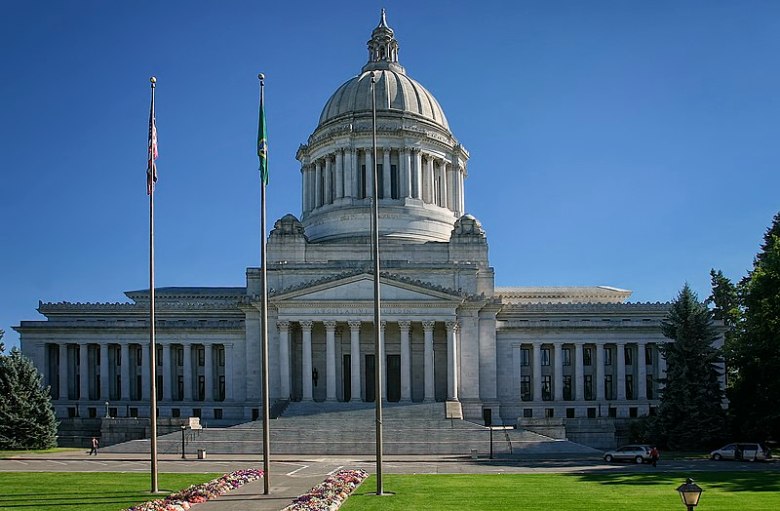
The numbers ebb and flow, but Indigenous influence remains entrenched in the politics of Washington state.
Julie Johnson, Lona Wilbur and Patricia Whitefoot will cast three of Washington state’s electoral votes for presidential candidate Kamala Harris in November.
Debra Lekanoff, Chris Stearns and Claudia Kauffman are working in the state Legislature to pass bipartisan laws that protect access to health care, improve behavioral health crisis response and access to treatment, ensure students have the food they need so they can concentrate on learning, protect worker pay and worker rights, promote development of clean energy, and ease the tax burden on disabled veterans and active-duty military personnel.
And in the state capital of Olympia, port commissioners Bob Iyall and Maggie McCarty Sanders are contributing to the decision-making that is attracting businesses and jobs to the city’s waterfront, restoring habitat, and safeguarding the health of the nearshore environment. READ MORE— Richard Arlin Walker, ICT
SUPPORT INDIGENOUS JOURNALISM. CONTRIBUTE TODAY
Annessa Hartman ran for the Oregon House of Representatives in part to give Native Americans a voice in the state capital.
She became their eyes as well.
Hartman, who is Haudenosaunee and one of three Native members of the 60-member House, was reading a bill in early March and saw that the nine tribal nations that share geography with Oregon were excluded from the state’s observance of the 250th anniversary of the signing of the Declaration of Independence.
The bill specified that representatives of Oregon’s diverse communities be involved: Black, Asian American, Pacific Islander, Hispanic. But the bill didn’t call for input from those who were stewards of the land “long before the colonists’ declaration,” The Oregonian reported. READ MORE — Richard Arlin Walker, Underscore Native News + ICT
Outside Holger Jorgensen’s wood-paneled house near Fairbanks, Alaska, it was at least 20 degrees below zero, but inside was warm in both temperature and conversation.
Jorgy, as he was known, sat in his recliner in his living room across from Holly Miowak Guise, a young Iñupiaq doctoral student at Yale University who was gathering oral histories with Alaska Natives about the 1940s.
Guise sat with her recording equipment on the nearby couch as they talked a long time about his experiences as an Iñupiat person who served in the Alaskan Territorial Guard as sergeant and pilot during World War II.
Before Guise left, Jorgy introduced the young researcher to his best friend, another World War II Athabascan veteran and fellow retired pilot, Al Wright. The next day, Wright sat with her while Jorgy snoozed on the couch behind them. READ MORE — Luna Reyna, Underscore Native News + ICT
TULSA, Okla. — Osage singer and Oscar nominee Scott George led the 2024 Tulsa Indigenous Peoples’ Day Parade as marshall Monday, on a day celebrated across Indian Country.
The theme of this year’s event in Tulsa was “Voices,” and George advised the young people in the crowd to listen to their elders’ voices.
“I was given a choice as a young man or a young boy, what do you want to do, do you want to sing or do you want to dance?” George said at the event. “From age 14, I came up trying to sing, trying to learn our ways, trying to learn our people’s songs.
“You’re young people,” he said. “I’m going to tell you, find your elders. Go talk to them, ask them questions, because you’re going to find yourself in my position one of these days where nobody is left to talk to. So go find that elder, respect them, love them, cherish them, because they’re not here forever.” READ MORE — Felix Clary, ICT + Tulsa World
Sign up here to get ICT’s newsletter
BISMARCK, N.D. — As evening fell in Bismarck, members of the Indigenous Parent Advisory Committee recently gathered to spark a quiet revolution in school governance. They deliberated on a return to their roots – replacing rigid parliamentary procedures with Indigenous peacemaking, a shift that could reshape how Native voices are heard in their children’s education.
This move towards traditional governance began at a Sept. 12 meeting, where committee members proposed adopting an Indigenous model. To guide the transition, they enlisted Cheryl Kary, executive director of the Sacred Pipe Resource Center, and Natasha Gourd, a peacemaking facilitator from the Native American Rights Fund.
Gourd, a Spirit Lake Nation citizen, presented on Indigenous peacemaking — a community-driven conflict resolution process.
“At one time, we were called ‘The Orators of the Plains,’” Gourd said. “This is one way to reclaim that ability to talk to each other and bring issues out into the open.” READ MORE— Buffalo’s Fire
MINNEAPOLIS, MN — The Minnesota Indian Women’s Resource Center has celebrated its 40th anniversary in Minneapolis.
The center was established in 1984 out of a need for addiction treatment centers that focused on care for Native women in Minnesota. Since its founding, the nonprofit has expanded its offerings with services and programs such as support groups, family services and housing assistance.
The center’s mission is to empower Native women and their families. The anniversary celebration was held the week of Sept. 20, 2024.
“Healing is at the heart of everything we’re doing,” said chief executive Ruth Buffalo. READ MORE — MPR News
- Felony disenfranchisement of Indigenous voters: There is no national data on the impact of felony disenfranchisement on Indigenous people despite being overly represented in the criminal justice system
- U.S. Treasury says tribally owned entities should be tax-exempt: Proposed new guidelines would clarify the decades-old question of whether tribal businesses or entities are exempt from federal taxes
- Bringing skateboarding to school: Pine Ridge High School establishes its first-ever skateboarding team
- Missed out on the northern lights? Scientists expect more solar storms to produce auroras
- Georgia judge rules county election officials must certify election results
- FEMA resumes door-to-door visits in North Carolina after threats tied to disinformation

Like this story? Support our work with a $5 or $10 contribution today. Contribute to the nonprofit ICT. Sign up for ICT’s free newsletter.

