
Greetings, relatives.
A lot of news out there. Thanks for stopping by ICT’s digital platform.
Each day we do our best to gather the latest news for you.
Okay, here’s what you need to know today:
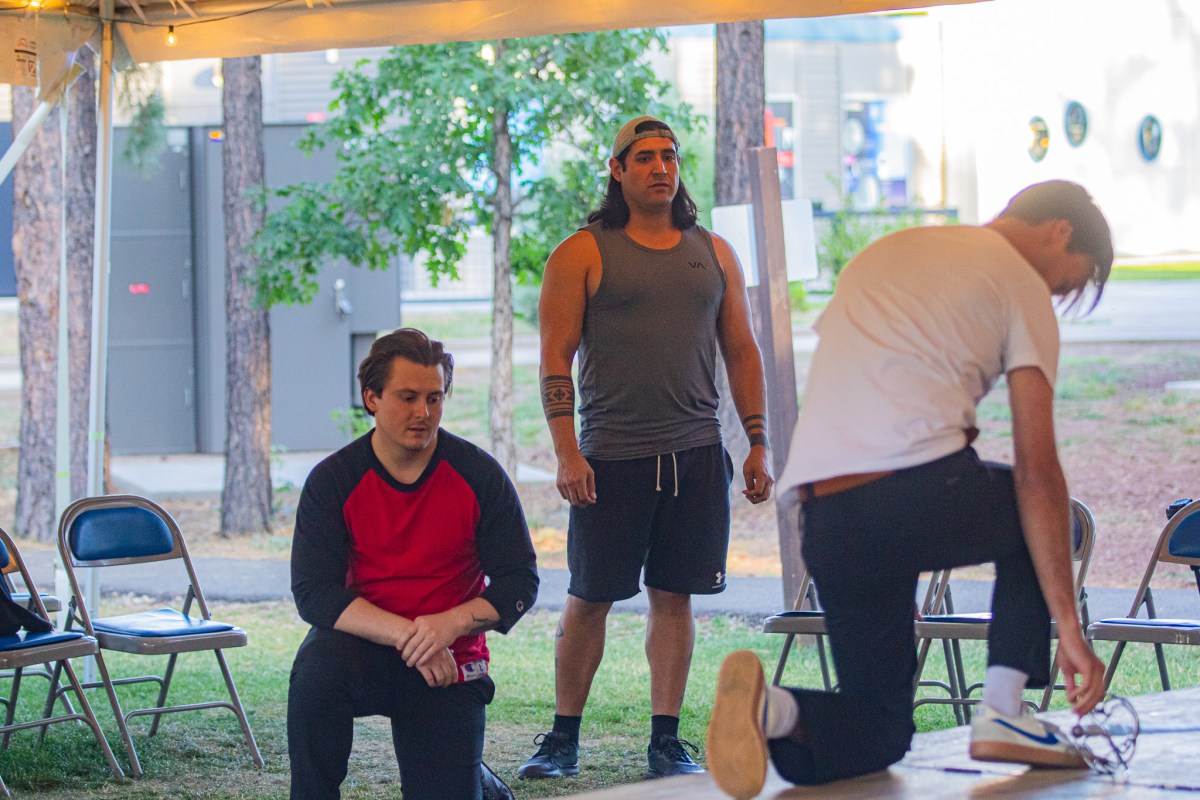
Brian Price faced a critical decision: choose stability and study physics at Columbia University, or take a risk and pursue his lifelong passion. Eventually, the former Navy SEAL decided on his next mission: acting.
“I was thinking of doing physics because I enjoy learning about science and I could get a job,” Price said. “But I always knew I wanted to be in movies and on TV.”
During his first year at Columbia University, the Navajo man received a phone call that would solidify his decision to change his major to theater.
“I got a phone call from Michael Bay’s casting director and they had heard that I was a Native American SEAL thinking of going to film school,” said Price. “They wanted a few pictures of what I look like in my SEAL gear because they were thinking of casting me in ‘Transformers: The Last Knight.’” READ MORE. — Cyrus Norcross, Special to ICT
SUPPORT INDIGENOUS JOURNALISM. CONTRIBUTE TODAY.
On the anniversary of the Sept. 11, 2001, terrorist attacks, ICT News is sharing past stories that we’ve published over the years about the attacks and their lingering impact on Native people. READ MORE.
Research released this month highlights an issue rarely discussed in the field of child welfare, but vital to the health and well-being of Indigenous children and families: their stewardship of the natural environment.
The unique study focuses on many generations of the Alaska Native Ninilchik Village Tribe, and the harmful impacts of colonization and federal and state mismanagement of traditional homelands. Tribal citizens contributed to the research, conducted over 12 months in South Central Alaska.
“Subsistence is a critical part of Alaska Native cultures and that the ability to pass subsistence practices to children is an important protective factor for their well-being,” reads a policy brief outlining the findings. READ MORE. — The Imprint
Lawmakers plan to probe the state’s compacts with Native American tribes later this year after the House’s top Republican lawmaker called for a deep dive on the issue.
House Speaker Charles McCall, R-Atoka, has said he requested the interim study to better understand the history of the compacts, how they were formed and the importance of those agreements for both tribes and the state.
Although it’s common for legislators to hold interim studies each fall as a way to explore issues on which they might craft legislation, legislative leaders rarely request their own studies.
McCall has said his study will address “some dynamics regarding why they’re structured the way they are now” and include past leaders who helped craft compacts. READ MORE. — Oklahoma Voice
Sign up here to get ICT’s newsletter
On the Monday edition of the ICT Newscast, how is Indian gaming is being impacted by artificial intelligence? Long-time political advocate Dick Trudell will be inducted into the National Native American Hall of Fame. Northwest tribes are using community as a tool to manage climate change.
Watch:
As Arizona’s three universities welcomed students back for the school year last month, Northern Arizona University saw the largest number of first-year Arizona resident students in its history, including an influx of first-time Indigenous students.
NAU had a 47 percent increase in new Indigenous students this fall semester, bringing NAU’s total Indigenous student enrollment to an “all-time high point,” according to the university.
“We’re thrilled that we have the largest number ever of Native American students enrolled at NAU in our 124-year history,” NAU President José Luis Cruz Rivera told the Arizona Mirror.
Rivera said the increase of Indigenous students from the previous year is fantastic, and the school attributes the influx of enrollment to its Access2Excelence program and the long tradition that NAU has in serving Indigenous students and communities. READ MORE.— AZ Mirror
- In the hopes of more buffalo: Southern Ute Tribe’s bison herd at maximum capacity due to environmental restrictions.
- EPA leader’s Alaska travels reveal myriad challenges: Michael Regan puts focus on land contamination, salmon runs, climate change and other regional concerns facing Indigenous communities.
- Minnesota commission considers replacing offensive state flag: State seeks unifying symbol to replace state flag considered offensive to Native Americans.
- Border wall disturbed Native burial grounds: Congressional watchdog describes border wall harm, says agencies should work together to ease damage.
- ‘We must take care of the water’: Infrastructure law sets aside $278 million in federal funds for water projects in Native communities.
- Grading Oklahoma: A look at Native American tribes in Oklahoma, the challenges they face.
- 7 new faculty join ASU’s Department of English.
- US Army Corps holds off endorsing Dakota Access oil pipe alternative.
We want your tips, but we also want your feedback. What should we be covering that we’re not? What are we getting wrong? Please let us know. dalton@ictnews.org.


