
Greetings, relatives.
A lot of news out there. Thanks for stopping by ICT’s digital platform.
Each day we do our best to gather the latest news for you. Remember to scroll to the bottom to see what’s popping out to us on social media and what we’re reading.
Also, if you like our daily digest, sign up for The Weekly, our newsletter emailed to you on Thursdays. If you like what we do and want us to keep going, support and donate here.
Okay, here’s what you need to know today:
More than 85 Indigenous candidates won election on Nov. 8 to political offices up and down the ballot in 22 states, adding Indigenous representation to Congress, statehouses, courtrooms and local governments across a wide swath of the nation.
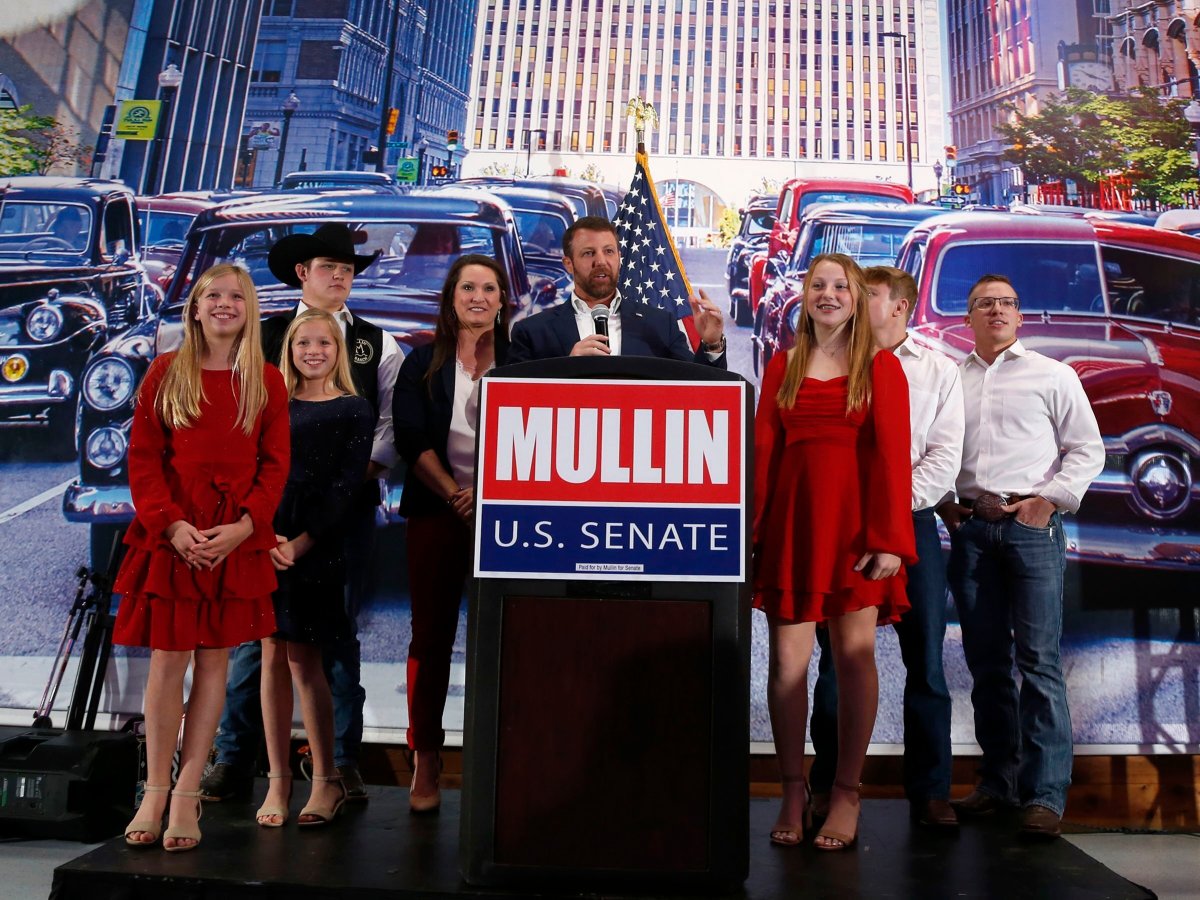
The election will bring the first Native person back to the U.S. Senate in nearly two decades, put a record number of Indigenous women judges on the bench in Arizona and place more than 65 Indigenous politicians in state legislatures across the country, according to an analysis of election results by ICT.
“We were saying it was going to be a nailbiter election, but in Indian Country, we were always certain we were going to have an incredible year,” said Jordan James Harvill, Cherokee and Choctaw, the national program director for Advance Native Political Leadership, which also tracked the election.
Twelve Indigenous candidates ran for Congress, and five will take their seats in the nation’s capital next year. READ MORE — Dianna Hunt and Joaqlin Estus, ICT
SUPPORT INDIGENOUS JOURNALISM. CONTRIBUTE TODAY
A renowned chief tribal judge in Michigan has been appointed to be the first Indigenous person to sit on the Michigan Court of Appeals, Gov. Gretchen Whitmer announced Tuesday.
Allie Greenleaf Maldonado is the chief judge for the Little Traverse Bay Bands of Odawa Indians (LTBB) Tribal Court, an LTBB citizen and member of the Turtle Clan. She is now the first tribal citizen to ever be appointed to Michigan’s second-highest court.
“I am humbled and honored to be trusted by Gov. Whitmer for this appointment to the Michigan Court of Appeals,” Maldonado said Tuesday. “I look forward to taking all of my professional experience and diligently applying it to the work ahead of me.
“This is a moment of importance not just for me, but for all of Indian Country as the governor’s wisdom in this appointment sends a message about the critical importance of the work of tribal courts. I am grateful to the governor and her team, and I look forward to giving all of Michigan my best.” READ MORE — Laina G. Stebbins, Michigan Advance
The No.1 men’s college basketball team in the country is headed by an Indigenous coach for the first time in history.
Kelvin Sampson, Lumbee, is in his ninth season at the helm of the University of Houston Cougars, who are ranked first by The Associated Press for the NCAA Division I men’s team.
The Cougars, 9-0, remained “firmly entrenched” at the top of the AP rankings for a second week – the first time since the program’s “Phi Slama Jama” days in the 1980s led by player Hakeem Olajuwan, AP reported.
“I play how I see the game,” Sampson told ICT this week. “I coach how I see the game. I made mistakes when I was a younger coach. I made more mistakes then than I do now. I got better as I got older.”
“I got knocked down and I got up every time,” he said. “I learn from mistakes.” READ MORE — Dan Ninham, Special to ICT
Native species such as swift foxes and black-footed ferrets disappeared from the Fort Belknap Indian Reservation generations ago, wiped out by poisoning campaigns, disease and farm plows that turned open prairie where nomadic tribes once roamed into cropland and cattle pastures.
Now with guidance from elders and outside wildlife groups, students and interns from the tribal college are helping reintroduce the small predators to the northern Montana reservation sprawling across more than 1,000 square miles near the U.S.-Canada border.
Sakura Main, a 24-year-old Aaniiih woman who is entering Fort Belknap’s Aaniiih Nakoda College in January, is helping to locate, trap and vaccinate the severely endangered ferrets against deadly plague in a program overseen by the tribal fish and game department.
The nocturnal animals live among the mounded burrows of prairie dog colonies, where ferrets stalk the rodents almost as big as they are, wrapping themselves around their prey to strangle and kill it. READ MORE— Associated Press
Sign up here to get ICT’s newsletter
An 1835 Treaty with the U.S. government promised a Cherokee Nation delegate seat in the House of Representatives. That treaty obligation has never been fulfilled. ICT’s McKenzie Allen-Charmley interviewed Cherokee Nation Principal Chief Chuck Hoskin Jr.
For nearly 50 years, The Indian Child Welfare Act set standards for the removal of Native children from their family and tribe. ICT’s Pacey Smith-Garcia has more from Indigenous leaders who are speaking out about a Supreme Court case that could impact this hallmark law.
Onondaga visual artist Frank Buffalo Hyde began showing his artwork as a teen. Here’s a profile of this “Institute of American Indian Arts” graduate.
It is one of the largest gatherings for leaders of Native nations to meet with high-level officials. Dacoda McDowell Wahpekeche covered the White House Tribal Nations Summit for ICT.
Part of President Joe Biden’s summit speech referenced Spirit Mountain, also known as Avi Kwa Ame. Fort Mojave Chairman Timothy Williams shared his reaction with McKenzie Allen-Charmley. We take a look at an excerpt from the president’s speech.
GRAND RONDE, Ore. — Being Indigenous and living in the homelands of her ancestors is the most important part of Erin Bernando’s identity.
It’s a history she can trace back to Ta-hon-nah Tumulth, a chief of a Chinook band of Cascade Indians who signed the Willamette Valley treaty in 1855 and lived near present-day Cascade Locks in the Columbia River Gorge. The treaty that Ta-hon-nah Tumulth signed led to the formation of a reservation for what would become the Confederated Tribes of Grand Ronde.
Yet, that connection to Chief Tumulth would be used against Bernando and dozens of her relatives during one of the most divisive periods of the tribe’s modern history. That painful period exposed broad disagreement over how the tribe determines its formal requirements for belonging that persist today.
Despite being part of negotiations for the 1855 treaty, the U.S. government executed Tumulth before he was able to move to the reservation. Residency there would eventually become an enrollment requirement — and the basis the tribe used in 2014 to revoke citizenship for Bernando and 85 of Tumulth’s other descendants. READ MORE — Chris Aadland, ICT and Underscore News
FOLLOW ICT ON SOCIAL MEDIA: FACEBOOK, TWITTER, INSTAGRAM, TIKTOK
- GLOBAL INDIGENOUS: Mining for youth, election problems and place names: Coverage around the world on Indigenous issues for the week ending Dec. 4, 2022
- The fight to stop ‘the biggest land grab: At the United Nations biodiversity conference, Indigenous leaders fight to be included in 30×30 talks
- Farmers of color sue government for promised aid: The federal aid, which was promised to pay off debt, was dropped following a lawsuit
- Democratic Sen. Kyrsten Sinema switches to independent
- Federal data: Kansas oil spill biggest in Keystone history
- Dan Snyder allegedly “obstructed” House probe into Washington Commanders, panel says
We want your tips, but we also want your feedback. What should we be covering that we’re not? What are we getting wrong? Please let us know. dalton@ictnews.org.

Our stories are worth telling. Our stories are worth sharing. Our stories are worth your support. Contribute $5 or $10 today to help ICT carry out its critical mission. Sign up for ICT’s free newsletter
