
Greetings, relatives.
A lot of news out there. Thanks for stopping by ICT’s digital platform.
Each day we do our best to gather the latest news for you.
Okay, here’s what you need to know today:
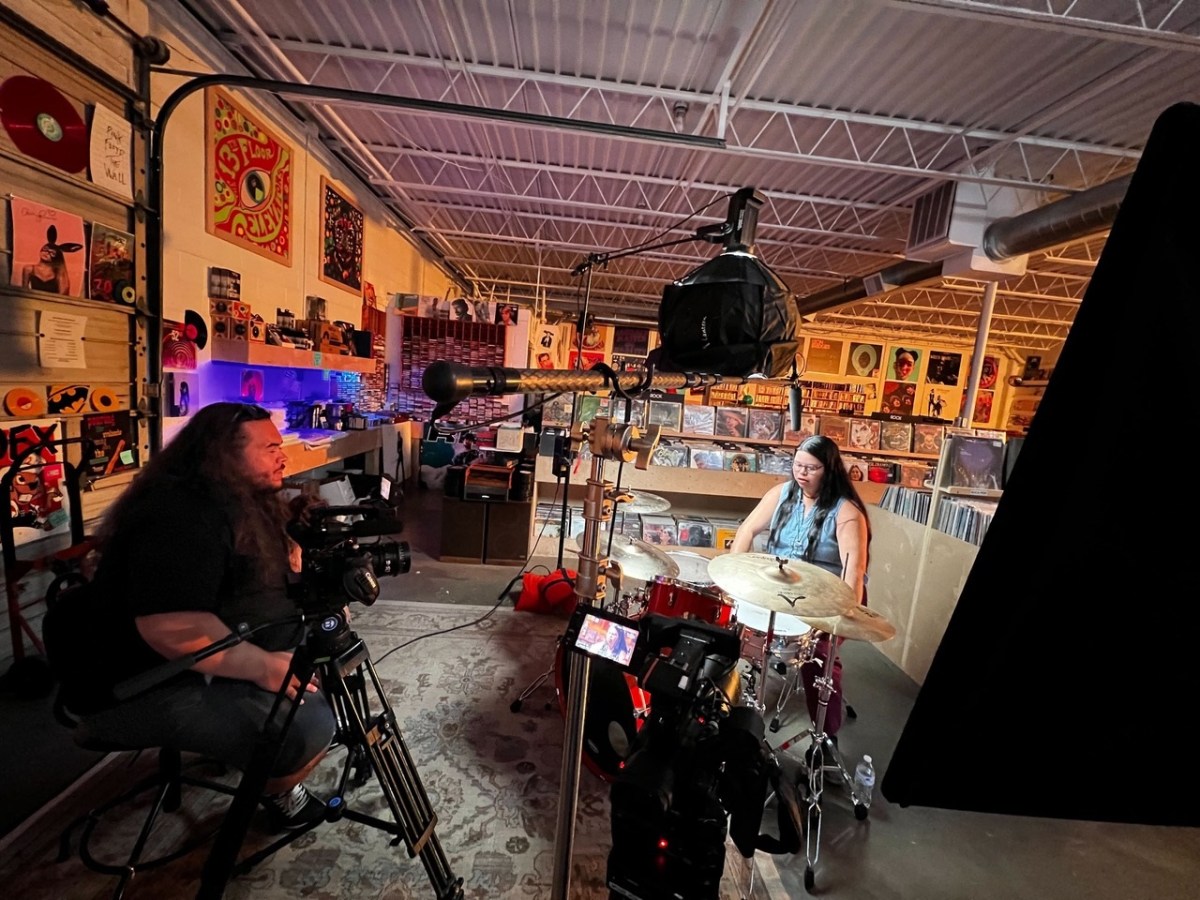
Film has become an important part of the Cherokee Nation’s business and identity as the tribe continues to build upon the film office they launched in 2019, the first certified Native American film office in the country.
Now, after years of supporting award-winning productions and $1 million rebates, they are rolling out a reorganization of the tribe’s filmmaking ecosystem and expanding the Cherokee Film Studios in Owasso, Oklahoma.
Now named simply Cherokee Film, the enterprise includes four branches – Cherokee Film Productions, Cherokee Film Studios, the Cherokee Film Commission, and the Cherokee Film Institute — with 30 full-time employees.
Cherokee Film will continue to offer the enticing rebates for productions filmed in Oklahoma with the services of the tribal film office, but it will also increase production of its own original programming, help tribal citizens break into the industry and create jobs in and around the Cherokee Nation. READ MORE. — Sandra Hale Schulman, Special to ICT
SUPPORT INDIGENOUS JOURNALISM. CONTRIBUTE TODAY.
Here comes another round of COVID-19 vaccines.
The Food and Drug Administration approved and authorized the updated Pfizer-BioNTech and Moderna mRNA COVID-19 vaccines for this fall and winter. Everyone six months and older, regardless of current vaccination status, are recommended to get vaccinated.
“…this booster is the best guessed replica of the COVID-19 variant that will be circulating out in the fall,” Dean Seneca, CEO of Seneca Scientific Solutions and former director of the Great Lakes Inter-Tribal Epidemiology Center, said.
He said as the COVID-19 virus mutates more vaccines will be needed to combat those specific variants, and it’s concerning how the current COVID-19 variant, BA.2.86, has more than 30 mutations compared to the average flu virus that has an average of six or eight mutations. READ MORE. — Kalle Benallie, ICT
The Maȟpíya Lúta Truth & Healing Initiative is looking for stories from students who attended the Holy Rosary Mission School from 1960-1980 (now Red Cloud Indian School/Maȟpíya Lúta).
The Truth and Healing Initiative’s oral historians are interested in hearing about the experiences of boarders, especially males.
Former students and families can contact Truth and Healing Executive Director Cecilia Fire Thunder at ceceliafirethunder@redcloudschool.org or by calling 605-407-2470.
The Holy Rosary Mission School was a Jesuit-run boarding school from 1889 until 1980.
The Truth and Healing Initiative is a commitment to acknowledging and examining the trauma that is part of Red Cloud’s history as an Indian boarding school. The Truth and Healing Advisory Council consists of elders, former boarders, and other community representatives and provides feedback and guidance on Red Cloud’s Truth and Healing. — ICT
Yolanda Fraser is back near a ragged chain-link fence, blinking through tears as she tidies up flowers and ribbons and a pinwheel twirls in the breeze at a makeshift roadside memorial in a small Montana town.
This is where the badly decomposed body of her granddaughter Kaysera Stops Pretty Places was found a few days after the 18-year-old went missing from a Native American reservation border town.
Four years later, there are still no answers about how the Native American teenager died. No named suspects. No arrests.
Fraser’s grief is a common tale among Native Americans whose loved ones went missing, and she’s turned her fight for justice into a leading role with other families working to highlight missing and slain Indigenous peoples’ cases across the U.S. Despite some early success from a new U.S. government program aimed at the problem, most cases remain unsolved and federal officials have closed more than 300 potential cases due to jurisdictional conflicts and other issues. READ MORE. — Associated Press
President Joe Biden is hosting Pacific Islands leaders at the White House this week for the U.S.-Pacific Islands Forum.
The forum includes more than a dozen Pacific Island leaders.
The two-day U.S.-Pacific Island Forum Summit is expected to focus heavily on the impact of climate change. Read more from the Associated Press here.
Sign up here to get ICT’s newsletter
On the Monday edition of the ICT Newscast, it takes months to grow and seconds to eat. We speak to a New Mexico certified chile farmer who is sustaining her people’s practices. A family story becomes a play about a Muscogee hero. ICT’s managing editor takes a trip home. His first since the pandemic.
Watch:
The film “Oppenheimer” shows U.S. scientists racing to develop the atomic bomb during World War II. It also hints at the post-war race to find peacetime uses of such bombs. Alaska became the site of a proposed nuclear experiment that turned simmering dissatisfaction over Native rights into a full-blown Native claims movement.
After the United States bombed Hiroshima and Nagasaki and the war ended, the Atomic Energy Commission proposed to use atomic bombs to alter the course of rivers and move mountains.
“If your mountain is not in the right place, drop us a card,” physicist Edward Teller is quoted in “The Firecracker Boys: H-Bombs, Inupiat Eskimos, and the Roots of the Environmental Movement,” by Dan O’Neil.
One idea was to bomb near the Mediterranean Sea to create an alternative to the Suez Canal. Another was to enlarge the Panama Canal. READ MORE. — Joaqlin Estus, ICT
- Indigenous artists, culture bearers recognized with cash awards: ‘Ancient art form brings meaning to the present, tradition into the future.’
- Child protective service workers share their ‘secret truths that haunt’: A movement to change the child welfare system asks caseworkers to speak up.
- Record number enroll to vote on Indigenous Voice to Parliament: The referendum to be held on Oct. 14 would enshrine in Australia’s constitution an Indigenous Voice to Parliament.
- Indigenous people celebrate as Brazil high court enshrines land rights: Though the case involved only one Indigenous group, the Supreme Court said it serve as a precedent for all instances of justice involving Indigenous groups.
- Medicaid fraud appears to reach another Native community: Over 200 people are houseless after Tucson, Arizona recovery community closes during Medicaid probe.
- How translating classic hits into Inuktitut became a healing process for Elisapie.
- Workers uncover eight mummies and pre-Inca objects while expanding the gas network in Peru.
- Hoskin signs affirmative action order to increase hiring of participants in tribe’s education, career programs.
We want your tips, but we also want your feedback. What should we be covering that we’re not? What are we getting wrong? Please let us know. dalton@ictnews.org.


