Greetings, relatives.
A lot of news out there. Thanks for stopping by ICT’s digital platform.
Each day we do our best to gather the latest news for you. Remember to scroll to the bottom to see what’s popping out to us on social media and what we’re reading.
Also, if you like our daily digest, sign up for The Weekly, our newsletter emailed to you on Thursdays. If you like what we do and want us to keep going, support and donate here.
Okay, here’s what you need to know today:
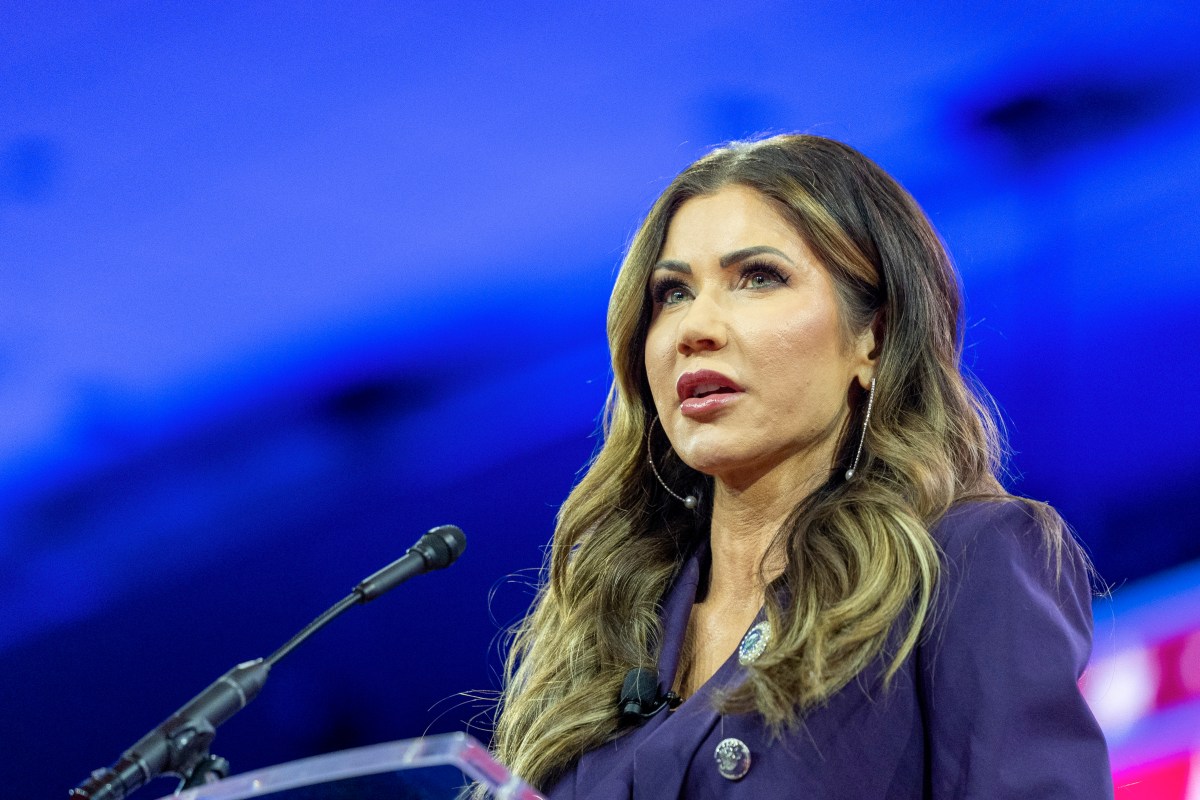
RAPID CITY, S.D. – South Dakota Gov. Kristi Noem is now banned from entering the lands of all nine tribes in South Dakota.
Following a meeting on Tuesday, May 21, the Flandreau Santee Sioux Tribe moved to ban the governor from the reservation in solidarity with the other eight Oceti Sakowin tribes in South Dakota.
The tribal council held an emergency meeting Saturday, May 18, during which no decision was made. On Monday, May 20, tribal leaders met with the governor’s office to further discuss the issue. The next day, the executive council voted to ban Noem.
The decision was made in response to inflammatory comments made by Noem about the tribes since January 31. READ MORE — Amelia Schafer, ICT + Rapid City Journal
SUPPORT INDIGENOUS JOURNALISM. CONTRIBUTE TODAY
Around the World: Narcotraffickers encroach upon Kakataibo Indigenous Reserve, First Nations Dance College secures $13 million, Tibetans re-educated after their lands are seized, and childcare center closes after 50 years in operation.
PERU: Drug traffickers invade reserve
On March 15, during a flyover, officials from Indigenous organizations and the Ministry of Culture observed evidence of drug production and trafficking within the Kakataibo Indigenous Reserve, Mongabay reported on May 17.
They identified three clandestine landing strips, one of which was centrally located within the reserve, alongside vast patches of deforested areas deep in the rainforest. Some of these areas had been planted with illegal coca crops.
The Kakataibo Indigenous Reserve, established in 2021 to protect Indigenous groups living in isolation, has already suffered the loss of over 1,500 hectares (3,700 acres) due to illegal deforestation since its inception. This discovery highlights the severity of the situation. Julio Cusurichi, a member of the Interethnic Association for the Development of the Peruvian Rainforest, described the reserve as “by far the most invaded Indigenous territory in the entire country.” READ MORE — Deusdedit Ruhangariyo, Special to ICT
It was about 2006 and oyster growers in the Salish Sea were seeing a decline in the abundance and growth of their farmed bivalves.
A decline in pH levels, tests revealed, had made local seawater corrosive enough to dissolve calcium carbonate in the water that oysters need for shell growth.
Ocean acidification – the result of carbon dioxide released into the air that settles in the ocean – had reached growers’ shores in the inland coast of Washington state. And if nothing was done to address it, the shellfish growers told then-Gov. Christine Gregoire and their district legislator, they would have to move their operations to more pH-balanced waters in Hawai’i.
The issue didn’t gain traction out of the gate with Washington state lawmakers – who were grappling with crime and mental health issues and teacher pay in their districts – didn’t gain traction, that is, until lawmakers recognized how ocean acidification might affect the state’s economy. READ MORE — Richard Arlin Walker, Special to ICT
OKLAHOMA CITY — A handful of Oklahoma-based tribes are refusing to share their tag information with law enforcement amid ongoing anger and frustration over an abrupt change in how state law enforcement is enforcing license plate policies for Indigenous residents.
The Department of Public Safety’s sudden decision to ticket Oklahoma drivers with tribal vehicle tags but reside outside their tribe’s official boundaries also helped derail negotiations with the Oklahoma Turnpike Authority, said Sharon Scott, president of the Oklahoma Intertribal Tax Association.
Some tribal leaders are frustrated over a “combative” relationship with the Turnpike Authority, Scott said. The agency has struggled to bill some Indigenous motorists that have tribal tags because it cannot access vehicle registration information.
Some smaller tribes, meanwhile, don’t view the one-size-fits-all model vehicle compacts being pushed by the governor as a solution to solve the information-sharing problem. The loss of tax commission revenue would be harmful to smaller tribes as it is one of the largest revenue streams. READ MORE — Oklahoma Voice
Sign up here to get ICT’s newsletter
The Flandreau Santee Sioux Executive Council voted Tuesday to ban South Dakota Gov. Kristi Noem, a Republican, from their lands. The vote means that all nine tribes in the state have passed votes banning Noem following a string of unwelcome comments from the governor. ICT‘s Amelia Schafer has been covering the story and joins us with the latest.
James and Ernie is a Diné comedy duo that has been entertaining Indigenous communities for decades. While the pair still performs together, each has taken their own path. ICT‘s Shirley Sneve has this interview with James Junes.
A couple of retired professors are on a new journey with a quest for more people to read. In the pages of books, they now can find themselves and their Native families reflected. This Native-owned publishing company, Black Bears and Blueberries Publishing, showcases Native writers and artists by finding a niche in the market. ICT‘s Shirley Sneve interviewed Thomas Peacock, who owns the company with his wife, Elizabeth Albert-Peacock.
WATCH
Survey results indicate nearly two-thirds of South Dakota public school educators are teaching the Oceti Sakowin Essential Understandings, but the number of respondents is lower than the last survey.
The essential understandings are a set of standards approved in 2018 for teaching students about Native American culture and history. “Oceti Sakowin” is the collective term for Lakota, Dakota and Nakota speaking Native Americans, many of whom live in South Dakota. There are nine tribal nations within the state.
About 62 percent of teachers are using the standards, based on a survey conducted by the state Department of Education in 2023 — a “remarkable increase” from 45 percent in 2021, said Fred Osborn, director of the Office of Indian Education, which is under the supervision of the state Department of Tribal Relations. He presented the survey results to the Indian Education Advisory Council earlier this month.
Use of the standards is optional. The survey is used to understand how the standards are being implemented, and to help state officials encourage statewide adoption. READ MORE — South Dakota Searchlight
- Standing Rock graduate’s cap and plume taken during ceremony: Indigenous communities rally behind Hunkpapa Lakota graduate after viral video shows removal at New Mexico graduation
- Ice jams cause flooding on mighty Kuskokwim River in Alaska: ‘Most of the houses were surrounded and we had some gravel roads washed out’
- Building bridges for community: First Alaska Native civil engineer to graduate Columbia University despite main-stage commencement cancellation
- Biden wants to notch one more legislative achievement: More judges than Trump
- UCLA police chief reassigned following criticism over handling of campus demonstrations
- Biden administration canceling student loans for another 160,000 borrowers
We want your tips, but we also want your feedback. What should we be covering that we’re not? What are we getting wrong? Please let us know. dalton@ictnews.org.

Like this story? Support our work with a $5 or $10 contribution today. Contribute to the nonprofit ICT. Sign up for ICT’s free newsletter