
A lot of news out there. Thanks for stopping by Indian Country Today’s digital platform.
Each day we do our best to gather the latest news for you. Remember to scroll to the bottom to see what’s popping out to us on social media and what we’re reading.
Also, if you like our daily digest, sign up for The Weekly, our newsletter emailed to you on Thursdays. If you like what we do and want us to keep going, support and donate here.
Okay, here’s what you need to know today:
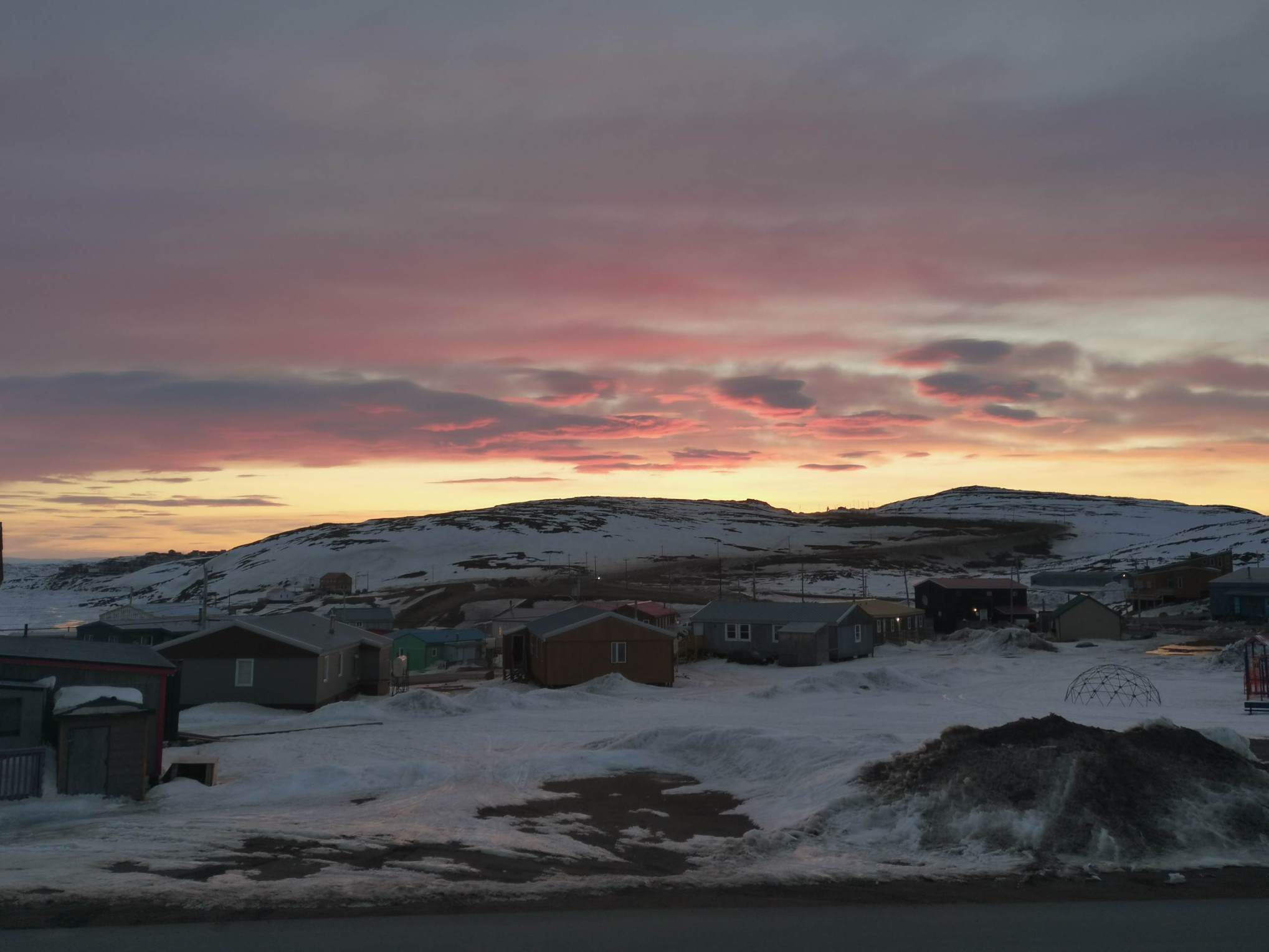
Residents of Iqaluit finally have hopes of getting their water system fully operational with clean water. Iqaluit, population 7,700, is the capital of Nunavut, which is Canada’s largest territory, and is 84 percent Inuit.
“The government of Canada just announced $214 million for our city to work on our water infrastructure that has been a six-year water crisis actually,” said Iqaluit Mayor Kenny Bell. “So we’re super excited about that and starting to feel the wave of change in making sure that we can have clean water for the future.” Bell spoke with Indian Country Today on April 8 while attending the Arctic Encounter Symposium in Anchorage.
Some of the funds will go to enlarge the city’s current source of drinking water, Geraldine Lake.
“Because of climate change we’re not seeing the same amount of precipitation or snow during the year. So our lakes are not regenerating as fast as they should be. So of course that’s very concerning for us. This influx of money will make sure that we have a larger source, a new source,” Bell said. READ MORE — Joaqlin Estus, Indian Country Today
—
SUPPORT INDIGENOUS JOURNALISM. CONTRIBUTE TODAY.
—
This special project is part of a collaborative series, “At the Crossroads,” from the Institute for Nonprofit News, Indian Country Today, KOSU and eight other news partners, examining the state of the economy in Indian Country. This reporting was made possible with support from the Walton Family Foundation.
To read the series, click here.
In Hawai’i, a new piece of legislation is aiming to restore the original name of a long-standing community.
The legislation is called HCR-27. It requests the U.S. Census Bureau redesignate the community currently called Captain Cook to its Hawaiian name Ka’awaloa. The legislation would also remove all references to places named Captain Cook on the entire island of Hawai’i.
Last week, the state’s committee on judiciary and Hawaiian affairs held a hearing. Two people gave testimony, including one 30-year resident of Hawai’i who opposed the bill.
“I must say that the proposed name change has really very little to do with Hawaiian culture and a lot to do with cancel culture. And I’m not sure with all that’s going on in the world, if this is the right thing to do,” said Mitchell Lee.
Mehana Kihoi is a Native Hawaiian who supports the legislation. She responded saying, “A common argument that I’ve been seeing is the idea that this is canceling culture. A phrase that’s been coined by settlers with no genealogical ties to this land, a phrase that is not only offensive, but grossly inaccurate. What we are doing here is correcting culture and restoring pono and integrity back to the land.”
According to the legislation, the area was named Captain Cook because the post office in the area was located in the Captain Cook Coffee Company.
Before that, Ka’awaloa was a thriving Hawaiian village. The village grew coffee for Hawaiian chiefs including King Kamehameha I.
The legislation has passed the Hawai’i state House and will next move to a committee in the state’s Senate. — Aliyah Chavez, Indian Country Today
The FBI is offering a reward for information leading to an arrest in the vandalizing of the Cieneguilla Petroglyphs in Santa Fe.
The agency announced a $5,000 reward Monday for any details that could help locate a suspect or suspects.
Authorities say the spray-painted graffiti was discovered on the petroglyphs back in January. The Bureau of Land Management oversees the property where the petroglyphs are.
The petroglyphs, which date between the 13th and 17th centuries, draw visitors yearly. They are considered a precious Native American cultural resource. — Associated Press
—
Sign up here to get ICT’s newsletter
—
On Tuesday’s ICT newscast we learn about a report that’s explaining underfunded Native performing arts. Plus, NDN Collective met with Indigenouspeople in South Dakota to come up with a plan to fight discrimination
Watch:
The former commissioner of health for the state of Oklahoma has been named the first surgeon general for the Muscogee Nation.
Dr. Lance Frye, who is a citizen of the Choctaw Nation, led Oklahoma’s response to the pandemic before resigning last October.
“I took on the role as the commissioner of health and stepped, really, right in the middle of the largest public health emergency in any of our lifetimes, and certainly in recent history,” he said during an interview with the Daily Yonder. “And it became very evident very quickly, I guess, that there has been a very large lack of investment in public health infrastructure for the past several decades.”
When it comes to Covid-19, he said there’s no question that Indian Country has been disproportionately affected. READ MORE. — The Daily Yonder
—
FOLLOW ICT ON SOCIAL MEDIA: FACEBOOK, TWITTER, INSTAGRAM, TIKTOK.
—
- INDIGENOUS FILM+ ONLINE: Listing prepared by Indigenous Media Initiatives
- Picuris Pueblo: ‘Intention is to grow cannabis here’: Tribal lands were targeted in recent years by federal law enforcement, governor says, even though they were abiding state law on medical marijuana
- Women sweep tribes’ board races: ‘It’s a pretty historic time for us’ #NativeVote22
- ‘Remembering the Children’ memorial gets $2 million grant: Memorial will go on a hillside believed to contain unmarked graves of students who died at the now-shuttered Rapid City Indian Boarding School
- NHSC forgives over $1.5M in student debt.
- Jason Momoa to write and star in Apple TV Plus series about the colonization of Hawaii.
- Has US Rep. Kai Kahele Given Up On Washington?
We want your tips, but we also want your feedback. What should we be covering that we’re not? What are we getting wrong? Please let us know. managingeditor@indiancountrytoday.com.


