
Greetings, relatives.
A lot of news out there. Thanks for stopping by ICT’s digital platform.
Each day we do our best to gather the latest news for you. Remember to scroll to the bottom to see what’s popping out to us on social media and what we’re reading.
Also, if you like our daily digest, sign up for The Weekly, our newsletter emailed to you on Thursdays. If you like what we do and want us to keep going, support and donate here.
Okay, here’s what you need to know today:
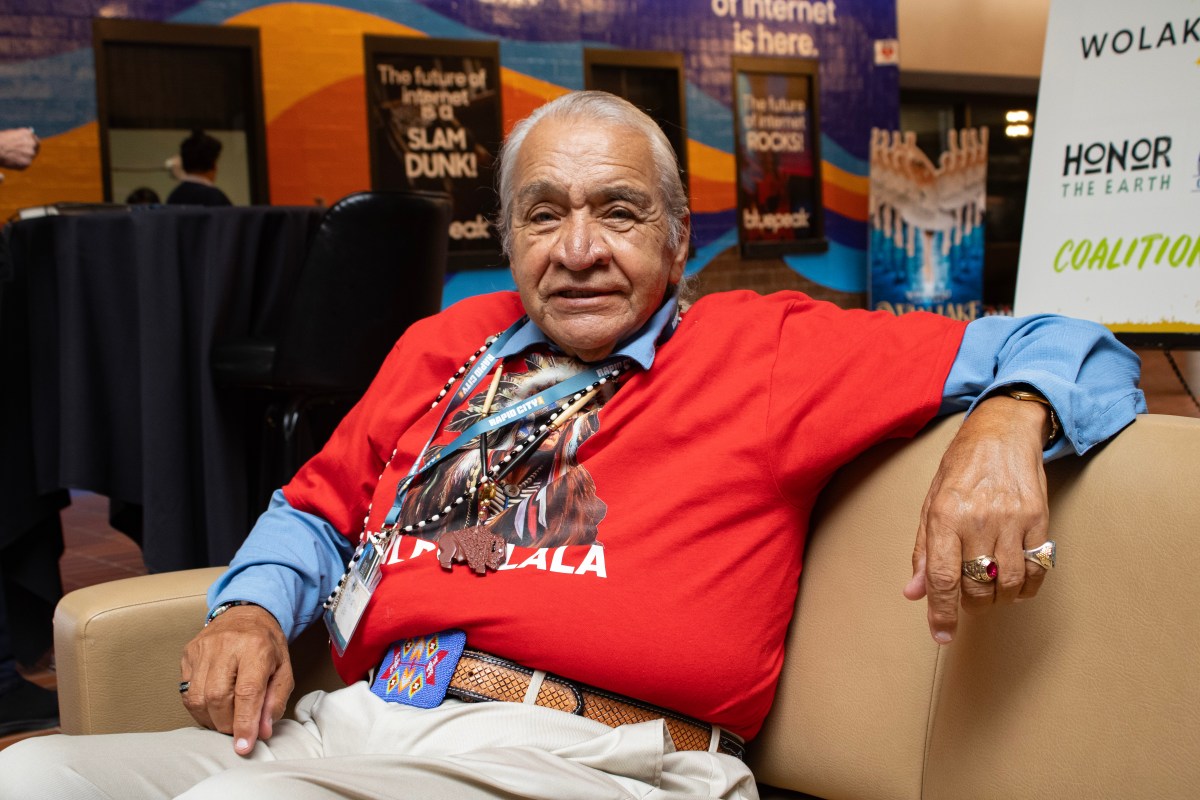
RAPID CITY, S.D. – For the first time ever, the World Wilderness Congress was hosted in Rapid City, bringing Indigenous people from about 40 countries to He Sapa, the Black Hills. This is also the first time the global event has been led by Indigenous people.
Two years ago, Philimon “Phil” Two Eagle, executive director of the Sicangu Lakota Treaty Council, spoke on behalf of the Oceti Sakowin and asked the Wilderness Congress to come to the Black Hills.
Amy Lewis, chief executive officer of the Wild Foundation, was chatting with Two Eagle when he presented her with the opportunity to tour sacred sites in the area. The two discussed the Treaty Council and things threatening the hills.
“I wanted to show her the beautiful lands of the Lakota, the seven council fires,” Two Eagle said. “So I said, ‘Can you help me bring the world to the Black Hills so they can see firsthand what we’re going through?’” READ MORE — Amelia Schafer, ICT + Rapid City Journal
SUPPORT INDIGENOUS JOURNALISM. CONTRIBUTE TODAY
Leonard Peltier was visited by Jose Francisco Cali Tzay, United Nations Special Rapporteur on the Rights of Indigenous People, on Aug. 27.
A special rapporteur is an independent expert appointed by the United Nations to report on human rights issues.
Tzay visited Peltier at Coleman 1 Federal Penitentiary in Coleman, Florida for a two-and-a-half-hour discussion of Peltier’s health and imprisonment.
During the 22nd United Nations Permanent Forum on Indigenous Issues, International Indian Treaty Council Board President Ron Lameman presented a request on behalf of Peltier’s spiritual advisor to visit him in prison.
Peltier asked Tzay to assist him in getting an emergency medical transfer to a facility like the Federal Medical Center in Rochester, Minnesota.
In 2022, the United Nations Working Group on Arbitrary Detention released a 17-page report condemning Peltier’s detention. The report cited numerous factors including anti-Native American bias in Peltier’s ongoing parole denials.
In a Sept. 3 press release, the Leonard Peltier Ad Hoc Committee said the Special Rapporteur’s visit and the International Indian Treaty Council’s resolute efforts both hold significant potential in getting Peltier medical attention.
The Ad Hoc Committee added that Peltier said he was honored by the visit and enjoyed his time with Francisco Cali and Seanna Howard from the University of Arizona who assisted the Rapporteur on this visit.
The U.S. Parole Commission denied Peltier’s most recent request for parole on July 2. — Amelia Schafer, ICT + Rapid City Journal
Around the World: Suriname carbon credit program sidelines Indigenous communities, Indigenous wellbeing central in Indigenous Business Australia’s first Environmental, Social, and Governance strategy and in Canada, Indigenous sacred items still “manhandled” despite new security protocols.
SURINAME: Carbon credit program sidelines Indigenous communities.
Local and Indigenous communities in Suriname are raising concerns about a new carbon credit trading scheme, claiming the government implemented it without consulting them. They fear being excluded from forest conservation policies and revenue sharing connected to land with ancestral significance to them. Mongabay reported on Aug. 26.
Suriname’s government has launched the world’s first sovereign carbon credits under the United Nations Framework Convention on Climate Change Paris Agreement, allowing these credits to be traded globally. However, forest communities who have long preserved these lands claim they were sidelined in the process. “The people who’ve really been caring for the forest… are kind of a side note,” said John Goedschalk, head of Climate Change Advisory Services, criticizing the government for finalizing the program before consulting the communities, according to Mongabay. He described the approach as fundamentally flawed. READ MORE— Deusdedit Ruhangariyo, Special to ICT
BILLINGS, Mont. — Tribal leaders in Montana urged Republican U.S. Senate candidate Tim Sheehy to apologize over remarks he made to supporters about Native Americans being “drunk at 8 a.m.” and throwing beer cans at him on the Crow Reservation
Audio recordings of Sheehy’s racial comments were obtained and published by Char-Koosta News, the official publication of the Flathead Indian Reservation.
Sheehy, who is backed by former President Donald Trump, is challenging three-term incumbent Democratic Sen. Jon Tester in one of the most closely-watched congressional races in the nation. A Republican victory could help decide control of the closely divided Senate.
A Sheehy campaign spokesperson did not dispute the authenticity of the recordings, which the tribal newspaper said came from fundraising events held in Montana last November. READ MORE — Associated Press
Sign up here to get ICT’s newsletter
A Bethel tribal government argued Friday in Anchorage Superior Court that the state improperly granted a permit for the planned Donlin Gold mine, while the state argued the mine met key environmental standards.
Orutsararmiut Native Council filed a lawsuit that seeks to reverse a key construction permit for the mine in Southwest Alaska.
The council, represented by the environmental law firm Earthjustice, filed suit in both federal and state courts against the state of Alaska and the federal government, seeking to challenge a permit needed to disturb salmon-bearing creeks in the mine site.
Oral arguments in the federal case took place in June. The state case, filed in 2021, was assigned to Superior Court Judge Catherine Easter. READ MORE — Alaska Beacon
TAHLEQUAH – A time-honored tradition of Cherokee National Holiday, Principal Chief Chuck Hoskin Jr. delivered an impassioned State of the Nation address on Aug. 31 that included the administration’s priorities for the coming year.
He also briefly discussed the intention of the Cherokee Nation to continue issuing vehicle tags even if no compact agreement is renewed between the tribe and the state of Oklahoma.
“Our tag compact agreement shares real time tag data with the state,” Hoskin said. “Everyone is safe and accountable during a traffic stop. It is the agreement that allows us to provide car tags to our at-large brothers and sisters across the state of Oklahoma. At the end of the year, we’ll either have a car tag compact or we won’t. But no matter what happens with our compact, come Jan. 1, 2025, we will continue issuing car tags and titles to Cherokee citizens within the reservation.”
Hoskin said the tribe will negotiate a contract with Gov. Kevin Stitt if able, but he stressed the compact must be “fair” and that it “depends on Gov. Stitt” if the Cherokee Nation continues sharing its compact revenue with the state after 2024. READ MORE— Cherokee Phoenix
- Award-winning Native star quilt maker opens storefront: A grand opening celebration is planned for later this year for the new South Dakota shop
- Cherokees take new approach to helping addicts: Tribe launches Recovery Rez as a way to minimize the harm that addicts cause themselves and reconnect them to their cultures
- Sandra Boham takes new position with Native Forward Scholars Fund: A life-long Native educator, Boham led Salish Kootenai College to the highest retention, graduation rates among all tribal colleges
- A 14-year-old student fatally shot 4 people in a rampage at a Georgia high school, officials say
- California wildfires grow as heat wave creates worry; South Dakota conditions improve
- Raise taxes on the rich or cut them? Harris and Trump differ on how to boost the US economy
We want your tips, but we also want your feedback. What should we be covering that we’re not? What are we getting wrong? Please let us know. dalton@ictnews.org.

Like this story? Support our work with a $5 or $10 contribution today. Contribute to the nonprofit ICT. Sign up for ICT’s free newsletter.

