Greetings, relatives.
A lot of news out there. Thanks for stopping by ICT’s digital platform.
Each day we do our best to gather the latest news for you.
Okay, here’s what you need to know today:
The Rasmuson Foundation has awarded 14 Indigenous artists with recognition and cash awards in three categories. They are some of the 36 Alaska artists being recognized by the foundation’s 2023 Individual Artist Awards. The awardees were selected by an international panel of artists and experts from a pool of 417 eligible applicants.
“Artists tell our stories and offer new ways of seeing,” said Gretchen Guess, Foundation president and CEO, in a prepared statement.“ We are so grateful for the dedication, talent and vibrancy of Alaska’s creative community.”
The foundation increased award amounts this year to 25 $10,000 Project Awards, 10 $25,000 Fellowship Awards and one $50,000 Distinguished Artist Award.
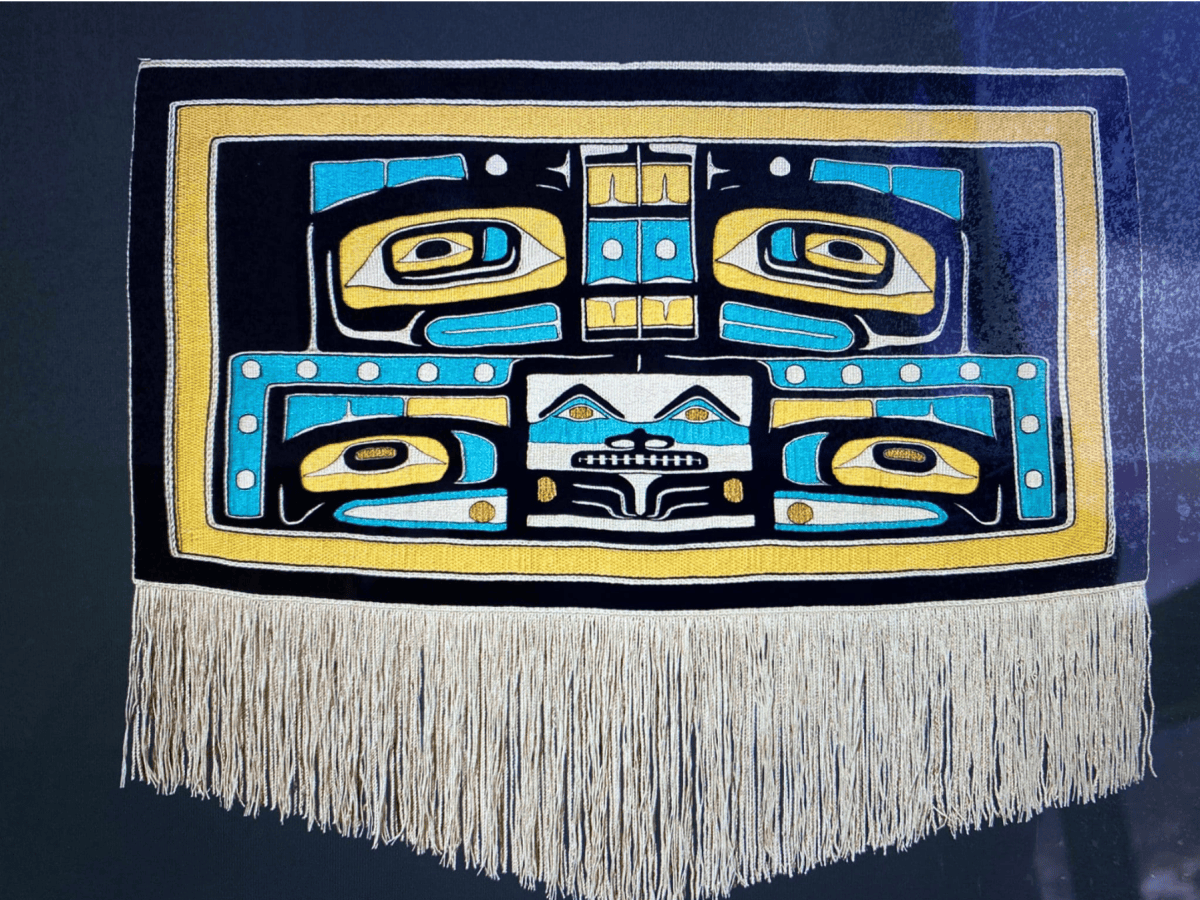
The foundation’s sole $50,000 Distinguished Artist award went to Anna Brown Ehlers, Tlingit, as “an established artist of recognized stature with decades of creative excellence and accomplishment in the arts.” READ MORE — ICT
SUPPORT INDIGENOUS JOURNALISM. CONTRIBUTE TODAY
Ahead of this week’s massive climate action in New York City and around the world, hundreds in downtown Albuquerque gathered to express their demands.
The Albuquerque Climate Strike took place on Sept. 14 where people marched from Robinson Park to outside of The Clyde Hotel, where elected leaders and business stakeholders attended the New Mexico Advanced Energy Summit.
The Albuquerque climate event outside was put together by 23 local grassroots organizations in solidarity with hundreds of strikes taking place in over 100 countries. Additionally, 40 organizers involved with the Albuquerque event are in New York City to attend actions during Climate Week NYC.
The Albuquerque delegation led the march on Sunday in New York City, with a banner that read: “New Mexico is Burning Biden and MLG: Climate Action Now!” READ MORE — Source New Mexico
PHOENIX — James Johnson,Tlingit, shares his work to revise the culture of his people and other Indigenous groups along the Pacific Northwest and Alaska during a September speaking season at the Heard Museum in Phoenix.
Johnson has a personal connection to the artform as a citizen of the Tlingit Ch’áak’ Dakl’aweidi Clan (Eagle/Killerwhale), which is from Xutsnoowú Kwáan of Angoon, Alaska. He is also from a line of Tlingit of Dakl’aweidi’ Chiefs, who wore carved hats to denote their clanship, which is the inspiration for Johnson’s current pieces.
Much of Johnson’s work covers a variety of mediums, from wooden carvings of masks, sculptures, and canvas paintings of various animals associated with Tlingit culture, like the eagle, bear and killer whale.
Johnson was part of the Heard Museum’s First Friday event in September. READ MORE — Chris Lomahquahu, ICT
Alaska’s ranked choice voting system, which was in place for victories for the first Democratic U.S. House member in half a century and the reelection of one of the last remaining moderate Republican U.S. senators, has become a test case for a nation struggling with political polarization.
To fans, Alaska’s system shows how voters can reduce extremism and increase civility in government. To detractors, it is an overly complex system that fails to reflect true voter preferences and harms loyal party candidates, especially conservative Republicans.
As more states and municipalities consider adopting ranked choice voting, Alaska’s experience is getting increased scrutiny.
“Alaska is looked at as a model,” said Tiffany Montemayor, a former Alaska Division of Elections official who helped carry out the system during the 2022 election. Montemayor now lives in Texas and just started a job with the national Ranked Choice Voting Resource Center. READ MORE — Alaska Beacon
Sign up here to get ICT’s newsletter
Ledger art has become a popular style across various tribes. Plains artist John Isaiah Pepion from the Blackfeet Nation has the history and significance behind the art form. ICT’s Paris Wise has this interview.
Tamara St. John worked for years to get the remains of one of her tribal ancestors returned home from a cemetery at the Carlisle Indian Industrial School. With help from the Native American Rights Fund, it ended in a historic pact that introduced ceremony to Carlisle repatriations. St. John spoke with ICT’s Stewart Huntington about the effort.
“This Indian Kid: A Native American Memoir” is out this week. Author Eddie Chuculate spoke with ICT’s Shirley Sneve about growing up in Oklahoma, and many other places.
WATCH
COLUMBUS, Ohio — A network of ancient American Indian ceremonial and burial mounds in Ohio described as “part cathedral, part cemetery and part astronomical observatory” was added Tuesday to the list of UNESCO World Heritage sites.
Preservationists, led by the Ohio History Connection, and Indigenous tribes, many with ancestral ties to the state, pushed to recognize the Hopewell Ceremonial Earthworks for their good condition, distinct style and cultural significance — describing them as “masterpieces of human genius.”
UNESCO’s World Heritage Committee approved the application during a meeting in Saudi Arabia.
The massive earthworks comprise eight ancient sites spread across 150 kilometers of what is present-day southern Ohio, including one located on the grounds of a private golf course and country club. The designation puts the spot in the same category as wonders of the world including Greece’s Acropolis, Peru’s Machu Picchu and the Great Wall of China. READ MORE — Associated Press
- Santo Domingo to spend $21.9M on fiber-optics: Tribal members struggle with slow speeds, something officials say they are working on after laying down more fiber-optic cable
- Out with the honey buckets: Water hookups come to Alaska Yup’ik village, and residents are thrilled to ditch their honey buckets
- Meet Blackfeet artist John Isaiah Pepion: Plains artist John Isaiah Pepion from the Blackfeet Nation is best known for his ledger art and has more on the history and significance behind the art form
- IHS Awards $1.5 Million to Address Alzheimer’s Disease on World Alzheimer’s Day
- Hollywood actor and writer strikes have broad support among Americans, AP-NORC poll shows
- Surgeons perform second pig heart transplant, trying to save a dying man
We want your tips, but we also want your feedback. What should we be covering that we’re not? What are we getting wrong? Please let us know. dalton@ictnews.org.