
Greetings, relatives.
A lot of news out there. Thanks for stopping by ICT’s digital platform.
Each day we do our best to gather the latest news for you. Remember to scroll to the bottom to see what’s popping out to us on social media and what we’re reading.
Also, if you like our daily digest, sign up for The Weekly, our newsletter emailed to you on Thursdays. If you like what we do and want us to keep going, support and donate here.
Okay, here’s what you need to know today:
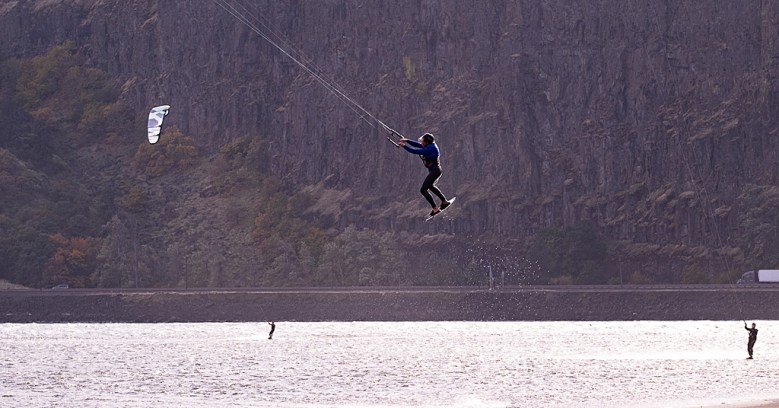
Just east of its origin in Vancouver, Washington, State Route 14 is one of the most scenic and historic highways in the Pacific Northwest, if not the entire country.
Forming a section of the Lewis and Clark Trail Scenic Byway, the highway winds through the entirety of the Columbia River Gorge.
Heading east, where SR 14 enters the tiny town of Lyle (pop. 269), most motorists steal glances over their right shoulders across the Columbia River to marvel at the towering bluffs around the Rowena Crest Viewpoint on the Oregon side of the Gorge.
With such spectacular scenery, it’s easy to miss another remarkable feature of the area—one that’s recently emerged as a flashpoint for stakeholder conflict, and become a microcosm of similar issues playing out around the Pacific Northwest, as an increasing number of interest groups, government agencies, tribal nations and private citizens vie for access to and control over public resources impacted by climate change and steadily growing public usage. READ MORE — Columbia Insight
SUPPORT INDIGENOUS JOURNALISM. CONTRIBUTE TODAY
Pine trees, evergreens and dogwoods blanket the foothills of the snow-capped Cascade Mountain range on the Tulalip Tribes’ ancestral land. Tall grasses and brush peek out from patches in lush forest. On a typical day skies are gray, with steady rain pattering over a mossy cover. The hum of grumbling thunder mixes with the swoosh of brisk winds.
Waterways provide the lifestream. Waves crash in steady rhythm onto the rocky shore of the Tulalip Marina — a long, thin dock jutting from the mainland like a toothpick. Screeching seagulls sky-dance overhead and ducks chatter as they glide in perfect “V” shapes across churning waters.
Andres “Dre” Thornock, 23, grew up here.
But in 2004, at age 3, Thornock entered the Tulalip Tribes’ foster care system. They were placed briefly with relatives, who reported to the court that they could not care for an additional child, and ended up moving through seven Washington foster homes. By the time they reached kindergarten age, tribal homelands became a distant memory. READ MORE — The Imprint
Around the world: The Indonesian government acknowledges ancestral forests, river protection gets a boost in Australia, four First Nations partner with a forest company in Canada and an exhibit at the U.S. Capitol focuses on the plight of Uyghurs in China.
INDONESIA: Government acknowledges ancestral forest claims
In an historic move, the Indonesian government has acknowledged the ancestral forest claims of Indigenous communities within the Aceh province of Sumatra, Mongabay reported on Oct. 26.
The decision by the Ministry of Environment and Forestry in September officially acknowledges the legal rights of ancestral forests spanning more than 55,000 acres in the northern end of Sumatra.
But the government stopped short of approving all requests for recognition, selectively choosing some over others. And some of the territories approved did not align with those originally proposed by the Indigenous communities, Mongabay reported. READ MORE — Deusdedit Ruhangariyo, Special to ICT
While New Mexicans around the state head to the polls to cast their ballots during early voting in the ongoing local election, lawmakers met in Santa Clara Pueblo last week to talk about how the election is different on tribal land this time around.
The recently passed Native American Voting Rights Act lifted barriers, but challenges still remain, they said.
Rep. Charlotte Little (D-Albuquerque) is the Indigenous Center Administrator for Naeva, a Native rights advocacy organization. She went over tribal elections processes to her colleagues on the legislative Indian Affairs Committee on Friday.
Specifically, she voiced changes from the 2023 Voting Right Act that affect tribal voters, like provisions that add more ballot drop boxes or designate a government or official building where people without traditional mailing address can still receive mail ballots or register to vote. READ MORE — Source NM
Sign up here to get ICT’s newsletter
ICT has reporters across Turtle Island. We have bureaus in Washington, D.C., Anchorage, Portland, Missoula, as well as reporters in Manitoba, South Dakota, and soon Oklahoma.
On this reporter roundtable is ICT political correspondent Pauly Denetclaw, ICT senior editor Dianna Hunt and special Canadian correspondent Miles Morrisseau.
WATCH
Jessica Keetso remembers running through puddles with her cousins during the monsoon seasons of her childhood in the Black Mesa region of the Navajo Nation in Northeastern Arizona. Their muddied legs would ache after a day’s worth of adventures, but they’d return each day until the puddles dried up to enjoy the times they used water “for recreation.”
Forty percent of families on the reservation live without access to running water, according to the Navajo Nation Water Management Branch, and Keetso belongs to one of those families. Her family fills up 5-gallon buckets each day and separates the water into cups and pitchers for specific purposes like bathing or washing dishes.
“I grew up hauling water from long distances,” Keetso said. “It takes half a day to go out and drive out on the dirt roads … to fill up and bring it back home. It makes you very aware of your consumption. It makes you appreciate water.”
Keetso, now 38, holds an environmental science degree from Northern Arizona University and was a volunteer for Tó Nizhóní Ání (TNA) in high school. She became a board member of the water protection nonprofit for the Navajo Nation in 2018. Now, she travels the reservation hosting meetings to educate citizens on the environmental impacts of a hydrogen pipeline TallGrass Energy plans to construct throughout the Navajo Nation. READ MORE — Aspen Ford, Special to ICT
- Best of October ICT reads: Catch up on the stories that made headlines in this last month
- Budgets, spreadsheets and dreams: Letter from the Editor
- Hopi leader: Red tape, financial hurdles put aid out of reach: The remarks by Timothy Nuvangyaoma were part of a Senate Indian Affairs Committee roundtable on challenges tribes are facing in getting projects approved
- Domestic Violence in Alaska: A crisis at home
- Federal Reserve leaves its key rate unchanged but keeps open possibility of a future hike
- The US infant mortality rate rose last year. The CDC says it’s the largest increase in two decades
We want your tips, but we also want your feedback. What should we be covering that we’re not? What are we getting wrong? Please let us know. dalton@ictnews.org.

Like this story? Support our work with a $5 or $10 contribution today. Contribute to the nonprofit ICT. Sign up for ICT’s free newsletter.

