Greetings, relatives.
A lot of news out there. Thanks for stopping by ICT’s digital platform.
Each day we do our best to gather the latest news for you.
Okay, here’s what you need to know today:
WARNING: This story contains disturbing details about residential and boarding schools. If you are feeling triggered, here is a resource list for trauma responses from the National Native American Boarding School Healing Coalition in the U.S. In Canada, the National Indian Residential School Crisis Hotline can be reached at 1-866-925-4419.
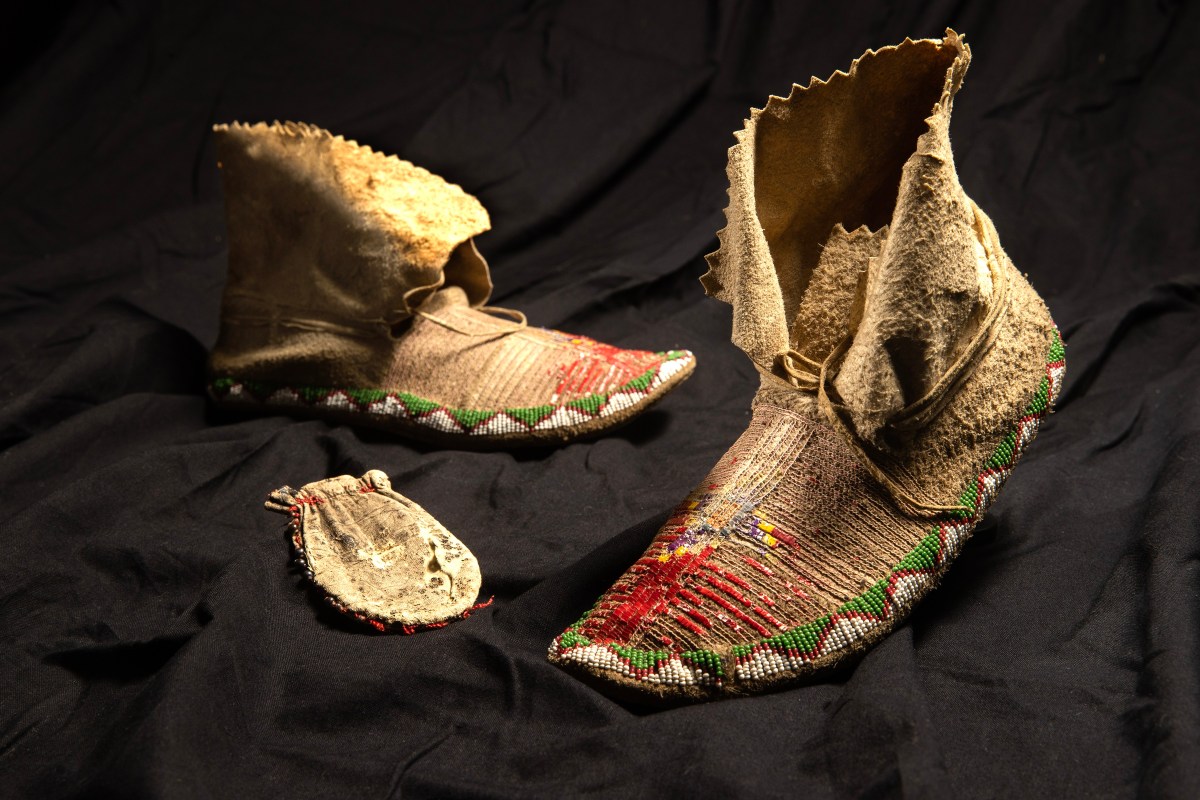
The moccasins sat for decades in the corner of a glass-enclosed bookcase in Pennsylvania, nestled on a shelf with a Davy Crockett trading card and Canadian Mountie knick-knack.
They had long been separated from the unknown Native boy who had worn them into the notorious Carlisle Indian Industrial School more than 100 years ago, where they were taken from him along with his Native connections to family, language and traditions.
By the time they returned quietly home to Sisseton Wahpeton Oyate lands in late September, however, their anonymity had made them universal, a reminder of the forced assimilation that had formed the mission of the Pennsylvania school. READ MORE. — Charles Fox, Special to ICT
SUPPORT INDIGENOUS JOURNALISM. CONTRIBUTE TODAY.
Students at one of the few schools near the central Oregon coast serving the Siletz Reservation called for their school to honor Indigenous Peoples’ Day. It didn’t go well.
In culture class Monday, Oct. 9, a group of students at Siletz Valley School rose out of their seats together and walked out of the building. They texted friends in other classes, and soon more than one-quarter of high school students had left class.
They walked out to protest the fact that the school did not recognize Indigenous Peoples’ Day as a holiday. Instead, students were required to attend classes.
“I want people to understand what Indigenous Peoples’ Day is and why we felt so strong about it,” said Zoey Howard, Siletz, a 16-year-old student who participated in the walkout. “It is a day of trauma. It’s meant to celebrate Indigenous people for what we’ve been through. And I want people to know that’s why we walked out.” READ MORE. — Nika Bartoo-Smith, ICT + Underscore News
Hundreds gathered Thursday night as a spotlight hit the stage at the Redd on Salmon in Portland. Imani Mitchell, an afro-Indigenous Niimiipuu descendant, took to the stage rapping, opening it up for Northwest Native Chamber executive director James Alan Parker.
Wearing a multi-strand beaded necklace resembling a gold chain made by his wife Se-ah-dom Edmo, Parker welcomed the audience to The Gathering, the annual Northwest Native Chamber gala extravaganza.
“I’m standing in a room, this room right now, with people who change the world,” said Parker, Chippewa Cree. “Today we call into existence the economies of the future grounded in generations of culture and belonging, all tied to the lands that we stand upon today.”
The Gathering is a chance for community members to show off their fanciest ‘fits, eat good food, visit with friends and support the work of Northwest Native Chamber. READ MORE. — Nika Bartoo-Smith, ICT + Underscore News
A day that had a sad, painful start ended with a celebration of the raising of a Boarding School Healing Totem Pole.
U.S. Secretary of Interior Deb Haaland, Laguna Pueblo, held a hearing on boarding schools on the morning and afternoon of Sunday, Oct. 22 at the Alaska Native Heritage Center in Anchorage. Like her prior stops in the Lower 48, devastating stories and painful memories were shared with the secretary.
Anchorage is the 10th stop on the Interior department’s Road to Healing, which is part of an initiative on boarding schools. It’s a year-long tour across the country to hear from Indigenous survivors of the boarding school system and their descendants about their experiences. That sharing is healing, and will contribute to a permanent oral history, Haaland told about a hundred people. READ MORE. — Joaqlin Estus, ICT
Sign up here to get ICT’s newsletter
On the Tuesday edition of the ICT Newscast, NASA engineer Aaron Yazzie was inducted into Stanford University’s Multicultural Hall of Fame. Abstract art is a family tradition for a Sicangu woman who is one of this year’s MacArthur Fellows. Highlights from the 40th Annual Elders and Youth Conference hits Alaska.
Watch:
No list of Indigenous horror films can ever be created without first acknowledging the master, the late Jeff Barnaby, Mi’kmaq, whose entire catalog deserves to be seen but whose masterpiece of Canadian cinema “Rhymes for Young Ghouls” is essential.
“Ghouls” is a film that I never want to see again but I probably will and I have to recommend it. I find it among the most horrific movies I have ever seen and I don’t think I will ever shake it. Jeff knew that. He knew he was making horror for Indigenous people. He knew he was making horror for Canadians.
The film is centered around the dark reality of Canada’s Indian Residential School System and the intergenerational legacy. Glenn Gould, Mi’kmaq, turns in a heart wrenching performance as a man trapped in a cycle of violence, shame and unforgivable regret. It also stars Kawennáhere Devery Jacobs, Mohawk, in her first lead role in a feature film. She is Gould’s daughter and like her friends and younger siblings are the ones who are living with the legacy of horror that no one dares speak. READ MORE. — Miles Morrisseau, ICT
- Alaska Federation of Natives: Dignitaries, dances, reunions and art displays: The largest Alaska Native organization gathered in Anchorage.
- An Indigenous kitchen, duck eggs … and Leonardo DiCaprio: Redefining food for the next generation.
- Alaska Native leaders call for legal overhaul to protect fish harvests: Frustration over salmon scarcities and long-running federal-state conflicts lead to push for overhaul of federal subsistence law to make it more Indigenous-focused.
- Brazil vetoes core part of legislation threatening Indigenous rights: Brazilian President Luiz Inácio Lula da Silva: Let’s talk and keep working so that we continue to have, as we do today, legal security and also respect for the rights of the original people.
- 3 indicted on charges related to Medicaid fraud: The three people ran a center that allegedly illegally billed the American Indian Health Program for more than $115 million in services.
- Steri-Write and Cherokee Indian Hospital Take Infection Prevention from the Clinics to the Casinos.
- Osage discussion spotlights positive relationship between FBI and Native Americans.
- Native American boarding school study preparing for a second RFP.
We want your tips, but we also want your feedback. What should we be covering that we’re not? What are we getting wrong? Please let us know. dalton@ictnews.org.